
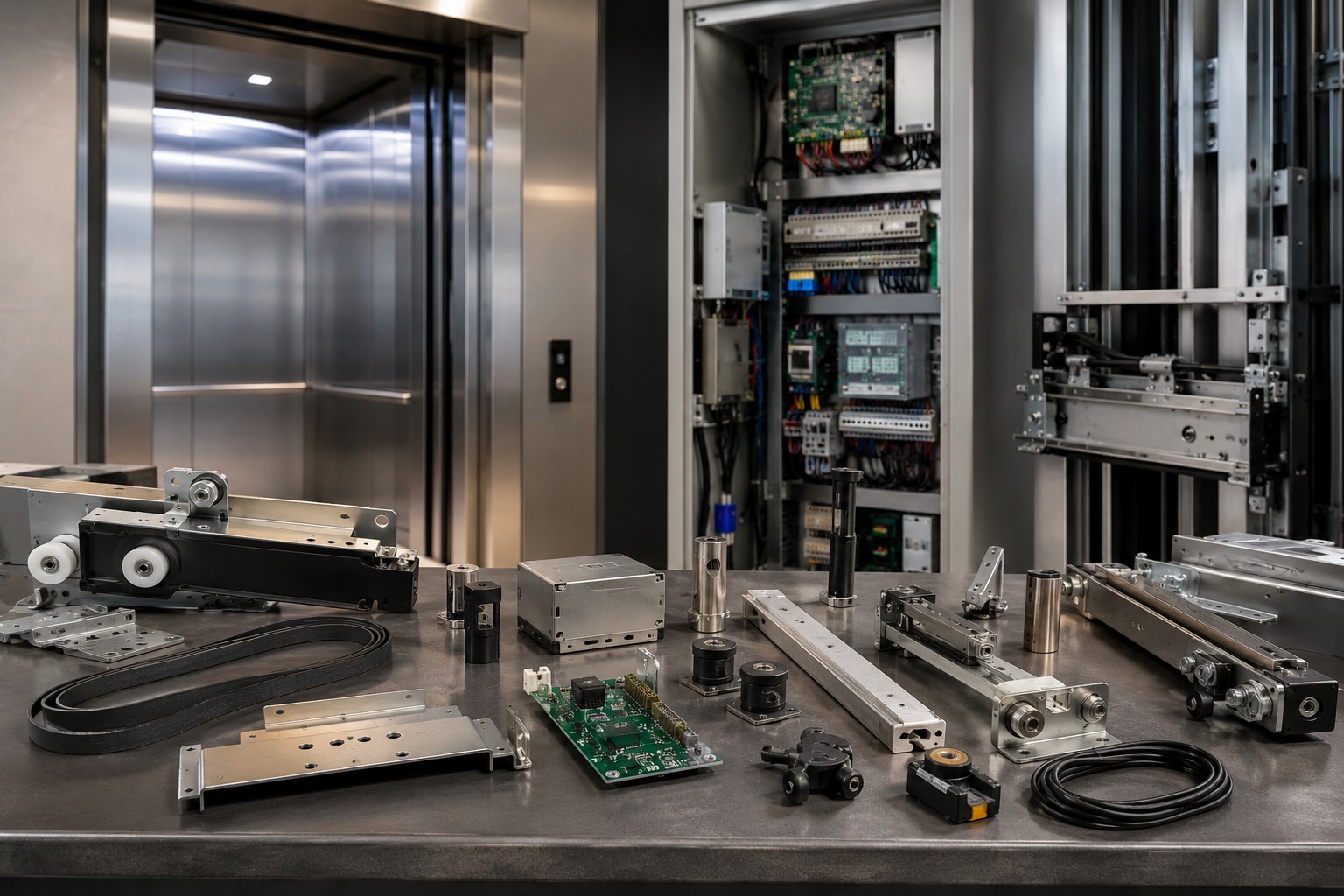
For maintenance contractors, distributors, and building owners in the Philippines, the most practical lift accessories are the ones that fail often enough to require regular replacement, yet are critical enough to affect uptime, ride quality, and safety. In day-to-day elevator service, the strongest replacement demand usually comes from door parts, safety devices, guide shoe oil cups, lubrication items, sensors, electronic boards, power supplies, inverters, buttons, and car operating panel components. These parts are requested repeatedly because elevators in Metro Manila, Cebu, Davao, Clark, and other fast-growing urban centers operate in humid, high-traffic conditions that accelerate wear.
The Philippine market also has its own buying pattern. Many service companies handle mixed portfolios of passenger lifts, freight elevators, hospital lifts, office tower installations, residential building units, and modernization projects. That means demand is rarely limited to one brand or one part family. A practical supplier must support careful model matching for brands such as Hitachi, Toshiba, KONE, Mitsubishi, and other installed systems, while also keeping replacement quality stable and packing parts securely for transport to business districts, provincial cities, and island locations.
This guide explains which lift accessories generate the steadiest replacement demand, why these categories matter in the Philippines, how distributors can build a profitable and responsive product range, and how to connect informational content with product pages for stronger search visibility and better conversions. It also includes buying advice, industry use cases, local market observations, charts, tables, and answers to common questions from maintenance teams.
Philippine market overview for lift accessory demand
Elevator maintenance demand in the Philippines is supported by several long-term drivers: urbanization, vertical residential development, office expansion, hotel construction, hospital upgrades, retail redevelopment, and modernization of older buildings. Business districts in Makati, Bonifacio Global City, Ortigas, Quezon City, Cebu IT Park, and Davao’s commercial centers continue to rely on high elevator availability. As building occupancy rises, so does the pressure on maintenance contractors to reduce breakdown time and secure compatible replacement parts quickly.
Replacement demand is not only driven by age. Climate matters. Salt exposure near coastal areas, high humidity, heat, dust, and unstable power quality can all increase the replacement frequency of boards, sensors, power supplies, door electrical parts, and contact-related accessories. Heavy traffic in condominiums, malls, transport-connected buildings, hospitals, and mixed-use towers also creates continuous wear on door systems, landing fixtures, light curtains, guide components, and lubrication parts.
Imports remain important in the Philippine elevator parts supply chain, especially through logistics hubs linked to the Port of Manila, Batangas, Subic, and Cebu. Because lead time can affect contract performance, many contractors prefer suppliers that can confirm model compatibility early, document part specifications clearly, and package sensitive electronics securely. The strongest performers in this market are usually the ones that combine technical screening with responsive communication.
| Driver | How it affects elevators | Accessory categories impacted | Typical buyer concern | Priority level | Replacement frequency tendency |
|---|---|---|---|---|---|
| High building traffic | More opening and closing cycles | Door rollers, springs, locks, sensors | Fast failure response | Very high | Frequent |
| Humidity and heat | Accelerates electrical and metal wear | Boards, power supplies, connectors, oil cups | Stable quality | High | Moderate to frequent |
| Power fluctuation | Stresses electronic components | Inverters, boards, sensors, supplies | Correct specification | High | Moderate |
| Aging installations | Older systems need more replacements | All accessory groups | Cross-model compatibility | Very high | Frequent |
| Modernization projects | Partial upgrades create mixed part demand | COP parts, indicators, intercoms, boards | Matching new with old systems | High | Project-based |
| Island logistics | Delivery delays can extend downtime | Critical spare parts kits | Protective packaging and dispatch speed | High | Stock-based |
The table above shows why the Philippine market values practical availability over broad catalog claims. Contractors often need accessories that can be identified, verified, and dispatched quickly rather than parts that are merely listed online without technical support.
Most in-demand lift accessory categories
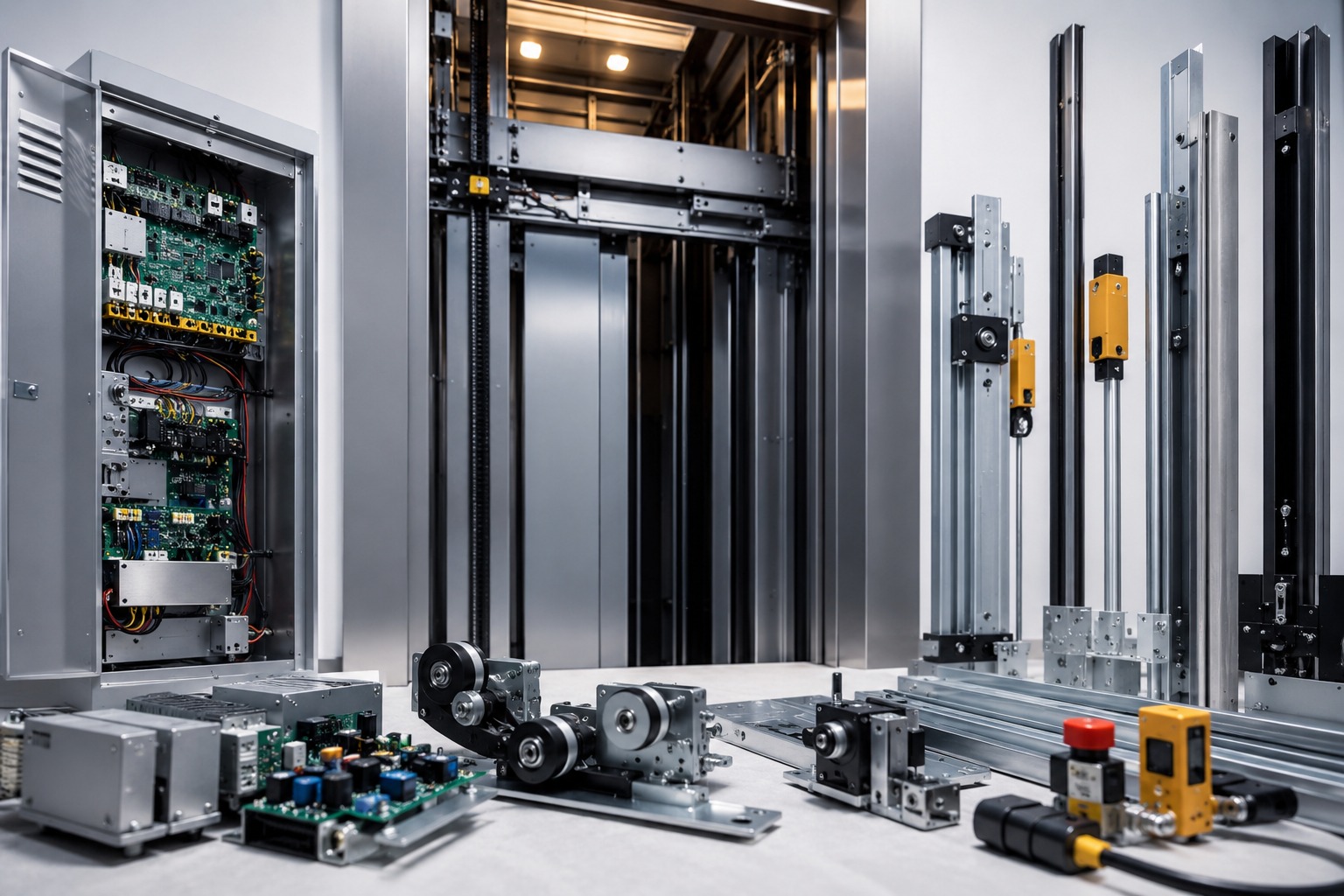
The most searched lift accessories categories usually reflect practical replacement pressure, not just online curiosity. Buyers search for parts that solve common breakdowns, reduce callbacks, and help maintenance teams restore service fast. In the Philippines, the highest-interest categories generally include door operator components, door locks, safety edges or light curtains, guide shoes, oil cups, sensors, encoders, power supplies, inverter parts, control boards, push buttons, COP panels, intercom parts, arrival indicators, and landing accessories.
Door-related accessories lead many demand lists because doors are the most frequently moving subsystem in an elevator. Even when the traction machine and controller remain stable, weak door performance can trigger nuisance faults, passenger complaints, and shutdowns. Electronic boards and sensors also rank high because modern elevators depend on accurate signal transmission, door monitoring, position feedback, and communication between system modules.
Another category with steady movement is fixture and panel parts. Buttons, indicator lights, intercom assemblies, and bottom box or outbound call components are common needs in both maintenance and modernization work. For example, contractors restoring landing call stations may need an outbound call board bottom box for elevator applications when fixtures are damaged, outdated, or inconsistent with the installed control layout.
| Category | Main use | Why demand stays high | Typical buyer | Urgency | Stocking suggestion |
|---|---|---|---|---|---|
| Door operator parts | Door opening and closing control | High cycle wear | Maintenance contractor | Very high | Keep regular stock |
| Door locks and safety devices | Landing and car door safety | Safety-critical replacement | Service company | Very high | Keep fast-moving models |
| Guide shoes and oil cups | Guide rail movement and lubrication | Wear from vibration and dust | Building maintenance team | Medium to high | Bundle in preventive kits |
| Electronic boards | Signal processing and control | Failure stops operation | Distributor and contractor | Very high | Match by model carefully |
| Sensors and encoders | Position and door detection | Precision component wear | Modernization contractor | High | Stock by brand family |
| Power supplies and inverter parts | Electrical stability and drive performance | Sensitive to power quality | Technical buyer | High | Screen by voltage and application |
This table highlights the categories that create the most reliable replacement business. Search volume usually follows operational pain points. The closer a part is to uptime, safety, and daily passenger experience, the more consistently it is requested.
Demand for door components and safety devices
Door parts are the backbone of elevator spare-parts turnover. In the Philippines, maintenance contractors regularly replace door rollers, skates, hangers, sliders, guides, door shoes, door locks, springs, contact assemblies, vanes, coupling parts, and door operator mechanisms. These items wear naturally because they are exposed to repeated movement, vibration, alignment issues, dust, and accidental impact from passenger traffic, carts, and freight use.
Safety devices within the door system also generate strong demand. Light curtains, photocells, safety edges, lock contacts, and interlock-related parts are essential not only for ride reliability but also for code compliance and user protection. In high-footfall properties such as malls in Metro Manila, BPO towers in Makati, hospitals in Quezon City, hotels in Cebu, and mixed-use buildings in Davao, weak door safety performance immediately affects service quality and can trigger serious operational risk.
Among the commonly purchased mechanical replacements are springs and sealing accessories. A door spring for elevator door systems is a classic example of a small but important item that can affect smooth opening, closing force, and overall door stability. For contractors, having these parts available reduces repeat visits and allows for more efficient preventive maintenance programs.
Demand in this category is steady because even a minor issue can stop elevator service. A noisy door, incomplete closing, weak locking, or inconsistent detection response often results in immediate troubleshooting. Distributors that understand these patterns usually stock both high-rotation generic door accessories and carefully matched brand-specific components.
| Part type | Function | Common failure symptom | Where demand is strong | Inspection priority | Replacement urgency |
|---|---|---|---|---|---|
| Door roller | Smooth panel movement | Noise, drag, uneven travel | Residential and office towers | High | High |
| Door lock | Landing door security | Interlock fault, no run | All building types | Very high | Very high |
| Light curtain | Passenger protection | False reopen or no detection | Malls, hospitals, hotels | Very high | High |
| Door spring | Motion balance and return force | Weak closure or bounce | Older installations | Medium | Medium to high |
| Contact assembly | Door status signaling | Intermittent faults | Commercial buildings | High | High |
| Door vane/coupler part | Landing door engagement | Mislevel or failed coupling | Freight and passenger lifts | High | High |
The practical message is simple: if a contractor wants a spare-parts range that creates regular sales, door and safety accessories should be near the top of the list.
Guide shoe oil cup and lubrication demand
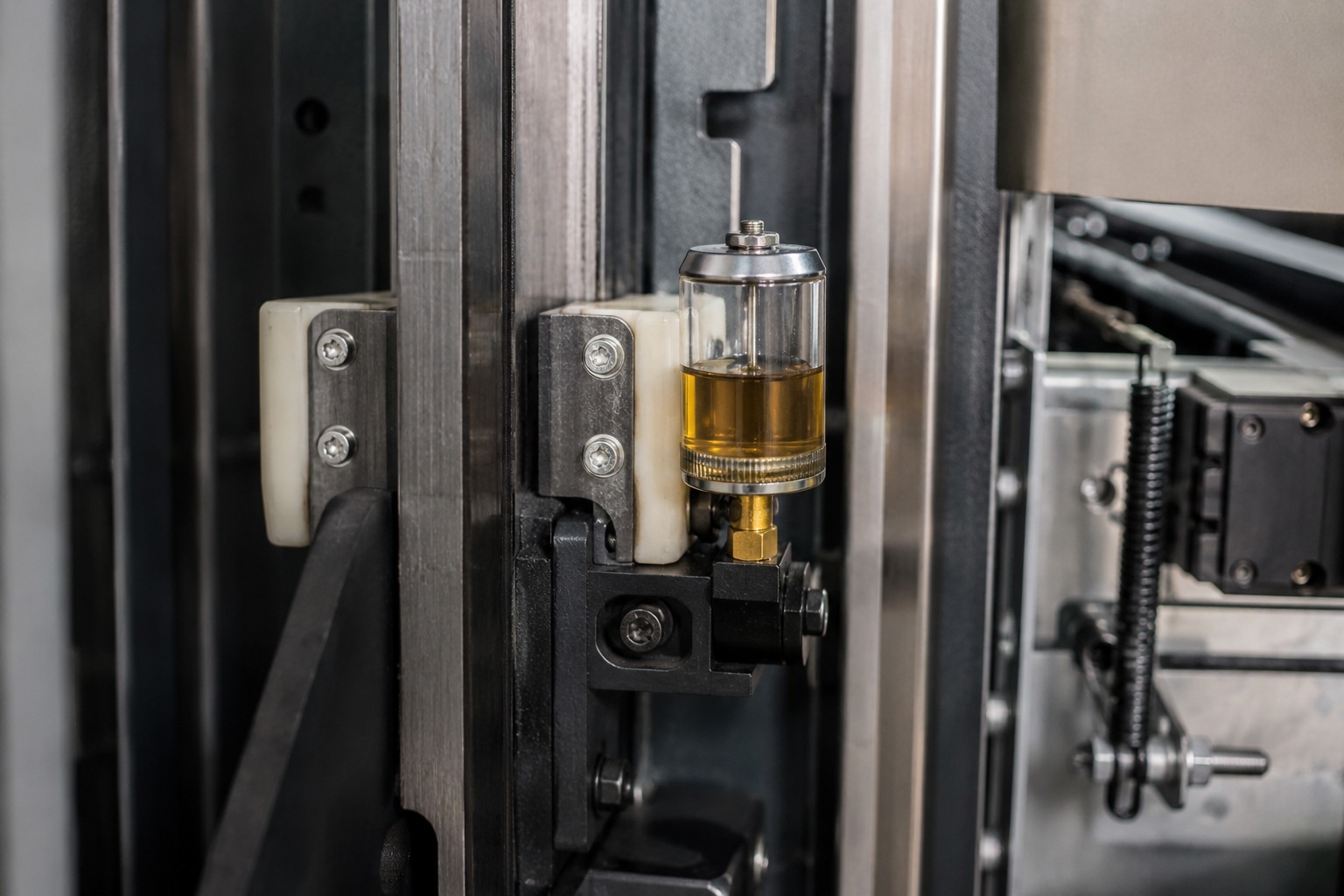
Guide shoe oil cups and lubrication accessories may not attract as much attention as controller boards or inverters, but they are fundamental to smooth elevator travel and long-term component protection. In many installations across the Philippines, especially in older buildings and high-use projects, poor lubrication contributes to vibration, noise, guide wear, and rail contact issues.
The replacement demand for oil cups, felt pads, inserts, liners, and guide shoe consumables is often tied to preventive maintenance quality. Where maintenance teams perform routine inspections consistently, these parts are replaced before major wear develops. Where maintenance is delayed, the resulting damage can lead to larger repair costs involving guide shoes, rail interfaces, and ride comfort complaints.
Humidity, dust, and building environment all affect lubrication performance. Coastal projects near Manila Bay, Cebu port areas, Batangas, and other marine-influenced locations may require stricter lubrication checks because corrosion and contamination can reduce part life. High-rise residential and office buildings that run continuously also benefit from scheduled replenishment and replacement of small lubrication accessories.
Some buyers also search for traction-related sealing accessories when maintaining machine-room or drive-area parts. For instance, a TKL traction seal used in elevator accessory replacement can be part of a broader maintenance requirement where sealing integrity and mechanical protection matter.
| Accessory | Main role | Common maintenance issue | Best use case | Stocking method | Cost impact |
|---|---|---|---|---|---|
| Guide shoe oil cup | Feeds lubrication to guide contact area | Dry running or leakage | Older passenger lifts | Keep multiple sizes | Low unit, high value in prevention |
| Felt pad | Holds and transfers oil | Wear and contamination | Routine PM servicing | Bundle with oil cup | Low |
| Guide insert/liner | Supports smooth guided movement | Excessive play or vibration | High-cycle elevators | Stock by model | Medium |
| Lubrication tubing | Transfers oil where required | Cracking or blockage | Older machine layouts | Project-based stock | Low |
| Seal accessory | Protects against leakage and contamination | Oil loss or ingress | Mechanical maintenance work | Stock key models | Low to medium |
| Guide shoe assembly part | Maintains alignment and ride quality | Noise, rubbing, instability | Modernization and repairs | Technical verification needed | Medium to high |
The key commercial lesson is that small lubrication accessories create repeat business because they support preventive service schedules. For distributors, this is a dependable category for recurring orders rather than one-time emergency sales.
Demand for electronic boards and sensors
Electronic boards and sensors are among the most technically sensitive lift accessories. Their demand is strong because even a single failed board, detection sensor, encoder, relay output module, or communication interface can interrupt normal operation. In the Philippine market, these parts are especially important in modern commercial buildings where downtime has a direct effect on tenant satisfaction, visitor flow, and building reputation.
Control boards are rarely purchased casually. Buyers need model numbers, photos, terminal details, firmware or version references, and application context. Good sourcing depends on careful matching rather than guesswork. This is where technical capability becomes a major differentiator. A professional supplier should be able to review part codes, compare board layouts, confirm compatible applications, and reduce the risk of ordering errors.
Sensor demand also remains high because these parts bridge the mechanical and electrical sides of elevator operation. Door detectors, leveling sensors, magnetic switches, proximity sensors, encoder interfaces, and position detection devices all support precision movement and safe door behavior. In buildings with heavy daily traffic, intermittent sensor faults often become one of the most frustrating service issues because they may appear randomly and cause repeat callbacks.
For modernization jobs, fixtures linked to electronic communication also matter. A common example is the arrival light and forecast indicator for Hitachi elevator systems, which can be requested when upgrading passenger information displays or replacing aged landing indicators.
From a technological capability standpoint, the strongest suppliers in this category do more than sell parts. They organize board images, connector references, voltage details, application notes, and brand families in a way that helps maintenance personnel identify the right item faster. That kind of technical screening reduces downtime and lowers the cost of misordered parts.
| Part category | Main purpose | Why matching matters | Typical risk if wrong | Buyer data needed | Demand pattern |
|---|---|---|---|---|---|
| Main control board | System command and logic | Version and connector differences | No operation or fault escalation | Part code, photos, brand, model | Emergency and planned |
| Door controller board | Door motor and sequence control | Application-specific programming | Door malfunction | Door operator model | Frequent |
| Position sensor | Floor detection and leveling | Signal type varies | Mislevel or call errors | Sensor code and location | Moderate |
| Encoder | Speed and position feedback | Resolution and connector must match | Drive fault or unstable run | Encoder label details | Moderate to high |
| Light curtain receiver/transmitter | Door safety detection | Beam count and size differ | Passenger protection failure | Model dimensions and code | Frequent |
| Communication module | Signal transfer between subsystems | Protocol compatibility matters | Intermittent communication loss | Board number and system layout | Project-based |
The explanation behind this table is straightforward: electronics create high value, but they require disciplined identification. This is where responsive technical support can decide whether a project is solved in one shipment or delayed by repeated trial and error.
Demand for power supplies and inverter components
Power supply units and inverter-related parts occupy a critical middle ground between emergency repair and planned modernization. These items are not as visible to passengers as buttons or indicators, but their impact on elevator performance is substantial. When a power supply becomes unstable or an inverter component fails, the result can range from intermittent faults to complete service shutdown.
In the Philippines, this category deserves extra attention because electrical conditions can vary from site to site. Buildings may experience fluctuations, heat buildup in control spaces, or aging electrical infrastructure. All of these can affect power modules, capacitors, cooling-related parts, converter assemblies, and inverter boards. In high-rise office and residential towers, even a temporary drive-related outage can create serious inconvenience and contract pressure.
Buyers in this segment usually want confidence in three areas: model compatibility, quality consistency, and protective packaging. Sensitive electrical parts should be screened before dispatch and packed to reduce transit damage. This is especially important when parts are shipped from warehousing points to contractors serving Luzon, Visayas, and Mindanao locations.
From a manufacturing capability perspective, reliable supply depends on disciplined sourcing, stable inspection standards, and packaging practices designed for electronic and mixed mechanical-electrical items. A supplier with strong manufacturing and sourcing control should be able to maintain product consistency across repeat orders, verify markings and specifications, and reduce avoidable damage during transport.
| Part type | Application | Typical issue | Operational impact | Verification point | Demand profile |
|---|---|---|---|---|---|
| Switching power supply | Controller and accessory power | Output instability | Random faults or no display | Voltage and current rating | Steady |
| Inverter board | Drive control | Drive trip or no run | Severe downtime | Drive model and board code | High-value occasional |
| Cooling fan assembly | Heat management | Overheating risk | Reduced inverter life | Size and voltage | Moderate |
| Capacitor-related part | Power conditioning | Voltage fluctuation symptoms | Unstable performance | Capacitance and layout | Moderate |
| Frequency converter module | Motor speed regulation | Error codes and rough running | Major service interruption | Brand, model, input/output specs | Project and repair driven |
| Auxiliary transformer or supply accessory | Support circuit power | Low output or burn marks | Accessory failure cascade | Wiring and load data | Moderate |
For distributors, these products may not move as frequently as small mechanical items, but they often provide higher value per transaction and strengthen long-term contractor relationships when supported by accurate matching.
How distributors build practical product ranges
Distributors serving the Philippine elevator aftermarket should build their product range around three layers: high-rotation consumables, critical fault-recovery items, and technical-value components. High-rotation consumables include door rollers, springs, locks, guide shoe parts, oil cups, buttons, lamps, and common sensors. Critical fault-recovery items include light curtains, door controller boards, power supplies, and essential interlock-related components. Technical-value items include inverters, specialized boards, encoders, display modules, and brand-specific fixtures.
The best range planning starts with service records. Which parts repeatedly fail across residential towers in Metro Manila? Which accessories are often needed for hospital lifts in Cebu? Which control boards cause delays because they require longer sourcing? By answering these questions, distributors can set inventory levels based on actual service patterns rather than broad assumptions.
They should also group demand by installed base. If local customers maintain many Hitachi, Toshiba, KONE, and Mitsubishi units, the range should reflect those brand families and the components most often requested for them. Another useful strategy is to stock replacement kits instead of isolated items. For example, a door service kit may include rollers, guides, contacts, and a spring; a lubrication kit may include oil cups, felt, and guide consumables.
Service capability is equally important. Distributors gain trust when they answer quickly, request the right identification details, confirm compatibility before shipping, and provide secure packaging for transport to job sites in Manila, Laguna, Cavite, Pampanga, Iloilo, Bacolod, Cagayan de Oro, and other areas. Responsive service is not an extra in this market; it is often the reason a buyer returns.
| Range layer | Typical parts | Stock depth | Margin style | Buyer expectation | Main benefit |
|---|---|---|---|---|---|
| Fast-moving consumables | Springs, rollers, oil cups, buttons | High | Volume-based | Immediate availability | Repeat orders |
| Safety-critical parts | Locks, light curtains, contacts | Medium to high | Stable | Reliable quality | Service trust |
| Electronic essentials | Power supplies, boards, sensors | Selective | Value-based | Correct matching | Fewer misorders |
| Drive-related items | Inverter accessories, encoder parts | Targeted | Higher ticket | Technical support | Stronger contractor ties |
| Modernization fixtures | Indicators, COP parts, intercoms | Project-led | Project margin | Appearance and compatibility | Upgrade opportunities |
| Brand-specific specialties | Unique OEM-style accessories | Low to medium | Specialized | Accurate sourcing | Market differentiation |
The explanation here is that a good distributor range is not about carrying everything. It is about balancing turnover, urgency, technical difficulty, and installed-base relevance.
How to connect blog content with product pages
Many elevator parts companies publish articles about maintenance, modernization, and troubleshooting, but fewer connect those articles effectively to product demand. The best approach is to use educational blog content to answer the question behind the purchase. A contractor searching for “door lock fault in elevator,” for example, may first want a diagnosis guide, but that guide should naturally lead to a relevant product page if replacement is the likely solution.
For SEO in the Philippines, topic clusters work well. A broad article on lift accessories can link to focused guides on door systems, board matching, lubrication schedules, or power supply troubleshooting. Within each guide, insert product links only where they are genuinely useful. This creates a stronger user journey and improves both search visibility and conversion quality.
Internal linking should also reflect search intent. If the article discusses worn door return tension, linking to a door spring product makes sense. If it discusses fixture replacement during modernization, linking to a call board or indicator product supports the user naturally. Avoid placing all links in one block. Spread them inside problem-solution paragraphs so readers reach the right page at the right moment.
Another effective method is to connect city or industry use cases to category pages. A blog about hospital elevator reliability in Quezon City can point to light curtains, sensors, and door safety parts. A guide for office towers in Makati can connect to boards, inverters, indicators, and communication accessories. This creates context and supports local search relevance.
Buying advice for contractors, building owners, and modernization teams
When purchasing lift accessories in the Philippines, the first rule is simple: verify the exact part before focusing on price. The cost of a wrong board, wrong sensor type, or incorrect lock assembly is often far higher than the savings from a cheaper order. Buyers should provide photos, nameplate information, dimensions, wiring details, and fault descriptions whenever possible.
Second, separate routine stock from emergency stock. Routine stock includes high-rotation items used in preventive maintenance. Emergency stock should focus on parts that commonly cause shutdowns, such as locks, light curtains, selected power supplies, door controller boards, and key sensors. Contractors with mixed portfolios should review usage every quarter and adjust stock by brand and building type.
Third, evaluate supplier discipline. Strong suppliers do not just quote quickly; they ask the right technical questions, confirm compatibility, inspect outgoing items, and package parts well. This is particularly important for shipments moving between major trade gateways and provincial destinations. Poor packaging can erase all the benefit of a correct order.
Finally, consider 2026 trends. Elevator maintenance is moving toward smarter diagnostics, more retrofit-friendly electronics, and increased interest in energy efficiency. Policy and building management expectations are also shifting toward safer operations, lifecycle planning, and sustainability. Buyers may increasingly prefer parts that support lower downtime, longer service intervals, and modernization paths rather than repeated stopgap repairs.
Industries and applications with the strongest accessory demand
Not all buildings consume lift accessories at the same rate. Residential high-rises generate frequent door-related demand because of constant daily traffic and variable passenger behavior. Office towers create strong demand for fixtures, boards, indicators, and doors because uptime is essential during working hours. Hospitals require especially reliable sensors, light curtains, leveling-related parts, and communication accessories because patient movement and equipment transport depend on stable operation.
Retail and hotel buildings typically show high wear on doors, indicators, and user-facing accessories. Freight elevators create demand for robust mechanical parts due to loading impact and harsher use conditions. Older institutional buildings, meanwhile, often generate mixed demand across lubrication parts, boards, relays, indicators, and modernization-related accessories because their systems evolve over time.
In application terms, the strongest replacement demand appears in preventive maintenance contracts, breakdown recovery, partial modernization, fixture upgrades, and safety improvement projects. A supplier that understands these applications can organize product pages and sales communication around real operating scenarios rather than generic categories.
Case-based examples from the Philippine market
Consider a condominium portfolio in Pasig and Taguig where elevator traffic spikes during morning and evening resident movement. In such sites, door rollers, contact assemblies, and light curtains often move faster than heavy electronic parts. The maintenance contractor benefits from stocking these accessories locally because the failures are frequent and highly visible to residents.
Now consider an office tower cluster in Makati with older installed systems undergoing gradual modernization. Here, indicators, COP accessories, outbound call fixtures, power supplies, and board-related items may be ordered in stages. The buyer needs a supplier that can match old and new configurations without creating inconsistency across floors or cars.
In a hospital environment in Quezon City or Cebu, a small sensor error or door safety problem can have outsized consequences. Buyers in these projects usually prioritize reliability, compatibility confirmation, and fast response over simple unit price. In many cases, repeated successful supply of safety and control accessories leads to longer-term supplier relationships.
What to look for in a lift accessories supplier
A strong supplier for the Philippine market should combine technological capability, manufacturing discipline, and responsive service. On the technology side, they should help with model matching for control boards, sensors, encoders, power supplies, and brand-specific accessories. They should understand part-code verification, application screening, and compatibility risk.
On the manufacturing and sourcing side, they should maintain stable quality inspection, organized product identification, and protective packaging for both mechanical and electronic items. This matters whether the requirement is a door accessory, a guide shoe oil cup, a control board, or a fixture module. Consistency across repeated orders is one of the most valuable qualities in long-term maintenance support.
On the service side, they should respond quickly, communicate clearly, and support urgent replacement demand without unnecessary delay. For contractors working across cities and islands, this service capability can directly reduce downtime. The most effective partners are those that help customers source compatible replacement parts and keep elevator systems operating safely, even when the installed base includes multiple brands and mixed-age equipment.
FAQ about lift accessories
Which lift accessories usually have the highest replacement demand?
Door parts, door locks, light curtains, guide shoe oil cups, sensors, control boards, power supplies, buttons, and indicators usually create the most consistent demand.
Why are door accessories searched so often?
Elevator doors cycle constantly. Wear on rollers, springs, contacts, locks, and safety devices can quickly affect operation, so contractors search for these parts frequently.
Are guide shoe oil cups still important in modern maintenance?
Yes. They remain important wherever lubrication performance affects ride quality, wear control, and preventive maintenance outcomes.
What information should buyers provide when ordering electronic boards?
Provide part number, brand, model, clear photos, connector details, and any known fault codes. This greatly improves matching accuracy.
How should a distributor choose which lift accessories to stock?
Review local service records, installed brand mix, emergency fault frequency, and preventive maintenance consumption. Stock fast-moving items deeply and technical items selectively.
How can blogs improve sales of elevator spare parts?
Blogs attract search traffic by answering maintenance questions. When they link naturally to relevant product pages, they guide buyers from diagnosis to purchase.
What trends will shape lift accessory demand in 2026?
Smarter diagnostics, stronger emphasis on energy-efficient drive systems, more retrofit-friendly electronics, better safety monitoring, and greater attention to sustainability and lifecycle planning are likely to shape demand.
Why does packaging matter for lift accessories?
Sensitive boards, sensors, indicators, and mixed electronic-mechanical parts can be damaged in transit. Protective packaging reduces replacement delays and protects installation schedules.
Final takeaway
In the Philippines, the lift accessories that generate the most reliable replacement demand are the ones closest to elevator uptime, safety, ride quality, and passenger experience. Door parts and safety devices lead the market, followed by guide shoe lubrication items, electronic boards, sensors, power supplies, and inverter-related components. Distributors and contractors that organize their product range around real service patterns, careful model matching, and responsive delivery can build stronger customer relationships and reduce costly downtime. As the market moves toward 2026, demand will increasingly reward suppliers that combine technical competence, stable sourcing, quality inspection, and practical support for modernization and preventive maintenance.