
A KONE elevator door should be repaired or replaced only after the exact door-operator model, part number, electrical rating and mechanical arrangement have been checked. A door lock, motor, controller or car-door mechanism may look similar to another item, but differences in connectors, revisions, handedness and settings can affect safety and operation.
For maintenance contractors, sourcing teams and modernisation companies in the Philippines, the practical approach is to diagnose the fault first, identify the complete door system second, and match the replacement part against the removed item and equipment records. This reduces repeat call-backs, incompatible deliveries and unnecessary replacement of working components.
How the KONE door system works
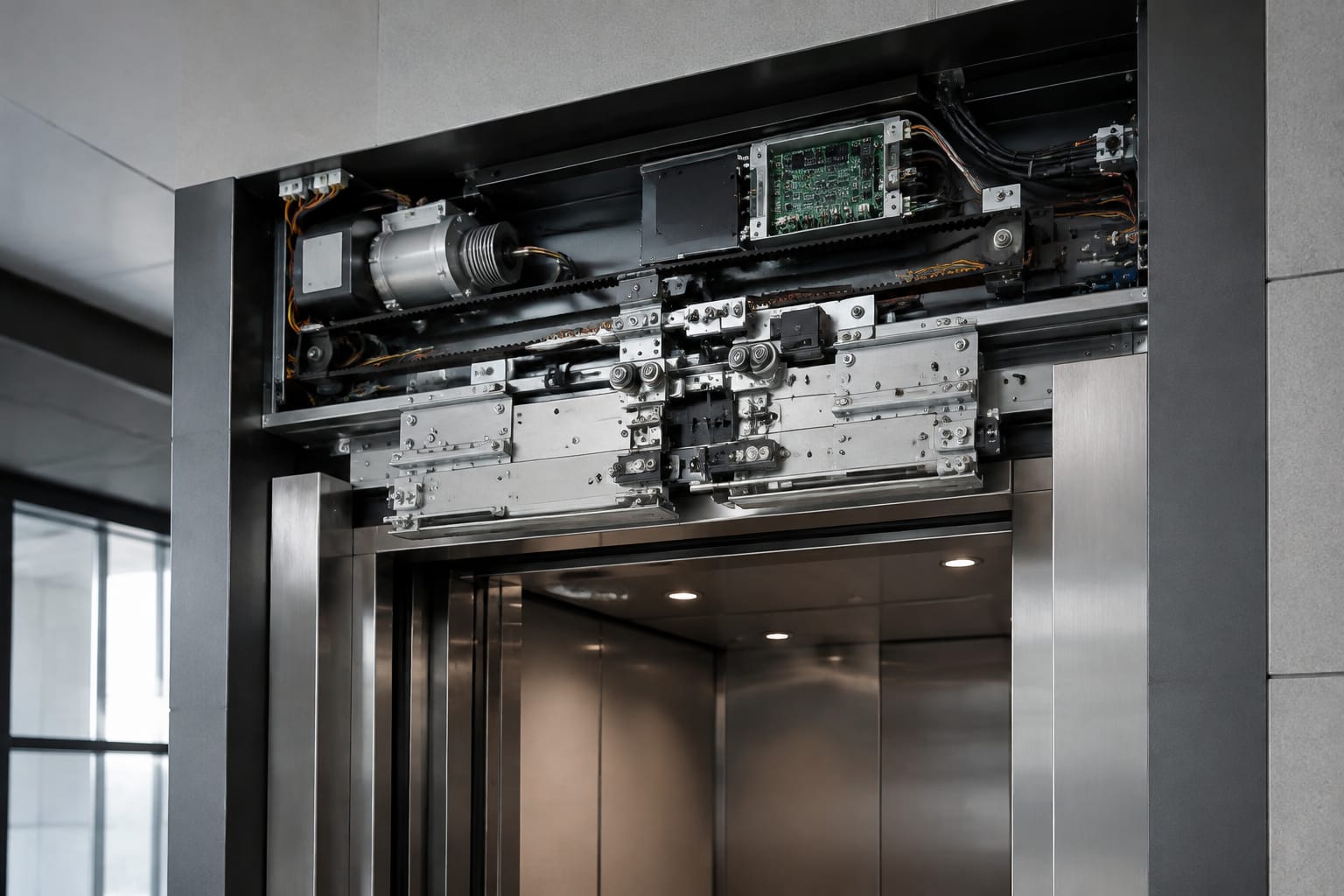
A KONE elevator door system has two coordinated functions: the car door opens and closes at each landing, while the landing door remains secured until the car is correctly positioned. The door operator on the car provides the motion. Mechanical couplings and electrical safety circuits ensure that the landing door can only be released when the car is at that floor.
Although configurations vary by installation and generation, a typical KONE elevator door arrangement includes:
- A car-door operator mounted above the car entrance
- Door panels, hangers, rollers, tracks and guides
- A door motor and drive transmission, such as a belt, chain or linkage
- A door controller or operator control board
- A car-door knife or vane that engages the landing-door lock
- Landing-door locks, contacts and release mechanisms
- Safety edges, light curtains or reopening sensors where fitted
- Wiring harnesses, connectors, switches and adjustment hardware
The door controller commands opening and closing, monitors feedback from switches or encoders, and reacts to obstruction signals. The motor produces movement, while belts, arms and linkages transfer that movement to the door panels. At a landing, the car-door knife operates the landing-door lock so both sets of doors move together.
A fault in one section can appear to originate elsewhere. For example, a worn roller can overload the motor; a damaged wiring connector can imitate a failed controller; and an incorrectly adjusted door knife can prevent a healthy landing lock from releasing.
Door locks and safety contacts
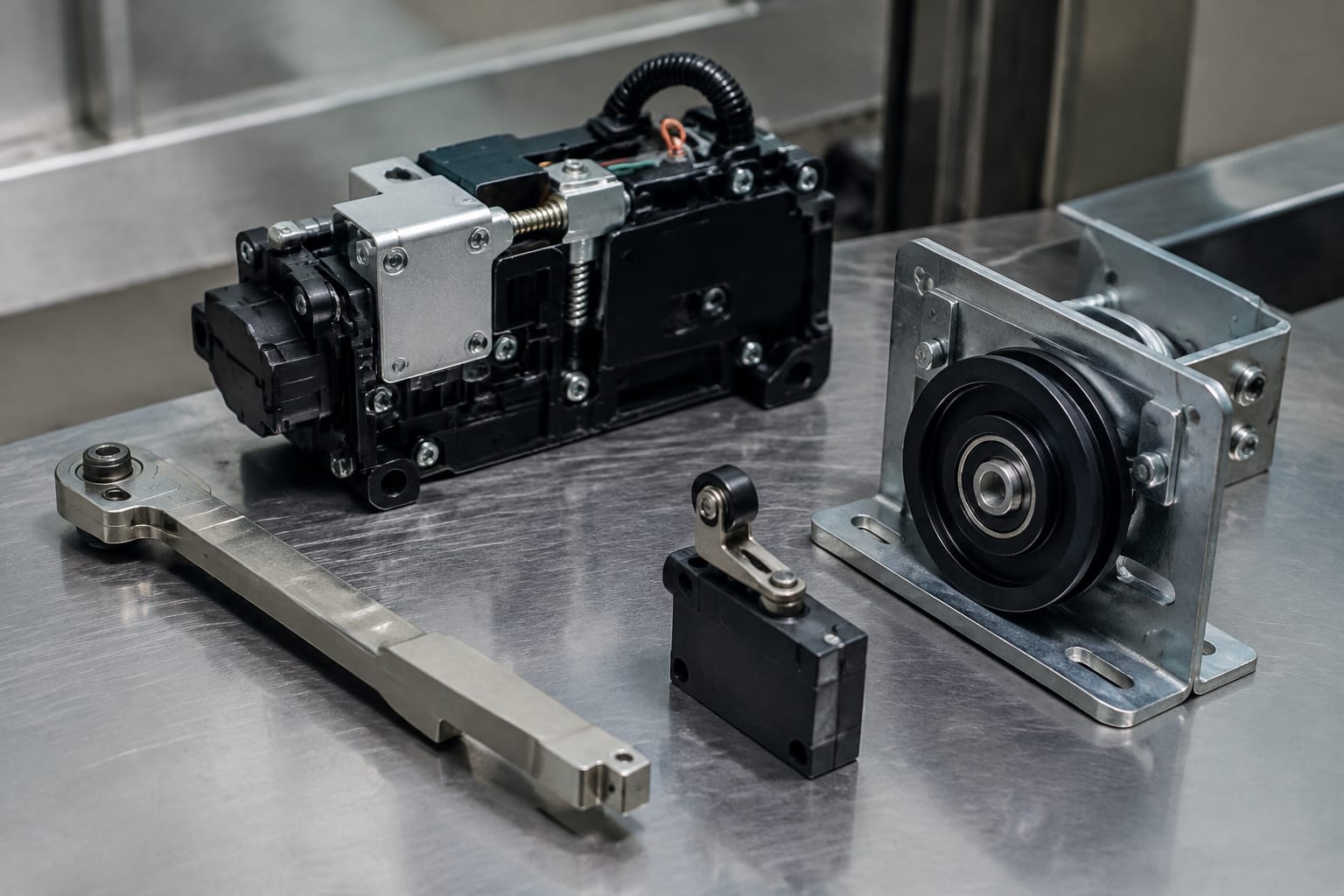
Landing-door locks are critical safety devices. They keep each landing entrance closed and electrically verify that the door is locked before the lift can travel. The lock normally combines a mechanical locking element with one or more electrical contacts.
Do not treat a landing lock as a generic hardware item. Its mounting pattern, lock body, moving lever, contact arrangement, actuator position and door-panel interface must suit the existing entrance system.
What to check when matching a door lock
Before ordering a KONE elevator door lock or lock assembly, record:
- The complete part number and revision marking on the old unit
- The landing-door manufacturer or entrance-system identification, where available
- Lock mounting orientation and whether the arrangement is left- or right-handed
- Number and type of electrical contacts
- Connector type, terminal layout and cable length
- Dimensions and position of the lock release lever or roller
- Door panel type and lock bracket arrangement
- Whether only a contact, roller, switch or complete lock body has failed
A worn lock roller or damaged contact may be serviceable separately where the specific design supports it. Replacing a small component can be economical, but only when the lock body, spring action and mechanical locking engagement remain sound. A cracked case, loose locking hook, weakened spring or repeated intermittent contact fault generally requires a more thorough assessment.
For related components, review [KONE-compatible door lock wheels, switches and brackets](/products/amd-door-lock-wheel-switch-door-bracket-kone-elevator-parts-lift-accessories/) alongside the actual lock assembly. These small items are frequently mistaken for universal parts, even though their dimensions and mounting details can vary.
Safety points during lock work
Landing-door lock work should be carried out by appropriately qualified lift personnel following the site’s isolation and safety procedures. The lift must not be returned to service simply because the door appears shut. The mechanical lock engagement and electrical safety-chain status both need verification.
Common mistakes include bypassing a lock contact for diagnosis and leaving the bypass in place, bending a release lever to force engagement, or fitting a contact with a different normal state. These actions can create intermittent faults or defeat a safety function.
Door knives and mechanical linkages
The car-door knife, also called a vane in some configurations, is the interface between the car door and the landing-door lock. As the car door opens, the knife engages the landing-door unlocking mechanism. Proper position and alignment are essential: the knife must enter and operate the landing lock without striking, dragging or applying excessive force.
Mechanical linkages include door arms, couplers, belts, pulleys, hangers, rollers, guides and door-panel brackets. These components determine whether the door moves smoothly and closes consistently.
Signs of a mechanical door problem
Investigate the mechanical system before replacing an electrical part when you observe:
- Scraping, knocking or grinding during door travel
- Uneven panel movement or a panel that lags behind
- Door reversal without a detected obstruction
- Motor noise with little or no panel movement
- Repeated belt movement or slipping
- A door that closes but does not reach the fully closed position
- Visible contact between the knife and landing lock
- Excessive force needed to move the door manually during controlled maintenance
Door panels should travel freely with correctly maintained tracks, rollers and guides. A motor or controller cannot compensate reliably for bent tracks, contaminated sills, loose hangers or a wrongly adjusted clutch. Replacing an expensive electronic board without checking mechanical resistance is a common avoidable cost.
When replacing a knife or complete car-door coupling component, confirm the profile, mounting hole spacing, adjustment range and relationship to the landing lock. [Car-door knives and lock devices for KONE elevator applications](/products/car-door-knife-door-lock-device-kone-elevator-parts-lift-accessories/) should be selected against the installed mechanism, not from a photo alone.
Adjustment is part of the repair
A mechanically compatible part may still require adjustment after installation. Door-panel overlap, closed position, opening width, knife engagement, roller pressure and belt tension can all affect performance. Record the original settings before removal where practical, but do not assume those settings were correct if the door had a recurring fault.
Door motors and controllers
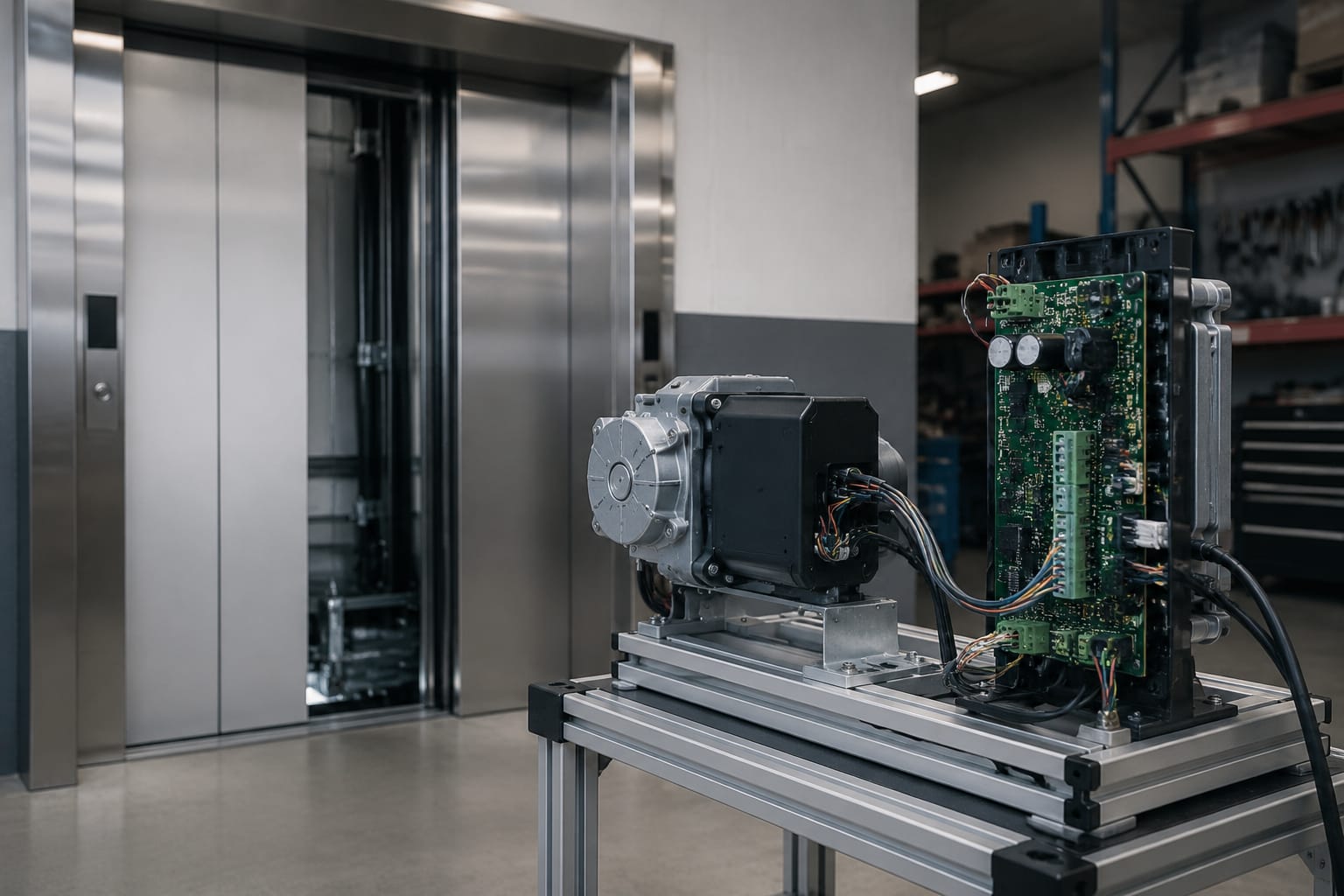
The door motor drives the car-door operator; the controller manages the motor and interprets feedback from door-position switches, encoders, reopening devices and the lift control system. These items work as a pair, but a failure in one does not automatically mean the other is defective.
A KONE door motor may differ by supply type, voltage, rated speed, encoder arrangement, shaft design, mounting points and connector. Door controllers or operator boards differ by software revision, input/output arrangement, communication interface and compatible motor type.
For replacement selection, [KONE elevator door motors and controllers](/products/kone-elevator-parts-door-motor-controller/) should be matched to the operator identification and existing component markings.
Motor fault versus controller fault
The following comparison helps narrow the likely fault. It is a diagnostic guide, not a substitute for manufacturer procedures or electrical testing.
| Symptom | Possible mechanical cause | Possible motor cause | Possible controller or signal cause |
|---|---|---|---|
| Door does not move | Jammed panel, seized roller, damaged belt | Open winding, failed encoder, worn brushes where applicable | No command, drive fault, failed output stage |
| Door moves slowly | Dirty sill, binding linkage, poor adjustment | Reduced torque, overheating, bearing wear | Incorrect settings, voltage issue, current limiting |
| Door opens then reverses | Dragging panel, misaligned knife | Inconsistent encoder feedback | Sensor input, force monitoring or parameter issue |
| Door stops at random positions | Loose belt or slipping drive | Intermittent motor cable or encoder | Loose connector, damaged board, unstable feedback |
| Door closes but will not complete | Obstructed sill, misaligned panels | Weak torque near close position | Faulty close-limit signal, safety input or configuration |
Start by checking the simple causes: clean the sill, inspect the belt and rollers, verify panel freedom, and examine connectors for looseness, corrosion, heat damage or broken conductors. A visual inspection alone is not enough; intermittent electrical faults often appear only when the door moves.
Do not substitute by appearance
A motor with the same frame size may have a different speed, feedback device or shaft. Likewise, two controller boards with similar connectors may use different programming or motor-drive arrangements. Installing an unmatched motor-controller combination can result in poor force control, failure to learn door positions, fault codes or damage to components.
Where a controller has adjustable parameters, preserve or document the existing configuration before replacement when permitted by the equipment procedure. Parameter transfer, commissioning access and software compatibility may be necessary. Confirm whether a replacement is an exact part-number match, an approved superseding revision or a component that requires additional setup.
Identify the door-operator model
The operator model is the best starting point for sourcing KONE elevator door parts. Do not rely only on the lift brand shown in the car. A site can have an original KONE lift with changed door equipment, a modernised controller with retained entrances, or different operator arrangements across groups of lifts.
Look for identification on the car-door operator assembly, motor label, controller enclosure, landing lock or installation documentation. Labels may be located above the car entrance, inside the operator cover, on the motor body or on the controller board.
Create a concise identification record containing:
- Lift and car identification within the building.
- Door-operator nameplate details, model and serial information.
- Part number, revision and manufacturing markings from the failed part.
- Clear photos of labels, connectors, mounting points and the complete assembly.
- Door opening type, panel arrangement and approximate opening width.
- Motor label details, including voltage, current, speed and feedback information where marked.
- Controller board labels, terminal markings and any displayed fault indication.
- A description of the fault and when it occurs.
Photos are useful, but part numbers and dimensions are more dependable. A photo should show the component in context, not only a close-up of its front face. Include the cable side, mounting surface, connector profile and surrounding mechanism.
Match ratings, connectors and revisions
An exact part number is normally the strongest compatibility reference. When an exact number is unavailable or has been superseded, match the complete set of technical and physical characteristics before considering a substitute.
Essential compatibility checks
| Component | Confirm before replacement | Why it matters |
|---|---|---|
| Door motor | Voltage, current, motor type, speed, shaft, mounting, encoder and connector | Incorrect characteristics can prevent operation or damage the drive |
| Door controller | Operator model, board revision, supply, motor compatibility, inputs, outputs and configuration requirements | Similar boards may not communicate or drive the same system correctly |
| Landing lock | Handing, mounting, hook and lever geometry, contacts, actuator and terminals | The door must lock mechanically and prove locked electrically |
| Door knife | Profile, height, fixing arrangement, adjustment range and lock interface | Incorrect engagement can damage the lock or stop landing-door release |
| Belt or linkage | Length, tooth profile, width, attachment points and tension arrangement | Incorrect fit causes slipping, poor travel or premature wear |
| Switch or sensor | Electrical state, connector, mounting, target position and operating distance | Wrong signals may cause door faults or unsafe operation |
Electrical ratings should never be assumed from a similar-looking spare. Confirm the label and the actual supply arrangement. Connector checks should cover more than plug shape: pin count, keying, pin assignment and wire condition all matter.
Revision control also deserves attention. A later revision may be designed as a replacement for an earlier one, but this should be verified through reliable technical information or the supplier’s compatibility confirmation. Do not mix boards, motors or encoders across revisions merely because their housings appear identical.
For B2B buyers, include the complete identification record in the request for quotation or purchase enquiry. Kelevator supplies multi-brand elevator spare parts to importers, distributors, maintenance contractors and OEM buyers, so a detailed record helps distinguish an exact-match request from a part requiring compatibility review.
Diagnose before replacing a part
Replacing components by trial and error increases downtime and may conceal the real fault. A structured diagnosis should separate mechanical resistance, electrical supply, signal feedback and control logic.
A practical diagnostic sequence
- Make the lift safe and follow the applicable isolation procedure.
- Inspect the sill, tracks, rollers, hangers, belt, linkage and door knife for visible wear, debris, misalignment or impact damage.
- Check that door panels move freely during appropriate controlled maintenance work.
- Examine wiring, plugs, terminals and cable flex points for loose or damaged connections.
- Record fault codes, indicators or repeatable conditions before cycling power or changing parts.
- Verify supply voltage and relevant safety-circuit status using suitable test methods.
- Check door-position switches, reopening devices and encoder feedback against the operator documentation.
- Test or substitute only after a defined fault points to the relevant component.
- Recheck the mechanical adjustment after any component replacement.
Do not ignore environmental factors. Dust and debris in sills, water ingress, heat, vibration and repeated impact from trolleys or delivery traffic can contribute to door faults in commercial buildings. The symptom may be electrical, while the underlying cause is contamination or mechanical wear.
Avoid replacing a controller to solve a door-closing fault until the door path and lock engagement are verified. Similarly, do not replace a lock contact repeatedly without checking whether the car-door knife is striking the lock or whether the landing door is under mechanical stress.
Commission and test the repaired door
A replacement is not complete when the new part is physically installed. The door must be commissioned, adjusted where required and tested through normal operating conditions.
Follow the equipment documentation and site safety requirements. The exact procedure depends on the operator, controller and installed safety devices, but the final checks should include the following.
- Confirm all covers, guards, fasteners and wiring retainers are correctly restored.
- Verify smooth opening and closing without rubbing, impact or abnormal noise.
- Check correct door-panel alignment and closed-position engagement.
- Confirm the car-door knife engages the landing lock cleanly at each served landing.
- Test landing-door locking and electrical proving functions as required.
- Check reopening behaviour for the installed safety edge or light curtain.
- Verify door operation from car and landing calls through repeated cycles.
- Confirm the lift does not travel with a landing door unlocked or an incomplete door-closed signal.
- Review fault indications after testing and document the part number and adjustments made.
Testing should cover more than one landing where the lift has multiple entrances. Door conditions can differ by floor because of sill contamination, landing-door alignment, lock wear or building movement. A repair that works at one floor may expose an adjustment problem at another.
FAQ
Can a KONE door motor be replaced with a similar motor?
Only when the motor is confirmed compatible with the existing operator and controller. Match the exact part number where possible, or verify voltage, speed, mounting, shaft, feedback device, connector and drive compatibility. Physical fit alone is not sufficient.
Is a door lock fault always caused by the lock?
No. The lock may be affected by a misaligned landing door, worn rollers, a damaged car-door knife, loose wiring or an intermittent safety-chain connection. Inspect the full interface before replacing the lock.
What information should be sent when sourcing a KONE elevator door part?
Send the operator model, part number and revision, clear label and connector photos, mounting photos, electrical ratings, door arrangement and a concise fault description. For locks and knives, include handing and dimensions or reference points where possible.
Should a controller board be fitted without configuration checks?
Not unless the replacement is confirmed as an exact compatible unit and the applicable procedure permits it. Some boards require parameter checks, setup, software compatibility confirmation or learning procedures after installation.
A reliable KONE elevator door repair begins with identification and diagnosis, then uses a replacement matched to the installed operator, lock or control arrangement. Keep the removed part, labels, photos and fault notes together until commissioning is complete. This gives your maintenance or sourcing team the information needed to verify the correct lock, knife, motor or controller before placing the next order.