
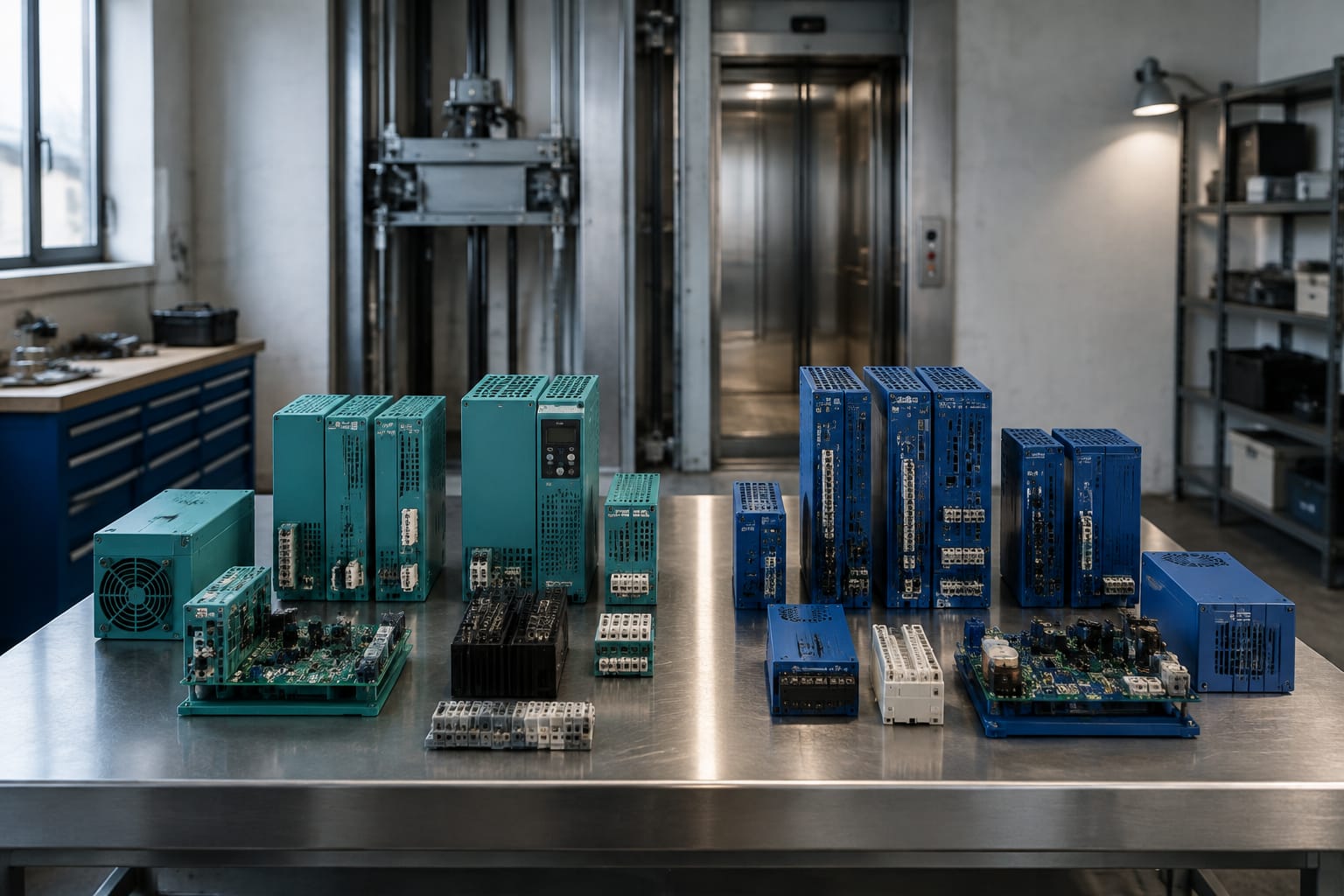
KONE and Sigma parts should be sourced as separate product families unless the exact equipment records and part documentation prove otherwise. Similar-looking boards, plugs, or cabinet layouts do not establish interchangeability. The safest approach is to identify the lift first, then match the component's complete label, revision, electrical requirements, connectors, and communication role.
For maintenance contractors and sourcing teams in the Philippines, this matters most when a breakdown requires a board replacement and the old part is incomplete, repaired, or poorly labelled. A correct purchase request gives the supplier enough evidence to identify the intended component. It also helps avoid receiving a board that physically fits but cannot work with the controller, drive, or car network.
KONE and Sigma Are Distinct Product Families
KONE and Sigma are closely associated in the elevator market, but their components should not be treated as generally interchangeable. A KONE or Sigma label is only one part of the identification process. The controller generation, board function, firmware or revision, electrical rating, and system architecture all affect whether a replacement can be used.
The most common mistake is to match a spare part by its broad description alone:
- “KONE main board”
- “Sigma communication board”
- “elevator inverter board”
- “door operator PCB”
- “lift power supply board”
These descriptions are useful for starting a search, but they are not sufficient for ordering. A main board can differ across controller generations. A communication board may use a different bus, address arrangement, connector layout, or software revision. A power board may have similar terminal positions while supporting a different voltage input or load.
Treat the lift brand and the component part number as two separate checks. The brand identifies the likely product ecosystem; the complete part number identifies the specific part to be evaluated.
For mixed-brand modernisation projects, do not assume that a KONE-related component can replace a Sigma-labelled component, or vice versa, simply because the installation has been upgraded over time. Many lifts contain a mix of original and replacement equipment. The installed controller, drive, car operating panel, door equipment, and wiring must be assessed in their actual configuration.
Identify the Elevator Before the Component
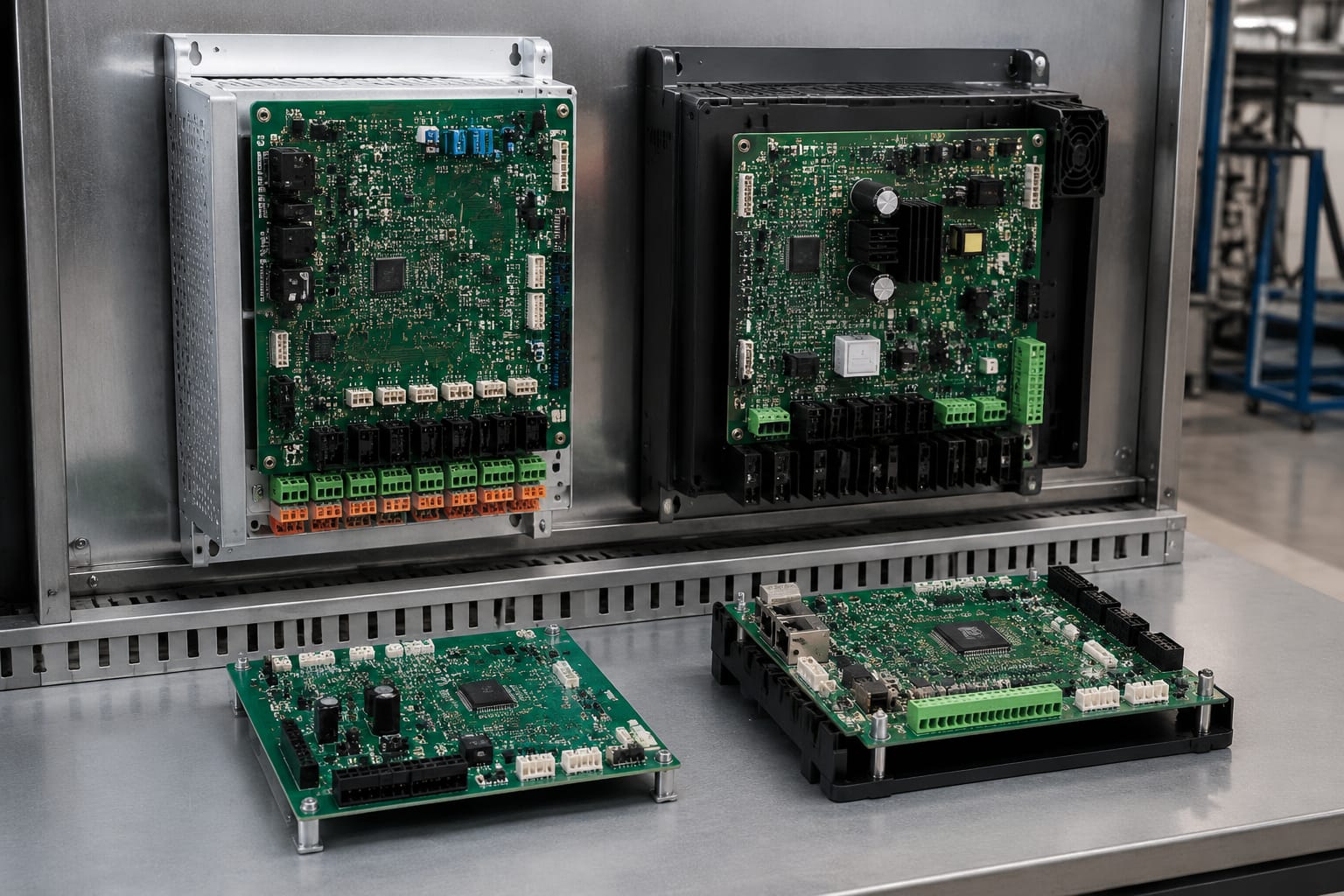
Start with the elevator installation, not the failed board. The same loose PCB may appear in several product searches, but the lift details narrow the possible matches quickly.
Collect the following information before requesting a quotation or confirming an order:
| Information to record | Why it matters |
|---|---|
| Lift brand and equipment family | Establishes the correct product ecosystem and prevents cross-brand assumptions |
| Controller model and cabinet label | Identifies the control system that uses the board |
| Lift type and application | Helps distinguish passenger, service, freight, or other installation requirements |
| Installation or modernisation history | Reveals whether original equipment has been replaced or combined with later components |
| Component function | Separates controller, drive, door, power, car communication, and safety-related boards |
| Clear photos of both sides | Shows labels, connectors, terminals, damage, and board revision details |
| Wiring and connector positions | Helps verify the physical interface before purchase |
| Existing board part number | Provides the strongest starting point for an exact match |
The controller cabinet is often the best place to begin. Record its manufacturer identification, controller designation, serial or equipment reference where available, and the labels of connected boards. Do not rely solely on the lift car branding. A car interior can be refurbished while the controller remains from an earlier system, or a controller can be changed during modernisation while other equipment remains in place.
When the original board is still available, photograph it before removing labels, stickers, or protective covers. Include full-board images plus close-ups of:
- Manufacturer name and logo
- Printed circuit board code
- Part number and barcode label
- Revision, issue, or version marking
- Software, EPROM, or firmware labels where fitted
- Input and output voltage markings
- Connector identifiers
- Terminal labels
- Any handwritten service markings, with caution
Handwritten labels can help trace local maintenance history, but they are not authoritative identification. Printed manufacturer codes and board markings should take priority.
Compare Board Names and Functions
Board names are not standardised across every KONE and Sigma system. A supplier listing may use a functional description, while the equipment label uses an internal code. Compare both the stated function and the specific interface of the board.
Controller and main boards
A controller or main board coordinates lift operation and may communicate with drives, door equipment, landing devices, car controls, and safety circuits. It is not a generic processor board. Its compatibility depends on the controller architecture and associated software.
Before sourcing one, confirm:
- Exact controller model
- Board part number and revision
- Number and type of plug-in connectors
- Communication ports and labelled terminals
- Firmware or memory-device information, if applicable
- Whether configuration data must be transferred or commissioned
A replacement main board can require configuration or parameter restoration. Do not assume that installing the board alone will return the lift to service.
Drive and inverter-related boards
Drive boards control or support the traction machine drive. They may be power boards, control boards, interface boards, gate driver boards, or communication modules within a drive assembly. Their names can be especially misleading because “drive board” covers several different functions.
Confirm the drive manufacturer and model, the assembly reference, and the exact board position within the drive. Also document the incoming supply specification and motor-side arrangement. A board from a different drive version can cause faults or equipment damage even when its shape appears similar.
Communication boards
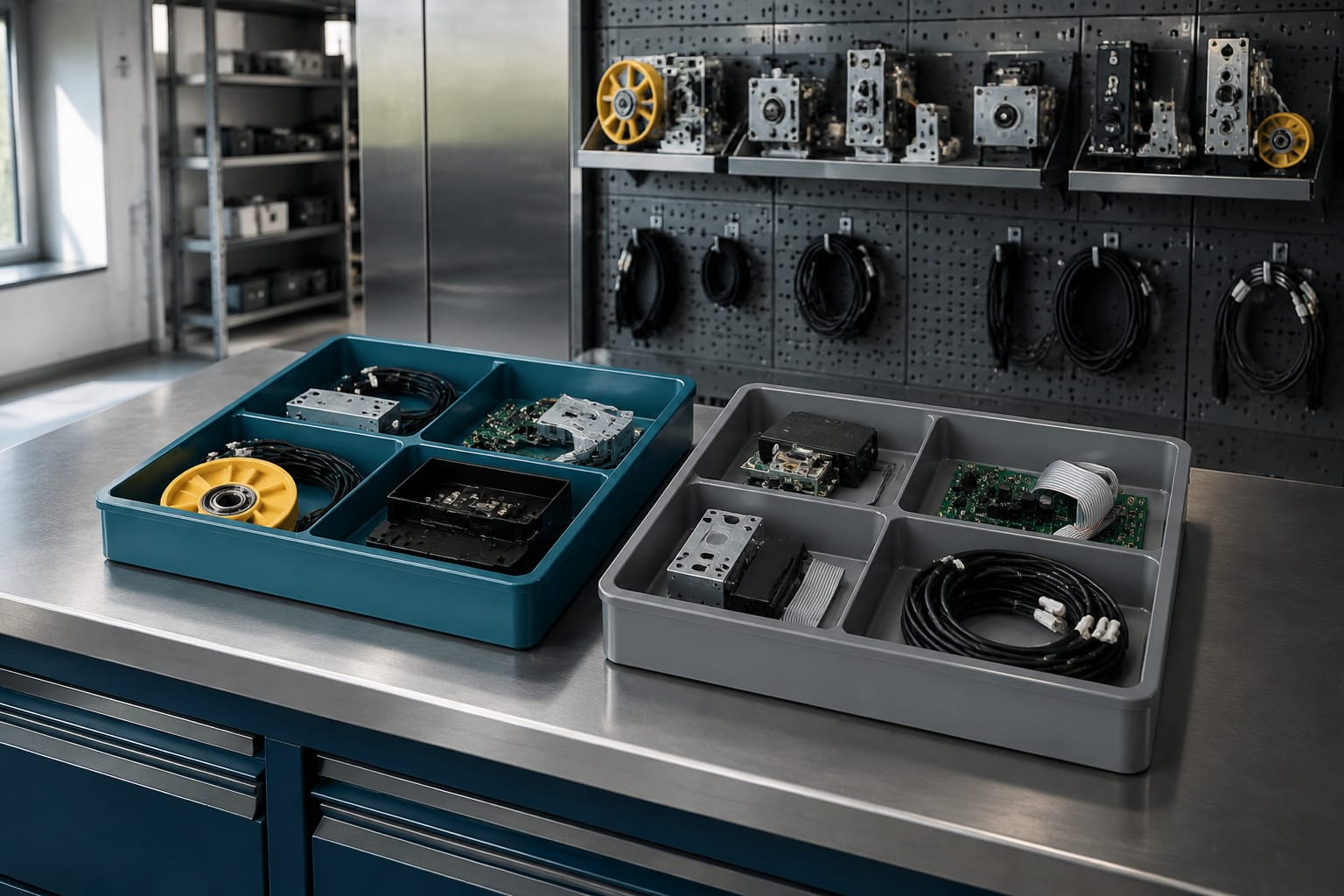
Communication boards link devices across the elevator system, such as the car, controller, landing equipment, or drive. They must match the expected protocol and hardware interface, not merely the cable plug.
For Sigma equipment, a [Sigma car communication board](/products/car-communication-board-sigma-elevator-parts/) should be evaluated against the installed controller and car network details. Check the board code, connector arrangement, bus labels, and revision before treating it as a replacement candidate.
Power supply and power boards
Power boards may distribute supply voltage, provide regulated outputs, protect circuits, or support a larger assembly. A board marked as a power board is not automatically suitable for another cabinet or drive.
When reviewing a [Sigma elevator power board](/products/power-board-sigma-elevator-parts-lift-accessories-2/), compare the rated supply, output markings, fuse arrangement, terminals, connectors, and the equipment assembly in which it is installed. A different voltage or output configuration is a stop sign, not a minor variation.
Door, car, and landing interface boards
These boards can have highly specific connections to door operators, car operating panels, indicators, push buttons, or landing fixtures. Check the connected equipment model and all plug positions. Similar faceplates or terminal labelling may conceal a different communication method or supply requirement.
Record Labels, Codes, and Revisions
A complete label record is more valuable than a short description such as “KONE Sigma PCB.” It allows the supplier and the buyer to compare actual identifiers instead of making an assumption from appearance.
Use a simple sourcing record for every board:
| Record field | Example of what to capture |
|---|---|
| Brand shown on equipment | KONE, Sigma, or another equipment maker |
| Board description | Main board, driver board, communication board, power board |
| Full printed part number | Include all letters, numbers, spaces, and suffixes |
| Revision or version | Rev, Ver, Issue, or other revision field |
| Board code | PCB number printed directly on the circuit board |
| Device or cabinet model | Controller, drive, or car system model |
| Electrical ratings | AC/DC voltage, frequency, current, and output markings |
| Connector references | Labels such as CN, X, J, P, or terminal designations |
| Condition | New, used, repaired, untested, or removed from service, as applicable |
| Photo reference | Link or file name for clear images of labels and connectors |
Do not remove suffixes when submitting a part number. A suffix can denote a revision, regional variation, connector configuration, component update, or programmed version. Likewise, distinguish a board code from an assembly part number. The PCB may carry one number while the complete service spare part has another.
If the old board has a label that conflicts with the printed circuit code, retain both. The difference may indicate a board assembled for a particular product or an update issued after the PCB design was released.
Avoid matching from online photos alone. Listing photos can show a representative image, a different revision, or a board without the precise label details required for a safe decision.
Check Voltage, Connectors, and Protocols
A proper KONE Sigma compatibility check covers electrical, physical, and communication requirements. Passing only one check is not enough.
Electrical compatibility
Verify all relevant ratings shown on the board, cabinet, and related equipment:
- Input supply voltage and whether it is AC or DC
- Voltage range, frequency, and phase where stated
- Output voltage and current ratings
- Fuse specifications and protective components
- Earthing and terminal requirements
- Drive or motor interface requirements for drive-related boards
Never infer a board's electrical suitability from its connector size or terminal layout. Electrical differences may not be visible from the front of the board.
Physical compatibility
Confirm the board can be installed in the intended location without modifying the equipment:
- Board dimensions and mounting-hole positions
- Connector count, type, keying, and orientation
- Terminal block arrangement
- Heat sink, shielding, or enclosure requirements
- Required daughterboards, jumpers, or removable modules
- Cable lengths and routing constraints
Forcing a plug into a similar connector can bend pins, damage the header, or connect the wrong signals. Connector keying is a useful safeguard, but it should not replace a documented match.
Communication and software compatibility
Networked elevator systems may depend on a specific protocol, address arrangement, baud setting, parameter set, firmware version, or controller software release. This is particularly important for car communication boards, controller boards, and drive interfaces.
Ask these practical questions:
- Does the replacement support the same communication bus as the installed system?
- Does it use the same connector pinout and terminal assignment?
- Is its revision accepted by the existing controller or drive?
- Does it need programming, addressing, or parameter loading?
- Can a qualified technician verify operation after installation?
Where documentation is unavailable, treat compatibility as unconfirmed. The responsible maintenance team should assess the equipment and follow appropriate site safety procedures before any replacement is energised.
Source Sigma Drive and Communication Boards
Sigma drive and communication boards require careful function matching because the terms used in supply enquiries can be broad. Separate the request into two parts: identify the board exactly, then identify the assembly and system it serves.
For a Sigma drive-related board, provide:
- Complete drive model and its nameplate details
- Full board part number and revision
- Photos of component side, solder side, connectors, and labels
- The board's location within the drive or controller
- Fault symptoms, if known, without treating them as a diagnosis
- Input and output markings
- Whether the old board is available for comparison
A [Sigma elevator driver board](/products/elevator-driver-board-sigma-elevator-parts-lift-accessories/) may refer to a board with a specific role in a particular assembly. Confirm its listed code and technical interface against the installed drive rather than ordering based on the generic term “driver board.”
For a Sigma communication board, add photos of the cable plugs and their labels. Note whether the board is installed in the car, controller, landing system, or another enclosure. The same category of board can support different network arrangements, so location and connected devices provide important context.
Do not substitute a communication board simply to test a suspected fault unless its match has been verified. An unresolved wiring, power supply, configuration, or controller issue can produce symptoms that resemble a failed communication PCB.
Source KONE-Specific Components
KONE-specific parts should be requested with the same discipline: use the exact component identifiers and the installed equipment details. Do not use “KONE Sigma” as a universal search term when the board label, controller documentation, or cabinet identification clearly points to one family.
For a KONE component, collect:
- KONE controller or equipment model
- Exact KONE spare part number
- Board revision and all label suffixes
- Installed location and board function
- Photos of labels, connectors, terminals, and mounting points
- Relevant electrical markings
- Information on any preceding modernisation or repair
KONE equipment may have product-specific part-number formats, system naming, and configuration requirements. If the label has worn off, look for the PCB code, connector labels, cabinet wiring diagram, and documentation retained by the building or maintenance team. It is better to state that an identifier is missing than to fill the gap with a guessed number.
For obsolete or difficult-to-identify components, distinguish between three questions:
- Is the offered board the same part number and revision?
- Is it an approved or technically supported replacement for the original part?
- Does the site require configuration, rewiring, or a broader modernisation solution?
These are different commercial and technical decisions. A board that is physically available is not necessarily a drop-in replacement.
Final Compatibility Checklist
Use this checklist before approving a KONE or Sigma elevator parts purchase:
- Confirm the lift brand, controller, drive, and relevant equipment family.
- Match the full component part number, including suffixes.
- Record the board revision, version, and printed PCB code.
- Confirm the board's actual function in the system.
- Compare supply voltage, output ratings, and terminal markings.
- Compare connector types, pin arrangement, keying, and orientation.
- Verify communication protocol, network location, and addressing requirements.
- Check whether firmware, parameters, or commissioning are required.
- Confirm mounting dimensions and required associated modules.
- Review photos of the offered item against the removed or installed board.
- Clarify the condition and scope of the supplied item.
- Have a qualified elevator technician assess installation and operational checks.
The final check should be evidence-based. A board is ready to source only when the available records support the match, or when the maintenance team has identified the additional work required to make a documented replacement suitable.
Kelevator supplies multi-brand elevator spare parts for B2B importers, distributors, maintenance contractors, modernisation companies, and OEM buyers. For a precise sourcing enquiry, submit the complete label record, equipment details, and clear board photos rather than only a broad KONE Sigma part description.