
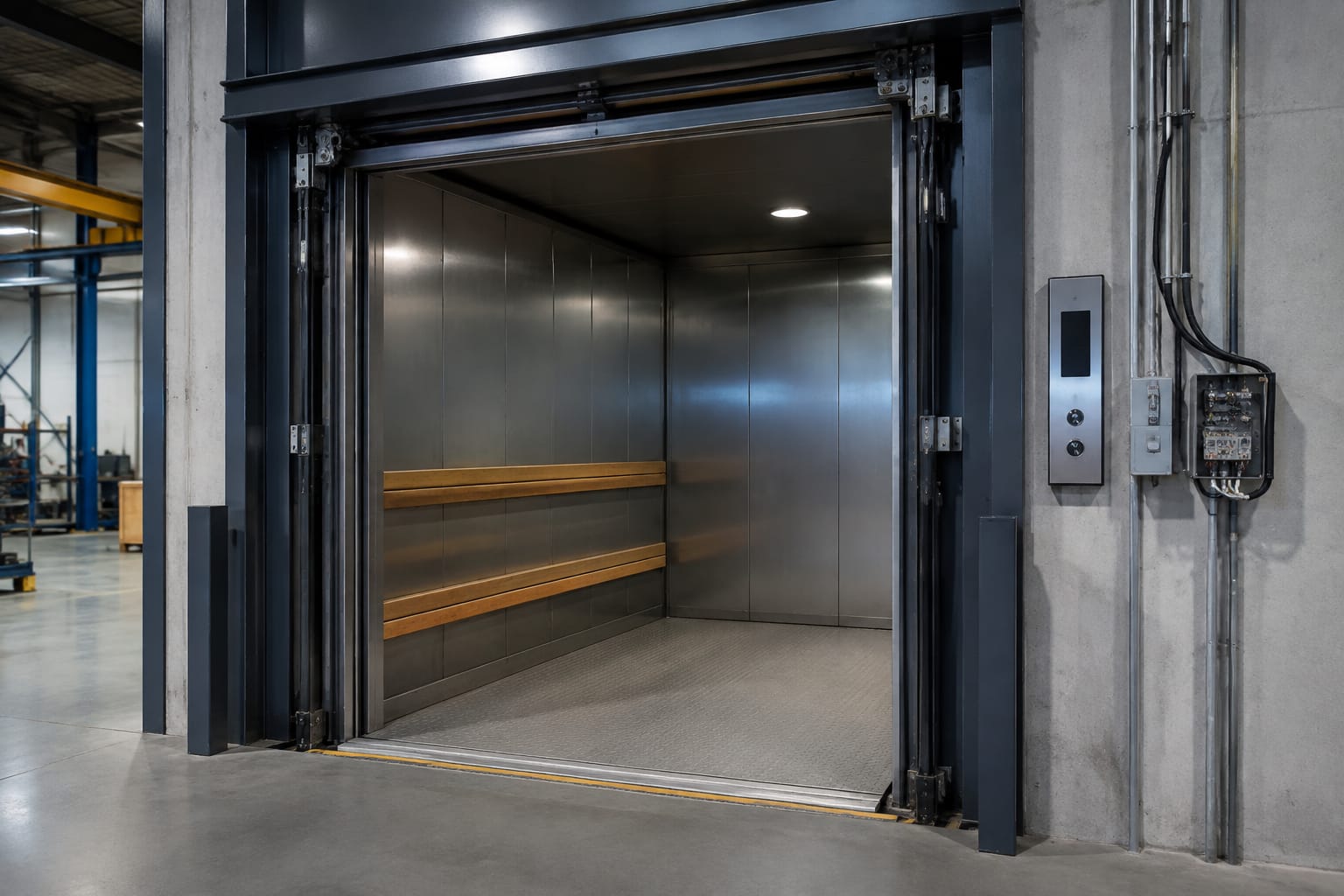
Freight elevator parts must be chosen for the working conditions around the lift, not simply because they look similar to an existing component. Repeated pallet, trolley and goods movement places high stress on landing doors, locks, rollers, guides, contacts and control devices. A correct replacement should match the original part's mechanical arrangement, electrical ratings and safety function.
For Philippine maintenance contractors and sourcing teams, the practical starting point is to identify the lift brand or controller, exact landing-door arrangement, part markings, measurements and failure symptoms. This avoids ordering a component that fits physically but does not operate safely or reliably with the freight elevator system.
How freight elevator duty changes part selection
Freight lifts typically experience impacts, vibration and frequent door cycles from deliveries, warehouse movements and industrial operations. Their components need to cope with more than passenger traffic. The door system is especially exposed when goods are moved close to the opening or when carts strike the sill, panels or landing entrance.
Part selection should account for the actual application:
- Load movement method: Hand trolleys, pallet jacks, roll cages and forklifts create different impact risks.
- Door configuration: Centre-opening, side-opening, bi-parting and vertical doors use different mechanical arrangements.
- Opening size: Wide or tall entrances may use heavier panels, tracks, hangers and guides.
- Environmental conditions: Dust, humidity, corrosive vapours and washdown areas affect contacts, rollers, fasteners and enclosures.
- Traffic pattern: A lift used heavily during delivery windows may wear door components faster than one with occasional goods traffic.
- Existing lift design: Retrofitting a stronger-looking part is not automatically safe if its geometry, electrical interface or operating force differs from the original.
A freight elevator's rated capacity alone does not identify the correct spare part. Door hardware is determined mainly by the entrance system, while electrical components depend on the control circuit and safety chain design. Always treat the existing component's part number and dimensions as the primary reference.
Freight-door panels and tracks
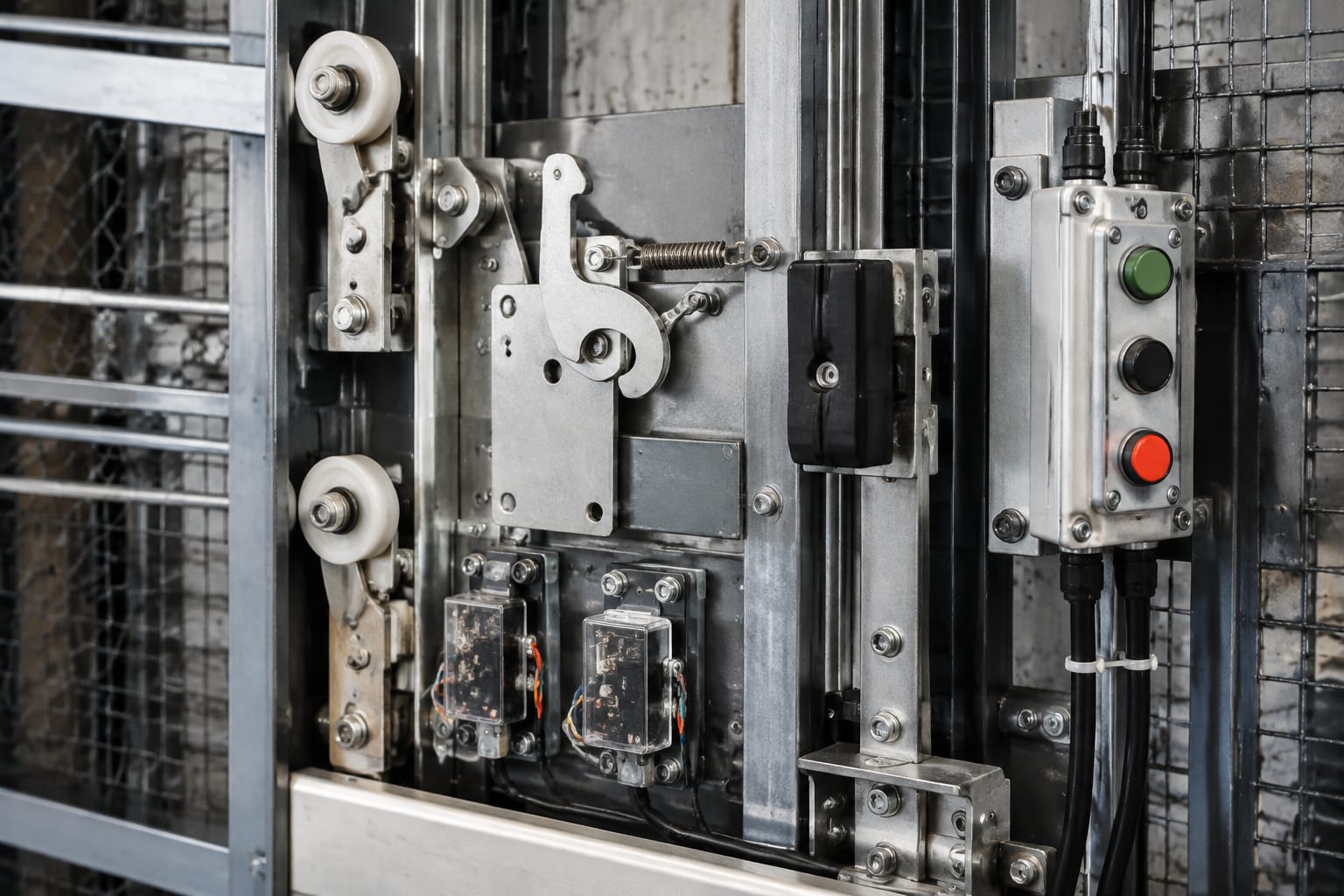
Landing-door panels form the barrier at each floor when the car is elsewhere. In freight installations, they may be damaged by direct impact, bent out of alignment or affected by loosened reinforcements and mounting hardware. Damage can prevent the door from closing fully, which in turn can stop the lift through the safety circuit.
Door-panel checks before replacement
Inspect the panel before assuming it must be replaced. Some faults originate in the track, hanger assembly or guide rather than in the panel itself. Check for:
- visible dents, bowing, cracks or damaged edges;
- misaligned panel gaps;
- rubbing marks at the sill, jamb or adjacent panel;
- loose stiffeners, hangers or coupling components;
- corrosion around panel seams and fixings;
- changes in the door's movement after a trolley or pallet impact.
A panel needs correct height, width, thickness, opening direction, skin construction and fixing positions. Even small differences in hanger hole centres or lock engagement position can cause persistent door faults.
Tracks, hangers and sills
The top track carries the moving door's weight through its hanger rollers. A bent, contaminated or worn track can make the door drag, rattle or fail to close consistently. The sill at floor level guides the lower edge of the panel and can collect debris from loading activities.
When assessing track-related parts, confirm:
| Component | Why it matters in freight service | What to verify |
|---|---|---|
| Top track | Supports door movement and alignment | Profile, length, mounting holes, wear condition |
| Hanger assembly | Carries panel weight and sets panel position | Roller type, adjustment range, panel fixing centres |
| Sill | Keeps lower panel travel aligned | Groove profile, length, damage and debris build-up |
| Door panel | Maintains the landing entrance barrier | Dimensions, handing, lock position and reinforcement |
| Coupling parts | Connect car-door operation to landing doors | Engagement geometry and matching door arrangement |
Do not attempt to straighten severely bent tracks or door panels without assessing whether their original alignment and strength can be restored. A temporary adjustment may allow operation but can transfer wear to locks, rollers and guides.
Door locks, hooks, and contacts
Landing-door locks are safety-critical freight elevator parts. They prevent a landing door from being opened when the car is not correctly positioned at that floor. The lock arrangement commonly combines mechanical retention, such as a hook or latch, with an electrical contact that confirms the door is closed and locked.
A door that appears shut is not necessarily locked. Likewise, an electrical signal alone does not prove that the mechanical interlock is properly engaged. Both functions must operate as intended.
For compatible replacement options, refer to Kelevator's [freight elevator door lock contact switch parts](/products/freight-elevator-door-lock-contact-switch-lift-parts-elevator-accessories/) only after confirming the specific lock layout and electrical requirements of the installation.
Mechanical locks and hooks
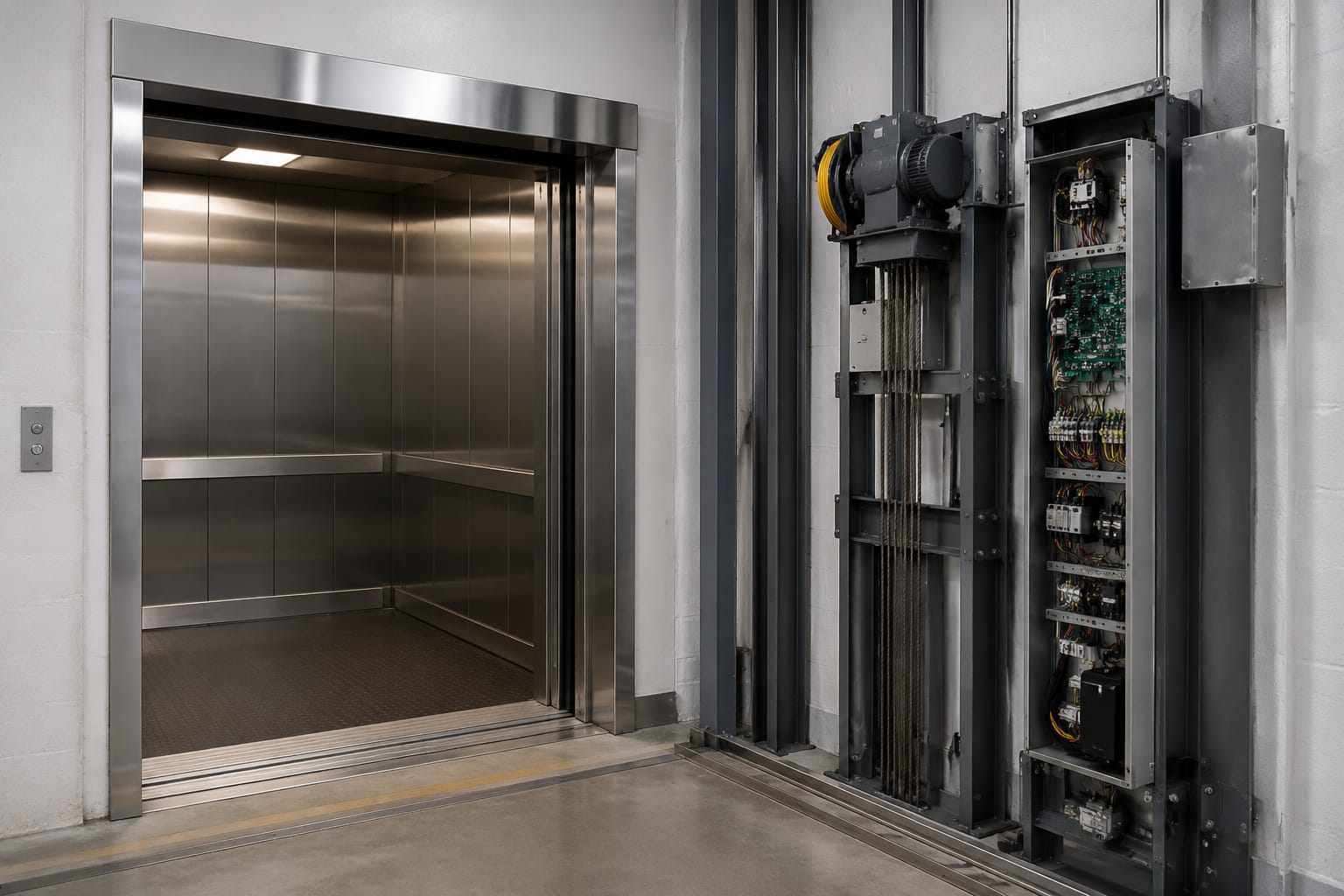
The hook, latch or locking lever must engage the mating part at the proper position as the door closes. Wear at the contact surfaces may create excessive play, incomplete engagement or intermittent operation. A distorted door panel or misaligned hanger can make a sound lock appear faulty.
Before selecting a replacement, record:
- lock body and mounting-hole dimensions;
- hook shape, travel and engagement direction;
- location relative to the door edge and jamb;
- release mechanism and keying arrangement where applicable;
- mating roller, keeper or cam dimensions;
- handedness or door-opening orientation;
- adjustment provision and original setting range.
Use a matching lock assembly rather than mixing hooks, bases and contacts from unrelated designs. Interlock components are designed as functional sets; a near match may create unsafe engagement or unreliable circuit operation.
A [hall-door lock hook for lift spare parts](/products/hall-door-lock-hook-lift-accessories-elevator-spare-parts/) is relevant when the fault is confirmed in the mechanical locking element, but the purchase decision should still be based on exact geometry and installation arrangement.
Contacts and safety circuits
Door contacts make or break part of the lift's safety circuit. A damaged contact, weak spring, contaminated contact surface or loose terminal may cause intermittent faults. However, replacing a contact without finding the reason for misalignment can result in repeated failure.
Confirm the following with the old unit, wiring diagram and controller documentation:
- contact type and normal operating state;
- terminal count and terminal identification;
- voltage and current ratings required by the circuit;
- mounting method and actuator movement;
- contact travel and required mechanical clearance;
- wire entry direction and enclosure requirements;
- compatibility with the installed lock body.
Do not bridge, bypass or permanently defeat a landing-door contact to keep a freight lift running. This removes a safety function and can conceal a mechanical fault that requires correction.
A [triangular hall-door lock cylinder](/products/hall-door-triangular-lock-cylinder-lift-accessories-elevator-spare-parts/) should also be selected by matching the lock housing, cylinder dimensions and access arrangement. Cylinder substitution is not a solution for a worn or misaligned interlock mechanism.
Rollers, guides, and closing components
Rollers and guides keep freight doors travelling in the intended path. They may be small components, but their condition affects panel alignment, locking reliability and the effort required from the operator or door equipment.
Hanger rollers and bottom guides
Hanger rollers run along the top track. Flat spots, damaged bearings, hardened running surfaces and poor adjustment can lead to noisy movement, vibration or a door that does not settle at its closed position. Bottom guides run within or against the sill and help prevent the panel from swinging.
Replace rollers or guides when there is excessive play, cracking, seized rotation, damaged bearings or wear that cannot be corrected through the specified adjustment. Check the companion components at the same time. New rollers on a damaged track, or a new guide in a worn sill, will not resolve the root cause.
Important identification details include roller diameter, width, bore size, bearing type, axle or stud configuration, guide profile and mounting-centre measurements.
Closers, springs and dampers
Some landing doors use closing weights, springs, cables, dampers or other closing mechanisms. These components should move the door to its fully closed and lockable position without excessive speed or impact.
Common signs of closing-component issues include:
- door stops short of lock engagement;
- door closes too quickly and rebounds;
- door needs manual force to complete travel;
- cable or spring hardware shows corrosion, fraying or deformation;
- closing force differs substantially between similar floors.
Do not increase closing force simply to overcome a dragging panel. First inspect the track, rollers, sill, guides and alignment. Excessive force may worsen wear and create an unsafe closing action.
Controls, buttons, and limit switches
Freight lift controls range from car operating panels and landing call buttons to inspection controls, overload-related interfaces and door-zone or travel limit switches. The correct part depends on the controller architecture and intended circuit function.
Buttons and indicators are not interchangeable merely because their face size is similar. A replacement may differ in voltage, lamp type, contact block arrangement, connector style, illumination colour, ingress protection or panel cut-out dimensions.
Buttons and control stations
For replacement push buttons and car operating panel devices, confirm:
- button diameter and mounting-hole size;
- legend, symbol or floor designation;
- momentary or maintained operation;
- contact configuration;
- illumination type and supply requirements;
- terminal or plug connection;
- panel thickness and rear clearance;
- environmental exposure and resistance to physical damage.
Where an older freight elevator has been modernised, the button may be newer than the lift's original door equipment. Identify the installed controller and panel assembly rather than assuming the lift brand determines every electrical spare part.
Limit switches and position devices
Limit switches are used for functions such as travel limits, door position confirmation and actuator-related positioning. They must have the correct actuator style, switching arrangement and mechanical operating point.
A switch can fail electrically, but it can also be activated incorrectly because the cam, bracket or door component has shifted. Measure the actuator position and inspect the mounting bracket before replacing the switch. After replacement, function testing should confirm the device changes state at the intended point and does not overtravel.
Only competent personnel should adjust lift safety switches, controller settings or terminal wiring. Electrical isolation, correct testing procedures and the equipment manufacturer's documentation remain essential.
Wear caused by loading operations
Loading operations can accelerate wear in ways that normal passenger use does not. The main issue is often not the weight inside the car but the contact between handling equipment and the entrance system.
Pallet jacks and trolleys can strike the sill, door edge or jamb. Loads extending beyond the trolley can catch a panel or lock area. Repeated debris transfer from wheels can build up in sill grooves. These conditions can affect several parts at once.
| Loading-related condition | Likely effect | Parts to inspect |
|---|---|---|
| Trolley impacts at entrance | Misalignment or dents | Panels, sill, guides, lock engagement |
| Dirt and packing debris in sill | Dragging or poor door travel | Sill channels, bottom guides, panel edge |
| Repeated slamming | Loose fittings and lock wear | Hangers, tracks, hooks, contacts |
| Uneven landing floor | Trolley contact at threshold | Sill, threshold edge, lower panel guides |
| Humid or corrosive work area | Corrosion and intermittent electrical faults | Contacts, terminals, springs, fasteners |
Operational controls matter as much as replacement parts. Keep the landing entrance clear, remove debris before it compacts in the sill, and investigate every significant impact. Continuing operation after an impact can turn a minor alignment issue into recurring lock and contact failures.
Information needed for replacement
The best replacement request contains enough information for a supplier or maintenance team to verify compatibility. “Freight elevator door lock” or “elevator roller” alone is usually insufficient, especially for older equipment or mixed-brand modernisations.
Prepare this information before sourcing freight elevator parts:
- Clear photos: Show the complete installed part, close-up markings, mounting face, terminals and mating components. Include a scale where useful.
- Part markings: Record every number, letter, logo and rating exactly as shown.
- Measurements: Provide overall dimensions, hole centres, shaft or roller sizes, and relevant clearances.
- Lift details: Identify the lift manufacturer where known, controller brand, installation type and whether the part is at a landing or in the car.
- Door details: State opening type, number of panels, door handing, landing position and approximate entrance size.
- Electrical details: Record voltage, current ratings, contact layout, terminal labels and connector type.
- Fault description: Explain whether the problem is mechanical wear, intermittent operation, physical impact, corrosion or a confirmed electrical failure.
- Quantity and condition: Note how many units are needed and whether other floors show similar wear.
Measurements should be taken from the old part after safe removal where necessary, not estimated from photographs. For a safety-critical component, retain the old item until the replacement has been verified as correct.
Inspection and maintenance planning
A planned inspection programme helps find entrance problems before they create lift downtime. The inspection interval should be set by the lift's traffic, environment, equipment documentation and applicable local requirements. A busy goods lift usually merits more frequent attention to its doors than a lightly used service lift.
A practical inspection scope includes:
- door-panel condition and free movement;
- top-track cleanliness, wear and secure mounting;
- hanger roller condition and adjustment;
- sill cleanliness and bottom-guide engagement;
- lock hook engagement and evidence of wear;
- contact condition, terminals and cable security;
- closing operation, including full closure and lock engagement;
- push buttons, indicators and control response;
- signs of impact, water ingress, corrosion or unauthorised modification.
Record findings by landing. A fault appearing only at one floor may point to local door alignment, sill damage or a specific interlock, while repeated symptoms at multiple landings may indicate a broader maintenance issue or unsuitable operating conditions.
Avoid treating repeated contact faults as a stock-consumption problem. Where the same part fails frequently, inspect the mechanical cause, electrical supply condition, environmental exposure and user handling practices. Replacing the affected component without correcting the cause can lead to another outage.
FAQ
Can a passenger lift door lock be used on a freight elevator?
Only when it is confirmed to be the correct compatible assembly for that exact entrance system and safety circuit. Similar appearance does not establish compatibility. Freight use may also require a more robust door arrangement because of the operating environment.
Should locks and contacts be replaced together?
Not always. Replace the parts that inspection identifies as worn or defective. However, because lock engagement and contact actuation are interdependent, inspect and test both whenever either component is serviced.
What is the most common cause of a freight landing door not closing properly?
Sill debris, damaged guides, worn rollers, bent panels and poor alignment are frequent causes. A faulty closer or lock can also contribute. Start with a mechanical inspection before changing electrical parts.
Which details are most important when ordering a door lock?
The existing part number, clear photographs, mounting dimensions, hook geometry, door handing, contact arrangement and electrical ratings are the most useful details. Include information about the lift controller and door configuration where available.
For routine replacement planning, create an entrance-parts record for each freight lift and update it after every repair. Kelevator supplies multi-brand elevator spare parts for B2B importers, distributors, maintenance contractors and OEM buyers; provide complete identification details so the proposed part can be assessed against the installed equipment.