
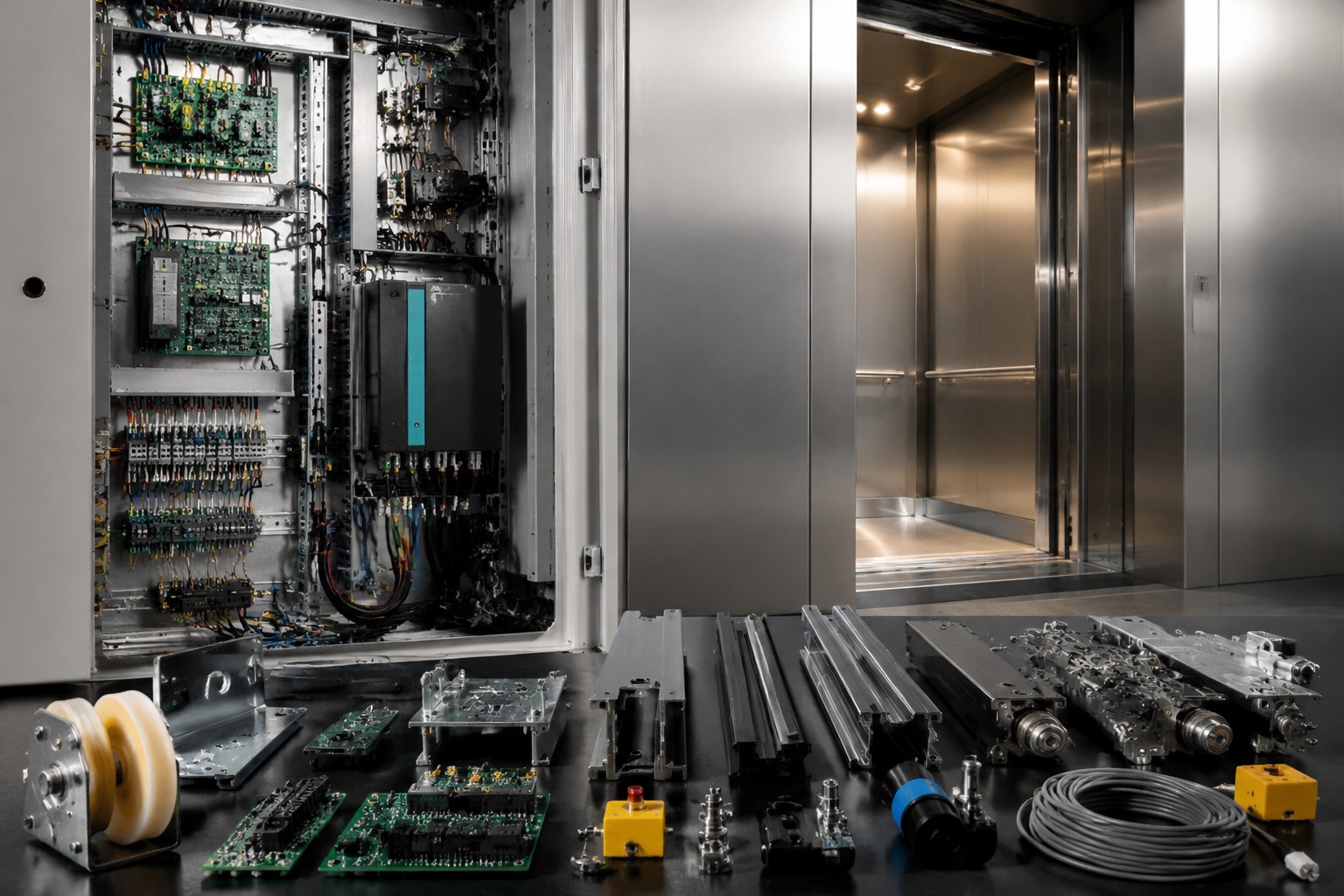
For building owners, property managers, maintenance contractors, and modernization teams in the Philippines, elevator spare parts procurement is not just a buying task. It is a safety, uptime, and tenant satisfaction decision. The fastest way to avoid wrong orders and repeated shutdowns is to begin with the elevator brand and exact model, focus first on high-failure parts, confirm part numbers with photos and measurements, review testing and packing standards, keep emergency stock for critical systems, compare supplier responsiveness and delivery, and then build a preventive replacement schedule. This practical approach helps reduce call-backs, shorten repair time, and control long-term maintenance costs.
In cities such as Metro Manila, Cebu, Davao, Clark, Iloilo, and Bacolod, many buildings rely on mixed elevator portfolios. A single property may have older Japanese units, newer modernization packages, and different door systems across towers. That makes spare parts sourcing more complex than ordering by appearance alone. A guide shoe, sensor, contactor, encoder, inverter board, or door lock that looks similar may still be incompatible because of dimensions, voltage, software revision, connector type, or mounting position. Reliable procurement depends on accurate matching and disciplined supplier evaluation.
The Philippine market also has practical logistics realities. Imported parts commonly move through Manila and Batangas ports, while urgent requirements for Visayas and Mindanao may need air freight to Cebu or Davao. Lead times, customs delays, packaging quality, and local delivery coordination all matter when a building has passengers waiting and tenants complaining. That is why a good procurement checklist should combine technical verification with response time, stock planning, and service support.
Below is a quick view of the most common lift spare part groups purchased by building owners and service teams.
| Category | Typical Parts | Main Failure Risk | Operational Impact | Usual Buying Priority | Notes for Philippine Projects |
|---|---|---|---|---|---|
| Door system | Door locks, rollers, hangers, operator boards, belts, sensors | High cycle wear, misalignment, dust | Frequent shutdowns and passenger entrapment alarms | Very high | Critical for offices, malls, hospitals, condominiums |
| Control and drive | Control boards, inverter parts, power supplies, relays, capacitors | Heat, power fluctuation, aging electronics | Long downtime if not matched correctly | Very high | Voltage stability and humidity should be considered |
| Safety devices | Light curtains, door locks, sensors, interlocks | Impact damage, contamination, wear | Safety circuit interruptions | Very high | Always request traceable testing records |
| Travel components | Guide shoes, linings, oil cups, rollers | Mechanical wear and lubrication issues | Noise, vibration, ride quality decline | High | Useful for preventive replacement programs |
| Hall and car fixtures | Buttons, COP panels, indicators, intercom parts | High touch use, vandalism, aging | Passenger complaints and partial service issues | Medium | Good candidates for emergency stock |
| Feedback and sensing | Encoders, weighing devices, limit switches, photo sensors | Calibration drift, cable damage, moisture | Leveling errors and control faults | High | Require exact matching of signals and dimensions |
This table shows why procurement should be risk-based rather than price-only. Door components, control electronics, and safety devices usually deserve first attention because they have the highest effect on uptime.
Begin with the elevator brand and exact model
The first rule in lift accessories procurement is simple: identify the brand, series, model, and if possible the serial or job number before asking for a quotation. In the Philippines, many buildings have elevators from Hitachi, Toshiba, KONE, Mitsubishi, and other global brands, but units may be installed across different years, with different revisions and modernization histories. Two elevators in the same tower can use different door operators or control boards because one unit was upgraded earlier than the other.
At minimum, collect the following before sending an inquiry: nameplate photo, controller label, old part number, clear photos of the front and back of the part, connector close-ups, dimensions, voltage, current rating, and application location. If the item is electronic, include software version or PCB revision when available. If the item is mechanical, include thickness, width, hole spacing, shaft diameter, and mounting orientation. This is especially important for components like guide shoes and linings, where a few millimeters can determine fit and wear performance.
For example, when replacing guide shoe liners, buyers should not order by appearance alone. A product such as the 130mm elevator guide boot lining rubber must be matched to the existing shoe design, rail size, and wear pattern. Similarly, if a control issue involves load weighing, a weighing device board for lift systems should be verified against the exact controller interface and signal requirements.
Buildings in Makati, Bonifacio Global City, Ortigas, and Quezon City often prioritize short downtime because passenger traffic is heavy. The better the identification data at the start, the less chance there is of wrong parts, repeated site visits, or freight waste. Good suppliers will ask for this information early because careful model matching is the basis of reliable sourcing.
| Information Needed | Why It Matters | Example | Where to Find It | Risk if Missing | Priority |
|---|---|---|---|---|---|
| Elevator brand | Determines platform family and compatibility path | Hitachi, Toshiba, KONE, Mitsubishi | Nameplate, maintenance records | Supplier may quote the wrong series | Critical |
| Model or series | Narrows correct part options | NPH, GPS, MRL series, modernization package | Controller label, original drawings | High risk of mismatch | Critical |
| Part number | Fastest path to exact identification | Board code, lock model, relay number | Old part sticker or printed marking | Longer quote time and uncertainty | Critical |
| Photos | Shows connectors, condition, and physical design | Front, back, side, plug details | On-site inspection | Hidden differences may be missed | Critical |
| Dimensions | Confirms mechanical fit | 130 mm liner, bolt spacing, shaft size | Manual measurement | Installation failure | High |
| Electrical data | Prevents rating mismatch | DC48V, 18A, 400V capacitor | Part label, drawings | Safety and performance issues | High |
The best procurement results come when building owners and maintenance firms standardize this data collection process. It makes every future inquiry faster and more accurate.
Focus first on parts with the highest failure rate
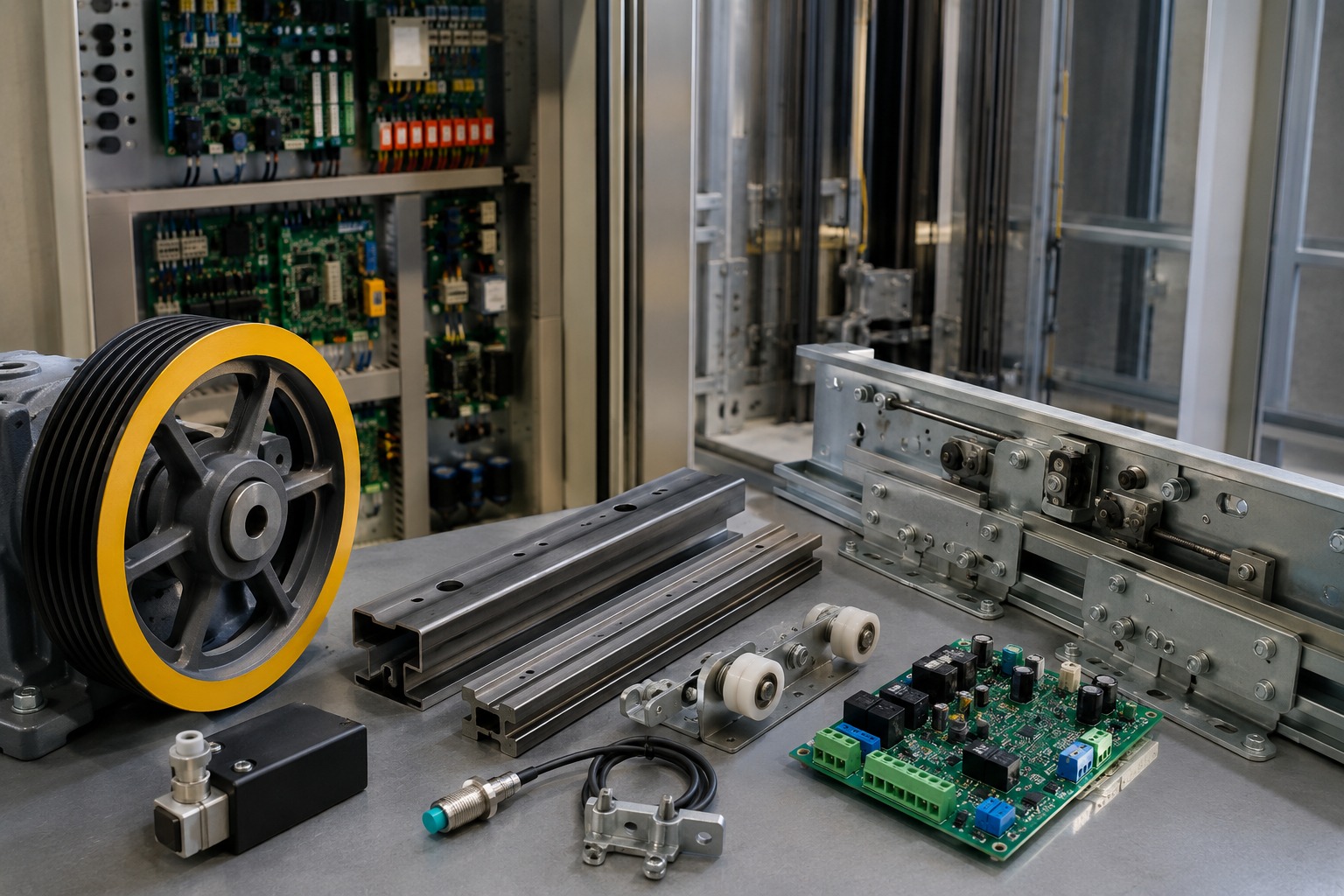
Not every item in an elevator should be purchased with the same urgency. To reduce downtime, prioritize the components that fail most often, wear the fastest, or stop the elevator immediately when they malfunction. In many Philippine buildings, the most common high-priority categories are door operator parts, door locks, light curtains, contactors, relays, power supplies, capacitors, guide shoe liners, sensors, buttons, and some control boards.
Door system parts are often the first area to review because elevator doors experience thousands of open-close cycles every week. Dust, humidity, vibration, and passenger impact all add stress. A worn roller or misaligned lock can trigger repeated faults. A failing light curtain can cause nuisance door reopening. An unstable operator board can stop service entirely.
Electrical components are another major focus. Contactors and capacitors are affected by heat and power conditions. If a project requires replacement of a DC contactor, the Fuji DC48V 18A elevator contactor type of part must be matched carefully to coil voltage, amperage, and mounting configuration. For drive-related maintenance, a 400V or 450V capacitor element for lift equipment should be checked for capacity, dimensions, and operating environment to avoid premature failure.
A useful procurement strategy is to classify parts into three groups: emergency shutdown parts, service-affecting parts, and cosmetic or convenience parts. Emergency shutdown parts include door locks, safety sensors, power supplies, certain boards, relays, and contactors. Service-affecting parts include buttons, indicators, intercoms, and some car operating panel items. Cosmetic parts include covers and trims. This helps buyers spend budget where uptime risk is highest.
| Part Type | Failure Frequency | Impact on Elevator Operation | Recommended Stock Level | Typical Warning Signs | Buying Priority |
|---|---|---|---|---|---|
| Door lock | High | Can stop the elevator immediately | 1 to 2 per critical site | Intermittent lock faults, door not closing | Very high |
| Light curtain | High | Frequent door reopening or safety fault | 1 set for busy buildings | False obstruction signals | Very high |
| Door operator board | Medium to high | Long downtime if unavailable | Shared emergency stock | Erratic door movement, board alarm | Very high |
| Contactor or relay | Medium to high | Control interruption and repeated trips | 2 to 4 common ratings | Chattering, overheating, burnt contacts | High |
| Guide shoe lining | Medium | Ride noise and wear increase | Periodic stock | Vibration, scraping sound | High |
| Buttons and COP items | Medium | Partial service complaints | Several units for uniform buildings | Unresponsive call registration | Medium |
The explanation is straightforward: if a part can shut down a lift or create a safety circuit issue, it belongs near the top of the buying list. High-traffic towers in Manila and Cebu especially benefit from this prioritization because each hour of downtime affects many users.
Verify part numbers, photos, and dimensions carefully
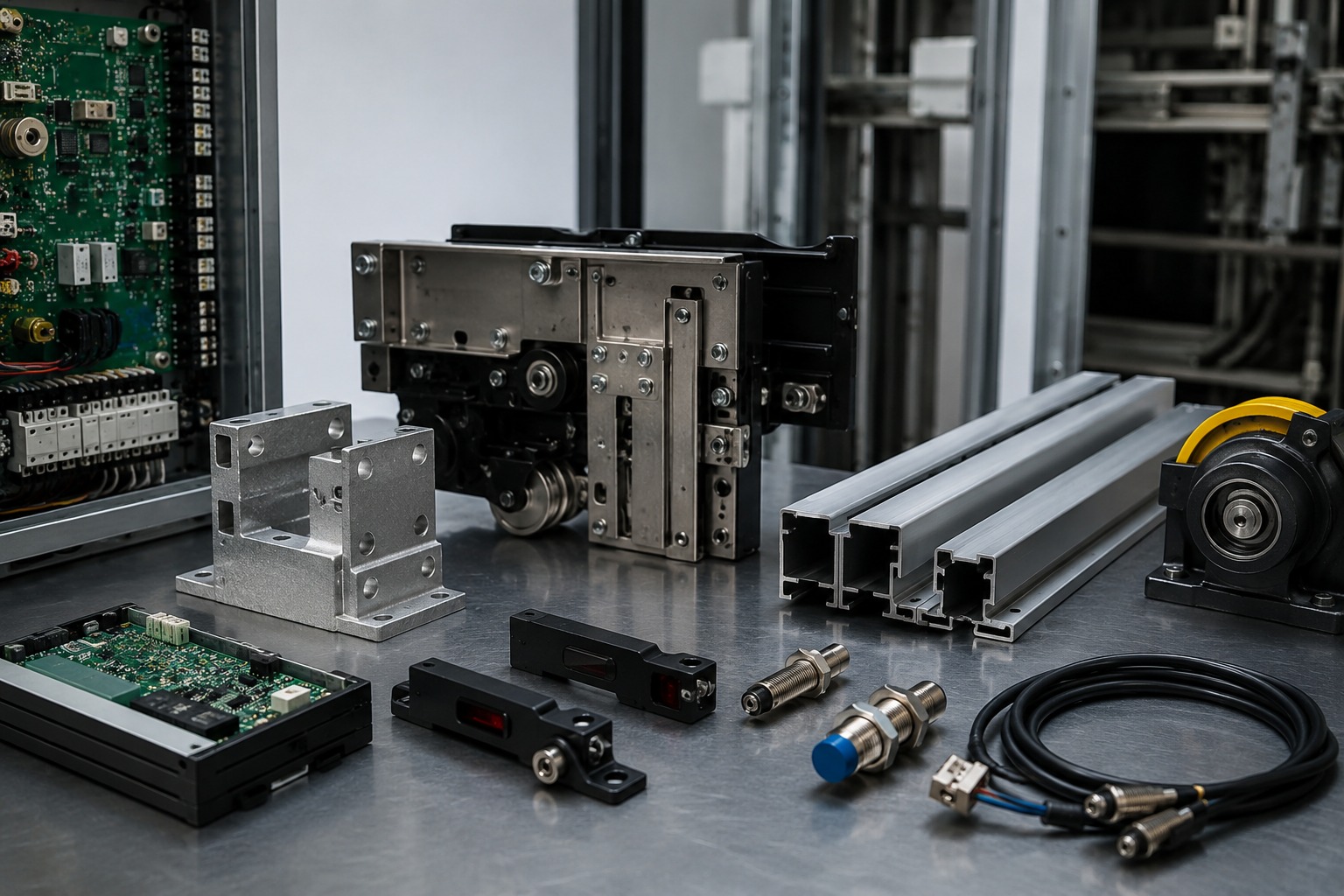
A common reason for delayed repairs is ordering by description only. Terms like “door lock,” “sensor,” “encoder,” or “power supply” are too broad. A disciplined verification process should compare the old part number, physical appearance, connector layout, dimensions, and technical rating with the proposed replacement. Ask the supplier to mark the matched item on annotated photos or drawings. This is one of the simplest ways to avoid wrong shipments.
For electronics, request confirmation on revision level, firmware if relevant, terminal arrangement, and whether the part is original specification, equivalent replacement, or compatible substitute. For mechanical parts, ask for width, thickness, material, mounting hole distance, and side orientation. For sensors and encoders, signal type, pulse count, cable length, and shaft specifications are equally important.
Buildings with older elevators often face a special challenge: the original part may no longer be in regular production. In such cases, compatibility assessment becomes more important than catalog listing. A professional supplier should explain what is exact, what is substitute, and what additional adjustment may be needed during installation.
| Check Item | Mechanical Parts | Electrical Parts | Electronic Boards | Proof to Request | Pass/Fail Rule |
|---|---|---|---|---|---|
| Part number match | Important | Critical | Critical | Label photo, quotation note | Must match or approved equivalent |
| Overall dimensions | Critical | Medium | High | Dimension drawing, measured photo | Must fit without forced modification |
| Connector or terminal layout | Low | High | Critical | Front/back photos | Must align with site wiring |
| Voltage/current rating | Low | Critical | Critical | Nameplate and data sheet | Must meet exact specification |
| Mounting orientation | High | Medium | High | Side photos, hole spacing | No drilling changes unless approved |
| Compatibility statement | Medium | High | Critical | Supplier written confirmation | Required for non-identical items |
This checklist is especially valuable when buying remotely for projects outside Metro Manila, where return cycles can waste several days. If the site is in Cagayan de Oro, General Santos, or Dumaguete, every incorrect shipment can stretch downtime and increase freight cost.
Ask for testing standards and protective packing
Quality is not only about whether a part works in the factory. It is also about whether it arrives in the Philippines in stable condition and can survive storage before installation. Buyers should ask what testing has been completed, what quality inspection points are used, and how the parts are packed for transport. This matters for both imported shipments and domestic redistribution.
For electronic boards, request functional inspection, visual inspection, anti-static protection, and padding against vibration. For relays, contactors, sensors, and power modules, ask whether terminal integrity and label readability are checked. For mechanical parts, ask about dimensional inspection, surface finish, material consistency, and moisture protection. If goods will pass through humid port environments or inland delivery to provincial sites, robust packing becomes even more important.
In professional sourcing, careful model matching should be supported by stable quality inspection and protective packaging. This combination lowers the risk of damage, handling errors, and site rejection. It is particularly useful for high-value electronics sent to hotels, hospitals, BPO towers, and mixed-use buildings where downtime has direct commercial impact.
| Question Area | What to Ask | Why It Matters | Good Supplier Answer | Warning Sign | Priority |
|---|---|---|---|---|---|
| Functional test | Was the part tested before shipment? | Reduces dead-on-arrival risk | Recorded inspection before packing | No clear test process | High |
| Visual inspection | Are labels, terminals, and casing checked? | Prevents installation issues | Checklist with photos available | Only verbal assurance | High |
| Dimensions check | Were critical measurements verified? | Important for fit | Measured values shared | No measurement proof | High |
| Anti-static packing | How are boards and sensitive electronics packed? | Protects PCBs during shipping | Anti-static bag and cushioned box | Loose packing | High |
| Moisture protection | Is there sealing for humid transit conditions? | Important for sea freight and storage | Sealed bag with desiccant | Open carton only | Medium |
| Outer packaging strength | Can the carton withstand port and courier handling? | Prevents transit damage | Reinforced export carton | Thin box, poor fill material | Medium |
For buyers, the explanation is practical: testing reduces hidden quality risk, and protective packing reduces logistics risk. Both are essential if you want fewer emergency repeat orders.
Keep emergency stock for critical elevator systems
Emergency stock is one of the most effective ways to reduce downtime in buildings with heavy passenger dependence. In the Philippines, this applies strongly to hospitals, hotels, high-rise residences, office towers, transport hubs, and shopping centers. When a single elevator serves a vital area, waiting for international replenishment can be too risky.
Emergency stock does not mean buying everything. It means identifying the few parts that most often create shutdowns or long delays. For a hospital in Manila, this may include door locks, light curtains, common relays, power supplies, buttons, and one or two critical boards. For a condominium in Cebu, it may mean maintaining a shared stock of door operator consumables, buttons, and leveling sensors across several similar units. For an industrial site near Clark or Subic, a spare contactor, capacitor, and selected inverter accessories may be justified if freight lead times are uncertain.
Storage conditions matter. Keep electronic parts dry, labeled, and sealed. Record which elevator model each part supports. Review stock every quarter so that items do not become unidentified or obsolete. Shared stock across a portfolio often gives better value than isolated building-by-building purchasing.
The Philippine market also benefits from geographic planning. Metro Manila buildings may rely on local emergency dispatch, while Visayas and Mindanao projects often gain from having regional stock in Cebu or Davao. That reduces dependence on one central warehouse and shortens final delivery time.
The line chart above illustrates a realistic demand growth pattern driven by urban expansion, aging installed base, mixed-use developments, and modernization projects. As the market grows toward 2026, stock discipline becomes more important, not less.
Compare supplier response speed and delivery performance
Price matters, but it should never be the only benchmark for elevator spare parts procurement. In real maintenance situations, the best supplier is often the one that answers technical questions quickly, confirms compatibility clearly, packs securely, and provides realistic delivery timing. In the Philippines, where lead times can be affected by customs, port congestion, weather disruption, and inter-island transport, supplier execution has direct value.
Compare suppliers using a scorecard rather than a single quote. Evaluate response time, technical accuracy, ability to request missing data, model matching confidence, packing quality, communication clarity, warranty approach, and actual shipping performance. A lower-priced supplier who sends the wrong board or ignores dimension checks can cost far more than a higher-priced but accurate and responsive one.
For building owners with several sites, standardize the comparison process. Track how long each supplier takes to answer, whether they ask for photos and dimensions proactively, whether they identify obsolete items honestly, and how they handle urgent orders. Over time, this creates a reliable supplier base instead of one-off buying decisions.
| Criteria | Weight | Supplier A | Supplier B | Supplier C | Why It Matters |
|---|---|---|---|---|---|
| Response speed | 20% | 9/10 | 6/10 | 8/10 | Faster troubleshooting and quotation cycle |
| Technical matching | 25% | 8/10 | 5/10 | 9/10 | Reduces wrong orders and returns |
| Testing and QC proof | 15% | 8/10 | 4/10 | 8/10 | Improves reliability confidence |
| Packing standard | 10% | 9/10 | 5/10 | 7/10 | Less transit damage |
| Delivery reliability | 20% | 8/10 | 6/10 | 7/10 | Protects uptime planning |
| Communication and after-sales | 10% | 9/10 | 5/10 | 8/10 | Better support during urgent repairs |
This scorecard shows why balanced evaluation is better than focusing only on unit cost. In real procurement, technical matching and delivery reliability often save more money than a small discount.
The comparison chart helps procurement teams visualize total supplier capability, especially for emergency orders where speed and technical confidence must work together.
Create a preventive replacement schedule
The smartest spare parts procurement program is preventive, not purely reactive. Instead of waiting for visible failure, building owners should review maintenance history and identify components that show repeat wear, age-related degradation, or predictable cycle life. This is especially valuable for portfolios with similar elevators across multiple properties.
A preventive replacement schedule usually includes monthly visual reviews, quarterly wear-part checks, semiannual electrical inspection, and annual critical component assessment. Consumables and wear items such as guide shoe liners, oil cups, buttons, rollers, and door hangers can be planned in advance. Electrical items like relays, contactors, and capacitors should be monitored for heat stress and operating hours. Certain boards and encoders may not need fixed replacement, but they should be evaluated when fault trends appear.
For building owners, the cost advantage is clear. Planned orders allow consolidation of freight, better stock positioning, and fewer emergency premiums. They also reduce the chance of using unverified substitutes under pressure. In the Philippines, where mixed logistics routes can add time, forward planning creates measurable savings.
| Part Category | Inspection Frequency | Replacement Trigger | Stocking Strategy | Typical Site Type | Main Benefit |
|---|---|---|---|---|---|
| Guide shoe liners and oil cups | Quarterly | Wear limit, noise, vibration | Keep periodic stock | Residential and office towers | Improves ride quality and reduces rail wear |
| Door locks and rollers | Monthly to quarterly | Fault recurrence, cycle wear | Emergency stock on busy sites | Malls, hospitals, hotels | Prevents shutdowns |
| Light curtains and sensors | Quarterly | False signals, contamination, damage | One spare set for critical lifts | Commercial buildings | Protects passenger safety and door performance |
| Contactors and relays | Semiannual | Heat marks, chattering, wear | Common ratings in shared stock | All building types | Reduces sudden control faults |
| Capacitors and power supplies | Semiannual to annual | Bulging, unstable output, age | Targeted stock for key models | High-rise and heavy-use sites | Supports drive and controller stability |
| Buttons, indicators, intercom parts | Quarterly | Non-response, cosmetic damage | Moderate stock for uniform sites | Condominiums and offices | Improves user experience and avoids complaints |
The explanation behind this table is simple: preventive procurement aligns budget with actual wear behavior. It reduces emergency buying and improves service continuity across the building lifecycle.
The area chart reflects a likely trend shift in the market: more building owners are moving from last-minute purchasing to planned replacement and stock management.
Philippines market, industries, and applications
The elevator spare parts market in the Philippines is shaped by urban density, vertical residential growth, office expansion, tourism, healthcare demand, and modernization of aging equipment. Metro Manila remains the largest center of spare parts demand, but Cebu and Davao continue to grow as regional business hubs. Clark, Subic, Iloilo, and Cagayan de Oro also create ongoing requirements for commercial and mixed-use building maintenance.
Different industries buy different part mixes. Hospitals emphasize safety devices, door reliability, and quick-response stock. Hotels focus on ride comfort, appearance-related fixtures, and uninterrupted guest service. Offices prioritize uptime and traffic flow. Condominiums often need steady demand for buttons, intercom parts, door accessories, and wear items. Industrial facilities may require rugged control and electrical components, particularly where power conditions or environmental dust affect reliability.
The bar chart shows realistic relative demand by sector, with offices, malls, and condominiums driving large volumes because of traffic intensity and installed base.
From an application standpoint, spare parts demand usually falls into six practical use cases: corrective maintenance, preventive replacement, modernization support, retrofit compatibility sourcing, emergency response, and portfolio standardization. Building owners who manage several sites gain the most from standardization because they can align stock and simplify future procurement decisions.
Case examples from real buying situations
Consider an office tower in Makati operating a mixed set of older elevators. The maintenance team experienced repeated door faults and initially planned to buy whichever lock assembly looked closest to the old item. Instead, they collected exact model data, part number photos, and hole spacing measurements. The supplier identified that only two cars used the original lock type, while the others had been updated during a previous modernization. By splitting the order correctly and adding a small emergency stock of compatible rollers and sensors, the building reduced repeat faults and avoided a second urgent shipment.
In Cebu, a residential project faced intermittent load signal problems on one elevator. The symptom suggested a weighing device issue, but there was uncertainty about board revision. After checking labels, connector photos, and control interface details, the team sourced the correct replacement board rather than an assumed equivalent. This prevented rework and shortened restore time.
In Davao, a hotel with aging drive equipment reviewed preventive risks before peak occupancy months. Instead of waiting for a breakdown, the engineering team purchased selected contactors, capacitor elements, and common power components in advance. This approach cost more upfront than a purely reactive strategy but saved far more by avoiding guest disruption and premium emergency freight.
Local sourcing realities and how to choose partners
Local availability in the Philippines can be uneven. Common consumables and some universal electrical items may be easier to source domestically, while brand-specific boards, encoders, and specialized door operator components often require import coordination. That means building owners should maintain a dual strategy: local response for urgent basics and planned international sourcing for exact-match critical items.
When evaluating partners, look for three practical strengths. First, technological capability: the supplier should understand controller logic, inverter-related components, door systems, and compatibility review, not just sales descriptions. Second, manufacturing capability: the supplier should show stable sourcing channels, dimensional checks, quality inspection discipline, and packaging protection for transit. Third, service capability: the supplier should communicate quickly, confirm model matching, share photo-based verification, and support urgent shipment planning for key projects.
These strengths matter more than broad promises. In elevator parts procurement, useful service is specific. Good partners ask the right questions, explain risks clearly, and help customers reduce downtime instead of simply quoting part names.
Our approach for building owners and maintenance teams
We support maintenance companies, distributors, building owners, and modernization contractors by focusing on practical procurement accuracy. On the technology side, we work with a wide range of elevator parts including control boards, inverter and frequency converter parts, door operator components, door locks, light curtains, guide shoes, oil cups, sensors, encoders, power supplies, buttons, COP panels, and intercom parts for many major elevator brands used in the Philippines. This technical breadth helps us review matching details across different systems rather than treating all parts as interchangeable.
On the manufacturing and sourcing side, our process emphasizes careful model matching, stable quality inspection, and protective packing. We verify visible markings, connector arrangements, dimensions, and core technical data as part of the sourcing workflow. For sensitive electronics and precision components, we pay attention to inspection consistency and packaging protection so goods arrive in better condition for local installation and storage.
On the service side, we aim to be responsive during quotation and urgent procurement. For customers managing downtime risk, quick feedback, realistic delivery communication, and support for compatible replacement sourcing can make a major difference. That is especially true in the Philippines where project timelines may depend on shipment routing through Manila, Batangas, Cebu, or Davao. The goal is not only to supply parts, but to help customers reduce downtime and keep elevator systems operating safely.
2026 trends in elevator spare parts procurement
Looking ahead to 2026, three forces are likely to shape elevator spare parts procurement in the Philippines. The first is digitalization. More building owners will use maintenance data, fault history, and portfolio analysis to predict replacement demand instead of relying on memory and emergency calls. QR-coded inventory, photo archives, and model-linked stock lists will become more common.
The second is policy and compliance pressure. Building owners will face stronger expectations around safety documentation, traceable maintenance decisions, and timely replacement of worn safety-related parts. Procurement records that show correct part matching, test review, and planned replacement schedules will become more valuable during audits and internal risk reviews.
The third is sustainability. Instead of replacing complete systems too early, many owners will extend elevator life through targeted modernization and disciplined spare parts management. Efficient replacement of boards, door systems, sensors, and wear parts can reduce waste while improving reliability. Better packaging, smarter freight consolidation, and preventive planning will also support lower logistics waste.
These trends all point to the same conclusion: procurement quality will become a strategic function, not just a purchasing task. Buyers who collect accurate data, compare suppliers carefully, and plan stock intelligently will be in a stronger position as the Philippine elevator market grows and ages at the same time.
FAQ about elevator spare parts procurement
What is the first thing I should send when asking for an elevator spare parts quote?
Start with the elevator brand, exact model or series, and clear photos of the old part. Include part number, dimensions, voltage or current rating, and where the part is used in the lift. This gives the supplier a much better chance of matching correctly on the first attempt.
Which parts should building owners keep in emergency stock?
Usually the best emergency stock items are door locks, light curtains, common relays, contactors, some buttons, selected power supplies, and other components that can shut down service quickly. The exact list depends on traffic level, lift model, and how critical the elevator is to operations.
Is the lowest price the best way to buy lift accessories?
No. The lowest price can become the highest total cost if the part is mismatched, poorly packed, or delivered late. Technical matching, response speed, testing proof, and shipping reliability are usually more important than a small unit price difference.
Why are part numbers, photos, and dimensions all needed?
Because one identifier alone may not be enough. Old labels can be faded, some parts have multiple revisions, and similar-looking items can differ in connector layout or mounting size. Using all three forms of verification lowers the risk of a wrong order.
How often should preventive replacement schedules be reviewed?
A quarterly review works well for many buildings, with more frequent checks for busy sites such as hospitals, malls, and office towers. Review fault history, wear trends, emergency call frequency, and any recurring parts requests.
What if the original elevator part is obsolete?
Ask for a written compatibility assessment. A responsible supplier should explain whether the item is an exact replacement, an approved equivalent, or a substitute requiring installation adjustment. Do not assume compatibility based on appearance alone.
How can building owners in the Philippines reduce delivery risk?
Use suppliers that communicate realistic lead times, maintain strong packing standards, and help plan stock for critical components. For portfolios outside Metro Manila, consider regional stock support in Cebu or Davao for faster final delivery.
What documents are useful for repeat buying?
Keep a digital file for each elevator with nameplate photos, controller labels, parts history, dimensions, and approved replacement references. Over time, this becomes one of the most valuable tools for fast and accurate procurement.
Reliable elevator spare parts procurement in the Philippines starts with disciplined identification and ends with preventive planning. If building owners and service teams begin with exact brand and model data, prioritize high-failure parts, verify every detail, demand proper testing and packing, maintain emergency stock for critical systems, and compare supplier performance beyond price, they can significantly reduce downtime and protect the riding experience for tenants, visitors, and staff.