
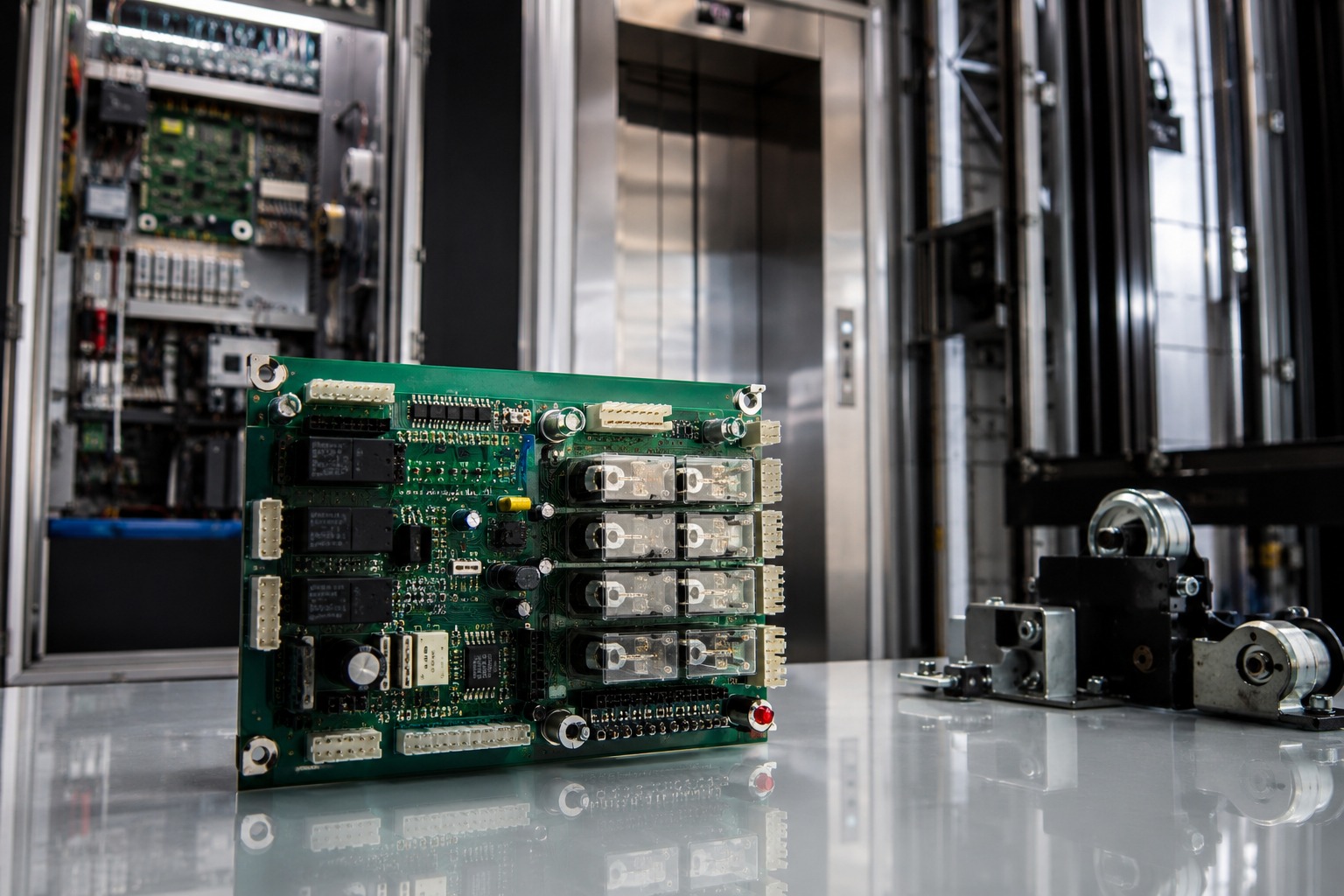
In Toshiba elevator systems, the safety circuit relay board is one of the most important boards for controlling whether a lift is allowed to run, stop, or remain locked out during a fault. In simple terms, it monitors the safety chain and confirms that critical protective devices such as door locks, limit switches, emergency stop paths, overload-related signals, and other interlocks are in the correct state before movement is permitted. If the board does not receive the expected safe signals, the controller prevents operation. For building owners, maintenance teams, and modernization contractors in the Philippines, understanding this board is essential because a wrong replacement, weak relay contact, or incomplete post-installation test can lead to repeat shutdowns, nuisance faults, or unsafe operation.
Across Metro Manila, Cebu, Davao, Clark, Laguna, Batangas, Iloilo, and Cagayan de Oro, elevator maintenance companies are under pressure to reduce downtime in office towers, hospitals, hotels, mixed-use developments, logistics buildings, and residential towers. Many sites rely on quick access to compatible Toshiba parts, careful model identification, and reliable support from suppliers that understand legacy systems as well as newer modernization requirements. Safety relay boards are not parts that should be sourced by appearance alone. Terminal assignments, board codes, relay ratings, firmware-related interactions, wiring logic, and cabinet configuration all matter.
This guide explains how elevator safety circuit relay boards work in Toshiba systems, the symptoms technicians often see when faults occur, what buyers in the Philippines should verify before ordering, how compatibility is checked, what testing should be done after replacement, and what documentation a dependable supplier should provide. It also covers practical maintenance advice and 2026 trends related to technology, policy, and sustainability in the local lift service market.
How Safety Circuit Relay Boards Work
A safety circuit relay board is designed to receive, process, and pass along safe-condition signals from multiple elevator protection devices. Although the exact arrangement depends on the Toshiba model and controller architecture, the board normally sits inside or interfaces with the main control cabinet and acts as a monitored gatekeeper. If the safety chain is complete, relays energize as intended and the system allows normal operation. If a signal is missing, unstable, delayed, or out of sequence, the board keeps the elevator from moving or triggers a fault response.
Typical inputs and logic paths connected to a Toshiba lift safety circuit board may include landing and car door lock contacts, final limit devices, pit stop and top inspection stop circuits, car top stop switches, governor-related safety contacts, buffer return conditions, overload or weighing-related interlocks, and emergency operation dependencies. Some systems also coordinate with expansion boards and communication boards, especially where signal distribution is modular. In many cases, a technician troubleshooting a recurring safety-chain fault will inspect not only the relay board itself but also related modules such as a Toshiba elevator expansion board or a Toshiba car top communication board when field signals do not reach the main control as expected.
The relay board performs three essential functions:
- Signal validation: confirms that required safety contacts are closed or open in the correct condition.
- Isolation and switching: uses relay contacts to pass safe signals onward while reducing direct stress on the main controller.
- Fault response: prevents elevator run commands when any monitored condition is abnormal.
In older installations around Makati, Ortigas, Quezon City, Pasig, and Cebu Business Park, relay-based safety chains are especially common. In modernization projects, a working safety relay board may still be retained if it matches the existing architecture and passes inspection, but many contractors prefer replacement when relays show age-related wear, oxidation, coil instability, or intermittent contact resistance.
| Board Function | What It Monitors | Why It Matters | Typical Failure Effect | Service Priority | Philippines Site Example |
|---|---|---|---|---|---|
| Door lock validation | Landing and car door lock circuit | Prevents movement with unsecured doors | Lift will not start or relevels unexpectedly | Very high | Residential towers in Taguig |
| Emergency stop path | Pit stop, car top stop, inspection stop | Ensures manual stop circuits are respected | Safety chain open fault | Very high | Service lifts in hospitals in Manila |
| Limit safety confirmation | Terminal and final limits | Prevents overtravel risk | Lockout after travel attempt | Very high | High-rise office towers in Makati |
| Protective relay switching | Controller permission logic | Allows safe run enable | No run despite normal door status | High | Hotels in Cebu |
| Interlock signal distribution | Connected field inputs and sub-boards | Keeps cabinet logic synchronized | Intermittent or random shutdowns | High | Malls in Davao |
| Fault status indication | Board LEDs or output states | Supports faster diagnosis | Longer troubleshooting time | Medium | Mixed-use sites in Clark |
The table above shows why this board is never just a simple switching accessory. It directly affects whether the lift can legally and safely operate. In real service conditions, even one damaged relay contact or one mismatched board revision can create repeat callbacks.
Common Safety Circuit Fault Symptoms
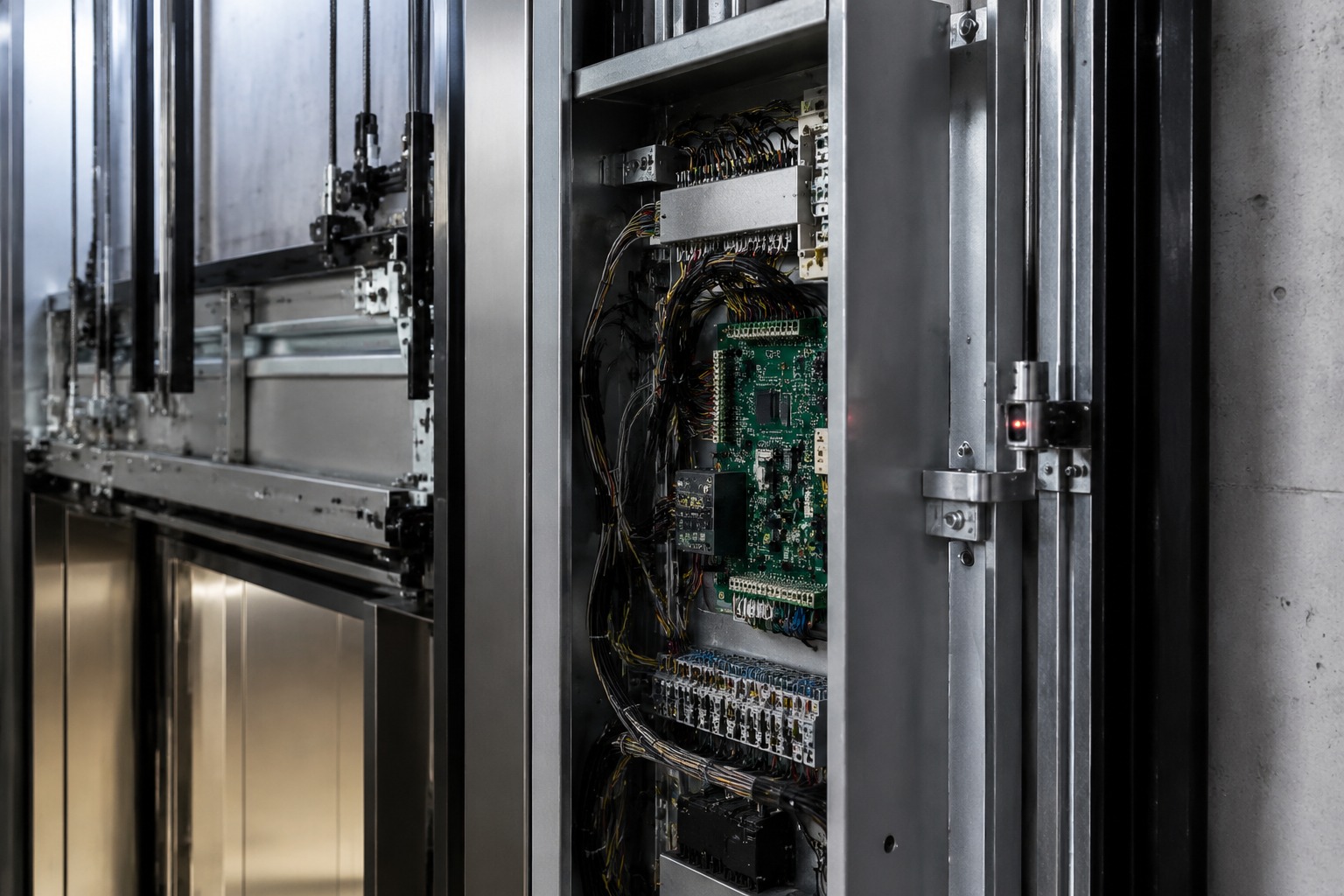
When a Toshiba elevator safety circuit relay board begins to fail, the symptoms are not always dramatic. Some faults are permanent and obvious, while others appear only during humidity, peak traffic, heat, vibration, or after cabinet cleaning and rewiring. In the Philippines, coastal and high-humidity environments such as Manila Bay districts, Batangas, Subic, Cebu port areas, and Davao can accelerate oxidation on terminals and relay contacts, making intermittent faults more likely.
Common symptoms include the elevator refusing to run despite doors appearing closed, random safety-chain fault alarms, intermittent door lock loss while parked, repeated shutdown after power fluctuations, relay chatter sounds from the cabinet, burnt odor or heat discoloration near relay components, and fault recovery only after tapping, cooling, or resetting the controller. Some technicians also report cases where the board itself is functional but receives unstable voltage from a failing power supply or weak signal continuity from field wiring.
A critical point is that the board should not be blamed automatically. Safety circuit faults can come from field devices, wiring, connectors, terminal looseness, moisture, damaged harnesses, controller input issues, or communication interruptions. Good troubleshooting isolates the board from the rest of the chain step by step.
| Symptom | Possible Relay Board Cause | Other Possible Cause | Observed Pattern | Risk Level | Recommended Action |
|---|---|---|---|---|---|
| Lift will not start | Run-enable relay not energizing | Open door lock circuit | Persistent | High | Check board LEDs, input voltage, and safety chain continuity |
| Intermittent shutdown | Oxidized relay contact | Loose terminal or harness | Appears during vibration or high traffic | High | Measure contact resistance and inspect cabinet wiring |
| Relay chatter | Weak coil or damaged board trace | Unstable power supply | Occurs during voltage fluctuation | High | Check supply stability and coil drive level |
| False door lock fault | Input relay sticking | Door lock contact wear | Often after door cycling | High | Compare field signal and board response in real time |
| Cabin stops responding after reset | Internal switching fault | Main controller logic issue | After restart sequence | Medium to high | Review fault log and verify related boards |
| Burn marks or smell | Overheated relay or terminal damage | Shorted external wiring | Visible on inspection | Very high | Remove from service and inspect before energizing |
The explanation behind these symptoms is important for procurement teams. If a buyer orders a replacement board based only on a single fault code without confirming the field condition, the new part may not solve the issue. That is why reliable suppliers ask for board photos, part number labels, controller model, wiring reference, and fault description before confirming availability.
The line chart above reflects a realistic growth pattern driven by aging building stock, modernization of legacy lifts, and stronger maintenance expectations in the Philippines market. Demand does not only come from complete failures. Preventive replacement and modernization packages also contribute to steady growth.
Toshiba Relay Board Sourcing Notes
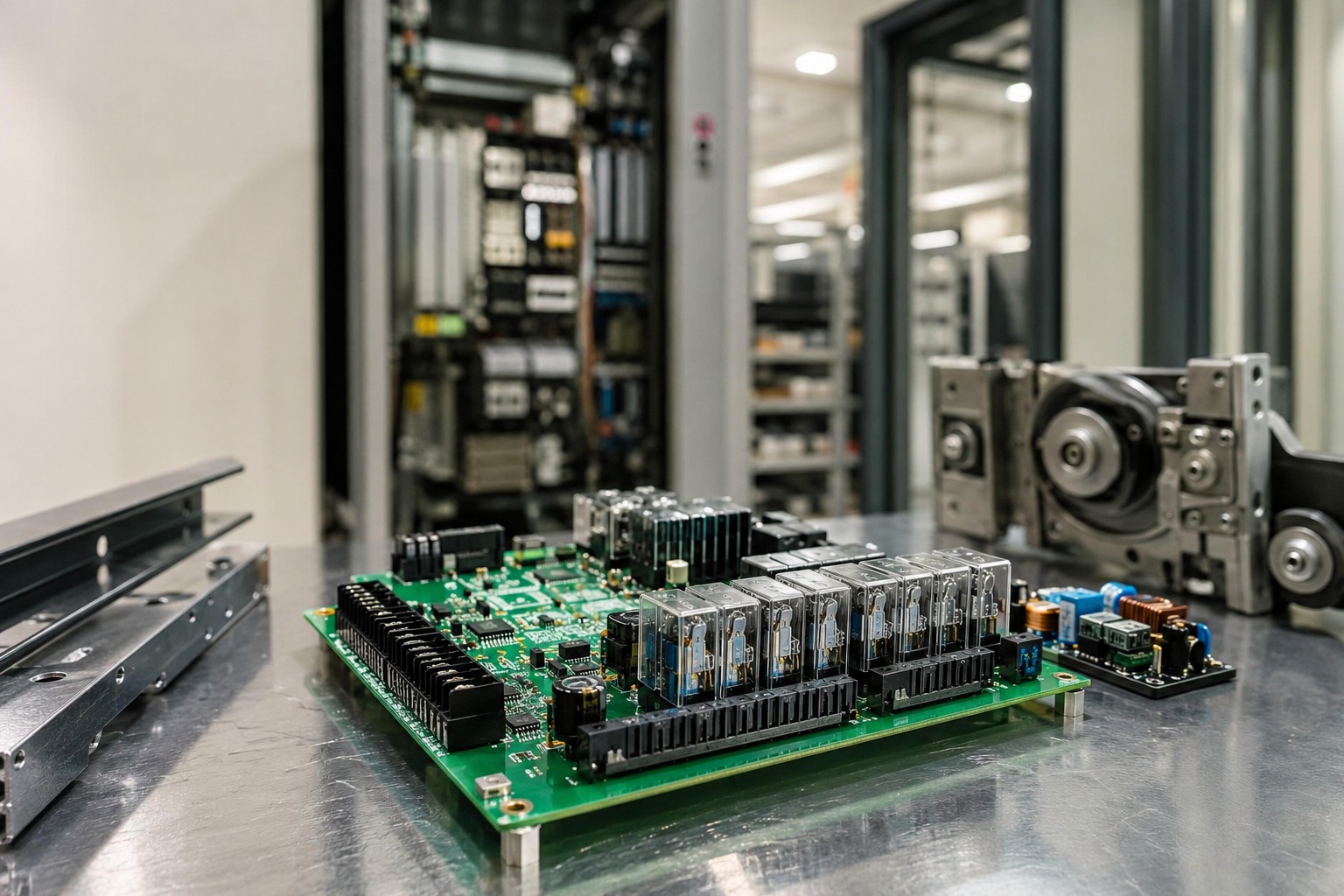
When sourcing a Toshiba safety circuit relay board, the first rule is to match by complete part information, not by physical appearance. Many boards look similar across generations, but relay arrangement, connector count, pin definition, mounting holes, and control logic can differ. A board sourced for a building in Bonifacio Global City may look nearly identical to one installed in an older tower in Makati, yet still be unsuitable if the code revision or system family is different.
Buyers in the Philippines often work under time pressure because site shutdowns affect tenant satisfaction and service-level commitments. However, rushing a purchase increases the risk of receiving a board that is electrically incompatible or requires additional adjustments not planned for on site. A good supplier will ask for the board label, controller type, elevator model, serial information if available, photos of both sides, connector photos, and the fault description. For more direct product reference, some buyers begin with a Toshiba elevator safety circuit relay board product page and then confirm the exact version with technical support.
For imported parts entering through major logistics hubs such as Manila, Batangas Port, Subic, and Cebu, packaging quality matters. Relay boards are vulnerable to bent pins, electrostatic damage, and vibration during transport. Protective anti-static packing, inner foam support, moisture protection, and labeled cartons reduce the chance of receiving a damaged board that later produces confusing commissioning issues.
From a supply capability perspective, our work with elevator maintenance companies and distributors is built around three practical areas. On the technology side, we focus on model matching support using board code review, connector comparison, and application cross-checking with related control modules. On the manufacturing side, we emphasize stable sourcing channels, incoming inspection, relay condition review, and protective packaging before shipment. On the service side, we support responsive quotation, photo-based verification, and clearer pre-shipment communication so customers can reduce downtime and avoid ordering mistakes.
| Sourcing Checkpoint | What Buyer Should Provide | Why It Is Necessary | Common Mistake | Impact of Mistake | Best Practice |
|---|---|---|---|---|---|
| Part number verification | Complete code from board label | Confirms exact model family | Using only cabinet model | Wrong board received | Send close-up label photos |
| Connector layout review | Front and rear board photos | Checks physical fit | Assuming same shape means same use | Installation failure | Compare ports and pin counts |
| Application context | Controller type and fault details | Supports correct diagnosis | Ordering before troubleshooting | Unsolved fault after replacement | Share site symptoms and logs |
| Board condition | Requirement for new or tested stock | Aligns expectations and budget | No condition agreement | Disputes after delivery | Confirm quality level in writing |
| Packing method | Delivery destination and transit method | Protects board during shipping | Standard loose packing | Transport damage | Use anti-static and foam protection |
| Lead time planning | Urgency and project date | Helps site scheduling | Late ordering | Extended elevator downtime | Prepare backup sourcing plan |
This table shows that successful sourcing is a process, not a one-line inquiry. The more accurate the buyer’s information, the lower the chance of delay, wrong supply, or unnecessary site revisits.
How Technicians Check Compatibility
Compatibility verification is one of the most important tasks before any Toshiba safety relay board is installed. In practice, technicians do not rely on a single identifier. They typically confirm several layers: board number, board revision, relay specification, connector assignment, operating voltage, cabinet architecture, signal logic, and controller family. If the safety chain also interacts with distributed modules, related boards must be checked too.
At sites with complex layouts, especially hospitals, premium residential towers, and commercial high-rises, service teams may compare the candidate replacement board against the removed board physically and electrically. They review relay count, contact rating, terminal labels, PCB markings, DIP switch positions if any, and traces of prior modifications. If the system includes linked boards for I/O distribution or communication, they may also inspect whether the fault could be tied to another module rather than the relay board itself.
Technicians generally follow a structured process:
- Record all board labels and cabinet references before removal.
- Photograph wiring and connector positions clearly.
- Confirm voltage and relay specifications.
- Compare connector coding, orientation, and mounting dimensions.
- Check whether software or controller settings depend on board revision.
- Inspect surrounding modules and field inputs to avoid replacing the wrong component.
| Compatibility Item | What Is Checked | Tools Used | Pass Criteria | Failure Risk If Ignored | Notes for Philippine Sites |
|---|---|---|---|---|---|
| Board code | Exact label and revision | Photo, magnifier, records | Full code match | Wrong logic behavior | Important for mixed-age buildings |
| Power rating | Input voltage and relay coil rating | Manual, meter | Specification match | Non-operation or burnout | Check after unstable mains events |
| Connector mapping | Pin order and keying | Photos, wiring diagram | Exact alignment | Miswiring damage | Essential during urgent repairs |
| Mounting dimensions | Hole spacing and cabinet fit | Ruler, board comparison | Direct fit | Forced installation stress | Useful for retrofit cabinets |
| Signal logic | Input/output function path | Schematic, field testing | Operational equivalence | Persistent faults | Often overlooked in partial upgrades |
| Related modules | Expansion and communication boards | Cabinet review | No conflict in system interaction | Hidden unresolved issue | Common in large commercial buildings |
This compatibility table highlights a point many procurement teams miss: two boards can physically fit and still behave differently in a live system. That is why experienced technicians treat matching as both a mechanical and electrical verification process.
The bar chart indicates that residential and office segments generate particularly strong replacement demand in the Philippines due to the large number of aging units, high usage frequency, and the need to restore service quickly in occupied buildings.
Testing the Safety Chain After Replacement
Replacing the board is only half of the job. The more important step is verifying that the entire safety chain operates correctly afterward. Technicians should never assume that a newly installed board is ready for full passenger service without systematic testing. The post-replacement process should confirm not only that the elevator runs, but that every critical protective circuit opens and closes properly under the expected conditions.
Standard testing commonly includes visual inspection, connector recheck, power-up monitoring, LED or indicator review, continuity confirmation, door lock verification, emergency stop circuit testing, inspection mode confirmation, travel limit checks, and multiple trial runs under no-load and normal-load conditions. On heavily used buildings in Manila, Quezon City, or Cebu, teams often perform repeated cycles to confirm that intermittent faults are truly eliminated, not merely hidden during the first few trips.
Good practice includes documenting the pre-fault condition, replacement details, and post-test results. If a board replacement is part of a larger reliability effort, related cabinet cleaning, terminal tightening, and review of aging field contacts should be performed at the same time.
| Test Step | Purpose | How It Is Performed | Expected Result | If It Fails | Record Needed |
|---|---|---|---|---|---|
| Visual reinspection | Confirm correct installation | Check connectors, screws, terminals, labels | No loose or reversed connection | Power down and correct wiring | Installation photo |
| Power-up check | Verify stable startup | Energize cabinet and observe board behavior | No abnormal heat, smell, or chatter | Check supply and board condition | Startup notes |
| Safety input verification | Confirm each input state | Read LEDs, meter, or controller status | Inputs match actual field condition | Trace field wiring or logic path | Input checklist |
| Door lock test | Validate movement permission logic | Open/close doors and confirm response | No run allowed when lock is open | Inspect door circuit and relay response | Door operation log |
| Emergency stop test | Verify protective stop action | Test relevant stop circuits per procedure | Safety chain opens correctly | Do not return to service | Stop-circuit test sheet |
| Repeated travel cycle test | Catch intermittent issues | Run several trips under controlled conditions | Stable operation without fault recurrence | Recheck board and related modules | Cycle count and observations |
The explanation behind this table is straightforward: a board replacement should be treated as a safety-critical intervention. If the site only checks whether the car moves and skips the rest of the chain, a hidden defect may remain. This is especially risky where buildings have high passenger traffic or where downtime creates a major operational impact, such as hospitals, hotels, and transport-linked developments.
The area chart shows an increasing trend toward preventive planning. More maintenance companies in the Philippines are replacing vulnerable relay boards before complete failure, especially when buildings have limited service redundancy or tight uptime requirements.
What Documents Suppliers Should Provide
Documentation helps buyers reduce installation risk and shorten troubleshooting time. A trustworthy supplier should provide enough information for the maintenance team to confirm that the board is suitable for the intended Toshiba system. For some projects, especially when the customer is a building owner, procurement department, or modernization contractor, documentation also supports internal approval and record-keeping.
At minimum, buyers should expect clear product identification, condition disclosure, photos, packaging details, and shipping information. For technical orders, compatibility notes, connector images, and any known application references are also valuable. If the item is not brand-new or comes from a tested stock source, that should be stated honestly. Transparency avoids disputes and allows the site team to prepare properly.
Our service approach is built around practical documentation support rather than vague sales claims. From the service capability side, responsive communication, photo confirmation, and clear shipment updates help maintenance teams schedule work with fewer surprises. From the manufacturing and inspection side, condition checks and protective packing records improve consistency. From the technology side, model matching notes reduce the chance of ordering a board that looks right but does not perform correctly in the field.
| Document Type | What It Includes | Why Buyer Needs It | When It Should Be Sent | Risk If Missing | Useful For |
|---|---|---|---|---|---|
| Product identification sheet | Part number, revision, board photos | Confirms exact item | Before order confirmation | Wrong model selection | Purchasing and engineering review |
| Condition statement | New, tested, or other condition disclosure | Sets quality expectation | Quotation stage | Post-delivery dispute | Budget approval |
| Compatibility note | Known application references and limits | Supports technical matching | Before shipment | Installation mismatch | Technician planning |
| Packing record | Anti-static and protective packaging details | Confirms transit protection | Before dispatch | Damage claims uncertainty | Import and receiving teams |
| Shipment documents | Invoice, tracking, packing list | Supports logistics clearance | At dispatch | Customs and receiving delays | Port handling in Manila, Cebu, Batangas |
| After-sales contact details | Service email or support contact | Speeds issue resolution | With order documents | Long downtime after questions arise | Maintenance coordination |
This documentation table matters because safety relay boards are technical products, not generic consumables. The better the paperwork and photo confirmation, the faster local teams can install with confidence and the less likely they are to face avoidable site delays.
Maintenance and Inspection Advice
Preventive maintenance for safety circuit relay boards should focus on the board itself and the wider environment around it. In the Philippines, heat, humidity, dust, salt exposure near coastal districts, and unstable power conditions in some areas can all affect long-term reliability. Even if the board remains electrically healthy, surrounding terminal looseness or contamination can produce the same fault symptoms as a failing relay.
Routine inspection tasks should include checking for discoloration, oxidation, cracked solder joints, relay chatter, abnormal heat, loose connectors, moisture ingress, and degraded insulation. Cabinet ventilation should be reviewed, especially in machine rooms exposed to high ambient temperature. Terminal retightening, controlled cleaning, and condition review of field interlocks can reduce nuisance trips. Sites with repeated power disturbances should also inspect related power supplies and surge protection arrangements.
From an application standpoint, this is relevant across many sectors: commercial offices with high cycle counts, condominium towers with constant daily use, hotels where guest impact is immediate, hospitals where lift reliability affects patient flow, and industrial or logistics facilities where service lifts support operations. In ports, warehouse districts, and large mixed-use developments, maintenance schedules are increasingly tied to uptime commitments and tenant expectations.
Here are practical maintenance tips that local service teams often find useful:
- Keep a photo record of board labels and installed wiring before problems occur.
- Inspect relay boards during periodic shutdowns, not only after a failure.
- Check cabinet temperature and ventilation in hot machine rooms.
- Look for signs of moisture or corrosion in coastal and humid locations.
- Review connector tightness after vibration-heavy operating periods.
- Do not clean boards with unsuitable chemicals or excessive force.
- Replace damaged harnesses or weakened door lock contacts when safety faults repeat.
- Maintain a spare-parts strategy for critical buildings with no service redundancy.
This comparison chart reflects what many buyers prioritize when choosing a supplier for Toshiba relay boards in the Philippines: accurate matching, stable inspection standards, fast communication, and strong documentation. Price matters, but a low-cost mismatch can create far greater downtime costs than a properly verified order.
FAQ About Safety Circuit Relay Boards
What does a safety circuit relay board actually do in a Toshiba elevator?
It confirms that critical safety devices are in the correct state before the elevator is allowed to move. If the safety chain is open or abnormal, the board prevents operation or triggers fault logic.
Can a lift run with a partially faulty relay board?
Sometimes a board with intermittent contact issues may appear to work temporarily, but that does not mean it is safe or reliable. Repeated shutdowns, relay chatter, or unstable safety signals require immediate technical attention.
Is part number matching enough?
Part number matching is essential, but it should be combined with revision check, connector review, voltage confirmation, and application verification. Appearance alone is never enough for safety-critical boards.
What if the same fault remains after replacement?
The problem may be in field wiring, door interlocks, stop circuits, power supply stability, or related control modules. The board should be considered as one part of the full safety chain, not the only possible fault point.
Should building owners keep a spare board?
For high-traffic buildings, hospitals, premium residences, and sites with difficult logistics access, keeping a verified spare can reduce downtime significantly. The spare should be labeled carefully and stored in proper anti-static protection.
What related Toshiba boards may need review during troubleshooting?
Depending on system architecture, technicians may also inspect the expansion board and the car top communication board, especially when field signals are not reaching the controller consistently.
How often should safety relay boards be inspected?
They should be reviewed during regular preventive maintenance, with closer attention in older systems, high-humidity environments, and buildings experiencing frequent power or vibration stress.
What trends should buyers watch in 2026?
Three trends stand out. First, more predictive maintenance practices are being adopted, with service teams using fault history and component aging patterns to replace vulnerable boards before complete failure. Second, policy and compliance pressure is increasing around documented maintenance quality, which means clearer testing records after component replacement. Third, sustainability is becoming more relevant: extending equipment life through correct model matching, reducing unnecessary scrapping, and improving packaging efficiency are all gaining value in procurement decisions. In the Philippines, these trends are especially visible in major urban centers and modernization-heavy areas such as Metro Manila, Cebu, and Davao.
How do local buyers choose a dependable supplier?
They usually look for a supplier that can support model verification, provide clear product photos and documentation, protect parts during shipment, and respond quickly when urgent matching questions arise. Technical confidence and service reliability often matter more than the cheapest quote.
For companies supporting elevator maintenance, distribution, and modernization work in the Philippines, the most practical approach is to combine careful diagnosis, accurate compatibility verification, proper post-installation testing, and dependable sourcing. That reduces repeat visits, avoids unnecessary replacements, and helps buildings return to service with lower risk. Whether the project is a single urgent repair in Makati, a modernization package in Quezon City, or a multi-site maintenance requirement across Cebu and Davao, the safety circuit relay board deserves the same level of attention as any other critical control component.
Reliable sourcing also becomes stronger when buyers work with suppliers that understand more than one product category. In many cases, a safety relay board issue is part of a broader cabinet condition involving control boards, inverter parts, door operator components, door locks, sensors, encoders, power supplies, buttons, COP panels, intercom parts, and other lift accessories. A supplier with broad lift-parts experience can often help identify related risks, recommend additional checks, and support smoother planning for future maintenance cycles.
In short, Toshiba elevator safety circuit relay boards protect lift operation by enforcing safe conditions before movement is allowed. The right board, installed correctly and tested thoroughly, supports stable operation and faster recovery from faults. For the Philippines market, where uptime, climate conditions, logistics timing, and technical compatibility all matter, a disciplined sourcing and maintenance strategy is the best way to keep elevator systems operating safely and efficiently.