
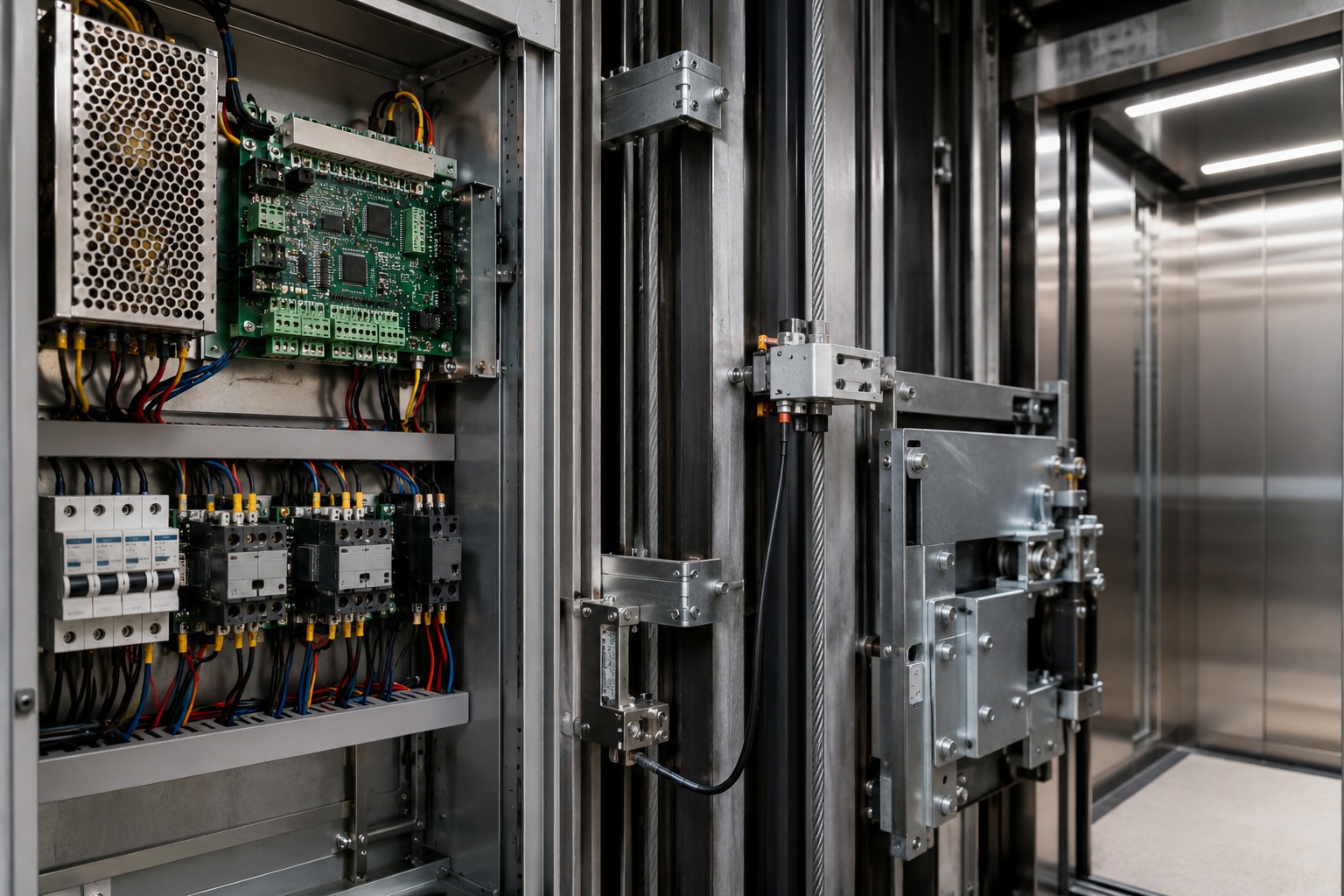
Elevator power supply parts are not just background components hidden inside cabinets. They directly affect controller stability, brake action, door performance, communication circuits, car lighting, emergency readiness, and the overall uptime of a building. In the Philippines, where elevators often operate in humid coastal environments, mixed-voltage buildings, and areas with utility fluctuations, selecting the right power supply is a safety decision as much as a maintenance decision.
The short answer is simple: the correct elevator power supply must match the input voltage available on site, deliver stable output under full load, protect low-voltage control circuits from fluctuation, support brake release performance without delay, and keep emergency lighting or rescue functions available during interruptions. For maintenance teams in Metro Manila, Cebu, Davao, Iloilo, Clark, Subic, and other fast-growing urban centers, these factors can reduce downtime, prevent nuisance shutdowns, and support safer passenger service.
Building owners and service companies usually focus on controllers, inverters, door operators, and safety switches first. Yet many recurring faults come from the power source feeding those systems. A weak switching board, wrong DC rating, unstable supply box, or overloaded auxiliary line can trigger confusing symptoms: random resets, communication loss, false door errors, brake release hesitation, dim car lights, or intermittent floor calls. That is why power supply planning deserves a structured buying and testing approach rather than a last-minute parts replacement.
In the local market, it is common to see elevators from Hitachi, Toshiba, KONE, Mitsubishi, and other major brands running in offices, condominiums, hotels, malls, hospitals, warehouses, and mixed-use projects. Many units are now aging, while modernization programs are increasing across Manila, Makati, Bonifacio Global City, Pasig, Quezon City, Cebu City, and Davao City. As these systems age, compatible replacement power boards and constant-voltage units become critical because exact original stock may be limited, lead times may vary, and climate-related stress can shorten service life.
For buyers comparing products, it helps to separate elevator power supplies into practical categories: controller and logic power supplies, switching power supply boards, brake power units, emergency lighting power systems, constant-voltage supply boxes, AVR-related boards, and communication or accessory supplies. When selecting replacements, maintenance teams should confirm not only voltage and current, but also mounting size, connector layout, output stability, brand compatibility, insulation quality, ripple tolerance, thermal performance, and the real field load connected to the unit.
If you need replacement options for lift auxiliary power components, product selection often starts with the application. A general elevator switch power supply may suit broad controller or accessory needs, while a switching power supply board for lifts is often chosen for cabinet-level electronic replacement. For specific models, an 24V/51V AVR power board for Hitachi elevators or a constant-voltage power supply box for Hitachi lifts may be the more accurate route when field matching requires model-based compatibility.
This guide explains the main power supply types used in elevators, how to choose switching boards, what brake release systems require, how to plan emergency lighting, how to check voltage and load, what common failure symptoms mean, and how to replace and test safely. It also includes market insights for the Philippines, application examples, supplier evaluation tips, and 2026 trends in modernization, energy efficiency, and sustainability.
Elevator market context in the Philippines
The Philippine elevator market continues to grow with new residential towers, tourism projects, logistics facilities, hospitals, data centers, and transport-linked developments. High-rise districts in Makati, Ortigas, BGC, and Cebu IT Park demand reliable vertical transportation, while provincial cities are also upgrading commercial buildings and public infrastructure. In these projects, power quality and service continuity are major issues because elevators must handle daily traffic even when weather conditions, generator transitions, or local utility instability place stress on electronics.
From a sourcing standpoint, ports and trade hubs such as Manila, Batangas, Cebu, and Davao influence lead time and inventory planning. Contractors working on modernization projects often prefer stock-ready or carefully matched alternative parts to avoid long stoppages. Power supplies are especially time-sensitive because an elevator can be completely unavailable if a control power board fails.
The chart above reflects a realistic demand pattern seen in replacement parts and modernization activities: steady growth driven by aging installed base, heavier use in residential towers, and stricter expectations for uptime. For power supplies, this means buyers in the Philippines increasingly need dependable sourcing, documented specifications, and better model matching rather than generic substitutions without verification.
| City or Hub | Typical Building Activity | Common Elevator Profile | Power Supply Risk | Maintenance Priority | Buying Implication |
|---|---|---|---|---|---|
| Metro Manila | High-rise offices and condos | Heavy daily traffic | Heat and cabinet overload | Stable control voltage | Keep stock for common boards |
| Makati and BGC | Premium commercial towers | Group control systems | Communication sensitivity | Low-ripple outputs | Prefer tested compatible units |
| Cebu City | Hotels, mixed-use, BPO | Passenger lifts and service lifts | Humidity and salt air | Corrosion-resistant handling | Protective packaging matters |
| Davao City | Malls and hospitals | Public-service operation | Emergency readiness | Lighting backup and alarms | Plan spare emergency units |
| Clark and Subic | Industrial and logistics | Freight and passenger lifts | Mixed power quality | Brake and drive reliability | Verify load margin carefully |
| Iloilo and Bacolod | Growing mid-rise projects | Modernized older units | Compatibility mismatch | Accurate model confirmation | Need responsive technical matching |
This table shows why elevator power supply decisions in the Philippines are strongly linked to local operating conditions. A part that works well in a dry inland installation may fail early in a humid coastal site if thermal and insulation margins are poor.
Main power supply types in elevators
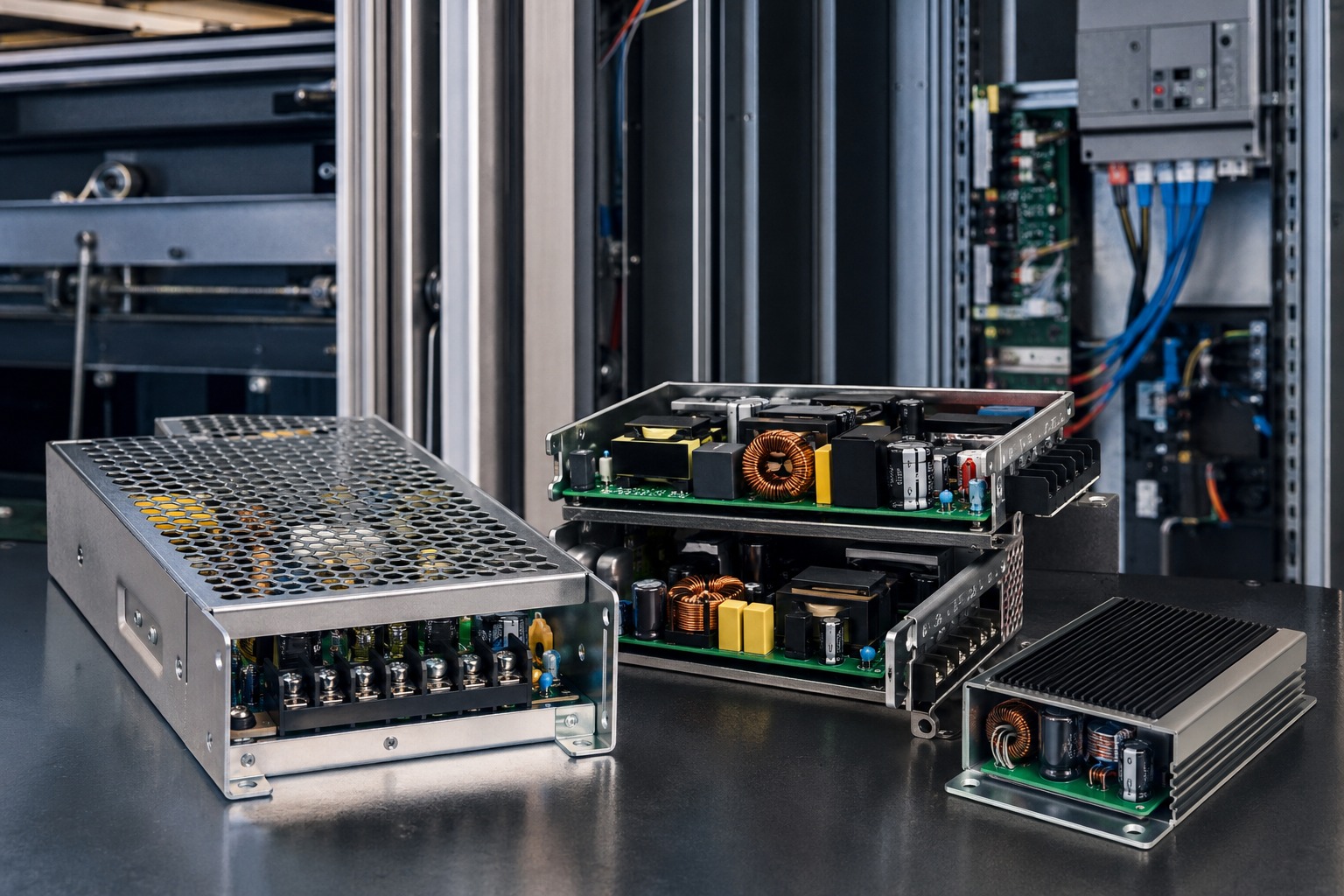
Elevators usually use more than one power supply stage. The main incoming building supply feeds the controller and drive system, but internal conversion stages then provide regulated voltages for logic boards, relays, encoders, sensors, door operators, communication circuits, safety loops, car lighting, and emergency devices. Understanding these types helps avoid ordering the wrong replacement.
The first category is the control power supply. This unit converts incoming AC to stable DC rails such as 5V, 12V, 24V, 36V, 48V, or brand-specific outputs required by controller boards and peripheral circuits. The second category is the switching power supply board, commonly used because it is compact, efficient, and suitable for cabinet integration. The third is a brake release or brake control power source, often designed to deliver reliable voltage during pick-up and holding stages. The fourth is emergency power for cabin lights, alarm, intercom, and rescue-related loads. The fifth includes constant-voltage boxes and AVR-related boards used in specific branded systems or applications where voltage regulation is critical.
For modernization projects, the selection process often begins by identifying whether the failed unit is a standard auxiliary supply or a model-specific board. Generic-looking boards may still carry unique connector assignments, current ratings, or protective logic. That is why visual similarity alone is not enough.
| Power Supply Type | Main Function | Typical Output | Connected Loads | Failure Impact | Selection Note |
|---|---|---|---|---|---|
| Controller logic supply | Feeds CPU and control circuits | 5V/12V/24V DC | Main boards, relays, sensors | Reset, no response, fault trips | Check ripple and current reserve |
| Switching power supply board | Efficient regulated conversion | 12V/24V/48V DC | Cabinet electronics | Intermittent instability | Match board layout and cooling |
| Brake power unit | Supports brake release and hold | Model dependent | Brake coil circuit | No release or delayed action | Verify coil voltage and timing |
| Emergency lighting supply | Keeps light and alarm active | Battery-backed DC | Car lights, buzzer, intercom | Dark cabin during outage | Confirm backup duration |
| Constant-voltage supply box | Stabilizes output for key circuits | Brand-specific regulated DC | Special control applications | Erratic board behavior | Use exact compatibility data |
| AVR-related power board | Handles regulated multi-output needs | 24V/51V or others | Specific OEM systems | Brand-specific operating faults | Confirm model and terminal map |
In practical maintenance work, technicians should also distinguish between primary supply failure and downstream load failure. A replacement power board may be damaged again if a shorted sensor line, coil, lamp circuit, or communication module is left connected without isolation testing.
Switching power supply board selection
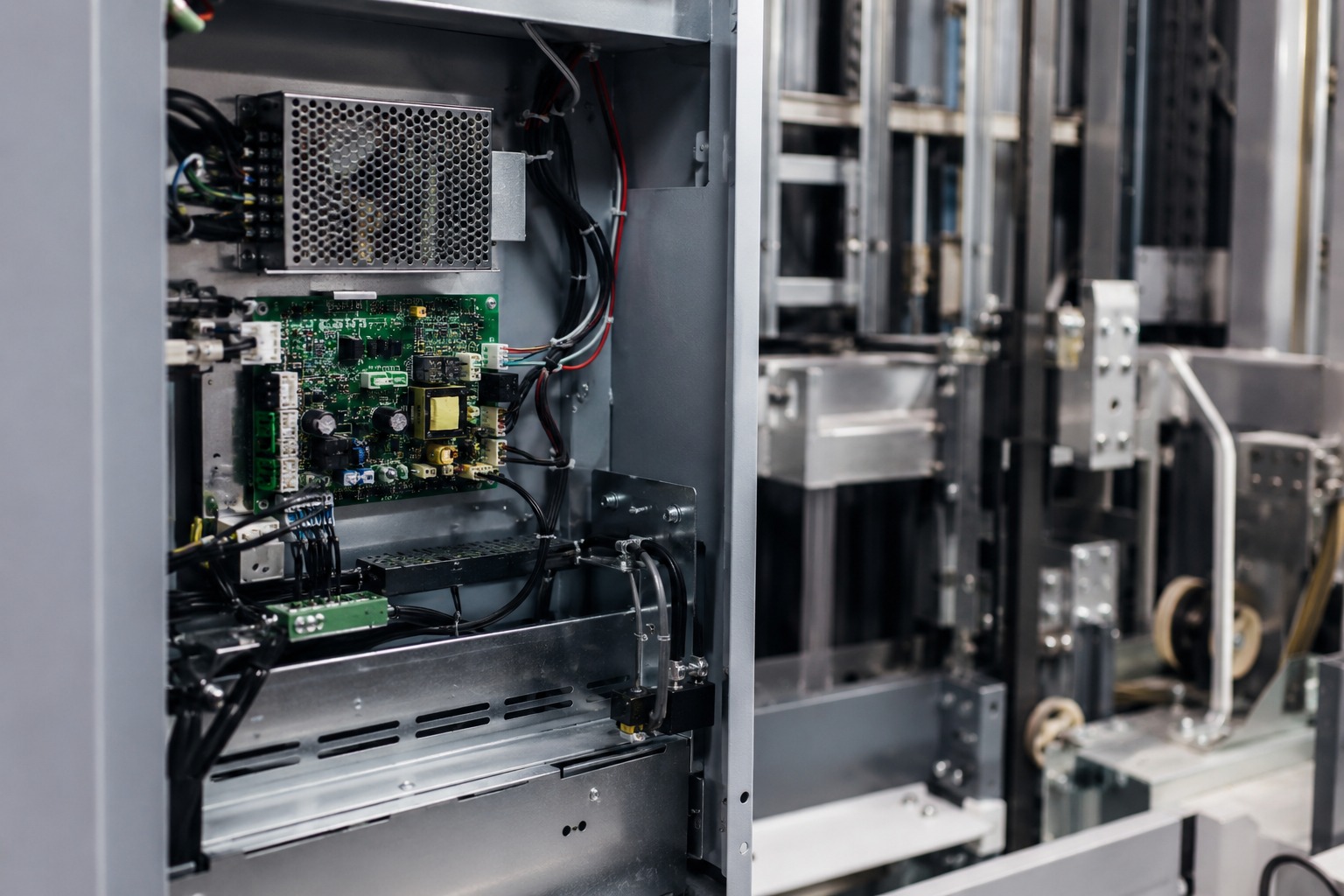
Choosing a switching power supply board for an elevator requires more than reading the printed output voltage. The board must operate safely inside an electrical cabinet where heat, dust, vibration, and electrical noise are already present. In the Philippines, where machine rooms and controller spaces may experience elevated temperatures, thermal tolerance is an especially important factor.
The best selection method is to compare the original board and the proposed replacement across seven items: input voltage range, output voltage, continuous output current, peak load tolerance, physical dimensions, connector arrangement, and application environment. If the board feeds communication devices, door control, or logic electronics, low ripple and stable regulation matter even more. If it feeds relays, indicators, or mixed auxiliary loads, current headroom becomes the priority.
Maintenance companies should also ask whether the supply has short-circuit protection, over-voltage protection, over-temperature performance, and reliable soldering quality. A low-cost substitute may power up on the bench but fail prematurely in a hot control cabinet with daily cycling.
| Selection Item | Why It Matters | Common Field Mistake | Resulting Problem | Best Practice | Verification Method |
|---|---|---|---|---|---|
| Input voltage range | Matches site electrical supply | Ignoring wide fluctuation | Random shutdown | Allow safe operating margin | Measure live input under load |
| Output voltage | Protects control electronics | Using near-match voltage | Board malfunction | Match exact rated output | Check nameplate and manual |
| Output current | Prevents overload heating | Using equal but no reserve | Premature failure | Add current margin | Calculate real connected load |
| Ripple and regulation | Important for communication and CPU | Buying generic low-grade unit | Noise, reset, signal loss | Use stable quality source | Oscilloscope or specification review |
| Physical size | Must fit cabinet safely | Forcing larger substitute | Heat buildup, wiring stress | Check mounting holes and clearance | Photo and dimension comparison |
| Terminal layout | Prevents wiring error | Assuming same order | Short circuit or reverse feed | Map every terminal before install | Label wires and compare diagrams |
For buyers managing multiple buildings, it is wise to classify switching power boards into three procurement groups: fast-moving generic auxiliary boards, brand-linked compatible boards, and exact model-specific supply modules. This reduces emergency sourcing delays and helps maintenance teams keep essential stock for common service calls.
Brake release power supply requirements
The brake circuit is one of the most safety-sensitive parts of an elevator. Even when the brake itself is mechanical, the power supply feeding its release or hold function must perform consistently. If voltage is too low, unstable, delayed, or missing during a command sequence, the brake may not release correctly. If there is a control issue, the elevator may not start, may trip on drive-related faults, or may show inconsistent run commands.
Some brake systems require a higher initial voltage or current for pull-in, followed by a lower hold level to reduce heat. Others use more direct fixed-voltage arrangements. That is why technicians should not assume every brake supply works like a standard 24V accessory circuit. The coil rating, control logic, response timing, and insulation condition all matter.
In hospitals, hotels, and office towers where smooth starting is expected, a weak brake supply may cause noise, delayed departure, or intermittent no-run conditions. In freight or service lifts, it may appear as occasional refusal to move under heavier load or after long idle periods. If a building has frequent power transfer between utility and generator, transition quality can also influence brake circuit performance.
| Brake Supply Check Point | What to Confirm | Typical Symptom if Wrong | Risk Level | Recommended Action | Testing Tool |
|---|---|---|---|---|---|
| Coil rated voltage | Exact voltage requirement | No release or overheating | High | Match coil and supply exactly | Coil label and meter |
| Release current | Starting current availability | Brake chatters | High | Check pick-up capacity | Clamp meter |
| Holding voltage | Stable hold after release | Noise or drop-out | High | Review circuit design | Voltage reading during run |
| Timing control | Sequence with drive command | Jerking or no start | High | Inspect controller logic | Signal tracing |
| Heat condition | Cabinet and coil temperature | Works cold, fails hot | Medium | Improve ventilation and rating margin | Thermal check |
| Wiring integrity | Terminal tightness and insulation | Intermittent release fault | High | Reterminate and inspect harness | Visual and continuity test |
The table above is useful because brake power issues are often misdiagnosed as drive faults or mechanical brake problems. A stable power supply and clean wiring check should be part of every brake troubleshooting workflow before larger components are replaced.
Emergency lighting power supply planning
Emergency lighting inside the elevator car is not optional convenience; it is part of passenger reassurance and emergency preparedness. During a utility interruption, transfer event, or control failure, passengers need enough light to remain calm and locate alarm or intercom buttons. In many buildings across the Philippines, especially in storm-prone areas, the emergency lighting supply should be reviewed alongside routine safety maintenance rather than only after a complaint.
Planning starts with the expected backup duration. The supply may need to support LED car lighting, alarm buzzer, intercom, and sometimes limited display or communication functions. Battery-backed emergency units must be sized for the actual load, not an estimate based on old lamp types. LED conversions often reduce power draw, which can improve backup time, but wiring changes should still be checked carefully.
Another important issue is charger health. An emergency light system may appear normal during regular operation while the battery is weak, disconnected, or unable to hold capacity. That hidden weakness is only discovered during an outage unless periodic discharge testing is performed.
In coastal cities such as Cebu, Bacolod, and parts of Davao, battery condition may also be affected by ambient temperature and storage practices. In older condominium stock in Manila or Quezon City, modernization often combines replacement of cabin fixtures with updated emergency power modules for better efficiency.
The trend chart reflects the gradual market move toward more efficient emergency and auxiliary power arrangements. By 2026, more building owners are expected to demand lower energy consumption, better battery management, and easier testing as part of sustainability and life-safety compliance programs.
Voltage ratings and load checks
Voltage rating and load calculation are the foundation of correct power supply selection. A unit can be electrically compatible on paper and still fail in service if the actual connected load approaches its limit, if startup demand is ignored, or if input variation is severe. For elevator systems, this check should include both steady-state and peak conditions.
Technicians should list every device fed by the supply: controller board, relays, door detector, sensors, encoder interface, indicators, intercom, fan, accessories, and any extra field modifications added over time. In older buildings, undocumented add-ons are common. A supply originally designed for standard circuits may have later been asked to support extra displays, access control interfaces, or communication modules.
A safe approach is to maintain current headroom rather than running the power supply close to its maximum rating. This is especially important in hot cabinet environments. A 24V supply operating at 95% load may seem acceptable during a short bench test but become unstable after hours of operation.
| Output Rating Example | Typical Use | Estimated Load Range | Recommended Reserve | Common Error | Field Advice |
|---|---|---|---|---|---|
| 5V DC | Logic and processor circuits | Low but sensitive | 20% or more | Ignoring ripple sensitivity | Prioritize quality regulation |
| 12V DC | Communication and small accessories | Light to medium | 20% to 30% | Adding devices later | Recalculate after upgrades |
| 24V DC | Relays, sensors, door devices | Medium to high | 25% or more | Overloading through additions | Measure actual current draw |
| 36V DC | Special control circuits | Application specific | Based on OEM guidance | Using generic substitute | Confirm board compatibility first |
| 48V DC | Certain communication or brake functions | Medium | 20% to 25% | Confusing nominal and actual values | Measure under live load |
| 24V/51V mixed board | Brand-specific multi-output use | System dependent | Strict matching required | Checking only one output | Test each output separately |
This table matters because many elevator faults come from partial checking. A technician may confirm that one output is present while another required rail is weak, unstable, or absent. Multi-output boards should always be tested terminal by terminal.
Common power failure symptoms
Power supply failures in elevators rarely announce themselves in a single obvious way. In many cases, the symptom appears elsewhere in the system. A weak supply can imitate a communication fault, a control board defect, a door issue, or a brake problem. Recognizing patterns helps maintenance teams shorten diagnosis time.
Typical signs include the controller rebooting randomly, dark or flickering COP indicators, intercom noise, failure of car light during outage, unexplained safety chain interruptions, door operator faults that come and go, unresponsive buttons, and no-run conditions after long operation. In some cabinets, failed capacitors, burnt odor, discolored PCB areas, or audible coil chatter are visible clues. However, a board can also fail with no obvious physical damage.
The bar chart gives a realistic view of where urgent power-related lift service often appears. Residential towers and office buildings tend to lead because of high daily cycling, aging installed bases, and pressure to restore service quickly.
When symptoms repeat after a recent replacement, the issue may involve wrong specification, poor installation, hidden overload, weak grounding, or a downstream short. That is why troubleshooting should always include both source and load-side checks.
Replacement and testing workflow
A disciplined replacement process helps prevent repeat failures and unnecessary board swaps. First, verify the fault using live measurements and the elevator’s fault history if available. Second, isolate connected loads where practical to rule out downstream short circuits. Third, compare the existing part number, input and output ratings, terminal positions, and application notes before ordering. Fourth, inspect the cabinet environment for heat, dust, corrosion, loose terminals, or evidence of moisture.
After installation, do not stop at a basic power-on check. Test the output under real operating load, confirm voltage stability during start and stop cycles, verify brake response, check door operation, and simulate emergency lighting transfer where safe procedures allow. In a passenger building, it is good practice to monitor the elevator through multiple calls and several travel cycles before returning it fully to service.
For maintenance contractors handling multi-brand systems, a reliable supplier relationship can make a major difference. The best partners support careful model matching, stable quality inspection, and packaging that protects electronic components during shipping to Manila, Cebu, Davao, Cagayan de Oro, General Santos, and other destinations.
| Workflow Step | Main Action | Why It Is Important | Common Mistake | Correct Practice | Expected Result |
|---|---|---|---|---|---|
| 1. Confirm fault | Measure input and outputs | Avoid wrong diagnosis | Replacing by guesswork | Record actual readings | Clear failure evidence |
| 2. Isolate loads | Disconnect suspect branches safely | Find downstream issues | Installing new board into short circuit | Test branch by branch | Prevent repeat damage |
| 3. Match part | Check model, rating, terminals | Ensures compatibility | Using visually similar unit | Confirm with photos and data | Correct replacement choice |
| 4. Install properly | Secure mounting and wiring | Maintains safe operation | Loose or stressed terminals | Label and torque carefully | Stable electrical connection |
| 5. Load test | Run elevator and monitor voltage | Find hidden instability | Bench-only verification | Check during actual cycles | Reliable field performance |
| 6. Document result | Keep service record | Supports future maintenance | No traceable history | Store readings and photos | Faster future troubleshooting |
This workflow is especially useful in modernization and recurring-service buildings. Good documentation helps identify whether the root problem is component aging, environmental stress, load growth, or repeated mismatch in replacement parts.
Buying advice for Philippine maintenance teams and building owners
When buying elevator power supplies in the Philippines, the lowest price should never be the only filter. The better buying questions are: Is the specification complete? Is the model matching process careful? Has the unit been inspected before shipment? Is the packaging suitable for electronic transport? Can the supplier respond quickly when you need photo confirmation or connector verification? These practical details have a direct effect on downtime.
For distributors and maintenance companies, it is smart to segment purchasing into emergency stock, planned maintenance stock, and modernization stock. Emergency stock should cover common switch power supplies, frequently used control voltages, and basic auxiliary boards. Planned maintenance stock should align with recurring service contracts and installed brand mix. Modernization stock should be ordered with deeper compatibility review because older branded systems often require exact terminal mapping and board-specific features.
Industries with high sensitivity to downtime include hospitals, hotels, mixed-use towers, BPO offices, and premium condominiums. Applications differ as well. A hospital lift needs high confidence in emergency readiness. A hotel passenger lift requires smooth, quiet operation and minimal visible disruption. An industrial service lift may place more focus on brake and controller durability under repeated loading. These application differences should influence how much reserve margin and testing depth you require from a power supply selection.
The comparison chart shows what experienced buyers typically value most. Exact model matching and quality inspection usually rank above price because an incorrect or unstable power supply creates more cost through downtime, repeat site visits, and passenger inconvenience.
Local supplier evaluation and our capabilities
When comparing local and overseas sources, Philippine buyers should review lead time, model confirmation quality, stock visibility, communication speed, and packaging standards for electronic parts. Especially for shipments moving through Manila, Cebu, or Davao distribution channels, protective handling matters because power supply boards can be damaged by moisture, static exposure, or impact if they are packed carelessly.
From a technological capability perspective, we support careful matching for elevator control boards, inverter and frequency converter parts, door operator components, light curtains, sensors, encoders, power supplies, COP parts, intercom components, and other lift accessories used across brands such as Hitachi, Toshiba, KONE, Mitsubishi, and more. For power supply enquiries, the focus is on confirming voltage, current, connector style, board layout, and application context so customers can reduce mismatch risk in the field.
From a manufacturing capability perspective, product selection is supported by stable sourcing channels, quality inspection procedures, and protective packaging suited for delicate elevator electronics. This is particularly important for switching power supply boards, constant-voltage boxes, and AVR-related units where transport damage or component stress can affect reliability before the part even reaches the job site.
From a service capability perspective, our work is centered on responsive communication for maintenance companies, distributors, building owners, and modernization contractors. The goal is to help customers shorten downtime, locate compatible replacement parts more efficiently, and keep elevator systems operating safely with practical support during model identification and order preparation.
Application examples and case-style scenarios
Consider a condominium tower in Pasig with intermittent controller resets and random COP flicker. The initial assumption might be a main control board issue, yet measurement reveals the 24V auxiliary supply drops during door cycling because additional devices were added over time. Replacing the control board would not solve the root cause. A correctly rated switching power supply with load reserve and output verification would.
In a Cebu hotel, brake release complaints appear only during afternoon heat. The brake coil is healthy, but the supply unit shows unstable behavior as cabinet temperature rises. Here, thermal tolerance and proper current margin matter more than simple voltage matching.
In a Davao hospital, emergency cabin lighting remains normal during daily operation but fails during outage testing. The issue is not the lamp circuit but degraded backup storage in the emergency supply. A structured test plan uncovers the hidden weakness before a real incident affects passengers.
In a modernization project near Subic, a Hitachi-compatible system requires a multi-output regulated board. The job succeeds because the buyer confirms terminal mapping, output ratings, and cabinet fit before installation rather than selecting a visually similar board with incomplete specifications.
2026 trends in elevator power supplies
By 2026, elevator power supply selection is likely to be shaped by three strong trends in the Philippines and across regional markets. First, modernization demand will continue to rise as existing elevators age and buildings seek longer service life without full system replacement. This increases demand for compatible regulated power boards, brand-linked supply modules, and retrofit-friendly emergency units.
Second, policy and operational expectations will push stronger attention to safety readiness and preventive maintenance. Building owners are becoming less willing to accept avoidable downtime, especially in hospitals, premium residential towers, and commercial centers. This means better documentation, more frequent testing of emergency lighting backup, and more structured verification of control voltage quality.
Third, sustainability will influence product decisions. Energy-efficient switching supplies, lower-loss LED emergency lighting systems, improved thermal performance, and longer-life components can reduce waste and improve lifecycle cost. While sustainability may start as an energy conversation, in elevator systems it also supports reliability because efficient parts often run cooler and experience less stress over time.
FAQ about elevator power supplies
What is the most common elevator power supply problem?
In routine maintenance, common issues include unstable 24V control output, failed switching boards, degraded capacitors, and emergency lighting units that no longer hold backup capacity.
Can I replace a power supply with a unit that has the same voltage but different current?
Only after checking the real load, reserve margin, terminal layout, size, and application. Higher current capacity can be acceptable in some cases, but only if the replacement is otherwise compatible and properly integrated.
Why does an elevator reset randomly even when the main power is present?
Possible causes include internal power supply instability, ripple issues, heat-related regulation failure, loose terminals, or a downstream load pulling voltage down intermittently.
How often should emergency lighting power be tested?
It should be included in periodic preventive maintenance with functional checks and capacity verification according to site policy and safety practice. Do not rely only on visual lamp status during normal operation.
Is a switching power supply board always better than older designs?
It is efficient and common in modern systems, but the right answer depends on compatibility, regulation quality, thermal behavior, and the exact elevator application. Correct matching matters more than technology label alone.
What documents help identify the right replacement?
Nameplate photos, board photos, input and output ratings, wiring labels, terminal close-ups, fault code history, and the elevator brand and model information all help improve matching accuracy.
Do coastal Philippine sites need special attention?
Yes. Humidity, salt exposure, and heat can accelerate corrosion and stress electronics. Better packaging, storage, and inspection are valuable for projects in Cebu, Davao, Iloilo, Bacolod, and other coastal areas.
Should building owners keep spare power supplies?
For critical buildings or aging elevators, keeping spare common power supply parts can significantly reduce downtime, especially where model-specific items may take longer to source.
In summary, elevator power supplies affect far more than simple power conversion. They shape controller reliability, brake response, lighting continuity, communication stability, and emergency preparedness. For Philippine maintenance teams, distributors, building owners, and modernization contractors, the safest approach is careful model matching, full voltage and load verification, practical testing under real operating conditions, and sourcing from partners that understand elevator-specific compatibility rather than general electronics alone.