
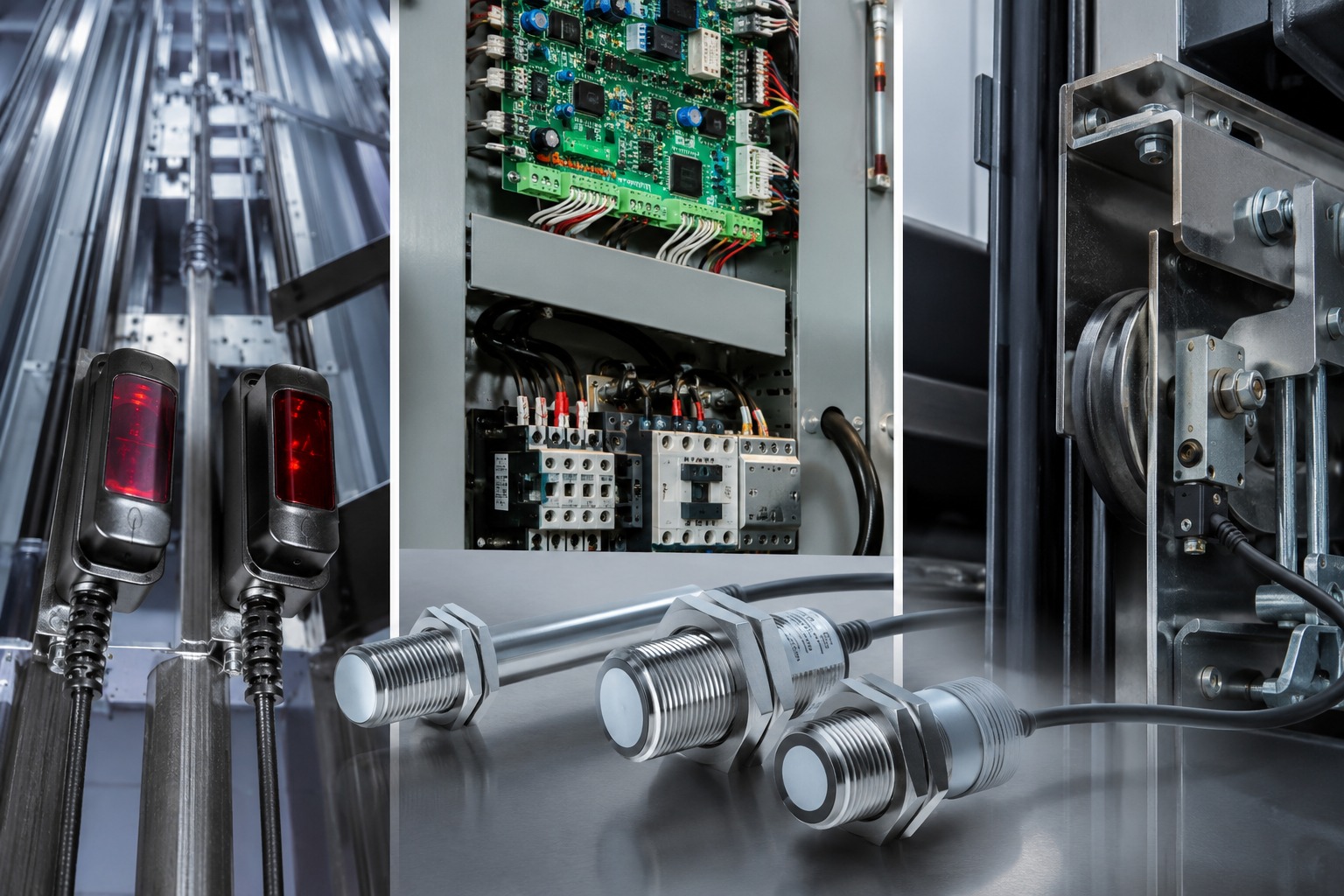
Elevator photoelectric switches and position detection sensors help the lift know where the car is, whether the door zone is correct, whether leveling is accurate, and whether control feedback is stable. In practical maintenance work, these small parts have a big effect on ride quality, door performance, floor stopping accuracy, and system safety. When a sensor becomes weak, dirty, misaligned, or electrically mismatched, the result may be nuisance faults, re-leveling problems, inaccurate landing stops, door reopening issues, or shutdowns that inconvenience passengers and building management.
In the Philippines, sensor reliability matters even more because elevators often operate in mixed conditions: coastal humidity in Manila Bay and Cebu, dust in construction-heavy districts, heavy passenger traffic in Makati and Bonifacio Global City, and salt exposure in port-side properties near Batangas, Subic, and Davao. For service contractors and building owners, choosing the correct elevator sensor is not only about matching a part number. It is also about checking sensing principle, output type, voltage, mounting space, beam distance, response speed, brand compatibility, and installation method.
This guide explains what elevator photoelectric switches detect, where position sensors are used, how to choose the right type and voltage, what to review when replacing Hitachi-related models, how mounting distance and alignment affect performance, what common failure symptoms look like, and how preventive maintenance can reduce callbacks. If you are sourcing spare parts, you can also review our elevator photoelectric switch options, our position detection sensor range for lift applications, and our GLS-326 type leveling sensor solutions for model matching.
For the Philippine market, buyers usually focus on three priorities: reliable compatibility, fast supply for urgent maintenance, and stable quality that reduces repeated replacements. Those priorities apply across commercial towers, condominiums, hospitals, malls, hotels, industrial sites, and modernization projects. A well-selected sensor can support smoother operation, lower downtime, and better maintenance efficiency.
What Elevator Photoelectric Switches Detect
A photoelectric switch in an elevator typically detects the presence or absence of a target using a light beam. Depending on design, that target may be a vane, flag, reflector, bracket edge, moving door component, or a point in the landing zone. In elevator systems, the sensor is not usually there for general object detection like in factory conveyors. Instead, it is used for specific control tasks where the controller must know exact position or state.
The most common functions include door zone confirmation, leveling reference, floor position indication, landing alignment, speed change point detection, and mechanism status feedback. When the car approaches a landing, the controller uses input from sensors together with encoder and control logic to decide when to slow down, enter the door zone, stop, and hold accurate leveling. If the photoelectric switch does not change state at the correct moment, the car may stop high or low, re-level repeatedly, or generate a fault code.
Photoelectric switches can also support door operator functions. In some arrangements, they confirm whether a vane or moving component has reached the expected point. In others, they act as part of the safety logic for preventing the system from continuing when a mechanical movement did not complete as expected. This is why a sensor that appears physically similar to another model cannot always be substituted directly.
| Detection Function | Typical Elevator Location | What the Sensor Detects | Why It Matters | Common Fault Risk | Maintenance Note |
|---|---|---|---|---|---|
| Door zone detection | Car top or hoistway reference point | Presence of vane or zone marker near landing | Allows safe door opening only in correct zone | Doors do not open or open late | Check beam path and target width |
| Leveling reference | Near landing stop position | Precise arrival point of car | Improves floor stopping accuracy | Car stops high or low | Verify mounting distance carefully |
| Position feedback | Car frame or shaft equipment | Passing of flags or brackets | Feeds controller with movement status | Floor count errors | Inspect target condition and spacing |
| Door mechanism status | Door operator assembly | Open or closed movement point | Supports proper door sequencing | Door reversal or incomplete close | Clean dust and grease around sensor |
| Speed change point | Hoistway position reference | Approach marker before landing | Supports smooth deceleration | Rough stopping or overshoot | Confirm response timing |
| Safety logic confirmation | Selected control interfaces | Expected state of moving part | Prevents operation in abnormal condition | Intermittent shutdowns | Check stable output signal under load |
The table above shows that the same sensing principle may support different control objectives. In maintenance practice, always identify the function first. If a technician replaces a door zone sensor with a similar-looking unit that has a different sensing distance or output logic, the elevator may run but still show unstable behavior.
Position Detection Sensor Applications
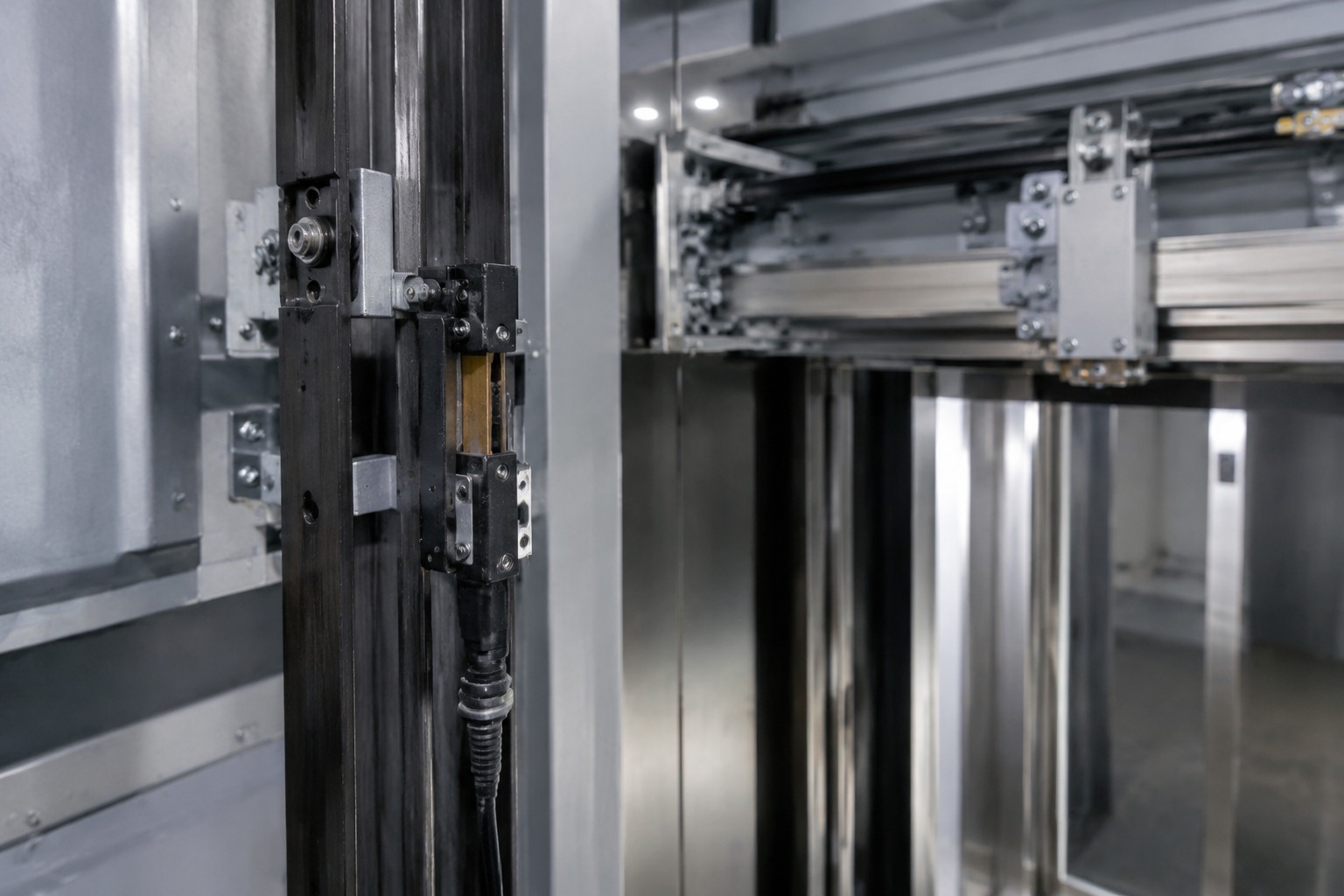
Position detection sensors are used wherever the elevator system needs repeatable confirmation of movement or location. In older units, they may work alongside mechanical switches and magnetic devices. In newer systems, they often complement encoders, frequency converters, and more precise control boards. They are especially important in applications where the controller expects a clean and fast switching signal under repetitive duty.
In Philippine commercial buildings, one common application is floor approach and landing alignment in medium- and high-rise passenger elevators. In hospitals, sensors help maintain smooth and accurate stopping for stretcher traffic. In residential towers across Quezon City, Pasig, and Cebu City, reliable position sensing reduces passenger complaints related to uneven leveling. In logistics, warehousing, and industrial freight lifts around Clark, Laguna, and Cavite, sensors also help support tougher duty cycles and heavier loads.
Position detection sensors can be found in the following application groups:
- Car leveling and re-leveling control
- Landing zone and floor stop confirmation
- Door operator position feedback
- Retiring cam or vane-related status detection
- High-speed lift deceleration reference points
- Modernization upgrades where original parts are obsolete
For maintenance companies, application knowledge is useful because symptoms may point to different sensors. If passengers report that the car stops correctly most of the day but becomes inaccurate during humidity spikes or after shaft cleaning, the issue may be contamination or marginal alignment rather than a major control board failure. Correct diagnosis saves time and avoids unnecessary replacement of higher-value components.
| Application | Building Type | Main Benefit | Typical Sensor Requirement | Philippines Use Case | Replacement Priority |
|---|---|---|---|---|---|
| Leveling control | Condominium | Accurate floor stop | Stable repeatability | Residential towers in Manila | High |
| Door zone confirmation | Office tower | Proper door opening permission | Reliable zone signal | Makati and BGC offices | High |
| Door operator feedback | Mall | Smoother door cycles | Fast response and dirt tolerance | Retail sites with heavy traffic | Medium to high |
| Floor position tracking | Hotel | Improved dispatch accuracy | Consistent switching output | Tourism hubs in Cebu and Boracay support facilities | Medium |
| Freight lift positioning | Warehouse | Reliable heavy-duty operation | Robust housing and secure mounting | Clark and Laguna industrial sites | High |
| Modernization integration | Mixed-use building | Extends equipment life | Model matching and controller compatibility | Older towers in Ortigas | High |
The applications above show why buyers should not think of elevator sensors as generic accessories. Their value comes from precise system fit. In modernization projects, especially, a replacement sensor may need the correct housing size, connector style, cable length, and electrical behavior to work with legacy controllers or adapted interfaces.
The line chart reflects a realistic upward demand trend driven by urban residential growth, office retrofits, and maintenance demand for installed elevators in major Philippine cities. Growth is supported not only by new installations but also by replacement needs in aging buildings where sensors are among the more frequently serviced control accessories.
How to Choose Sensor Type and Voltage
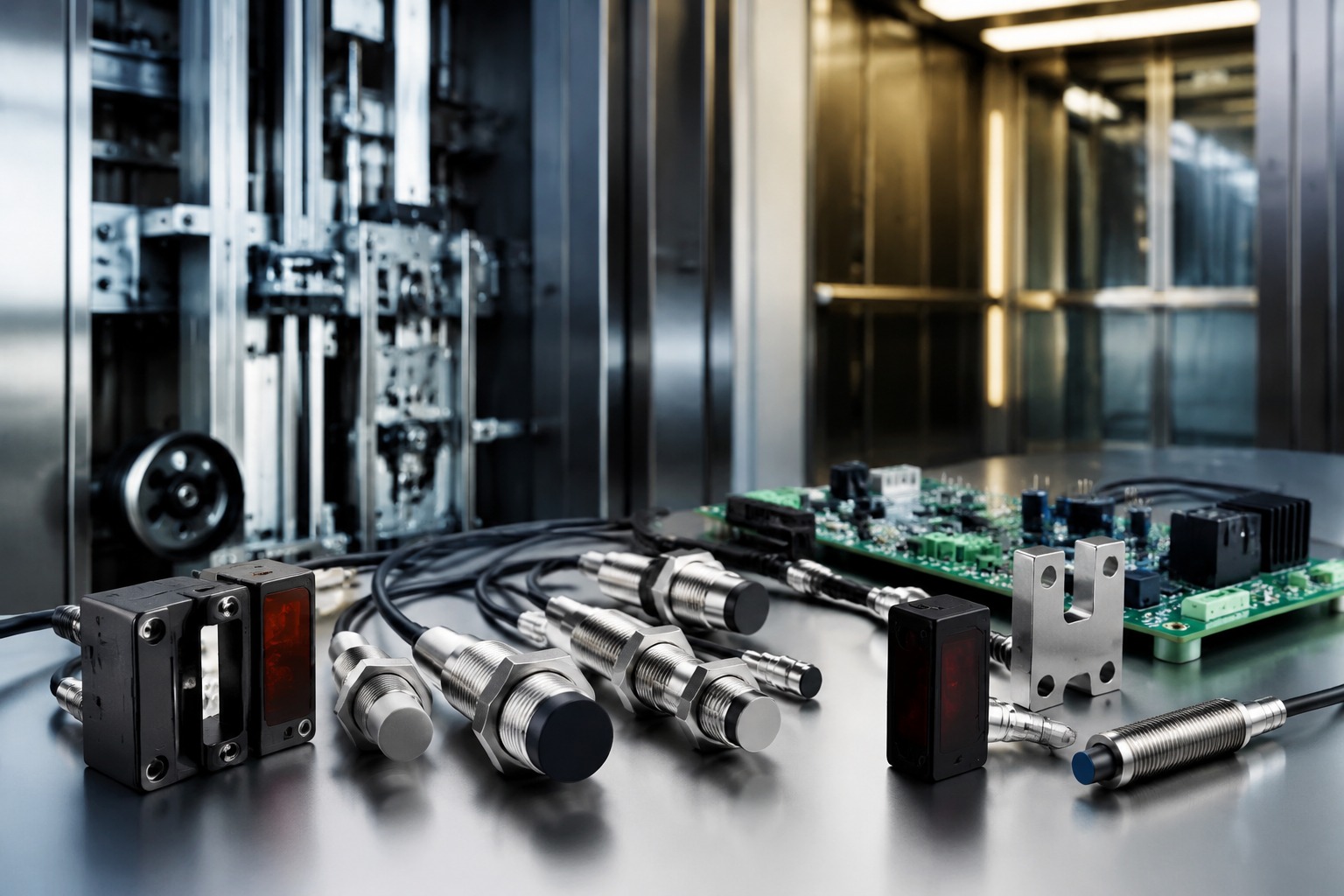
Choosing the right sensor type and voltage is one of the most important steps in elevator spare parts sourcing. A replacement must match both mechanical and electrical requirements. Even if the sensor body fits in the bracket, the output may not be compatible with the controller, or the sensing distance may shift the trigger point enough to cause erratic operation.
Start with the original part data. Check model number, brand reference, rated voltage, output type, connector or lead wire arrangement, light source type, sensing distance, mounting hole spacing, target style, and environmental rating. If the original label is worn, compare photos, dimensions, and wiring against the machine documentation or actual site condition.
Voltage matching is critical. Common options may include 12V, 24V, AC/DC variants, and specific controller-compatible ranges. Never assume a sensor is interchangeable simply because the plug fits. Output logic can differ as normally open, normally closed, NPN, PNP, relay output, or dedicated controller signal format. In elevator systems, using the wrong output can cause false inputs, permanent ON state, no detection, or even board damage.
Type selection also depends on installation method. Through-beam, retro-reflective, diffuse, slot, and compact photoelectric designs each behave differently. Some applications require a narrow and precise beam to detect a vane edge. Others need tolerance for vibration or a wider target path. In dusty shafts, a design with better contamination resistance may last longer.
| Selection Factor | What to Check | Why It Is Important | Common Mistake | Site Effect | Recommended Action |
|---|---|---|---|---|---|
| Rated voltage | Controller supply and original sensor label | Prevents mismatch and unstable operation | Using similar-looking sensor with different voltage | No output or sensor burnout | Confirm with multimeter and manual |
| Output type | NPN, PNP, NO, NC, relay, dedicated signal | Ensures controller reads status correctly | Ignoring signal logic | False fault or permanent trigger | Match exact output behavior |
| Sensing distance | Original beam range and target gap | Affects timing and repeatability | Choosing longer range without alignment review | Late or early switching | Measure actual installed distance |
| Housing size | Bracket dimensions and hole spacing | Supports stable mounting | Forcing loose installation | Vibration and intermittent faults | Use exact or verified compatible size |
| Cable/connector | Pin assignment and cable length | Avoids rewiring errors | Cutting and splicing without signal check | Intermittent contact issues | Verify pinout before installation |
| Environment resistance | Dust, humidity, salt exposure | Improves lifespan in local conditions | Selecting indoor-only unit for shaft use | Frequent contamination failure | Choose suitable protection level |
For buyers in the Philippines, environmental durability should be part of the evaluation. Equipment installed in coastal buildings around Manila Bay, Iloilo, Cebu, and Davao may face more corrosion-related issues. Buildings near ports and transport hubs can also experience higher dust and vibration. A sensor that performs well in a clean test bench environment may behave differently after months in a humid shaft.
When customers request assistance from us, we usually recommend sharing the original model code, clear product photos, wiring details, equipment brand, and application position. This helps reduce the risk of ordering a part that is only visually similar. Our technical capabilities are focused on careful model matching, cross-checking of key specifications, and reviewing compatibility for elevator control accessories so maintenance teams can order with better confidence.
Hitachi Sensor Replacement Considerations
Hitachi-related elevator sensors often require closer attention because replacement decisions must consider not only the sensor body, but also the specific application logic within the elevator system. Some buildings in the Philippines have older Hitachi units that have gone through partial modernization, which means the installed sensor may not be identical to the original factory issue. A site may have adapted brackets, replacement connectors, or a third-party controller interface.
Before replacing a Hitachi position sensor or leveling sensor, confirm the following: original part number, current installed variant, cable termination, bracket location, sensing target, voltage supply, and controller input expectations. If the site has a history of repeated sensor failure, also inspect whether the root cause is mechanical vibration, target misalignment, water ingress, electrical noise, or poor-quality previous replacement parts.
One common mistake is to replace only based on a partial model name or external appearance. Another is to assume that all Hitachi-compatible sensors used in leveling applications have the same beam width and switching point. In reality, a small difference in geometry can affect landing accuracy. This is especially important in buildings where passengers are sensitive to floor level difference, such as hospitals, condominiums with elderly residents, and premium office towers.
| Hitachi Replacement Checkpoint | Why It Matters | What to Verify on Site | Risk if Ignored | Best Practice | Priority |
|---|---|---|---|---|---|
| Part number confirmation | Avoids wrong model substitution | Label, manual, maintenance history | Immediate incompatibility | Cross-check multiple sources | Critical |
| Actual installed configuration | Past repairs may have changed setup | Photos, bracket, connector, wire colors | Order mismatch | Document before removal | Critical |
| Voltage and output logic | Protects controller input | Measure supply and input type | Signal failure or damage | Check with technician and drawings | Critical |
| Target and beam geometry | Affects switching position | Flag width, target gap, approach direction | Leveling errors | Replicate original geometry | High |
| Mounting tolerance | Hitachi systems may need exact placement | Hole spacing and sensor face alignment | Intermittent operation | Use stable bracket and lock fasteners | High |
| Modernization history | Older systems may use adapted parts | Controller brand and retrofit records | Unexpected incompatibility | Review system changes before ordering | High |
For customers sourcing replacements, our manufacturing capabilities support stable product inspection, dimensional review, and protective packaging designed to reduce transit damage before delivery to the Philippines. That is particularly useful when sending parts to service teams working across Metro Manila, Cebu, Davao, Bacolod, and Cagayan de Oro, where minimizing shipping-related delays matters for urgent maintenance schedules.
This demand comparison indicates why office, mall, and condominium sectors remain strong sources of replacement sensor demand in the Philippine market. High ride frequency, extended operating hours, and larger installed elevator counts create more opportunities for wear, misalignment, and contamination-related sensor issues.
Mounting Distance and Alignment Checks
Correct mounting distance and alignment are as important as selecting the right model. Even a genuine or highly compatible replacement may perform poorly if the beam does not meet the target at the intended point. In elevator applications, a few millimeters can matter. Mounting too far from the target may weaken detection. Mounting too close can cause unstable triggering or mechanical interference. Angular misalignment can create intermittent faults that only appear during vibration, high speed travel, or thermal expansion.
Technicians should check bracket rigidity, sensor face orientation, target position, cable strain, and beam path cleanliness. If the target is bent or loose, replacing the sensor alone may not solve the problem. Similarly, if the bracket has been reworked during past repairs, the new sensor may need careful shimming or adjustment to recreate the original trigger point.
Alignment checks should include both static and dynamic verification. Static means visually checking the gap, tightening hardware, and confirming the indicator light switches correctly. Dynamic means operating the elevator through multiple cycles and observing whether the signal is consistent at normal speed, slow speed, and under actual door and car vibration conditions.
| Alignment Item | Inspection Method | Acceptable Result | Common Problem | Operational Symptom | Corrective Action |
|---|---|---|---|---|---|
| Sensor-to-target gap | Measure actual distance | Within model specification | Gap too wide | Missed detection | Reposition sensor or target |
| Face orientation | Visual and straight-edge check | Beam aimed correctly | Sensor tilted | Intermittent switching | Adjust bracket angle |
| Bracket rigidity | Manual movement test | No looseness under vibration | Loose mounting screws | Random faults during travel | Retighten and lock fasteners |
| Target condition | Inspect vane or flag | Straight and clean target | Bent or dirty flag | Late detection | Repair or replace target |
| Cable routing | Trace cable movement path | No tension or rubbing | Cable pulled during travel | Signal dropouts | Secure cable and add slack |
| Indicator response | Cycle test during movement | Consistent light/status change | Flickering output | Nuisance shutdowns | Recheck alignment and power quality |
The explanation above shows why sensor replacement should never end at installation. A proper post-installation check reduces return visits. In humid and dusty shafts common in tropical climates, contamination can also build up quickly, so the “correct” alignment on day one may drift into marginal operation if cleaning is neglected.
The area chart shows a practical trend in the market: more buyers are moving away from generic “looks similar” substitutions and toward better-matched compatible replacements. This trend is supported by modernization work, rising expectations from property managers, and the need to reduce repeat maintenance visits.
Fault Symptoms and Troubleshooting
When an elevator sensor begins failing, the symptoms are not always obvious. Some faults are hard failures, where the sensor has no power, no output, or physical damage. Others are soft failures, where operation becomes unstable only under certain temperatures, humidity levels, or vibration conditions. Good troubleshooting starts by separating sensor issues from wiring, controller, and mechanical problems.
Typical symptoms include inaccurate leveling, repeated re-leveling after stop, doors not opening at landing, false door zone indication, missed floor position inputs, intermittent shutdowns, or fault codes linked to approach, landing, or door logic. In many cases, cleaning and re-alignment can restore normal operation, but if the signal output is degraded or internal components have aged, replacement is the correct fix.
A practical troubleshooting sequence is: verify supply voltage, inspect wiring and connectors, clean the sensor face and target, check LED indication, test alignment, review target condition, monitor signal at controller input, and compare behavior over repeated cycles. If the signal still fluctuates after mechanical corrections, replace with a verified matching sensor.
| Fault Symptom | Likely Cause | Quick Check | Detailed Check | Possible Fix | Urgency |
|---|---|---|---|---|---|
| Car stops above or below floor | Misaligned leveling sensor or wrong sensing point | Check gap and target | Observe switching timing during approach | Realign or replace sensor | High |
| Repeated re-leveling | Weak intermittent sensor signal | Watch indicator light | Measure output consistency over cycles | Clean, secure, or replace | High |
| Doors do not open at landing | No valid door zone signal | Check zone sensor status | Trace controller input response | Restore sensor detection | Critical |
| Random shutdown during travel | Loose wiring or unstable position feedback | Inspect connectors | Vibration test and continuity test | Repair wiring or change sensor | Critical |
| Intermittent fault in rainy season | Moisture ingress or corrosion | Visual inspection for rust | Check insulation and connector condition | Replace and improve sealing | Medium to high |
| False detection after shaft cleaning | Target bent or bracket shifted | Inspect physical alignment | Re-measure mounting position | Reposition hardware | Medium |
The troubleshooting table is useful because it links symptoms to probable causes without jumping straight to replacement. In the field, this helps maintenance teams prioritize action. For example, “doors do not open at landing” is often a critical service issue requiring immediate verification of door zone input, while “intermittent re-leveling” may allow for a shorter but still urgent diagnostic window.
Our service capabilities are centered on responsive communication, careful matching support, and helping customers reduce downtime with practical replacement guidance. For maintenance companies handling multi-site service routes in Luzon, Visayas, and Mindanao, this kind of support matters because delays in identifying the right sensor can keep elevators out of service longer than necessary.
Preventive Sensor Maintenance
Preventive maintenance is one of the most cost-effective ways to extend sensor life and reduce emergency callouts. Because elevator sensors are relatively small and inexpensive compared with inverters, control boards, or motors, they are sometimes overlooked until a fault occurs. However, periodic attention can prevent many common failures.
A good preventive routine includes cleaning, inspection of mounting tightness, checking target condition, reviewing cable routing, verifying indicator response, and confirming proper gap. In high-traffic buildings, these checks should be part of scheduled maintenance intervals. In more demanding environments such as coastal properties, parking structures, industrial freight lifts, and sites with ongoing renovation dust, inspection frequency may need to be increased.
Maintenance teams in the Philippines should pay special attention during monsoon periods, after nearby construction, and in buildings close to roads, ports, or sea air. Salt, humidity, and dust can all affect optics, connectors, and mounting hardware. Repeated door vibrations can also loosen small brackets over time.
| Maintenance Task | Recommended Interval | What to Inspect | Reason | Tools Needed | Expected Benefit |
|---|---|---|---|---|---|
| Clean sensor face | Monthly or as needed | Dust, grease, moisture film | Maintains clear beam path | Lint-free cloth | More reliable detection |
| Check alignment | Quarterly | Gap, angle, target path | Prevents trigger drift | Measuring tool and visual gauge | Stable leveling and door zone signals |
| Tighten mounting hardware | Quarterly | Bracket and screws | Reduces vibration-related faults | Basic hand tools | Fewer intermittent shutdowns |
| Inspect cable and connector | Quarterly | Wear, corrosion, looseness | Protects signal integrity | Multimeter and visual check | Lower wiring-related failures |
| Verify signal response | Semiannual | LED and controller input state | Detects weak output early | Meter or diagnostic interface | Planned replacement before failure |
| Review environmental exposure | Semiannual | Water, rust, salt, heavy dust | Adjusts maintenance frequency | Inspection checklist | Longer component life |
The preventive maintenance schedule above is especially useful for property managers who want to reduce passenger complaints and emergency repair expenses. It also helps modernization contractors assess whether existing sensor positions can be kept or need improvement during upgrades.
This comparison highlights why specialized sourcing matters for elevator sensors. General industrial parts channels may provide fast access to broad products, but elevator applications often require closer model matching, brand familiarity, and compatibility checks. For building owners and maintenance contractors in the Philippines, those differences can directly affect downtime and repeat service costs.
FAQ about Elevator Photoelectric Switches
1. What is the difference between a photoelectric switch and a position detection sensor in elevators?
A photoelectric switch is a sensing method that uses light to detect a target. A position detection sensor is a broader application term describing a sensor used to confirm movement or location. In elevators, a photoelectric switch can serve as a position detection sensor when it is used for leveling, door zone, or floor reference.
2. Can I replace an elevator sensor with any industrial sensor of the same size?
No. Size alone is not enough. You must verify voltage, output logic, sensing distance, target type, response behavior, and mounting geometry. A physically similar sensor may still cause unstable operation.
3. How do I know whether the problem is the sensor or the controller?
Start by checking power supply, wiring, LED indication, alignment, and controller input state. If the sensor receives proper voltage and the mechanical setup is correct but the output remains unstable, the sensor is a likely cause. If the output is normal but the controller does not respond, investigate the input circuit or related control board.
4. Are Hitachi elevator sensors harder to replace?
They are not necessarily harder, but they often require stricter verification. Many sites have undergone previous repairs or modernization, so the installed part may differ from the original issue. Always confirm actual site configuration.
5. Why do sensor problems increase in some Philippine buildings during rainy months?
Humidity, condensation, and corrosion can affect optics, connectors, and signal stability. Buildings near the coast or near open loading areas can experience even more exposure. Preventive cleaning and inspection are important before and during the wet season.
6. How often should elevator photoelectric switches be inspected?
For most passenger elevators, visual inspection and cleaning during regular maintenance visits is a good baseline. High-traffic buildings, freight lifts, and harsh environments may need more frequent checks.
7. What information should I provide when requesting a replacement quote?
Share the original part number, clear photos, dimensions, voltage, wiring details, elevator brand, and where the sensor is used. This improves matching accuracy and reduces delays.
8. Are leveling sensors and door zone sensors the same?
Not always. Some systems use related designs, but the application, switching point, and required output can differ. Treat them as function-specific components unless documentation confirms interchangeability.
9. What buying approach is best for maintenance companies in the Philippines?
Use a supplier that understands elevator spare parts, can review compatibility, and can support reliable logistics to your service areas. This is especially important if you maintain mixed brands such as Hitachi, Toshiba, KONE, Mitsubishi, and others across multiple cities.
10. What should buyers expect in 2026 and beyond?
By 2026, the market is expected to move further toward better-matched replacement sensors, more modernization-driven demand, and stronger focus on lifecycle reliability. Technology trends include smarter diagnostics, cleaner signal integration with modern control systems, and improved compatibility documentation. Policy and sustainability trends may also push building owners toward maintenance strategies that extend equipment life, reduce waste from repeated incorrect purchases, and support safer, more energy-conscious elevator operations.
Buying Advice for the Philippines Market
For Philippine buyers, the best purchasing decision usually balances technical fit, delivery dependability, and long-term service value. A lower unit price does not always mean lower total cost if the part causes a return visit, passenger complaint, or repeated downtime. In Metro Manila, where response times and tenant expectations are tight, reducing repeat faults can be more valuable than saving a small amount on the initial purchase.
When comparing local suppliers and import channels, review whether they can help with actual model matching, not just general product availability. Ask whether they are used to elevator applications, whether they can interpret photo-based identification, and whether they provide stable packaging suitable for domestic forwarding to Luzon, Visayas, or Mindanao. Deliveries routed through Manila, Cebu, Davao, Batangas, or Subic should also consider transit handling and lead time risk.
For contractors managing modernization projects, it is wise to standardize documentation during disassembly. Record sensor labels, take bracket measurements, note connector pinouts, and save original mounting positions. This makes future replacements easier and helps avoid confusion when multiple brands or retrofitted systems exist within the same property portfolio.
Industries and Real-World Use Cases
Different industries create different sensor stress conditions. In office towers, long daily operating hours mean high cycle counts. In condominiums, leveling comfort matters because residents notice floor mismatch quickly. In malls, door cycles are heavy and contamination from public traffic is common. In hospitals, smooth and accurate stopping is critical for patient movement. In industrial or freight settings, vibration and dust may be stronger than in standard passenger lifts.
A common case in central business districts such as Makati or Ortigas is intermittent leveling complaints during peak hours. Often the cause is not a major drive issue but a marginal sensor alignment that fails under vibration and high traffic. In coastal properties in Cebu or near Manila Bay, corrosion at connectors can produce unstable signals that appear random until the connector is opened and inspected. In older mixed-use buildings in Quezon City or downtown Manila, modernization has sometimes left a mix of original and replacement parts, making careful model tracing essential.
These examples reinforce a simple point: good sensor practice combines correct identification, accurate installation, and regular maintenance. When those three are handled properly, photoelectric switches and position sensors quietly support smooth elevator operation every day.
Our Support for Elevator Sensor Sourcing
We support maintenance companies, distributors, building owners, and modernization contractors with elevator spare parts sourcing that prioritizes reliable matching and practical service. Our technical capabilities help customers compare models, confirm key parameters, and reduce ordering errors for control-related parts such as sensors, encoders, power supplies, and boards. Our manufacturing-related quality process focuses on stable inspection and protective packing to help parts arrive in good condition. Our service support is built around responsive communication, compatibility review, and helping customers reduce downtime across a wide mix of brands used in the Philippines.
Beyond sensors, customers often source related lift accessories at the same time, including door operator components, door locks, light curtains, guide shoes, oil cups, buttons, COP panels, intercom parts, and more. For many maintenance teams, having a supplier that understands how these parts interact inside elevator systems makes purchasing more efficient, especially when urgent service windows are short.
If you are reviewing a replacement for a photoelectric switch, position detection device, or leveling sensor, the most effective next step is to gather the exact model details and installation photos. That makes it easier to confirm whether the needed part is a direct replacement, a compatible alternative, or a case that requires deeper technical review.