
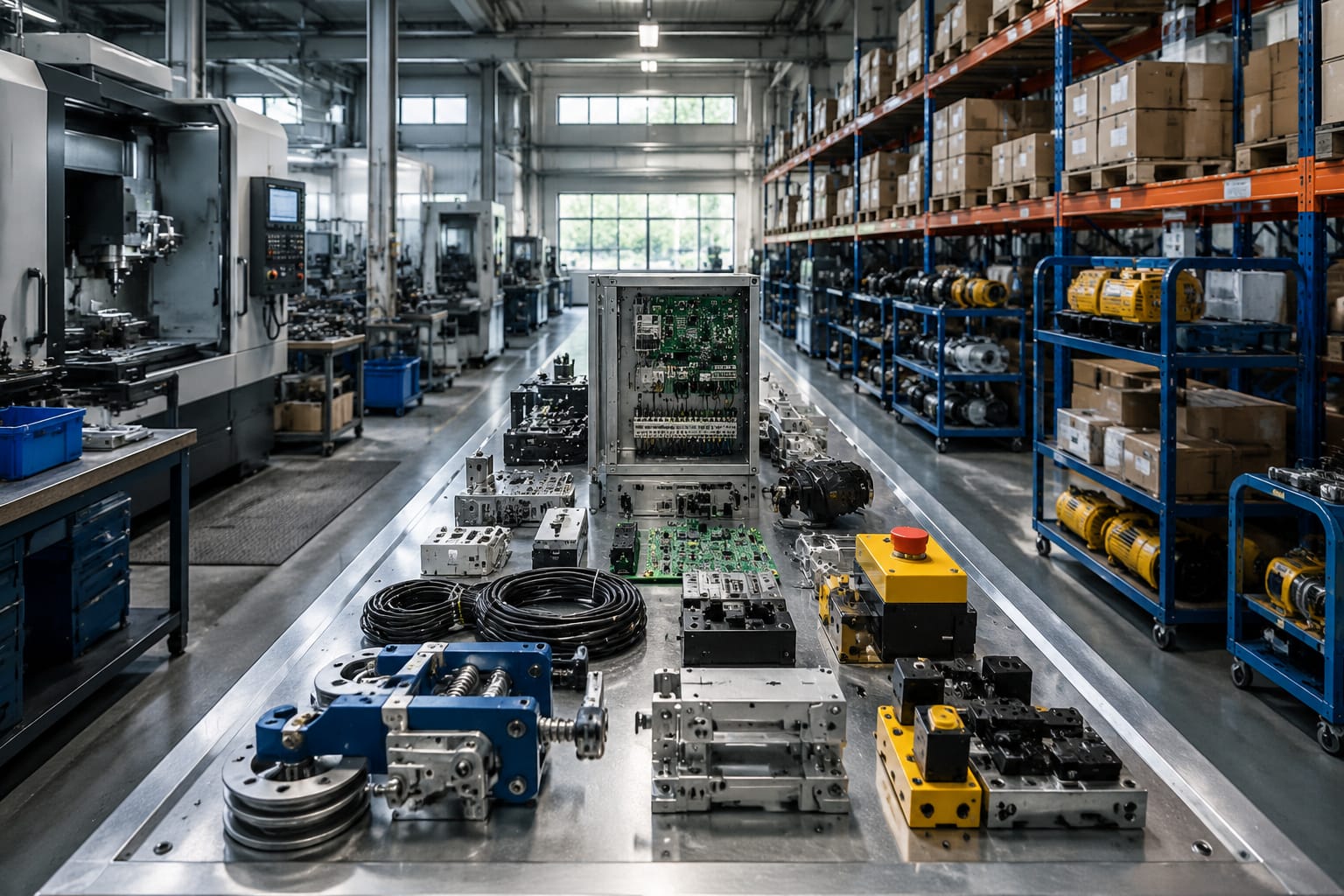
An elevator parts manufacturer makes the component or system, while an elevator parts supplier sources and distributes parts from one or more manufacturers. The right choice depends on the replacement: manufacturers are often more suitable for custom engineering, repeat production, and direct technical alignment; suppliers are usually more practical for multi-brand sourcing, legacy equipment, and consolidated orders.
For Philippine maintenance contractors, importers, distributors, modernisation companies, and OEM buyers, the decision should be based on compatibility, documentation, quantity, lead time, technical support, and the consequences of installing the wrong part. A supplier is not automatically less capable than a manufacturer, and buying directly from a manufacturer is not always the fastest or lowest-risk option.
Manufacturer and Supplier Roles Explained
An elevator parts manufacturer designs, produces, assembles, or controls the production of a component. Depending on the product, the manufacturer may be responsible for the electrical design, mechanical dimensions, firmware, production testing, packaging, and technical documentation.
An elevator parts supplier operates further along the purchasing chain. A supplier may hold stock, source products from several manufacturers, support different elevator brands, combine parts into one shipment, and help customers identify suitable replacements. Some suppliers also provide application guidance, inspection, or after-sales coordination, but the scope varies by company.
The terms can overlap. A manufacturer may sell through distributors, while a supplier may manufacture selected items under its own brand or arrange production to a customer’s requirements. Therefore, it is important to ask what role the company has for the specific part you need.
Manufacturer versus supplier at a glance
| Consideration | Elevator parts manufacturer | Elevator parts supplier |
|---|---|---|
| Main role | Makes or controls production of a part | Sources and distributes parts |
| Product access | Usually strongest for its own product line | May offer products from several brands |
| Customisation | Often better placed for design changes and repeat production | May coordinate custom sourcing or recommend alternatives |
| Multi-brand purchasing | Usually limited to its own range | Often more convenient for mixed-brand requirements |
| Legacy equipment | May support older products only if records or production remain available | May locate compatible replacement options from different sources |
| Small or mixed orders | May apply production minimums | May consolidate different part types |
| Lead time | Depends on stock, production schedule, and customisation | Depends on supplier stock and upstream availability |
| Technical authority | Direct authority over its own design | Product knowledge may differ across brands and models |
| Documentation | Usually direct for its own products | Should provide available manufacturer documentation |
| Best fit | Custom, repeat, or design-specific requirements | Standard, multi-brand, legacy, or consolidated sourcing |
This table describes common procurement patterns, not guarantees. Confirm the commercial and technical terms for every order.
Product Range and Multi-Brand Access
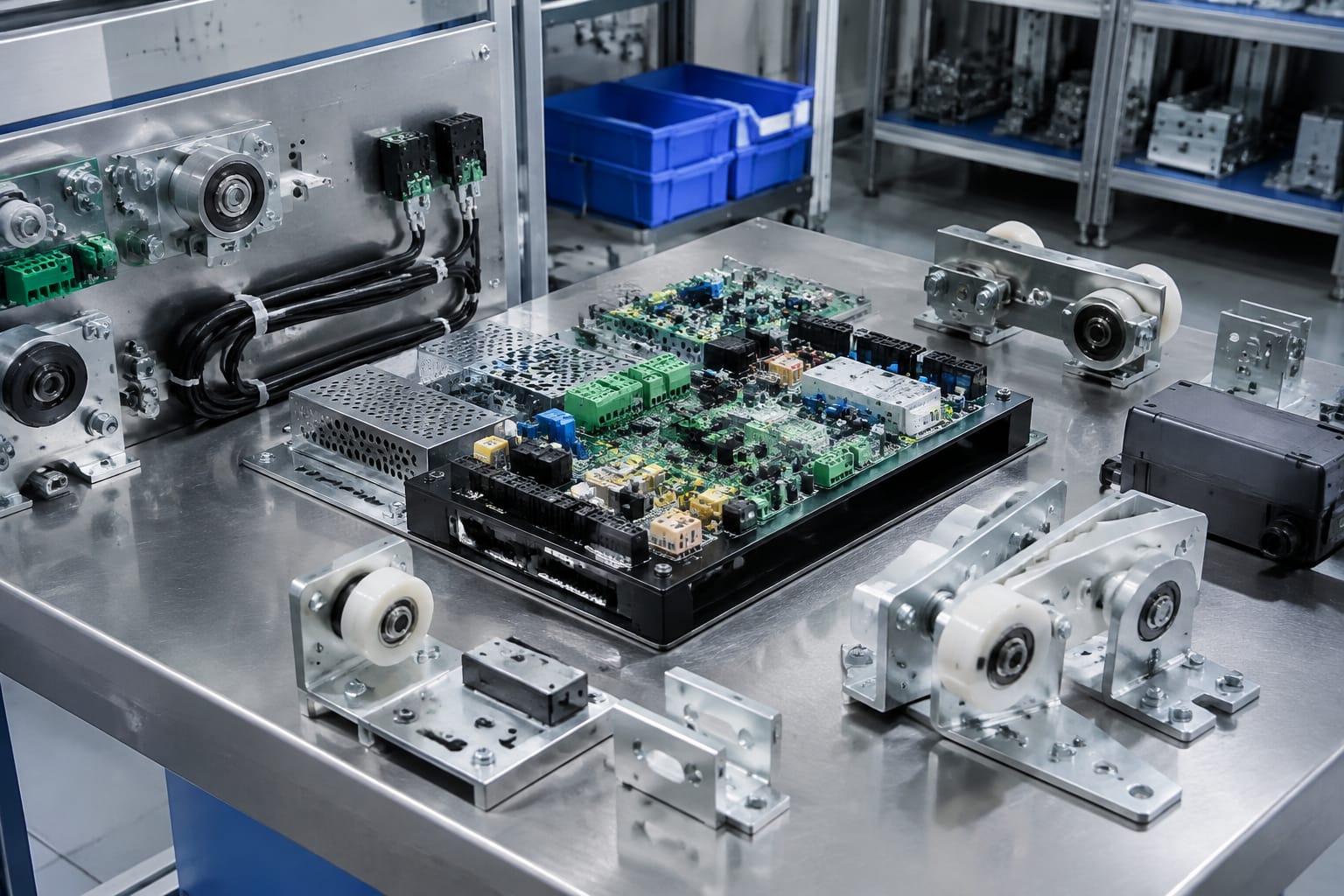
A manufacturer normally focuses on a defined product family. This can be useful when the required part must match a particular design, interface, mounting arrangement, or control system. Direct communication with the manufacturer may also reduce uncertainty about revisions and approved substitutes within that product family.
The limitation is range. A lift maintenance project may require a controller-related item, door safety component, emergency power equipment, relays, sensors, or mechanical parts from different brands. Ordering each item directly from a separate manufacturer can create more enquiries, invoices, shipping arrangements, and technical checks.
A multi-brand supplier can simplify that process by handling parts from several manufacturers or product lines. This is particularly useful for:
- Maintenance contractors supporting different elevator brands
- Distributors building a broader spare-parts inventory
- Importers consolidating an order for one shipment
- Modernisation teams replacing obsolete components in stages
- Sourcing teams comparing several technically suitable options
- OEM buyers that need recurring access to selected components
Multi-brand access does not mean that every replacement is interchangeable. A supplier should still verify the original part number, electrical characteristics, physical fit, control-system interface, and application. A similar appearance is not proof of compatibility.
For example, a buyer reviewing control or accessory requirements may need to distinguish between a frequency converter, a lift controller, a door safety device, and an emergency power supply. These are not interchangeable merely because they are all used in elevator systems. Product category, model, revision, and intended application must be checked separately.
Customisation and Engineering Support
A manufacturer is generally the stronger route when the requirement involves a genuine design change. Examples may include:
- A modified mounting plate or enclosure
- A different connector arrangement
- A specified voltage or signal interface
- A replacement designed around a fixed cabinet layout
- A repeat part with controlled dimensions
- A private-label or OEM production requirement
- A new component that must integrate with an existing system
Before requesting a customised part, prepare the information that allows the manufacturer to assess the requirement accurately:
- Original manufacturer and part number
- Elevator model or control-system details
- Electrical ratings and signal information
- Mechanical drawings, dimensions, and mounting points
- Connector, terminal, or cable details
- Operating environment and installation constraints
- Required quantity and expected repeat demand
- Testing or documentation requirements
A supplier can still be valuable in this process. It may identify an available standard part that avoids unnecessary redesign, locate a compatible alternative, or coordinate a request with the original maker. This can be more practical when the specification is not yet complete.
Do not describe a standard replacement as “custom” simply because it will be used in a different elevator. Customisation can affect tooling, engineering review, testing, minimum order quantity, and production time. Ask whether the proposed part is an exact replacement, an approved equivalent, or a modified product requiring site validation.
Availability for Legacy Equipment
Legacy elevator equipment creates a different sourcing problem. The original manufacturer may have discontinued the part, changed the design, stopped supporting a product family, or retained limited documentation. Direct contact with the original manufacturer can still be useful, but it may not produce a current, available replacement.
A supplier with multi-brand and legacy sourcing experience may provide more practical options, such as:
- A remaining standard replacement
- A later revision intended to replace the original
- A compatible alternative from another manufacturer
- A refurbished or used component, where explicitly offered and acceptable
- A set of related parts needed to complete the replacement
- Technical information needed for a modernisation decision
Each option has limitations. A later revision may require wiring, parameter, or mounting changes. A cross-brand alternative may need engineering approval. A refurbished part may have different documentation and support conditions from a new part. An apparently compatible component may work in one installation but not another because of differences in firmware, configuration, or surrounding equipment.
For a legacy replacement, provide clear evidence rather than relying on a description such as “for an old Mitsubishi lift” or “for an existing Otis system.” Send the nameplate details, original part number, photographs of labels and connectors, dimensions, wiring information, and any fault or obsolescence notes available to your team.
A supplier should state what has been confirmed and what still requires checking. Buyers should also confirm whether the replacement requires commissioning, parameter transfer, software access, or on-site testing by a qualified technician.
Quality Assurance and Documentation
The key quality question is not simply whether a company is a manufacturer or supplier. It is whether the part’s identity, condition, traceability, and suitability can be verified.
For a new component, request or confirm the relevant documentation before purchase where it is important to the application:
- Manufacturer name and exact part number
- Product revision or date code, where applicable
- Datasheet or technical specification
- Installation or wiring information
- Inspection or test records, if supplied for that product
- Material or conformity documents, if required by the project
- Packaging and labelling details
- Storage or handling requirements
- Warranty terms and exclusions
- Recommended replacement or compatibility notes
The documents available will vary by product and manufacturer. Do not assume that every spare part includes the same certificate or test report. Confirm what is actually included in the quotation and shipping documents.
When buying through a supplier, ask whether the part is:
- New and unused
- A current production item
- An older but unused item
- Refurbished or repaired
- A substitute for the requested part
- Sourced from the original manufacturer or another channel
These distinctions affect risk and should be recorded in the purchase order. If the item is critical to safe operation or system integrity, document the acceptance criteria before ordering.
Packaging is also relevant for electrical and electronic parts. Check that the item arrives with its identification intact and that there is no visible damage, moisture exposure, corrosion, broken connector, or sign of improper handling. Inspection on receipt does not replace professional installation or functional testing.
An elevator parts manufacturer can provide direct documentation for its own product. A capable supplier should be able to identify the source of the part and pass on the documentation it is authorised or able to provide. If the supplier cannot confirm what is being offered, treat the item as unverified until the technical and commercial gaps are resolved.
Minimum Orders and Lead Times
Manufacturers may set minimum order quantities because production involves materials, setup, tooling, labour, and testing. This is more common for customised parts, private-label production, and items made to order. A direct manufacturer may also prioritise larger repeat requirements over a one-off replacement.
Suppliers may be more flexible for small quantities or mixed orders, especially when parts are already in stock. However, supplier availability is not guaranteed. The item may need to be sourced from an upstream manufacturer or another distributor, which can add time and cost.
Lead time should be separated into clear stages:
- Quotation and technical review
- Confirmation of the exact part
- Stock allocation or production
- Inspection and packing
- Export or domestic dispatch
- Freight and customs processing, where applicable
- Receipt and incoming inspection
Ask whether the quoted lead time is based on available stock, confirmed production, or an estimate from another party. Also confirm whether the stated time excludes freight, customs processing, testing, or documentation.
For an urgent breakdown, the fastest route may be a supplier with the correct part already available. For a planned modernisation, direct manufacturer engagement may be worthwhile if the project needs a repeatable design, engineering changes, or long-term supply. In both cases, an incorrect part creates a longer delay than a careful compatibility review.
Avoid selecting a source solely because it promises the shortest dispatch time. Confirm the exact part number and condition first. “Ready to ship” is useful only when the item is suitable for the actual elevator installation.
Technical Support After Purchase
Technical support can be as important as the initial sale, especially for control, drive, door, and safety-related components. The support model differs between manufacturers and suppliers.
A manufacturer may provide the most authoritative information about its own design, including manuals, wiring, parameter settings, known revisions, and approved replacement relationships. Access to that support may depend on the product, distributor arrangement, or project requirements.
A supplier may offer practical support by checking part numbers, comparing product revisions, coordinating questions with the manufacturer, and helping the buyer identify missing information. A multi-brand supplier can be useful when a maintenance team is working across several elevator brands.
Before ordering, confirm:
- Who answers technical questions after delivery
- Whether support covers identification only or installation guidance
- What information must be supplied for troubleshooting
- Whether configuration or programming is required
- Whether the supplier can obtain manufacturer clarification
- How damaged, incorrect, or incompatible items are handled
- What warranty process applies and who assesses the claim
Technical support does not replace the responsibility of the elevator contractor or qualified technician to assess the installation. A supplier can help clarify a product, but the site team must determine whether the component is appropriate for the specific system and whether commissioning and safety checks are required.
For example, a replacement emergency power supply or light curtain accessory may look straightforward to source, but the project still requires checks on ratings, connection method, physical arrangement, and system behaviour. A sourcing decision should include these verification steps rather than treating the product name as a complete specification.
Choosing the Right Sourcing Route
Use the following decision points to select between an elevator parts manufacturer and supplier.
Choose a manufacturer when:
- You need a custom design or modified component
- The part must follow a proprietary interface or specification
- You require a repeat production arrangement
- Your volume supports direct production ordering
- You need direct clarification from the design authority
- The project has enough lead time for engineering and manufacturing
- Documentation must come directly from the product maker
The manufacturer is often appropriate for an OEM programme, a new equipment design, or a planned modernisation with defined technical requirements. Still, confirm production minimums, engineering charges, tooling ownership, testing, delivery terms, and after-sales support.
Choose a supplier when:
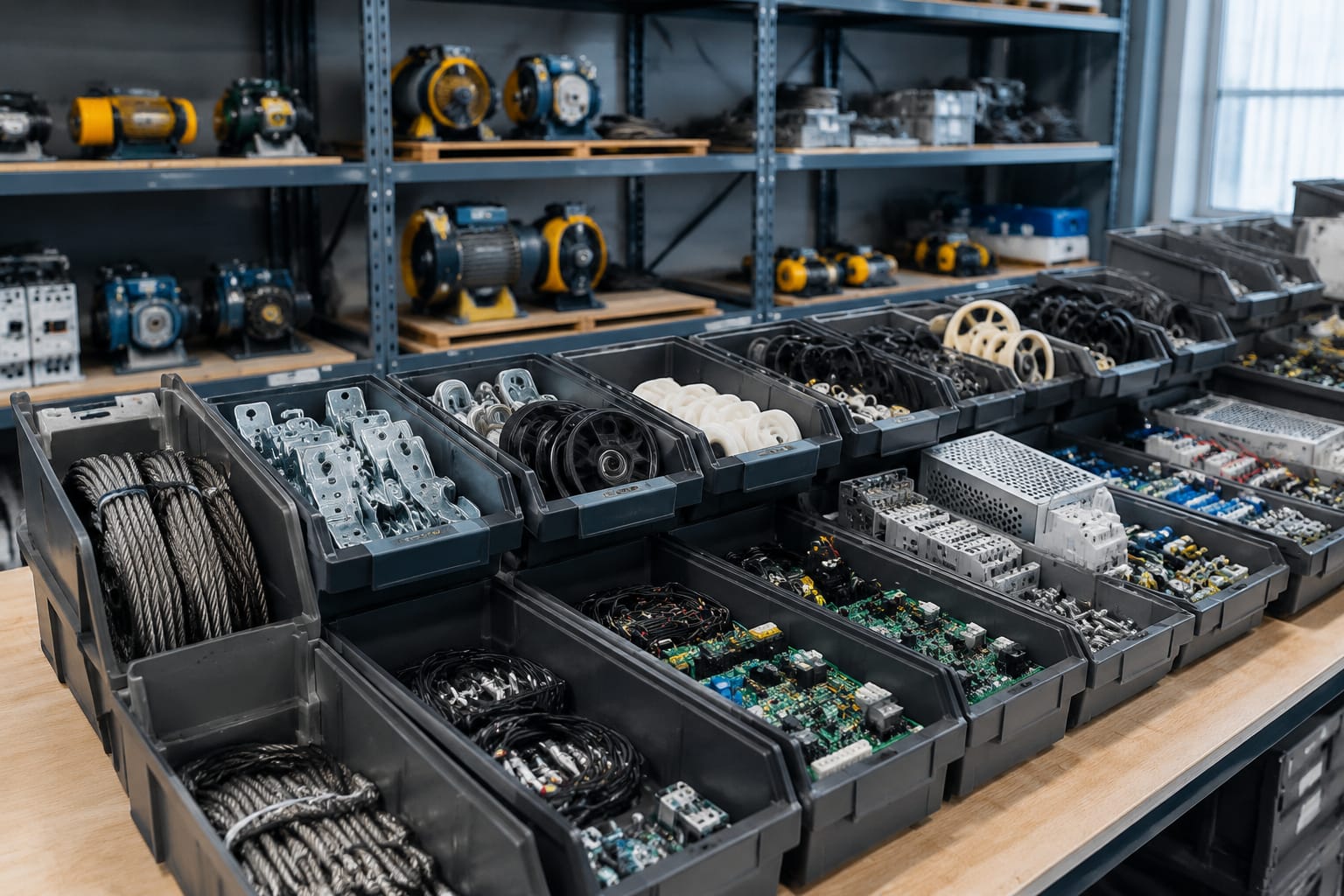
- You need parts from more than one brand
- The order contains several different product categories
- You need a small quantity or a one-off replacement
- The original part is obsolete or difficult to locate
- You need help identifying a replacement
- A maintenance shutdown creates a firm purchasing deadline
- You want to consolidate sourcing and shipping
- You need access to both standard and alternative options
For B2B buyers, a supplier can reduce procurement effort without removing the need for technical verification. Kelevator supplies multi-brand elevator spare parts to B2B importers, distributors, maintenance contractors, and OEM buyers, which makes a multi-brand sourcing route relevant when a project involves mixed requirements.
A practical comparison checklist
Before requesting a quote, prepare:
- Original part number and manufacturer
- Photographs of the nameplate, label, connectors, and installed position
- Elevator brand, model, and control-system information
- Required quantity and whether repeat orders are expected
- Required delivery destination and project schedule
- New, unused, refurbished, or substitute-part preference
- Required documents and inspection records
- Known electrical, mechanical, or environmental constraints
- Whether the part will be used for repair, modernisation, testing, or production
Then ask each potential source to identify the offer clearly:
- Exact replacement or alternative?
- New or refurbished?
- Same revision or later revision?
- In stock or made to order?
- What documents are included?
- What compatibility information has been verified?
- What information remains for the buyer or site team to confirm?
This approach lets you compare a manufacturer and supplier on the same basis. It also helps prevent a common procurement mistake: comparing only unit price while ignoring engineering review, freight, minimum order, commissioning effort, and the risk of a failed installation.
Common Sourcing Mistakes to Avoid
Treating a supplier as only a reseller
A supplier’s value may include product identification, multi-brand coordination, documentation handling, and communication with upstream manufacturers. Ask what services are included rather than assuming the role is limited to forwarding a box.
Assuming the original manufacturer is always the best source
The original maker may be the best source for a proprietary or customised requirement, but an obsolete part, small order, or mixed-brand project may be easier to handle through a specialist supplier.
Matching by appearance
A part with the same shape or connector may have different ratings, firmware, pin assignment, mounting dimensions, or operating logic. Confirm technical compatibility using part numbers and system information.
Omitting the exact application
“Elevator spare part” is not enough information for a reliable quotation. Include the equipment model, original label, installation context, and intended use.
Ignoring the replacement’s surrounding system
A component may be compatible in isolation but require related changes to wiring, parameters, brackets, connectors, or control logic. Ask whether the replacement is a direct fit or part of a broader conversion.
Failing to document the agreed condition
Record whether the item is new, unused old stock, refurbished, or an alternative. This avoids disputes during receiving inspection and warranty handling.
Frequently Asked Questions
Is an elevator parts manufacturer better than a supplier?
Neither is always better. A manufacturer is generally the stronger choice for custom, proprietary, or repeat-production requirements. A supplier is often more practical for multi-brand orders, legacy replacements, small quantities, and urgent sourcing. Compatibility and documentation matter more than the company label alone.
Can a supplier provide original elevator parts?
A supplier may offer original parts, alternatives, or parts sourced from different manufacturers. Ask for the exact manufacturer, part number, condition, and supporting documentation before placing the order.
Should I buy direct from the elevator OEM?
Direct OEM purchasing can be appropriate when the part is proprietary, the application requires OEM confirmation, or the project needs a controlled design. For discontinued parts, mixed-brand requirements, or consolidated procurement, a specialist supplier may offer more practical options.
What information does a supplier need to identify a replacement?
Provide the original manufacturer and part number, clear photographs, nameplate details, elevator and controller information, connector and mounting details, quantity, and the intended application. The more specific the information, the less likely the quotation will rely on assumptions.
How do I choose a source for an urgent breakdown?
Start by confirming the exact replacement and its availability. A supplier with the correct item ready for dispatch may be suitable, but do not skip compatibility checks. Confirm the part condition, documentation, delivery terms, and any commissioning requirements before installation.
Next Step
Classify the requirement as standard, legacy, customised, or urgent, then prepare the part number, equipment details, photographs, quantity, and documentation requirements. That information will help you decide whether to approach an elevator parts manufacturer directly or use a multi-brand supplier for a broader sourcing request.
Related product references
For practical catalog examples related to this topic, review [Monarch Elevator frequency converter 3000+ integrated machine Lift Controller](/products/monarch-elevator-frequency-converter-3000-integrated-machine-lift-controller/), [light curtain lift accessories elevator spare parts](/products/light-curtain-lift-accessories-elevator-spare-parts-6/), and [Elevator emergency power supply box Mitsubishi lift parts](/products/elevator-emergency-power-supply-box-mitsubishi-lift-parts/). Confirm the exact model, dimensions, ratings, and connectors before ordering.