
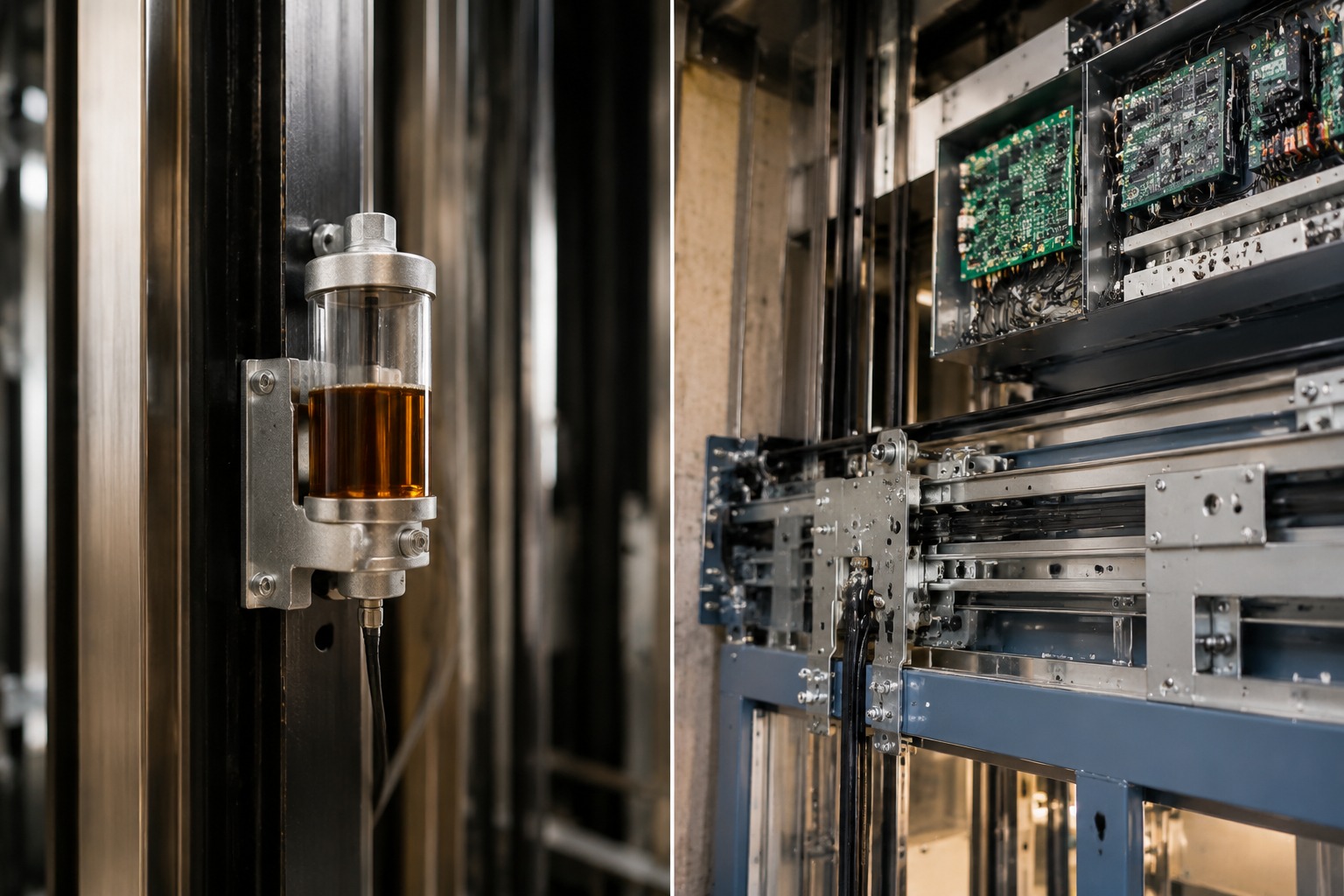
Guide rail lubrication is a small maintenance detail with a very large impact on elevator safety, ride quality, and long-term repair cost. In the Philippines, where elevators operate in coastal humidity, high-rise residential towers, shopping centers, hospitals, hotels, mixed-use buildings, and industrial facilities, properly matched oil cups, felt pads, and bottom pit oil collection boxes help keep guide rails protected from dry friction, uneven wear, rust formation, and contamination. When these parts are ignored, the result can be noisy car travel, unstable shoe movement, accelerated guide rail scoring, oil dripping into the pit, and more frequent shutdowns.
The direct answer is simple: elevator oil cups store and deliver lubricant to the guide rail, felt pads regulate the amount of oil released, and oil collection boxes help manage excess lubricant in the pit area. Together, they create a controlled lubrication path. For property managers and maintenance companies in Metro Manila, Cebu, Davao, Iloilo, Cagayan de Oro, and other fast-growing urban areas, selecting the right lubrication accessories is part of protecting both passenger comfort and lifecycle cost. If you are evaluating standard replacement parts, you can review elevator oil cups for lift accessories as a starting point for compatible maintenance supply planning.
The Philippine market places special importance on practical compatibility. Many buildings use a mix of legacy and modernized equipment from brands such as Hitachi, Toshiba, KONE, Mitsubishi, and others. In these situations, maintenance teams do not just need “an oil cup”; they need the correct size, mounting style, felt density, and oil flow behavior for the actual rail, guide shoe, and operating environment. This article explains why guide rail lubrication matters, the main oil cup types, how felt pads control oil flow, how to choose small square oil cups for machine room less elevators, where bottom pit oil collection boxes are useful, how often to inspect and replace parts, the lubrication mistakes to avoid, and what future trends may shape selection decisions in 2026 and beyond.
Philippines Market Overview for Elevator Lubrication Parts
Demand for guide rail lubrication accessories in the Philippines is tied to several local factors: condominium growth in Metro Manila and Cebu, hotel and office projects in Makati, Bonifacio Global City, Ortigas, and Pasay, hospital expansions, warehouse and industrial upgrades near Batangas and Subic, and modernization of aging lifts in older commercial buildings. The tropical climate also matters. High moisture levels can increase the risk of oxidation on metal surfaces, while dust and airborne contaminants can mix with oil and create sludge on rails when lubrication is poorly controlled.
Maintenance contractors serving ports and trade hubs such as Manila, Batangas, and Cebu often prefer parts that are easy to match, easy to stock, and packed securely for domestic delivery or regional distribution. For imported spare parts, consistency in dimensions and protective packaging is especially important because damage to felt or deformation of a cup body can affect field performance. Building owners increasingly ask not only for price, but also for uptime protection, service interval stability, and lower call-back risk.
The line chart above illustrates a realistic demand trend based on ongoing urbanization, modernization projects, and preventive maintenance awareness. Growth is not explosive, but it is steady, which is typical for replacement-focused elevator parts markets. In practical terms, this means suppliers that can support stable replenishment of oil cups, felt pads, and oil collection boxes are often better positioned than those focused only on one-time sales.
| Philippine Market Driver | Why It Increases Demand | Common Buildings Affected | Lubrication Impact | Buying Priority | Typical Risk if Ignored |
|---|---|---|---|---|---|
| High-rise condominium growth | More elevators under regular maintenance contracts | Residential towers in Metro Manila and Cebu | Frequent rail contact cycles require controlled oiling | Consistent replacement stock | Noise complaints and uneven ride quality |
| Modernization of older lifts | Legacy systems need compatible spare parts | Older offices, malls, mixed-use buildings | Existing rail condition may need careful lubricant control | Model matching and retrofit fit | Misfit parts and repeat service calls |
| Coastal humidity | Corrosion risk is higher near sea air | Manila Bay, Cebu, Davao, Batangas sites | Lubrication helps reduce exposed dry metal contact | Reliable felt performance | Rust, contamination, and sludge formation |
| Heavy passenger traffic | Elevators run more cycles per day | Malls, transport hubs, hospitals | Oil delivery must stay stable between inspections | Durable cup body and pad | Accelerated rail and shoe wear |
| Industrial and logistics expansion | Service lifts and freight lifts need robust parts | Warehouses near Subic and Calabarzon | Dust control becomes critical | Pit oil management | Dirty rails and pit contamination |
| Preventive maintenance compliance | Building owners want fewer shutdowns | Commercial and institutional facilities | Scheduled replacement prevents lubrication gaps | Inspection-friendly design | Unexpected downtime and higher repair cost |
This table shows why the market for elevator lubrication components is not only about replacement frequency. It is also about local operating conditions, building usage patterns, and the ability to maintain safe, clean lubrication over time. In the Philippines, these factors often shape purchasing decisions more than headline unit price alone.
Why Guide Rail Lubrication Matters
Guide rails provide the travel path that keeps the elevator car and counterweight aligned. They are not designed to run dry in systems that require lubrication. When the oil supply at the rail interface is insufficient, friction increases, operating noise often becomes more noticeable, and guide shoes or inserts may wear faster. Over time, dry or inconsistent lubrication can contribute to scoring marks, metal fines, vibration, and a rougher ride. In buildings where users expect quiet and smooth elevator travel, even a minor lubrication problem can become a visible service issue.
Lubrication also matters because it supports the overall balance between protection and cleanliness. Too little oil can leave rails vulnerable; too much oil can attract dust, drip into the pit, and create housekeeping or safety concerns. A good lubrication system therefore does not simply add oil. It meters oil properly, distributes it through the felt, and keeps the rail surface evenly conditioned.
In the Philippines, where some equipment rooms and shafts can be exposed to heat, humidity, and dust variations, maintenance teams need to assess actual site conditions rather than follow one generic rule. A hospital in Quezon City, a residential tower in Makati, and a freight elevator in an industrial facility in Laguna may all require different lubrication approaches even if the same brand family is involved.
| Lubrication Function | What It Protects | Operational Benefit | Effect on Maintenance | Passenger Impact | If Lubrication Fails |
|---|---|---|---|---|---|
| Reduce rail friction | Guide rail surface and shoe contact area | Smoother travel | Less premature wear | Quieter ride | Noise and jerking sensation |
| Limit surface scoring | Rail finish quality | Stable guidance | Fewer corrective interventions | More consistent leveling feel | Visible rail marks and rough movement |
| Control heat at contact point | Shoes, liners, and rail interface | Better long-cycle performance | Lower replacement frequency | Fewer service interruptions | Wear debris and friction damage |
| Support corrosion resistance | Metal surfaces exposed to humidity | Cleaner operation | Reduced cleaning burden | More reliable service | Oxidation and contaminated oil film |
| Improve lubrication consistency | Entire guide path | Predictable operation | Easier inspection planning | Less vibration | Localized dry spots |
| Reduce pit contamination when managed properly | Pit area and shaft cleanliness | Safer housekeeping conditions | Simpler routine service | Indirect reliability benefit | Oil pooling and dirt buildup |
The key takeaway from this table is that guide rail lubrication affects not only mechanical wear, but also ride quality, shaft cleanliness, maintenance predictability, and customer perception. That is why even low-cost components like oil cups and felt pads deserve careful attention.
Types of Elevator Oil Cups
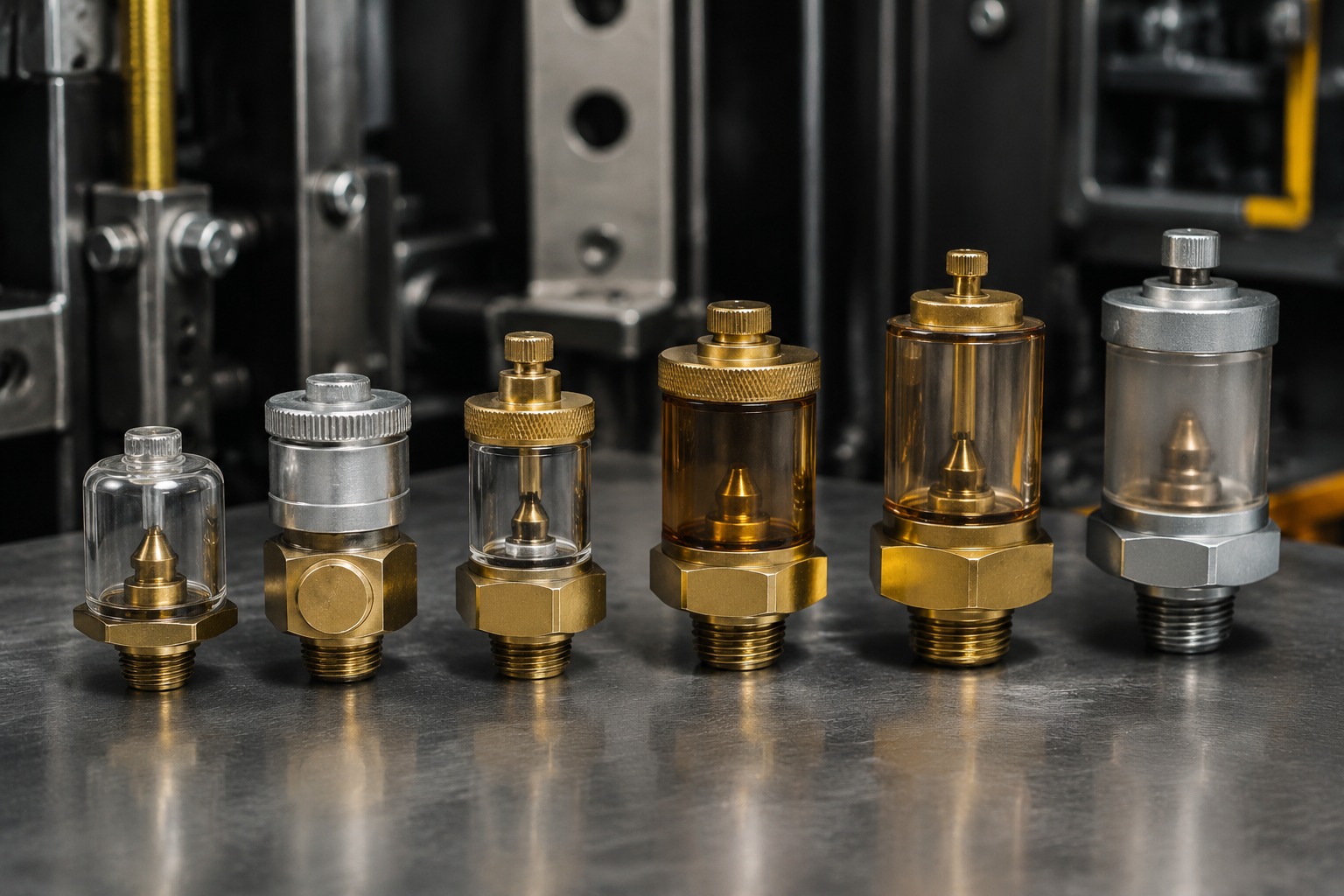
Elevator oil cups are available in several forms, and the right choice depends on rail size, mounting style, equipment layout, available space, and service access. Some are standard rectangular or square designs used in traditional arrangements, while others are compact variants intended for tighter assemblies. In older buildings, field technicians may encounter mixed installations where dimensions or mounting details differ from what the manual suggests, especially after modernization work.
For general replacement planning, many buyers start with standard oil cup lift accessories and then narrow down by body dimensions, felt arrangement, and compatibility with the existing guide shoe setup. The correct oil cup should fit securely, hold lubricant without leakage, and allow the felt to contact the rail evenly rather than at an angle.
| Oil Cup Type | Typical Shape | Best Use Scenario | Main Advantage | Possible Limitation | Buying Note |
|---|---|---|---|---|---|
| Standard square oil cup | Square | Common passenger elevator applications | Easy sourcing and straightforward replacement | May not fit tight spaces | Check body width and mounting points |
| Small square oil cup | Compact square | Space-limited guide shoe areas | Useful for modern compact systems | Lower oil reservoir volume | Confirm refill interval |
| Rectangular oil cup | Rectangular | Specific legacy equipment layouts | Can match older assemblies well | Less universal | Measure length, depth, and clip style |
| Metal body oil cup | Square or custom | Heavier duty or long-life preference | Strong structure | May cost more | Check corrosion resistance in humid sites |
| Plastic or composite body oil cup | Square or compact | Light-duty and standard maintenance use | Lightweight and economical | Material quality varies | Use verified quality parts only |
| Brand-matched replacement cup | Varies by model | Modernized or OEM-sensitive systems | Higher fit confidence | Requires model confirmation | Share photos, dimensions, and elevator brand |
This comparison shows that “type” is not just about shape. Reservoir size, body material, compatibility with the felt pad, and installation space all matter. Buyers in the Philippines often benefit from collecting three simple data points before ordering: the elevator brand or modernization history, the dimensions of the current oil cup, and clear photos of the mounting area. That alone can prevent many wrong-part shipments.
For machine room less systems or other compact arrangements, a small square oil cup for machine room less elevators can be a practical choice when standard units are too bulky. These designs are especially relevant where maintenance access is tighter and parts need to fit without interfering with adjacent components.
How Felt Pads Control Oil Flow
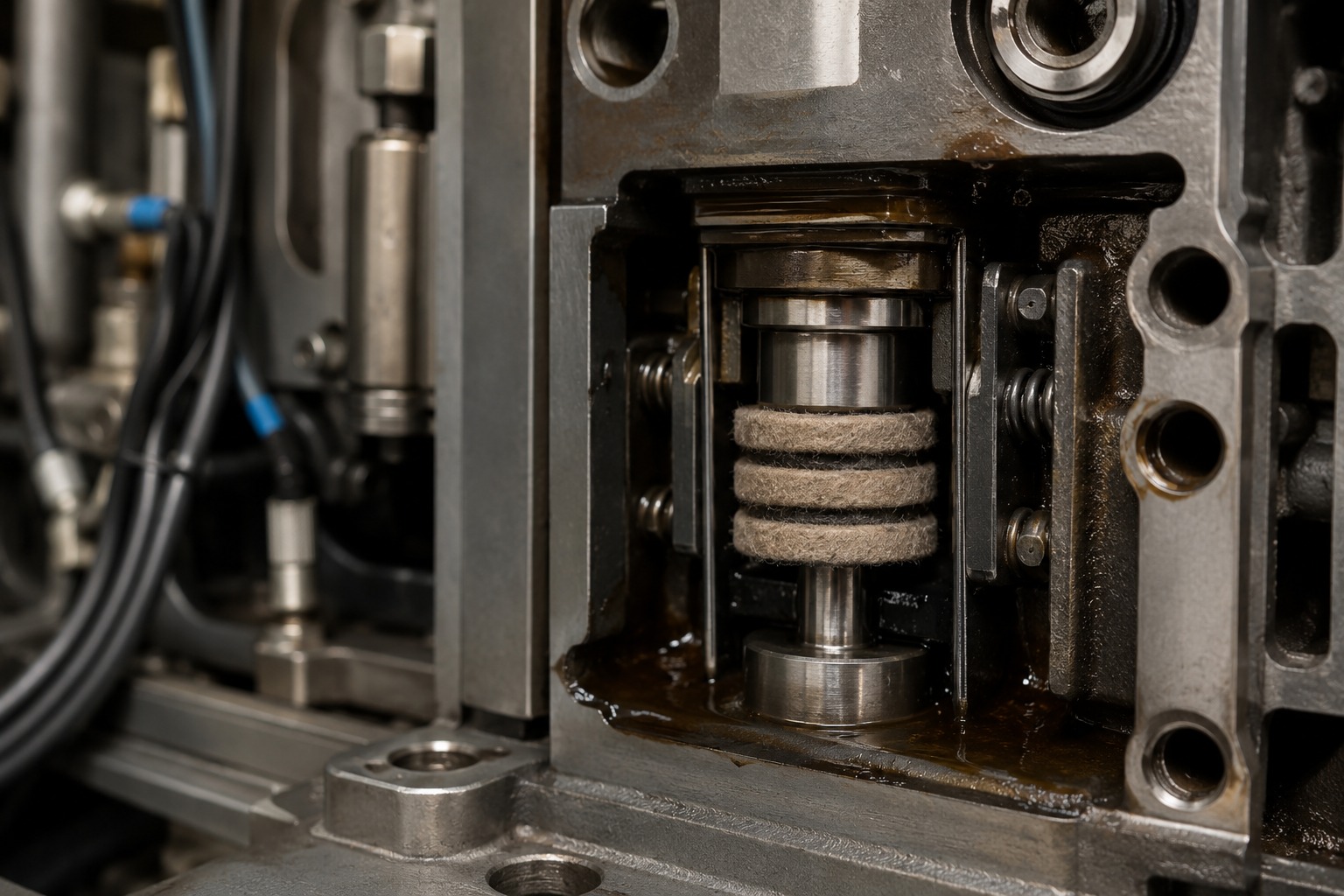
Felt pads are the quiet regulators of elevator rail lubrication. The cup stores the oil, but the felt decides how that oil reaches the guide rail. A well-made felt pad absorbs lubricant, releases it gradually, and maintains even contact across the rail face. If the felt is too loose, too hard, contaminated, deformed, or poorly matched to the oil cup, lubrication can become inconsistent. The result may be dripping, patchy oil transfer, or dry contact points.
In practical maintenance terms, the felt pad acts like a metering medium. It should be dense enough to prevent uncontrolled flow but open enough to deliver lubricant steadily during operation. Felt condition can change over time due to dirt, compression, oil breakdown, and repeated friction. That is why technicians should inspect not only oil quantity but also felt texture, shape retention, and contact pattern.
When replacement is needed, choosing a suitable elevator oil cup felt pad or cotton felt accessory is essential. The goal is not simply to replace material, but to restore stable oil flow behavior.
| Felt Pad Condition or Feature | Oil Flow Effect | Rail Contact Quality | Operational Result | Inspection Sign | Recommended Action |
|---|---|---|---|---|---|
| Clean and properly dense felt | Steady metered flow | Even | Smooth lubrication performance | Uniform oil trace | Keep in service and monitor |
| Over-compressed felt | Restricted flow | Uneven | Possible dry spots | Hard or flattened surface | Replace pad |
| Loose or low-density felt | Excessive flow | Too wet | Oil dripping and dirt pickup | Heavy oil streaking | Use correct felt density |
| Dirty felt with dust buildup | Blocked or irregular flow | Patchy | Mixed dry and wet zones | Dark sludge on felt | Clean area and replace felt |
| Misaligned felt | Localized transfer only | Partial | Uneven rail conditioning | One-sided wear marks | Reinstall or replace correctly |
| Aged felt with frayed edges | Unpredictable flow | Poor stability | Higher maintenance variability | Fiber breakdown | Replace during planned service |
The explanation behind this table is straightforward: most lubrication problems are not caused by oil alone. They are often caused by the way the felt handles the oil. A proper felt pad supports predictable lubrication intervals, cleaner rails, and less guesswork during inspections.
The area chart reflects a broader service trend: maintenance teams are paying more attention to flow control, not just lubricant replenishment. This shift is likely to continue in 2026 as property owners push for cleaner pits, lower waste, and more reliable preventive maintenance outcomes.
Machine Room Less Oil Cup Selection
Machine room less elevators present a special selection challenge because the available space around the guide shoe assembly can be limited. Compact design reduces installation room, so the oil cup must fit neatly without obstructing movement, access, or adjacent parts. In addition, the refill process should remain practical for maintenance teams. An oversized cup that barely fits may cause more trouble than it solves.
For these systems, a small square oil cup is often preferred because it balances compact dimensions with adequate lubricant storage. However, selection should not be based on size alone. Buyers should verify mounting position, felt pad dimensions, reservoir capacity, material durability, and how easily technicians can inspect the unit during routine visits. In the Philippine context, ease of access matters because many service contracts depend on tight maintenance windows and efficient technician movement across multiple sites in a day.
Another point to consider is vibration behavior. In compact systems, a poorly secured oil cup may shift over time or fail to maintain ideal felt contact. That can lead to intermittent lubrication. This is one reason why exact matching and stable build quality matter more than choosing the lowest-cost generic option.
| Selection Factor | Why It Matters in MRL Elevators | Good Practice | Common Error | Field Consequence | Buyer Tip |
|---|---|---|---|---|---|
| Compact body size | Space is limited around components | Measure actual installation gap | Assuming standard size will fit | Interference during operation | Request dimensional drawing |
| Reservoir capacity | Too small may need frequent refill | Match capacity to service interval | Choosing the smallest unit only | Oil runs out early | Review site traffic level |
| Mounting compatibility | Secure installation is critical | Confirm bracket or clip arrangement | Forcing mismatched fitting | Misalignment and leakage | Use photo confirmation before ordering |
| Felt pad size and density | Controls oil release | Use matched felt specification | Substituting random felt material | Dry rails or over-oiling | Order cup and felt together when possible |
| Inspection accessibility | Routine maintenance must stay efficient | Choose service-friendly layout | Ignoring refill access | Skipped or delayed inspection | Ask technicians for feedback before buying |
| Material durability | Part must withstand long-term use | Select proven stable quality | Using fragile low-grade parts | Cracks, deformation, repeat replacement | Prioritize quality control history |
This table highlights why MRL selection is more technical than it first appears. A compact oil cup must still deliver stable lubrication, survive repeated service handling, and fit the maintenance reality of the site. That is why many contractors prefer to keep a documented model-matching record for recurring building portfolios.
Bottom Pit Oil Collection Box Use Cases
Bottom pit oil collection boxes are used to capture excess lubricant or drips that may travel downward from the guide rail lubrication path. They are especially useful in buildings where over-oiling has previously been a problem, where dirt accumulation in the pit is a recurring issue, or where maintenance standards require cleaner housekeeping conditions. Although an oil collection box does not replace proper lubrication control, it can be an important secondary protection measure.
In the Philippines, pit cleanliness matters for both safety and service efficiency. In a humid environment, oil mixed with dust and moisture can create stubborn deposits. When pits are poorly managed, technicians spend more time cleaning and less time completing preventive maintenance. A collection box helps localize lubricant runoff and makes housekeeping more manageable.
For suitable applications, a square bottom pit oil collection box for elevators can support cleaner maintenance routines and easier monitoring of excess oil conditions.
| Use Case | Where It Commonly Applies | Main Benefit | What It Does Not Solve | Inspection Focus | Recommended Practice |
|---|---|---|---|---|---|
| High-traffic passenger elevators | Malls and office towers | Captures drip accumulation | Does not correct poor felt control | Volume of collected oil | Investigate source if buildup increases |
| Older elevators with inconsistent lubrication history | Modernized commercial buildings | Improves pit cleanliness during transition | Does not repair worn rails | Frequency of residue | Use with broader maintenance review |
| Freight elevators in dusty sites | Warehouses and industrial facilities | Reduces spread of oily debris | Does not stop dust entry | Sludge formation | Pair with regular pit cleaning |
| Coastal or humid installations | Batangas, Cebu, Davao, Manila Bay areas | Helps manage oil and contamination mix | Does not eliminate corrosion risk | Water and oil interaction | Monitor for rust and moisture ingress |
| Buildings with strict housekeeping expectations | Hospitals, hotels, premium residences | Supports cleaner maintenance presentation | Does not replace preventive checks | Overflow or staining | Add to inspection checklist |
| Sites with prior over-lubrication problems | Any building after repeated oil leakage complaints | Provides visible evidence of excess oil | Does not fix root cause alone | Collection rate trend | Adjust oiling method and felt condition |
The practical meaning of this table is that oil collection boxes are most effective when used as part of a controlled maintenance strategy. They help contain and reveal problems, but they should not be used to excuse ongoing over-lubrication.
Inspection and Replacement Schedule
A good inspection and replacement schedule prevents both dry rails and unnecessary waste. The exact interval depends on usage intensity, rail condition, environmental contamination, elevator speed, and the design of the lubrication assembly. However, most maintenance teams benefit from a routine that combines visual checks, oil level checks, felt contact evaluation, and planned replacement before major deterioration occurs.
In busy Philippine buildings, especially residential towers and hospitals, it is wise to monitor lubrication components more frequently than in low-use installations. Service teams should also document changes in oil consumption. A sudden increase can indicate over-flow, damaged felt, cup misalignment, or another underlying issue.
| Inspection Item | Suggested Frequency | What to Check | Warning Sign | Immediate Action | Replacement Trigger |
|---|---|---|---|---|---|
| Oil level in cup | Monthly | Enough lubricant for service interval | Empty or near-empty cup | Refill with correct lubricant | Repeated rapid depletion |
| Felt pad contact | Monthly | Even rail contact and proper alignment | Partial or angled contact | Reposition if possible | Persistent misfit or wear |
| Felt cleanliness | Monthly to quarterly | Dust, sludge, or fiber breakdown | Dark clogged surface | Clean surrounding area | Replace contaminated felt |
| Oil cup body condition | Quarterly | Cracks, deformation, loose mounting | Leakage or movement | Tighten or secure temporarily | Replace damaged cup body |
| Rail oil pattern | Quarterly | Uniform thin lubrication trace | Dry sections or heavy streaks | Adjust and inspect felt | When pattern remains unstable |
| Pit oil collection box condition | Quarterly | Collected volume and cleanliness | Unexpected buildup or overflow | Clean and trace source | If box is damaged or ineffective |
| Full lubrication system review | Semiannual or annual | Overall suitability for traffic and environment | Repeated complaints or wear findings | Review oil, cup, and felt combination | Replace mismatched components as a set |
This schedule is a practical baseline rather than a rigid rule. The explanation is important: replacement timing should be based on condition and site behavior, not only calendar age. Two elevators installed on the same day may need different maintenance actions if one serves a hospital around the clock and the other serves a low-use office annex.
The bar chart illustrates why inspection planning varies by industry. Condominiums, hospitals, and malls tend to generate stronger demand because of higher trip cycles and stronger expectations for continuous service.
Common Lubrication Mistakes
Many lubrication issues are avoidable. The most common mistakes usually come from using the wrong oil cup size, neglecting felt condition, overfilling the cup, selecting incompatible replacement parts, or failing to investigate oil buildup in the pit. These errors can create a cycle in which technicians keep adding oil to solve symptoms while the real problem remains uncorrected.
Another mistake is treating all elevators in a portfolio the same way. A building owner with sites in Makati, Taguig, Cebu, and Davao may assume one standard part will fit every lift. In reality, modernization history, guide shoe design, and shaft condition can differ significantly. A disciplined matching process saves money by preventing repeated replacements and emergency call-backs.
| Common Mistake | Why It Happens | Short-Term Result | Long-Term Risk | Better Approach | Who Should Watch It |
|---|---|---|---|---|---|
| Overfilling the oil cup | Trying to extend refill interval | Excess dripping | Pit contamination and dirt buildup | Follow controlled fill level | Technicians and supervisors |
| Ignoring worn felt pads | Focus stays on oil quantity only | Uneven lubrication | Rail and shoe wear | Inspect felt condition every visit | Maintenance teams |
| Using mismatched cup dimensions | Ordering by appearance alone | Poor fit or unstable mounting | Leakage and repeat failure | Measure and confirm model details | Purchasing staff |
| Using low-grade substitute felt | Attempt to reduce cost | Irregular oil flow | Higher total maintenance cost | Use specified density and size | Procurement and field teams |
| Not checking pit oil collection | Hidden issue during routine visits | Residue accumulates unnoticed | Unsafe or dirty pit conditions | Add pit check to schedule | Service managers |
| Applying one maintenance method to all elevators | Portfolio standardization pressure | Some sites become over- or under-lubricated | Inconsistent performance across buildings | Adjust by traffic and environment | Building owners and contractors |
The lesson from this table is that lubrication is a controlled system, not a one-step task. Accuracy in selection, refill practice, and inspection discipline matters more than simply adding more oil.
Buying Advice for Philippines Maintenance Buyers
When buying elevator oil cups and related lubrication components in the Philippines, decision-makers should focus on compatibility, condition control, and supply reliability. Price is important, but the wrong part can quickly cost more through repeat visits, damaged guide surfaces, or tenant complaints.
Start by documenting the existing installation. Good purchasing records include elevator brand, model if available, photos of the oil cup and mounting position, cup dimensions, felt dimensions, and notes about site conditions such as heavy dust, high humidity, or frequent over-lubrication. If the building has undergone modernization, note which subsystem changed. This helps avoid ordering legacy parts for a modified assembly.
It is also wise to ask whether the supplier can support broader spare parts continuity. Many maintenance firms prefer to consolidate sourcing of oil cups, guide shoes, door parts, sensors, buttons, and electronic boards to reduce purchasing complexity. In a market where downtime matters, the best vendor is often the one that helps maintenance teams match the right part quickly and package it safely for delivery to Metro Manila, Central Luzon, Calabarzon, Visayas, or Mindanao.
Industries and Applications
Elevator lubrication accessories are used across multiple sectors in the Philippines. Residential towers need stable, low-noise operation and predictable maintenance intervals. Hospitals require dependable performance and clean pits because shutdowns affect patient movement. Hotels prioritize passenger comfort and appearance, especially in premium properties. Shopping centers operate high-volume lifts with demanding traffic patterns. Office towers need smooth transport during peak hours. Industrial buildings and warehouses may operate freight or service lifts in dirtier conditions where pit oil management becomes especially important.
Applications also vary by elevator type. Passenger elevators usually emphasize ride quality and clean lubrication control. Service elevators may prioritize durability and maintenance convenience. Freight elevators often require more frequent inspection due to harsher environmental exposure. Modernized lifts may demand special attention because existing rails and guide arrangements can interact differently with replacement oil cups and felt pads than in brand-new systems.
Case Studies from Typical Philippine Scenarios
Consider a condominium tower in Bonifacio Global City experiencing intermittent rail noise on one car. The issue was not low oil volume alone. Inspection found a compact oil cup with an aged felt pad that had hardened and lost even rail contact. Replacing the felt and verifying cup alignment restored stable oil transfer and reduced complaints within the next service cycle.
In another scenario, a mid-rise commercial building in Cebu reported repeated oil residue in the pit. The root cause was overfilling combined with a felt pad that released too much oil. The solution included correcting fill practice, replacing the felt with a proper density grade, and adding a bottom pit oil collection box to improve monitoring and housekeeping while the maintenance pattern stabilized.
A hospital in Davao had modernization work completed on part of its elevator group. Standard replacement cups previously used on older units no longer fit one upgraded assembly correctly. By confirming the compact mounting space and changing to a smaller square oil cup with matched felt dimensions, the maintenance team reduced installation time and avoided makeshift fitting adjustments that could have caused future leakage.
Local Supplier Considerations in the Philippines
Not all suppliers serve the market in the same way. Some focus mainly on trading available stock, while others support model matching, condition review, and broader maintenance planning. For buyers in the Philippines, practical supplier evaluation often includes response speed, photo-based identification support, packaging quality for domestic shipment, and the ability to supply related parts for multiple elevator brands.
| Supplier Evaluation Point | Why It Matters | Strong Supplier Sign | Weak Supplier Sign | Effect on Buyer | Decision Value |
|---|---|---|---|---|---|
| Compatibility support | Reduces wrong-part orders | Asks for photos and dimensions | Sells by guesswork | Fewer returns and delays | High |
| Product range breadth | Helps consolidate sourcing | Offers oil cups, felt, shoes, boards, sensors | Very limited catalog | Simpler procurement | High |
| Quality inspection | Prevents field failure | Checks dimensions and finish before shipment | No inspection process | Lower service risk | High |
| Packaging quality | Protects parts in transit | Protective packing for felt and cup bodies | Loose packing | Less damage on arrival | Medium |
| Response time | Important during downtime | Fast part identification and quotation | Slow follow-up | Shorter downtime | High |
| After-sales communication | Supports recurring maintenance needs | Can assist with repeated model matching | No technical follow-up | Better long-term sourcing stability | Medium to high |
This table shows that the best supplier is not necessarily the cheapest initial option. For maintenance contractors, supplier reliability often translates directly into lower downtime, fewer misorders, and better service consistency for clients.
The comparison chart illustrates the practical gap between a sourcing partner that supports maintenance outcomes and a basic reseller that only moves stock. For technical spare parts such as oil cups and felt pads, this difference can be significant.
Our Company Support for Elevator Lubrication Parts
For buyers in the Philippines, we support lubrication-related elevator spare parts with a practical, maintenance-oriented approach rather than a simple catalog-only model. Our work is centered on helping maintenance companies, distributors, building owners, and modernization contractors reduce downtime and source compatible replacement parts with more confidence.
Technological Capabilities
We assist with model matching across multiple elevator brands and related parts families, including oil cups, felt pads, guide shoes, control boards, inverter components, door operator parts, door locks, sensors, encoders, power supplies, buttons, COP panels, and intercom accessories. This wider technical familiarity helps when a customer needs to confirm whether an oil cup issue is isolated or linked to another guide or motion component. We place emphasis on accurate identification through photos, dimensions, and application details, which is especially useful in modernization scenarios common in Philippine commercial buildings.
Manufacturing Capabilities
Our sourcing and product handling process focuses on stable dimensional consistency, practical material selection, and quality inspection before shipment. For lubrication components, that means attention to body integrity, fit stability, and felt compatibility. Protective packaging is also important because deformation or contamination during transport can affect installation results. This is relevant for deliveries to major urban centers as well as regional destinations where goods may pass through multiple handling points.
Service Capabilities
We support responsive communication, careful order confirmation, and recurring supply needs for maintenance portfolios. Instead of treating each order as a one-off transaction, we aim to help customers build repeatable part-matching records that reduce future sourcing time. For Philippine buyers managing multiple sites, this can improve replenishment speed and reduce the risk of buying incompatible replacements during urgent maintenance situations.
2026 Trends: Technology, Policy, and Sustainability
Looking ahead to 2026, three trends are likely to shape the market for elevator oil cups and guide rail lubrication components in the Philippines. First is a stronger focus on preventive maintenance data. Even for simple mechanical parts, maintenance teams are becoming more systematic about documenting oil consumption, replacement intervals, and recurring fault patterns. This supports more efficient service planning and may influence which oil cup and felt combinations become preferred standards for large building portfolios.
Second is policy and compliance pressure related to building safety, operational reliability, and cleaner maintenance practices. While oil cups themselves are small components, they affect rail condition, pit cleanliness, and the quality of routine service. Building owners are expected to place greater value on documented maintenance quality, especially in hospitals, premium residences, offices, and public-facing commercial properties.
Third is sustainability. Controlled lubrication helps reduce oil waste, unnecessary replacement, and contamination in the pit area. In 2026 and beyond, buyers may increasingly prefer lubrication setups that support longer stable service intervals, cleaner pits, and fewer repeat call-backs. This does not mean using less oil at any cost. It means using the right quantity with the right flow control. Felt pad quality, compact but suitable cup design, and better excess oil management will all become more relevant.
FAQ About Elevator Oil Cups
What does an elevator oil cup do?
An elevator oil cup stores lubricant and feeds it to the guide rail through a felt pad or similar contact medium. Its main job is to support controlled lubrication rather than uncontrolled dripping.
How do I know if the felt pad needs replacement?
Signs include hardening, dirt buildup, frayed fibers, uneven contact, dry rail sections, or excessive oil streaking. If the felt no longer delivers a stable thin oil pattern, replacement is usually the best option.
Are all oil cups the same size?
No. Dimensions, mounting style, reservoir size, and felt arrangement vary. Even visually similar parts may not fit correctly, especially in modernized or machine room less elevators.
Why is there oil in the elevator pit?
Possible causes include overfilling, worn felt, misalignment, excessive flow, or long-term drip accumulation. A pit oil collection box can help contain and monitor excess oil, but the root cause should still be corrected.
How often should oil cups be checked?
Monthly checks are common for oil level and felt condition, with broader quarterly or semiannual reviews depending on traffic and site conditions. High-use buildings in the Philippines may require closer monitoring.
Can I use any felt material as a replacement?
It is not recommended. Incorrect density or dimensions can cause either under-lubrication or over-lubrication. Use felt designed for elevator oil cup applications.
What is the best oil cup for machine room less elevators?
Often it is a compact small square unit that matches the installation space, mounting method, and service interval needs. Exact selection depends on the actual guide shoe arrangement and maintenance access.
What information should I send when asking for a quotation?
Send the elevator brand, model if known, photos of the current oil cup and mounting area, dimensions of the cup and felt, and details about the site problem. This helps ensure accurate matching.
Is a cheaper oil cup always a good deal?
Not necessarily. If dimensions are inconsistent, material quality is weak, or felt compatibility is poor, the total maintenance cost can increase through leakage, rail wear, and repeat labor.
Why does guide rail lubrication matter so much?
Because it affects rail protection, ride quality, noise control, pit cleanliness, and long-term maintenance cost. Small lubrication components can have a large effect on overall elevator performance.
For elevator maintenance buyers in the Philippines, the best approach is to treat oil cups, felt pads, and pit oil collection boxes as part of a complete rail lubrication system. When these parts are selected correctly, inspected regularly, and replaced before failure, they help protect guide rails, reduce unplanned downtime, and support cleaner, safer elevator operation across residential, commercial, hospitality, healthcare, and industrial buildings.