
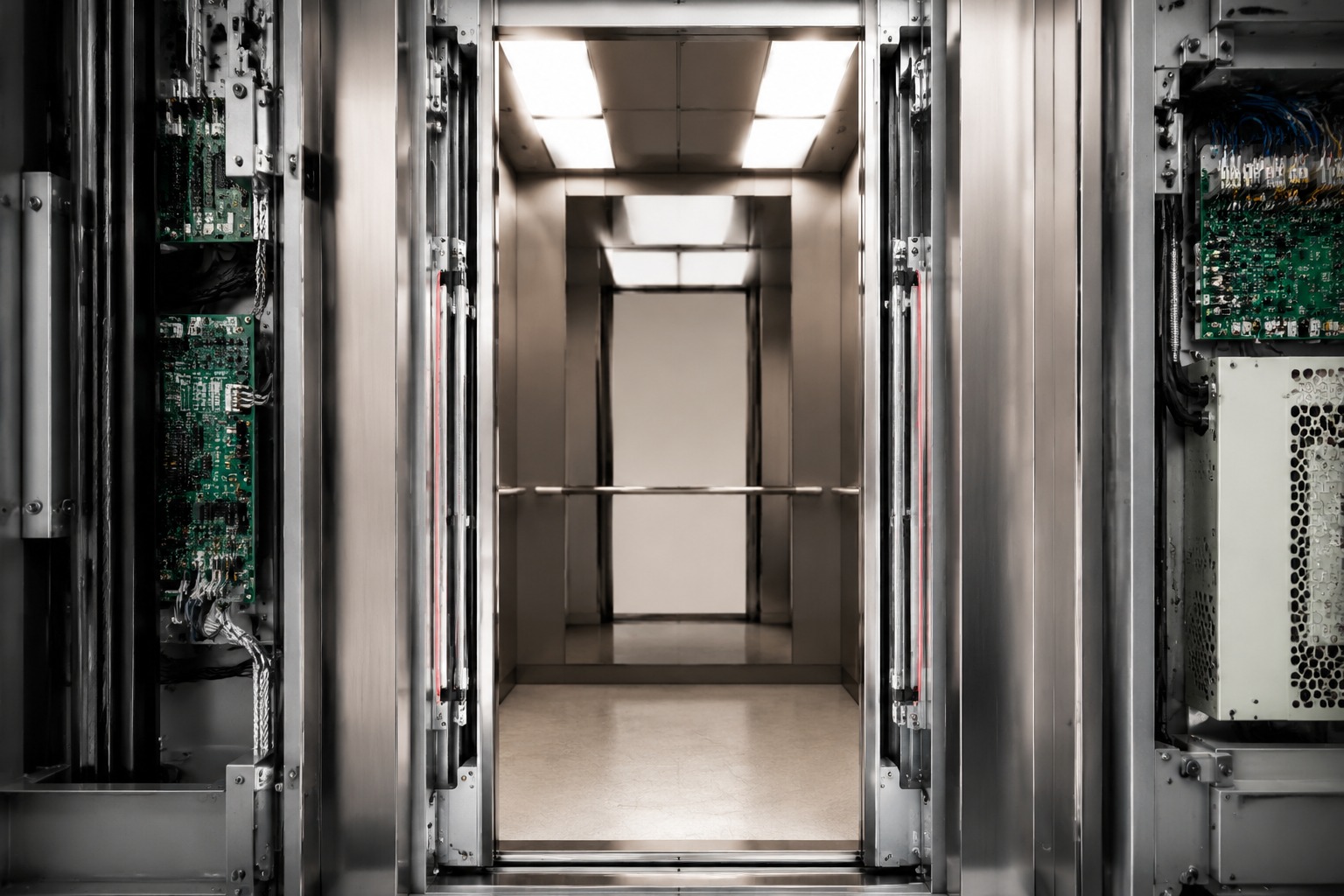
Elevator light curtains are one of the most practical door safety upgrades for buildings in the Philippines. In simple terms, a light curtain creates an invisible screening field across the elevator entrance. When a passenger, trolley, box, or stroller breaks that field, the door controller receives a signal to reopen or keep the doors from closing. This reduces door impact faults, helps protect passengers, and supports smoother elevator operation in offices, condominiums, hospitals, hotels, malls, and industrial sites.
For property managers in Metro Manila, Cebu, Davao, Clark, Iloilo, Cagayan de Oro, and other growing urban centers, upgrading worn door sensors is often a cost-effective way to improve ride safety without a full modernization project. In many buildings, older mechanical sensors or limited-beam door detectors no longer match today’s traffic patterns. High passenger flow, humid coastal environments, voltage fluctuations, dust, and frequent loading activity can all shorten component life. Choosing the right replacement light curtain requires more than just matching the physical size. Beam count, controller compatibility, wiring method, operating voltage, mounting space, and door operator behavior all matter.
This guide explains how elevator light curtains work, how to identify common failure symptoms, how to select beam coverage and model type, and what to check during replacement of an E GMS light curtain. It also covers post-installation testing, upgrade timing, local buying considerations in the Philippines, and practical FAQs for maintenance companies, distributors, building owners, and modernization contractors.
What an elevator light curtain does
An elevator light curtain is an infrared door protection device made up of a transmitter and a receiver installed on opposite sides of the elevator entrance. These two sides create multiple beams from near the sill up to a significant height along the doorway. If any of the beams are interrupted, the system tells the controller that the opening is obstructed.
Compared with older single-point photocells, a modern light curtain detects objects across a much larger portion of the opening. That makes it more effective for children, luggage wheels, delivery carts, hand-carried goods, housekeeping trolleys, and people entering at different heights or angles. In busy buildings in Makati, Bonifacio Global City, Ortigas, Quezon City, and Cebu IT Park, this wider coverage helps reduce nuisance door hits and user complaints.
Its main functions include passenger protection, door re-opening, impact reduction, and lower wear on the door operator. When the doors repeatedly strike objects or are forced to reopen late, rollers, couplers, belts, door shoes, and door operator mechanisms face added stress. A properly aligned and responsive light curtain helps the system react earlier and more consistently.
In older elevators, the difference after replacement is often noticeable. Doors feel less aggressive, obstruction detection becomes more reliable, and callbacks caused by intermittent door faults can decline. For building owners balancing service quality and operating cost, this makes the light curtain one of the most visible small upgrades in passenger experience.
| Function | How It Works | Practical Benefit | Common Sites in the Philippines | Risk if Missing | Maintenance Note |
|---|---|---|---|---|---|
| Passenger detection | Infrared beams detect objects in the doorway | Prevents doors from closing on users | Condominiums, offices | Door impact incidents | Keep lenses clean |
| Door reopening signal | Sends obstruction command to controller | Improves entry and exit flow | Malls, hospitals | Late reopening response | Check signal stability |
| Wide-area coverage | Multiple beams cover various heights | Detects bags, carts, children | Hotels, mixed-use towers | Low-height objects may be missed | Select correct beam density |
| Reduced mechanical stress | Less physical contact before reopening | Helps extend door component life | High-traffic buildings | More wear on rollers and operator | Monitor door strike history |
| Improved user confidence | Smoother and safer door behavior | Fewer complaints | Residential towers | Poor rider perception | Verify reopening speed |
| Support for modernization | Can replace outdated detectors | Practical safety upgrade | Older buildings in Manila and Cebu | Legacy sensors become unreliable | Confirm controller compatibility |
The table above shows why this component is so important. Even though the light curtain is relatively compact, it affects both safety and daily operating smoothness. For many elevators, it is the first upgrade considered before larger work on the control system or door operator.
Common light curtain failure symptoms
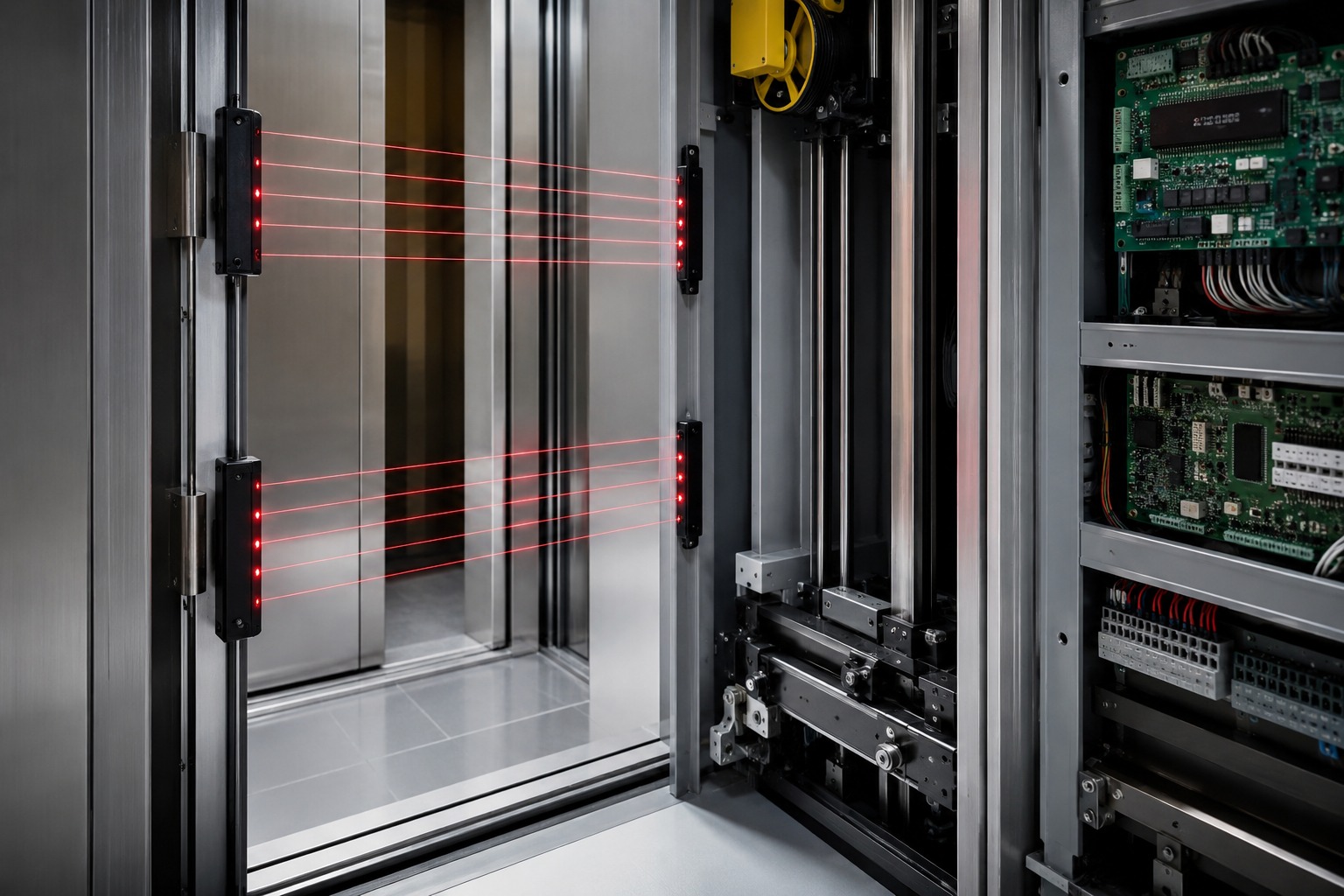
Light curtain failures are not always complete failures. In many service calls, the device still powers on but performs inconsistently. That can make troubleshooting difficult unless technicians review both electrical and mechanical causes.
The most common symptom is repeated door reopening with no passenger present. This may be caused by misalignment, dirty lenses, unstable power supply, damaged cables, reflections, moisture ingress, or internal board faults. Another frequent symptom is the opposite: the doors fail to reopen when a person or object is in the opening. That is a higher-risk condition and should be addressed immediately.
In the Philippines, tropical humidity and dust accumulation are especially relevant in coastal and mixed-use environments such as Manila Bay areas, Cebu port districts, Subic, Batangas, and Davao logistics zones. Salt-laden air, poor shaft cleanliness, and frequent vibration can gradually affect connectors and beam performance. Elevators in hospitals and malls may also experience frequent obstruction cycles, increasing stress on door protection devices.
Maintenance teams should also watch for intermittent behavior after door panel movement. If the signal drops only when the door travels, the issue may involve cable flexing, routing damage, or a weak connector rather than the sensor face itself. If the curtain works when stationary but fails during operation, inspect moving cable sections and hinge points carefully.
| Symptom | Likely Cause | Operational Effect | Urgency | Typical Check | Suggested Action |
|---|---|---|---|---|---|
| Door reopens with no obstruction | Misalignment or dirty lens | Slow traffic flow | Medium | Inspect transmitter and receiver line | Clean and realign |
| Door closes on passenger path | Beam failure or no output signal | Safety risk | High | Measure output and test beam interruption | Replace defective unit |
| Intermittent operation during movement | Cable fatigue or loose connector | Unpredictable door faults | High | Flex cable while monitoring signal | Repair harness or replace cable |
| No power indicator | Power supply issue | No detection function | High | Check voltage input | Verify supply and fuse path |
| Random fault after cleaning | Internal moisture or PCB issue | Recurring callback | Medium | Inspect housing and seals | Replace unit if unstable |
| Works only at some heights | Partial beam array failure | Low objects not detected | High | Perform beam walk test | Install new matching model |
The table shows that symptoms should be linked to operating conditions, not just visual inspection. A good troubleshooting routine combines door movement observation, controller input checks, and physical examination of the mounting and cable route.
For maintenance companies, keeping a record of callback history is useful. If a single elevator has frequent nuisance door faults, and the mechanical door system has already been adjusted, the sensor may be the actual source. Replacing a degraded light curtain early can reduce repeated labor visits and tenant complaints.
How to choose beam coverage and model type
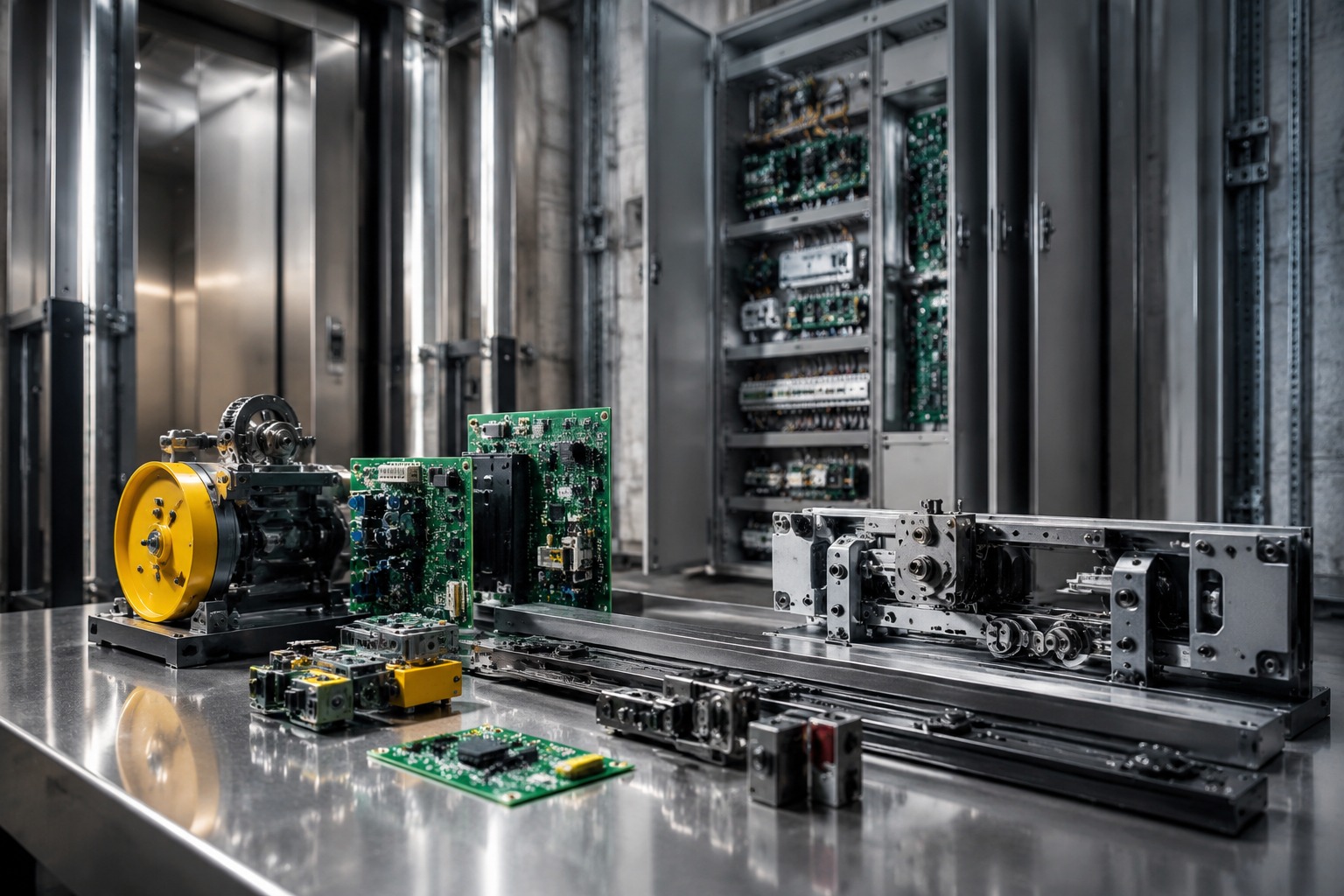
Choosing the right elevator light curtain starts with application needs, not just price. Beam coverage refers to how many infrared beams or scanning points protect the opening. Higher beam density generally improves detection performance, especially for narrow objects and lower-height obstructions. However, the best choice depends on doorway width, door speed, controller characteristics, and traffic type.
Residential elevators in smaller buildings may operate adequately with a standard light curtain configuration, while hospitals, malls, and logistics-oriented buildings often benefit from wider detection coverage and robust response characteristics. A hospital in Manila or Cebu handling wheelchairs, stretchers, and support carts should not be using a low-coverage detector selected only for initial cost savings.
Model type also matters. Some light curtains are designed as universal replacement units, while others are intended for specific brands, door operators, or controller signal types. Mounting profile, thickness, voltage range, relay output, NPN or PNP logic, and communication format must be matched carefully. Door panel depth and available installation space are especially important in modernization work, where older elevator entrances may leave very little room.
Another decision point is whether to choose a direct replacement or an upgrade kit. A direct replacement is ideal when dimensions, connectors, and outputs match the existing setup. An upgrade kit may be better when the old model is obsolete, the original performance was weak, or the controller has already been modernized.
| Selection Factor | Standard Requirement | High-Traffic Requirement | Why It Matters | Who Should Prioritize It | Buying Tip |
|---|---|---|---|---|---|
| Beam coverage | Basic multi-beam detection | Higher beam density | Improves object detection | Hospitals, malls | Ask for beam count and effective coverage |
| Door width match | Compatible with opening size | Exact fit for wide entrances | Prevents blind zones | Freight and service lifts | Measure clear opening accurately |
| Voltage range | Matches existing supply | Tolerant to fluctuations | Ensures stable operation | Older buildings | Confirm rated input before ordering |
| Output type | Standard relay or transistor | Controller-specific logic | Affects signal compatibility | Modernization contractors | Check wiring diagram first |
| Profile size | Fits normal mounting space | Low-profile for narrow door edges | Prevents installation conflict | Retrofit projects | Compare side-view dimensions |
| Durability | Indoor commercial grade | Higher resistance to dust and vibration | Supports longer service life | Ports, industrial zones | Choose proven field-use models |
This table helps buyers compare specifications in a practical way. In the Philippines market, it is often helpful to discuss not only the lift brand but also the exact building usage. An office tower in Makati, a beachside hotel in Mactan, and a warehouse-linked commercial building in Calamba can each require a different replacement approach even if the door opening sizes appear similar.
If you are reviewing suitable models, you can check options such as E GMS elevator light curtain units for matching and replacement planning, or compare another elevator light curtain configuration when considering alternative installation requirements.
E GMS light curtain replacement notes
Replacing an E GMS light curtain should begin with model identification and site verification. Do not assume all E GMS units are the same. Check the label, input voltage, connector style, cable length, output type, mounting hole positions, and overall dimensions. If the original label is faded or missing, use door operator photos, cabinet wiring references, and old maintenance records to confirm the match.
In many replacement projects, the challenge is not the sensor body but the field wiring and mounting tolerance. A new unit may have the same functional purpose yet require slight bracket adjustments or connector adaptation. For this reason, technicians should inspect the transmitter side and receiver side separately, because one side may have physical damage while the other side still appears intact.
Another key point is door edge alignment. Even a correct replacement may behave poorly if the door panels are warped, the sill is dirty, the door hanger system is loose, or the panels are not tracking properly. Before blaming the replacement sensor, confirm that the door path is mechanically sound.
For modernization contractors handling multiple brands in the Philippines, E GMS replacements are often considered when original parts become harder to source quickly. The goal is to restore dependable door protection while reducing downtime. In commercial districts where elevator availability directly affects tenant operations, delays in model matching can become costly.
| Replacement Checkpoint | What to Confirm | Why It Is Important | Field Risk if Ignored | Recommended Tool | Result |
|---|---|---|---|---|---|
| Nameplate data | Model and voltage | Avoid wrong unit installation | No power or signal mismatch | Camera and notepad | Correct specification match |
| Connector type | Pin layout and plug style | Prevents wiring errors | Intermittent operation | Pin reference sheet | Safer installation |
| Mounting dimensions | Length, width, hole spacing | Ensures proper fit | Twisted alignment | Tape measure | Stable beam path |
| Cable route | Moving cable condition | Supports long-term reliability | Signal loss during motion | Continuity tester | Reduced callback risk |
| Output logic | Relay, NPN, PNP or other type | Controller must read signal correctly | Door stays open or ignores obstruction | Wiring diagram | Compatible operation |
| Mechanical door condition | Panel travel and alignment | Sensor performance depends on door stability | False failure diagnosis | Visual and manual inspection | Accurate troubleshooting |
The table above is useful when planning a replacement visit or quoting a job. Good preparation cuts site time and prevents return trips caused by missing connector details or unverified logic requirements.
Wiring and controller compatibility checks
Wiring compatibility is one of the most overlooked issues in elevator light curtain replacement. A sensor can physically fit the entrance and still fail to work properly if its electrical output does not match the door controller or elevator control board input expectations.
Technicians should verify input voltage, output signal type, connector pin assignment, cable shielding, common terminal reference, and response behavior during beam interruption. Some controllers expect a normally open signal, others a normally closed behavior, and some rely on relay isolation while others read transistor outputs directly. Installing a mismatched sensor may create symptoms such as permanent door open status, no obstruction response, or intermittent faults.
Controller compatibility is especially important in mixed-brand maintenance portfolios common in the Philippines. A building may have original Japanese, Korean, European, or locally modernized elevator systems with modified wiring over time. Never rely solely on brand assumptions. Field changes made during earlier repairs can alter the current wiring arrangement.
Where possible, compare the existing wiring diagram with actual cabinet wiring. Use a meter to verify live voltage before disconnecting the old unit. Confirm that cable insulation has not become brittle due to age or heat. In older machine rooms and control spaces, cable labeling is often incomplete, so photo documentation before removal is strongly recommended.
Our work with elevator spare parts customers shows that careful model matching matters as much as component quality. On the technical side, support should include review of part numbers, photos, connector forms, and application details so buyers can reduce compatibility errors before shipment. On the manufacturing side, stable quality inspection and protective packaging are important because light curtain assemblies can be damaged by impact in transport if not packed properly. On the service side, responsive communication helps maintenance teams confirm doubtful details quickly and avoid extended elevator downtime.
The line chart above illustrates a realistic demand growth trend for replacement light curtains in the Philippines. Growth is supported by aging building stock, increased safety expectations, and a wider focus on selective modernization rather than full lift replacement.
Testing after installation
After installation, testing should never be limited to a simple power-on confirmation. A proper commissioning process checks electrical function, beam coverage, door controller response, and real operating conditions. This is especially important when the replacement involves an alternative model, a rewired connector, or an older controller.
Begin with a static test. Confirm that the power indicator is normal and that the output changes correctly when the beam field is interrupted. Then proceed to a vertical beam walk test by passing an object or hand through different heights of the opening, including near the sill and at mid-height. The purpose is to verify that coverage is consistent from bottom to top, not just near the center.
Next, run dynamic tests with the doors closing at normal speed. Check whether interruption causes immediate reopening or hold-open action as intended. Repeat multiple times from different entry angles. Also test with narrow and wider objects, because some partial failures only appear when the obstruction is small. For hospitals, hotels, and retail settings, include trolley or cart simulation when possible.
Finally, review behavior over several cycles without obstruction. The doors should close smoothly and without nuisance reopening. If false triggers occur, inspect alignment, reflective surfaces, cable strain, and power stability. In some sites, voltage dips or door vibration can create intermittent problems that do not appear in a quick single-cycle test.
| Test Step | Method | Expected Result | What Failure Suggests | Priority | Site Note |
|---|---|---|---|---|---|
| Power check | Confirm input voltage and status LED | Stable startup | Supply issue or wrong model | High | Check before door movement |
| Static interruption test | Break beams while doors are open | Output changes correctly | Signal or sensor fault | High | Test both sides |
| Full-height coverage test | Move object from sill upward | Detection at all tested points | Partial beam failure or misalignment | High | Use narrow object if needed |
| Dynamic closing test | Interrupt while doors close | Immediate reopen or hold open | Controller input mismatch | High | Repeat at normal door speed |
| False trigger test | Run several empty door cycles | No random reopen | Alignment or vibration issue | Medium | Observe during real operation |
| Traffic simulation | Use cart, bag, or stroller path | Reliable detection in actual use | Coverage too weak for application | Medium | Important in malls and hospitals |
This testing table can be used as a field checklist. It reduces the risk of closing a job too early and then receiving callbacks from the building within days.
When to upgrade old door sensors
An upgrade is recommended when the existing door sensor no longer provides consistent protection, when spare parts are hard to source, or when the elevator use profile has changed. Buildings originally designed for lighter traffic may now experience much heavier passenger flow. Condominiums converted to mixed residential-commercial use, office buildings with denser occupancy, and hospitals that added equipment traffic are common examples.
Mechanical wear and environmental exposure also make upgrades necessary. If the sensor housing is cracked, cable insulation is deteriorated, or repeated cleaning no longer resolves false signals, replacement is usually more economical than repeated service labor. In older elevators, switching from limited-point detection to a true multi-beam light curtain can significantly improve obstruction detection and reduce door impact complaints.
Another reason to upgrade is compliance with modern user expectations. Building owners in the Philippines are increasingly aware that visible safety performance affects tenant satisfaction, brand perception, and maintenance planning. In premium condominiums in BGC, hotels in Pasay and Mactan, and medical facilities in Quezon City or Davao, passengers expect elevator doors to behave predictably and safely.
By 2026, the trend is likely to move further toward smarter and more sustainable door safety upgrades. The market is favoring components with improved diagnostics, better tolerance to unstable environments, and easier integration into modernization projects. Policy direction and procurement standards are also gradually emphasizing reliable safety-related parts in building maintenance programs. Sustainability matters too: replacing a small but failure-prone door sensor can help extend overall door operator life and reduce waste from repeated emergency repairs.
The bar chart shows which sectors are likely to drive replacement demand. Condominiums, offices, and malls remain strong segments because they combine high daily usage with visible user sensitivity to door behavior.
FAQ about elevator light curtains
How long does an elevator light curtain usually last?
Service life depends on traffic volume, environment, power quality, and installation condition. In clean, well-maintained buildings it may last many years, but in humid, dusty, or high-use sites the practical replacement cycle can be shorter.
Can a light curtain be replaced without changing the whole door operator?
Yes. In many cases the light curtain can be replaced as a separate safety component. However, compatibility with the existing door operator and controller must be checked first.
Is a higher beam count always better?
Not always in absolute terms, but wider and denser coverage is often better for busy public buildings. The best model depends on application, mounting space, controller compatibility, and budget.
What causes random door reopening after replacement?
Typical causes include poor alignment, reflections, cable stress, unstable power input, incorrect output logic, or mechanical vibration of the door panels.
Can universal light curtains replace original branded units?
Often yes, if dimensions, voltage, output type, and controller response are properly matched. This is common in modernization and support of older elevators with limited spare part availability.
Should both transmitter and receiver be replaced together?
In most cases, yes. Replacing the full matched set helps avoid performance imbalance between old and new components.
What should buyers send to confirm the correct model?
Provide clear photos of the old unit, nameplate, connector, full door entrance, controller wiring, and measurements. This improves part matching accuracy and avoids shipping delays.
How do local logistics affect procurement in the Philippines?
Lead time planning matters, especially for projects serving Metro Manila, Cebu, Davao, Clark, and island locations. Good packing and clear labeling help protect sensor assemblies during shipment through ports and domestic transport routes.
The area chart highlights a clear trend: older point-type door sensors are steadily being replaced by multi-beam light curtains as safety expectations and modernization activity rise.
Philippines market outlook, buying advice, and local sourcing points
The elevator service market in the Philippines continues to expand alongside urban construction, vertical housing demand, commercial redevelopment, healthcare growth, and transport-linked mixed-use projects. Cities such as Manila, Quezon City, Pasig, Taguig, Cebu, Davao, Bacolod, and Iloilo are all seeing property owners place greater attention on operational reliability rather than waiting for major failures.
For light curtain procurement, local buyers usually weigh four factors: compatibility, lead time, quality consistency, and after-sales responsiveness. A low-cost unit that causes repeated callbacks is rarely the cheapest option in total operating cost. Maintenance companies need replacement parts that can be matched correctly from photos and field data, shipped with adequate protective packaging, and supported with practical technical confirmation.
When evaluating suppliers, buyers should ask how they support technical matching, how they inspect outgoing products, and whether they can help identify alternatives for discontinued models. This is particularly important for older equipment from Hitachi, Toshiba, KONE, Mitsubishi, and other established brands where exact version details vary by installation year and modernization history.
From a technology capability perspective, a capable parts supplier should be able to review model data, connector forms, application photos, and system requirements to reduce mismatches. From a manufacturing capability perspective, quality inspection, stable sourcing channels, and durable packaging matter because light curtains are alignment-sensitive products. From a service capability perspective, responsive communication, clear shipment coordination, and practical support for maintenance teams help shorten downtime and improve project planning.
| Buyer Question | Why It Matters | Good Supplier Answer | Warning Sign | Best for Which Buyer | Impact on Project |
|---|---|---|---|---|---|
| Can you match by photo and nameplate? | Older units may have unclear records | Yes, with structured review | No verification process | Maintenance companies | Fewer ordering mistakes |
| Do you confirm wiring type? | Electrical mismatch causes faults | Checks output and voltage details | Only asks for brand name | Modernization contractors | Better installation success |
| How is quality inspected? | Consistency affects callbacks | Functional checks and visual inspection | No inspection details | Distributors | Improved reliability |
| How are items packed? | Transport damage is a real risk | Protective packaging for sensor assemblies | Generic loose packing | Provincial buyers | Lower transit damage |
| Can you support discontinued models? | Many old elevators need alternatives | Offers compatible replacement options | Only supplies exact stocked items | Building owners | Shorter downtime |
| How fast is communication? | Urgent repairs need quick confirmation | Responsive service and follow-up | Slow or incomplete replies | All buyers | Faster decision-making |
This table can help buyers compare suppliers beyond simple unit pricing. In the Philippines, transport routes through Metro Manila, Batangas, Subic, Cebu, and Davao make packaging and dispatch coordination especially important for timely project execution.
The comparison chart summarizes what buyers value most when sourcing replacement light curtains: accurate matching, stable quality, and service speed. These factors often decide whether a maintenance job is completed smoothly or turns into a series of costly return visits.
Applications, industries, and a practical case view
Elevator light curtains are used across many property types in the Philippines. In residential towers, they improve day-to-day passenger confidence and reduce friction during busy morning and evening periods. In office buildings, they help maintain traffic flow and reduce complaints during peak movement. In hospitals, they support safe handling of wheelchairs, stretchers, and medical carts. In hotels, they improve guest experience and reduce nuisance incidents with luggage. In malls and commercial centers, they help manage frequent crossings, deliveries, and family traffic. In industrial and back-of-house service lifts, they protect against loading obstructions and repeated door strikes.
Consider a practical example. An older mixed-use building in Ortigas experienced recurring door faults on one passenger lift. The site had already adjusted rollers and cleaned the sill several times, but tenants still reported abrupt door behavior. Inspection showed that the old sensor had incomplete coverage near the lower section and intermittent signal loss when the doors moved. After confirming wiring and controller compatibility, the maintenance team installed a matched replacement light curtain and completed full-height dynamic tests. The result was fewer nuisance reopen cycles, better obstruction response, and a visible drop in callbacks over the following months.
That kind of case is common. Often, the door operator is blamed first because it is the moving mechanism. But in reality, the sensor signal may be the weak link. Good diagnosis avoids unnecessary replacement of larger and more expensive components.
Final buying guidance for building owners and contractors
If you are planning an elevator light curtain replacement or upgrade in the Philippines, start with the direct practical questions: What is the exact existing model? What is the controller expecting electrically? How much detection coverage does the building really need? Is the door mechanism itself in good condition? And does the supplier provide reliable help in matching the replacement?
The best procurement decisions balance safety, compatibility, and lifetime operating value. A good light curtain should do more than fit the door edge. It should work consistently in the building’s real traffic conditions, respond correctly with the controller, withstand local environmental stress, and arrive properly packed and verified for installation.
For maintenance companies, distributors, building owners, and modernization contractors, the strongest results usually come from careful technical matching, stable quality inspection, and responsive service throughout the buying process. That approach helps reduce downtime, avoid compatibility mistakes, and keep elevators operating safely for the passengers who depend on them every day.