
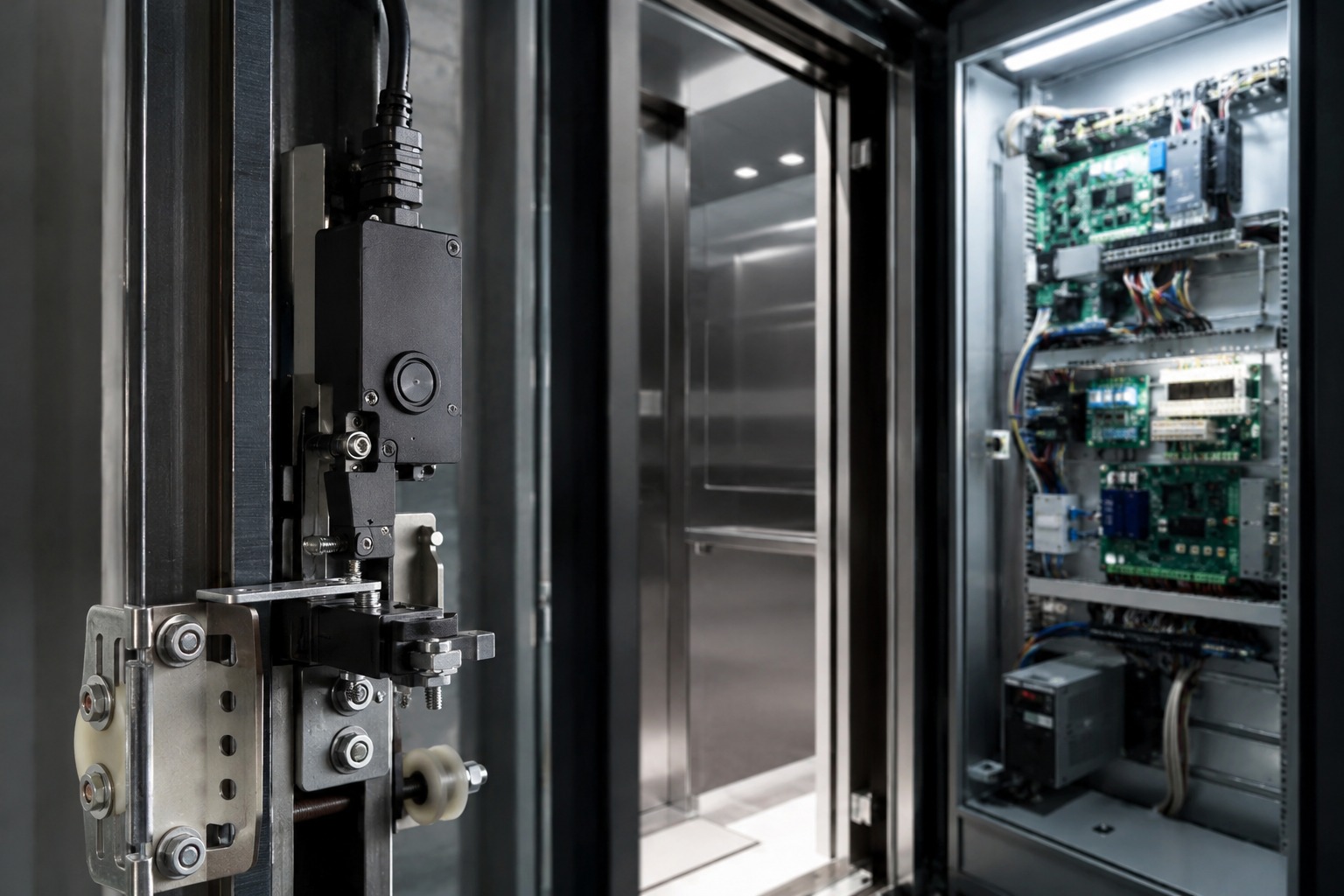
Accurate elevator leveling is the small detail that makes a major difference in passenger safety, ride comfort, and maintenance costs. When the car stops too high or too low relative to the landing sill, even by a few millimeters, the risk of trips, wheelchair difficulty, trolley impact, and tenant complaints rises quickly. In the Philippines, where elevators serve condominiums in Metro Manila, hotels in Cebu, hospitals in Davao, offices in Makati, and mixed-use developments in Bonifacio Global City, dependable leveling performance is essential because traffic is constant and downtime can affect both safety and business operations.
At the center of this function is the leveling sensor. Whether the system uses photoelectric sensing, magnetic detection, or a position detection arrangement linked with the controller, the sensor helps the elevator recognize the exact stopping zone and align the car floor with the landing. For building owners, modernization contractors, distributors, and lift maintenance companies, understanding how these sensors work helps reduce repeat service calls and improves replacement accuracy.
This guide explains the practical side of elevator leveling sensors for the Philippines market: how to identify failure signs, compare sensor types, review model matching considerations for GLS 326, verify installation position, test after replacement, and plan preventive maintenance. It also discusses market demand, product selection, local sourcing concerns through Manila, Cebu, and Davao supply routes, and what buyers should check before ordering compatible spare parts.
Why precise elevator leveling is important
Elevator leveling accuracy matters because the final stopping position affects safety, legal risk, accessibility, and component life. A car that stops above or below the landing creates a visible floor mismatch. In residential towers, this can trigger resident complaints. In hospitals, it can interfere with stretcher movement. In retail centers, it increases the chance that carts, luggage, or cleaning equipment hit the threshold. In logistics-oriented commercial sites near ports such as Manila North Harbor, Batangas, or Cebu Port, any stoppage issue can also slow movement of goods between floors.
From a technical standpoint, proper leveling supports smooth door operation and stable dispatching. If the car re-levels too often, the controller, brake, and door operator may experience unnecessary cycles. If leveling is inaccurate after loading changes, the system can make repeated correction moves, increasing wear on traction components and electrical parts. Over time, poor stop accuracy may also hide wider issues such as sensor drift, bracket movement, contamination, wiring instability, or controller parameter mismatch.
In the Philippines, leveling accuracy is especially important in high-rise residential and commercial environments where elevators are used continuously during morning and evening peaks. Buildings in Quezon City, Ortigas, Alabang, and Iloilo often face a combination of humidity, dust, intermittent power quality issues, and heavy passenger traffic. These conditions make reliable sensing and proper maintenance more important than simply replacing parts only when failure becomes obvious.
There is also a compliance and reputation side. Building administrators want to avoid slip and trip incidents, especially in premium office towers, hotels, and medical facilities. For maintenance firms, accurate floor stops reflect the quality of service. For distributors and parts buyers, selecting the right sensor model reduces return rates and urgent call-backs. This is why many procurement teams now look beyond price and ask for stable quality inspection, careful model matching, and packaging that protects sensitive sensor components in transit across the Philippines.
| Area | Effect of Good Leveling | Effect of Poor Leveling | Who Is Affected | Typical Philippine Scenario | Priority Level |
|---|---|---|---|---|---|
| Passenger safety | Reduced trip hazard | Higher slip and fall risk | Residents, visitors, staff | Condo towers in Makati and Pasig | Critical |
| Accessibility | Smoother wheelchair entry | Difficult passage at sill | Persons with disabilities, elderly | Hospitals and clinics in Metro Manila | Critical |
| Ride quality | Consistent, professional stop feel | Noticeable bounce or correction | All passengers | Hotels in Cebu and BGC offices | High |
| Door operation | Aligned threshold reduces impact | Extra stress on door timing and cycles | Maintenance teams | Retail malls with heavy traffic | High |
| Maintenance cost | Fewer call-backs | More troubleshooting visits | Service contractors, owners | Provincial sites with travel time costs | High |
| Building reputation | Reliable user experience | Frequent complaints | Property managers | Premium mixed-use developments | Medium to High |
The table above shows that leveling problems are not isolated technical issues. They influence building usability, maintenance budgets, and customer satisfaction. For this reason, a leveling sensor should be treated as a critical reliability component, not just a low-cost accessory.
The market trend above reflects the growing installed base of elevators and the increased modernization of older units. Demand is not only coming from new projects; many existing buildings are now replacing aging sensors, brackets, and related position-detection parts to maintain service quality.
Typical signs of leveling sensor failure
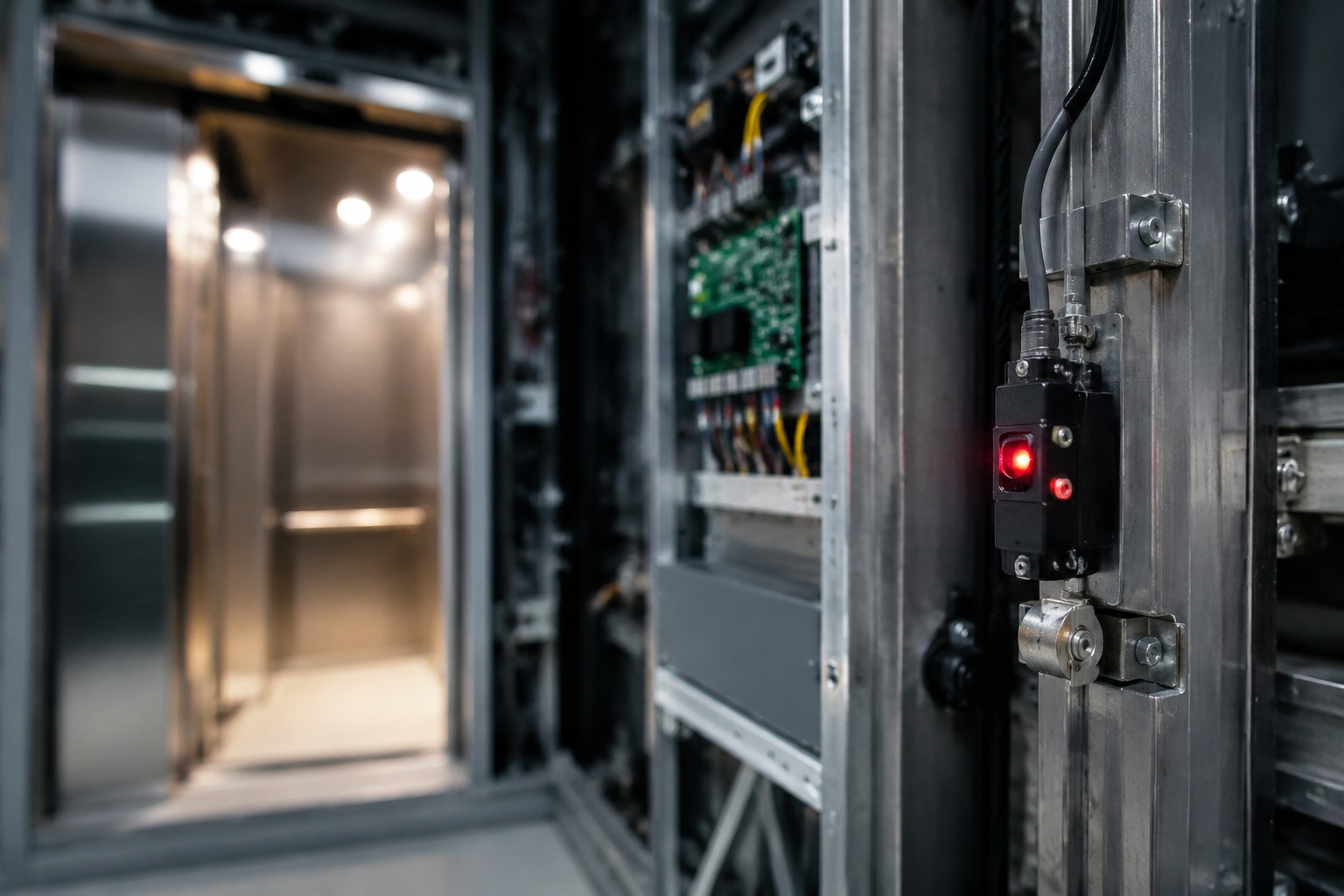
Common leveling sensor failure signs usually appear before total failure. The earliest clue is often inconsistent stop alignment: the elevator levels correctly at some floors but not others, or it stops accurately when empty but drifts under load. This suggests a sensor output problem, poor mounting, contamination on the target area, or a mismatch between detection distance and the actual installation setup.
Another frequent sign is re-leveling after the doors open. If the car moves slightly to correct its position after stopping, the control system may be compensating for inaccurate or delayed sensor feedback. In some cases, passengers notice a small upward or downward correction after they step in or out. While slight re-leveling can happen under some load changes, repeated or exaggerated correction is a strong reason to inspect the leveling sensor circuit.
Intermittent door zone faults are also common. A sensor may send unstable signals because of loose wiring, moisture, vibration, or internal degradation. Maintenance technicians may find that the issue appears during humid afternoons, after heavy rain, or when traffic is highest. In coastal and high-humidity locations in the Philippines, such as Cebu, Bacolod, and parts of Metro Manila, moisture control and connector condition deserve close attention.
Additional warning signs include unexplained nuisance shutdowns, difficulty achieving final stop during inspection mode, visible physical damage to the sensor housing, LED indication abnormalities, bracket bending, and contamination from oil, dust, or rust particles. Sometimes the problem is not the sensor body itself but poor alignment with the vane, magnet, flag, or target.
| Observed Symptom | Possible Sensor Cause | Possible Non-Sensor Cause | Inspection Priority | Recommended Action | Urgency |
|---|---|---|---|---|---|
| Car stops high or low at landing | Sensor drift or misalignment | Controller parameter issue | Check immediately | Verify position, target gap, signal stability | High |
| Re-leveling after door opens | Delayed or weak detection | Brake slip or load compensation issue | High | Inspect sensor and brake behavior together | High |
| Only some floors affected | Inconsistent target alignment | Rail or sill reference variation | High | Check floor-by-floor alignment | Medium to High |
| Intermittent fault code | Loose wiring, internal sensor fault | Terminal oxidation | High | Tighten terminals and test voltage/signal | High |
| No detection LED response | Power loss or failed sensor | Broken cable | Immediate | Confirm supply, continuity, then replace if needed | Critical |
| Problem appears during humid weather | Moisture ingress | Cabinet condensation | Medium | Inspect sealing, connectors, and environment | Medium to High |
The practical message is simple: do not wait for a total shutdown. Early symptom tracking lowers repair cost and reduces the chance of misdiagnosing the issue as a controller fault when the root problem is actually unstable detection at the landing zone.
Photoelectric sensing compared with magnetic detection
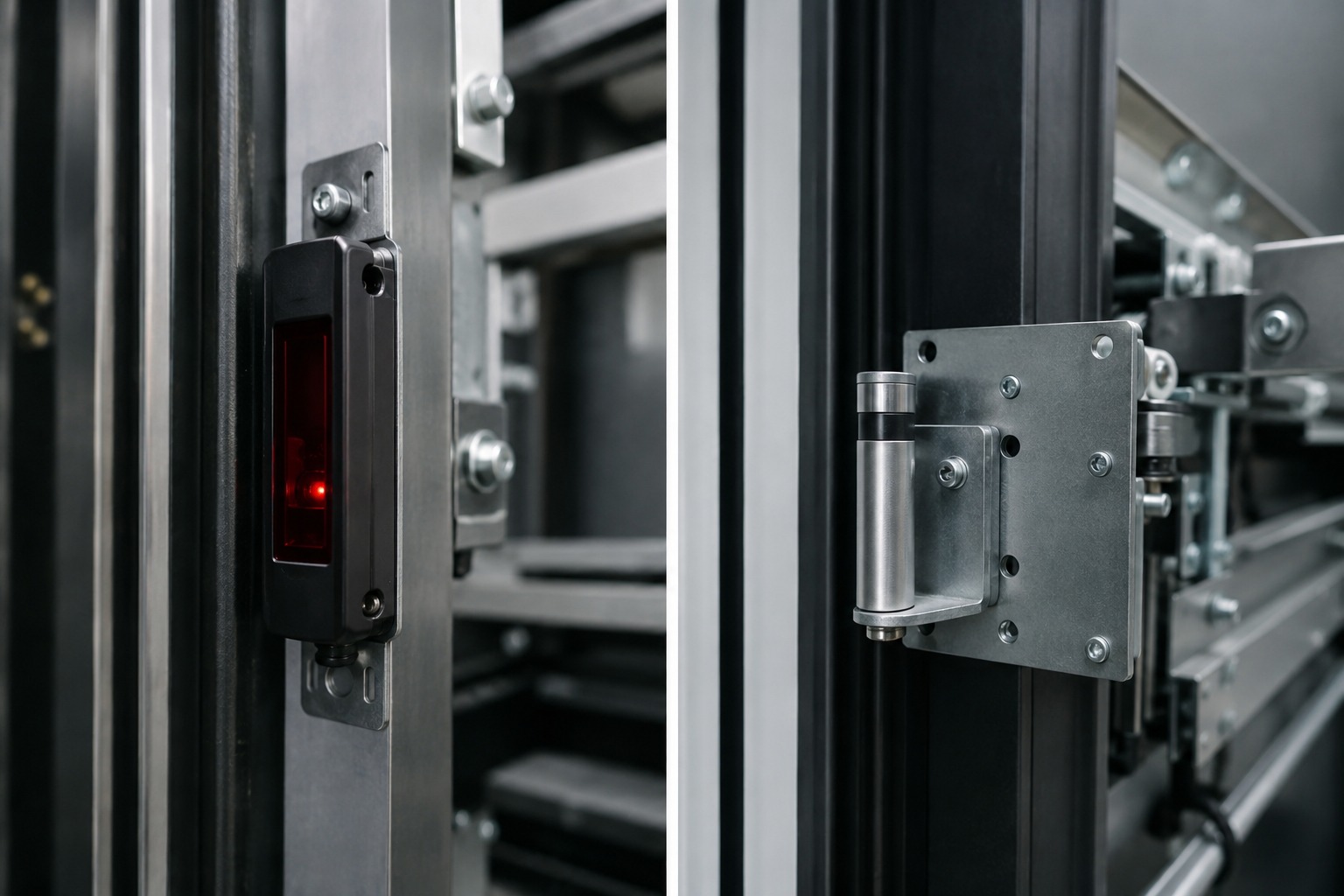
Photoelectric sensor versus magnetic detection is one of the most common questions in elevator spare parts sourcing. Both methods are widely used, but they differ in detection principle, environmental sensitivity, installation needs, and compatibility requirements.
Photoelectric sensors typically detect the presence of a vane, flag, or interruption in a light beam. They are often appreciated for precise switching and clear installation logic, especially where the original elevator design uses a dedicated optical reference point. However, their performance can be affected by dirt, dust accumulation, lens contamination, or alignment shift. In machine spaces or hoistways with construction dust, grease mist, or poor cleaning practices, the optical path should be inspected more often.
Magnetic detection systems rely on the presence of a magnet or magnetic target and are often chosen for robust operation in harsher environments. They can be less sensitive to dust and some forms of visual contamination, but they still require correct distance, target orientation, and reliable wiring. Magnetic components can also vary in field strength and geometry, so compatible replacement should never be based only on appearance.
For many buyers in the Philippines, the right question is not which technology is universally better, but which one matches the elevator’s original design, controller logic, and site conditions. Condominiums with controlled maintenance routines may perform very well with photoelectric systems. Industrial or service elevators exposed to rougher conditions may benefit from magnetic arrangements if they are specified by the OEM design.
| Factor | Photoelectric Sensor | Magnetic Detection | Best Use Case | Main Risk | Buying Note |
|---|---|---|---|---|---|
| Detection method | Light interruption or reflection | Magnetic field sensing | Depends on original design | Wrong type selection | Match OEM method first |
| Dust sensitivity | Higher | Lower | Cleaner sites for optical | Lens contamination | Plan cleaning interval |
| Alignment requirement | Usually precise | Moderate but still important | Sites with stable brackets | False switching | Check mounting dimensions |
| Humidity exposure | Can affect optics and connectors | Can affect electronics and terminals | Protected hoistways | Condensation-related faults | Inspect enclosure quality |
| Maintenance focus | Lens, beam path, alignment | Gap, target orientation, wiring | Technician skill dependent | Missed field adjustment | Use installation checklist |
| Typical sourcing issue | Looks similar but wrong switching spec | Looks similar but wrong magnet response | Replacement projects | Model mismatch | Confirm code, voltage, output, dimensions |
The comparison table shows why proper matching is more important than broad assumptions. A well-sourced replacement should match electrical rating, housing dimensions, sensing distance, output behavior, connector style, and the controller’s expected signal profile.
This comparison chart is not a universal engineering rule, but it helps illustrate the trade-offs buyers often consider when discussing replacement strategy with service teams and procurement managers.
GLS 326 sensor sourcing notes
GLS 326 sensor sourcing notes are especially useful for buyers who need reliable replacement options without causing avoidable downtime. Before ordering, confirm whether GLS 326 is the exact model required by the elevator system or whether the field label refers to a compatible or legacy internal code used by the maintenance team. This matters because similar-looking sensors may differ in voltage input, output type, cable arrangement, switching logic, and mounting dimensions.
When sourcing for the Philippines, buyers should also think about transit handling, stock lead time, and documentation quality. A sensor may be electrically correct but still create installation delays if the packaging does not protect the body and connector pins or if no clear product photos are available for cross-checking. Projects in Luzon often need fast access through Metro Manila distribution channels, while projects in Visayas and Mindanao may require additional shipping coordination to avoid extended elevator downtime.
For product review and model checking, buyers can evaluate options such as the GLS 326 leveling sensor for elevators. For broader replacement discussions, some customers also compare with other elevator leveling sensor options or review a related position detection sensor for elevator applications when troubleshooting stopping-zone feedback.
Good sourcing practice includes asking for actual product images, wire details, dimensions, model labels, and application confirmation. It is also wise to confirm whether the part is intended as an exact replacement or as a compatible substitute requiring field verification. In modernization projects involving older installations in Manila, Pasay, or Mandaluyong, technicians often face undocumented prior modifications, so it is helpful to verify the installed part against the actual site condition rather than relying only on an old parts list.
| Checkpoint | Why It Matters | What to Verify | Risk If Ignored | Suggested Buyer Action | Decision Impact |
|---|---|---|---|---|---|
| Model code | Avoid wrong replacement | Exact label and series | Non-working installation | Request clear label photos | Critical |
| Electrical specification | Ensures controller compatibility | Voltage, output type, polarity | Signal fault or damage | Cross-check with manual or existing part | Critical |
| Mounting dimensions | Fit must match bracket | Hole spacing, body size | Installation delay | Confirm drawings or measured dimensions | High |
| Cable or connector type | Field connection must suit site | Length, termination, pin style | Extra rewiring work | Ask for connector close-up images | High |
| Packaging quality | Protects sensitive parts in shipping | Shock protection, sealing | Transit damage | Choose protective packaging | Medium to High |
| Supplier response speed | Reduces downtime | Lead time, stock indication | Extended service outage | Prefer responsive technical support | High |
The checklist above helps maintenance companies and distributors avoid one of the most expensive mistakes in elevator spare parts purchasing: ordering a part that looks right but does not behave correctly in the actual system.
Installation position and adjustment checks
Installation position and adjustment checks are just as important as part selection. A correct sensor that is mounted in the wrong position will still produce poor leveling. The first step is to compare the new sensor location with the original reference. Measure bracket position, target gap, vertical alignment, and any offset relative to the vane, magnet, or strike point. Never assume a previous installation was correct if the elevator already had leveling complaints.
Inspect the mechanical condition of the mounting bracket before replacing the sensor. Vibration, corrosion, accidental impact, and repeated field adjustments can bend or loosen the bracket. In older sites in Binondo, Escolta, or provincial government buildings with long service history, bracket fatigue is not unusual. Replacing only the sensor while leaving an unstable bracket often leads to recurring fault reports.
Check for these installation details during replacement:
- Sensor body sits squarely without twisting.
- Specified gap to the target is maintained across travel variation.
- Fasteners are tightened to stable mechanical condition.
- Cables are routed away from moving parts and sharp edges.
- Connectors are dry, clean, and properly locked.
- Indicator LED or test output responds at the expected point.
Adjustment should be done carefully, with reference to the elevator’s original service data when available. Over-adjustment to compensate for a separate problem can create new issues. For example, moving the sensor to hide brake slip or rail-related stop inconsistency may temporarily reduce the symptom at one floor while worsening accuracy elsewhere.
| Inspection Item | What to Look For | Acceptable Condition | Common Field Problem | Corrective Action | Effect on Leveling |
|---|---|---|---|---|---|
| Bracket condition | Cracks, bend, looseness | Rigid and aligned | Shift under vibration | Repair or replace bracket | High |
| Sensor gap | Distance to target | Within specified range | No detection or false detection | Reset position accurately | Critical |
| Vertical reference | Height relative to landing target | Matches original reference | Stops high or low | Re-measure and adjust | Critical |
| Wiring route | Pinch points, friction, movement | Secured and protected | Intermittent signal loss | Re-route and clamp properly | High |
| Connector condition | Corrosion or weak locking | Clean and firm | Random fault during vibration | Clean or replace terminal parts | High |
| LED/test indication | Switch response timing | Stable repeatable response | Flicker or delay | Inspect power and alignment | Medium to High |
The explanation behind this table is straightforward: each item influences whether the controller receives a stable and repeatable leveling signal. The more repeatable the signal, the more consistent the floor stop.
Testing elevator leveling after sensor replacement
Testing leveling after replacement should be done methodically. A quick run test is not enough. First, verify electrical operation before normal service. Confirm correct power supply, input signal state, and indicator behavior. Then conduct floor-by-floor travel checks in both upward and downward directions. If possible, record stop accuracy at multiple landings under no-load and loaded conditions.
Testing should include at least these steps:
- Static check of wiring, terminals, and mechanical security.
- Signal confirmation at inspection mode.
- Travel test through all served floors.
- Stop accuracy check in both directions.
- Load test or passenger simulation where site conditions allow.
- Door zone and re-leveling observation.
- Final review of fault history after several cycles.
A common mistake is approving the replacement after only two or three successful stops. Some issues appear only after repeated runs, temperature change, or load variation. In busy towers in Makati or Taguig, elevators may look fine in a short test but show inconsistency during rush-hour use. That is why a broader verification routine is recommended.
It is also useful to compare landing accuracy results by floor grouping. If lower floors are accurate but upper floors are not, the issue may involve more than the sensor alone. If the elevator levels correctly while empty but not with a service load, review brake holding, load weighing input, and controller compensation logic in addition to the sensor.
The area chart shows the trend shift from basic replacement toward more structured maintenance and verification. By 2026, more service providers in the Philippines are expected to use digital records, condition tracking, and preventive checks to reduce repeat faults and emergency visits.
Preventive maintenance recommendations
Preventive maintenance recommendations for elevator leveling sensors should focus on repeatability, cleanliness, and early detection of drift. A good maintenance plan reduces breakdown risk and helps owners budget for replacement before service interruptions become serious.
At minimum, scheduled maintenance should include visual inspection of the sensor body, bracket, target area, wiring, and connectors. For photoelectric designs, clean the optical surface and verify that no dust, oil film, or foreign material blocks the detection path. For magnetic systems, confirm target condition, positioning, and stable response at the required distance. Also review whether repeated adjustment has occurred; frequent adjustment is usually a sign of an underlying mechanical or electrical issue.
In tropical conditions common across the Philippines, preventive maintenance should also address environment-related risks. High humidity can lead to oxidation at terminals and condensation in control spaces. Coastal air can accelerate corrosion. Construction dust from nearby fit-outs in mixed-use towers can contaminate optical components. These local factors make routine inspection more important than a generic calendar approach.
Recommended preventive practices include:
- Document stop accuracy deviations before they become complaints.
- Inspect mounting hardware for looseness every service cycle.
- Keep spare compatible sensors for high-traffic buildings.
- Use proper labeling and traceable storage for replacement parts.
- Review fault logs with site history, not as isolated events.
- Train technicians on model matching, not just installation.
From a procurement perspective, preventive maintenance is easier when the supplier can support reliable sourcing, careful model matching, and stable quality inspection. Technological capability matters here: a supplier that can verify sensor labels, dimensions, wiring details, and application photos helps reduce ordering mistakes. Manufacturing capability also matters: consistent component handling, protective packaging, and quality checks reduce damage risk before the part even reaches the site. Service capability is equally important for Philippine customers, especially when urgent support is needed for projects in Metro Manila, Cebu, Davao, Cagayan de Oro, or Bacolod.
| Task | Monthly | Quarterly | Semiannual | Annual | Purpose |
|---|---|---|---|---|---|
| Visual sensor inspection | Yes | Yes | Yes | Yes | Catch physical damage early |
| Bracket tightness check | Yes | Yes | Yes | Yes | Prevent drift from vibration |
| Optical cleaning or target check | As needed | Yes | Yes | Yes | Maintain stable detection |
| Signal verification test | No | Yes | Yes | Yes | Confirm electrical consistency |
| Floor stop accuracy record | No | Yes | Yes | Yes | Track performance trend |
| Spare part inventory review | No | No | Yes | Yes | Reduce downtime risk |
The table above is intended as a practical framework. High-traffic sites, hospitals, hotels, and older elevators may require more frequent checks than low-use office installations.
This bar chart highlights where replacement demand is strongest. Residential towers lead because they combine high trip volume with wide geographic spread across Metro Manila, Cebu, and other growing urban centers.
FAQ about elevator leveling sensors
1. What does an elevator leveling sensor do?
It tells the elevator system when the car has reached the correct zone for accurate floor stopping. This helps align the car floor with the landing and supports safe boarding and exit.
2. How do I know if the leveling sensor is bad?
Common signs include uneven stops, repeated re-leveling, intermittent door zone faults, unstable LED indication, and service complaints that appear at certain floors or under certain loads.
3. Can I replace a photoelectric sensor with a magnetic one?
Only if the elevator design, control logic, and field configuration are engineered for that change. In most cases, replacement should match the original sensing method unless a qualified modernization plan specifies otherwise.
4. Is GLS 326 always interchangeable with similar-looking models?
No. Similar appearance does not guarantee identical voltage, output, sensing distance, mounting, or connector arrangement. Model matching is essential.
5. Why does the elevator stop correctly when empty but not when loaded?
The issue may involve the leveling sensor, but it can also relate to brake performance, traction behavior, load compensation, or controller settings. The sensor should be tested as part of a wider diagnosis.
6. How often should leveling sensors be inspected?
Visual checks should be part of routine maintenance. Signal verification and floor stop accuracy review are recommended at regular scheduled intervals, with more frequent checks for high-use sites.
7. What should buyers in the Philippines ask before ordering?
Ask for exact model code, electrical specification, dimensions, connector details, photos, packaging method, and estimated lead time. This is especially important for projects outside Metro Manila where reordering can extend downtime.
8. Are humidity and dust serious concerns?
Yes. In the Philippines, humidity, coastal air, and construction dust can affect sensor performance, connectors, and mounting condition. Preventive maintenance should account for these local conditions.
9. Should building owners keep spare leveling sensors in stock?
For high-traffic buildings, hospitals, hotels, and premium residential towers, keeping a correctly matched spare can reduce downtime significantly.
10. What makes a reliable parts supplier for these sensors?
The best suppliers support accurate model matching, stable quality inspection, careful packaging, responsive communication, and practical compatibility review based on application details rather than guesswork.
Philippines market, applications, and buyer guidance
The Philippines elevator parts market is shaped by urban density, modernization demand, and logistics realities. New construction remains active in key growth corridors such as Metro Manila, Cebu, Davao, Clark, Iloilo, and Cagayan de Oro, but a large share of sensor demand also comes from servicing older elevators in existing buildings. That creates a mixed market where OEM replacement, compatible spare parts, and project-based modernization all coexist.
Applications vary by sector. Residential towers prioritize smooth daily passenger service. Office buildings focus on minimizing tenant complaints and avoiding service interruption during business hours. Hotels need quiet and accurate stops that align with guest expectations. Hospitals require dependable landing accuracy for wheelchairs, stretchers, and equipment movement. Industrial and service elevators may operate in rougher conditions where stable detection under dust and vibration becomes more important.
For buyers, the best purchasing strategy combines technical verification with supply planning. Do not evaluate a sensor based on unit price alone. Consider lead time, confirmation quality, packaging, and the supplier’s ability to support other elevator spare parts as needed. Many maintenance firms prefer working with suppliers that can also help with control boards, inverter parts, door operator components, door locks, light curtains, guide shoes, oil cups, encoders, power supplies, buttons, COP panels, and intercom parts, because broader sourcing reduces coordination effort during complex repairs.
There is also a local logistics angle. Deliveries to projects in Manila, Cavite, Laguna, and Bulacan may move quickly, while projects in Visayas and Mindanao often require more careful scheduling. For critical lifts in hospitals, business centers, and transport-linked properties, buyers should ask about stock readiness and transit protection before finalizing orders.
Case examples and local supplier evaluation
Consider a residential high-rise in Ortigas that experienced uneven stops mainly during evening peak traffic. Initial suspicion focused on controller settings, but inspection found a slightly shifted leveling sensor bracket and an optical path affected by dust. After proper replacement, bracket correction, and floor-by-floor testing, passenger complaints dropped and re-leveling frequency improved. The lesson was that accurate installation and verification matter as much as the replacement part itself.
In another example, a hotel property in Cebu faced intermittent landing alignment complaints only on a few upper floors. The issue was traced to unstable wiring termination and environmental exposure near the sensing point rather than complete sensor failure. The site resolved the issue by replacing the affected sensor assembly, improving cable securing, and updating preventive inspection routines. This reduced repeated service visits and helped avoid guest-facing disruption.
When evaluating local and international suppliers serving the Philippines market, buyers should compare more than product listings. Review their technical capabilities, manufacturing-related quality control, and service responsiveness. A strong supplier should help verify model details, provide clear application communication, and support safe shipping. This is particularly useful for maintenance companies handling mixed brands such as Hitachi, Toshiba, KONE, Mitsubishi, and others across varied building portfolios.
Our approach aligns with those needs in three practical ways. First, technological capabilities: we support careful model matching through product identification, application review, and compatibility-focused communication to help reduce ordering errors. Second, manufacturing capabilities: we emphasize stable quality inspection and protective packaging so parts arrive in dependable condition for field use. Third, service capabilities: we respond quickly to maintenance companies, distributors, building owners, and modernization contractors that need efficient sourcing to reduce elevator downtime.
| Evaluation Factor | Basic Supplier | Reliable Technical Supplier | Why It Matters | Buyer Question to Ask | Value to Philippine Projects |
|---|---|---|---|---|---|
| Model matching support | Limited | Detailed and responsive | Reduces wrong orders | Can you verify by label and photo? | High |
| Product range | Narrow | Broader elevator parts coverage | Simplifies procurement | Can you support related spare parts too? | High |
| Quality inspection | Unknown | Consistent pre-shipment checks | Lowers failure risk | What inspection steps are performed? | High |
| Packaging | Basic packing only | Protective packaging | Prevents transit damage | How are sensors protected for shipping? | Medium to High |
| Response speed | Slow follow-up | Fast technical and sales feedback | Reduces downtime | What is your usual reply time? | High |
| Support for urgent projects | Inconsistent | More coordinated sourcing support | Important for critical buildings | Can you prioritize urgent replacement needs? | High |
The explanation behind this final table is that supplier quality directly affects maintenance outcomes. Even a technically correct sensor can become a poor purchase if documentation is unclear, packaging is weak, or response time is too slow for the building’s urgency.
2026 outlook: technology, policy, and sustainability
Looking ahead to 2026, elevator leveling sensor demand in the Philippines is likely to be shaped by three linked trends: smarter maintenance, tighter operational expectations, and sustainability-focused modernization.
On the technology side, more maintenance providers are expected to use digital service records, recurring fault trend analysis, and proactive replacement planning instead of waiting for breakdowns. Sensors may remain physically simple components, but the way they are monitored and sourced will become more data-driven. This is especially relevant for multi-site property portfolios across Manila, Cebu, and Davao.
On the policy side, building owners and facility managers are under growing pressure to keep vertical transportation systems safe, accessible, and dependable. While exact compliance practices vary by building type and management structure, the direction is clear: fewer service disruptions, better user safety, and stronger documentation of maintenance quality.
On the sustainability side, modernization projects increasingly favor repairs and compatible replacement strategies that extend the life of elevator systems without full equipment replacement. Better sensor reliability supports that goal by improving stop accuracy, reducing wasted service visits, and lowering the chance of collateral wear on related components. In practical terms, a well-matched leveling sensor is a small part with a large impact on lifecycle efficiency.
For Philippine buyers, the long-term takeaway is simple: accurate model identification, proper installation, full testing, and preventive maintenance deliver better value than reactive purchasing. Whether the need is for a GLS 326 unit, a general leveling sensor, or a position detection component, the right sourcing and service process helps keep elevators safe, smooth, and available.