
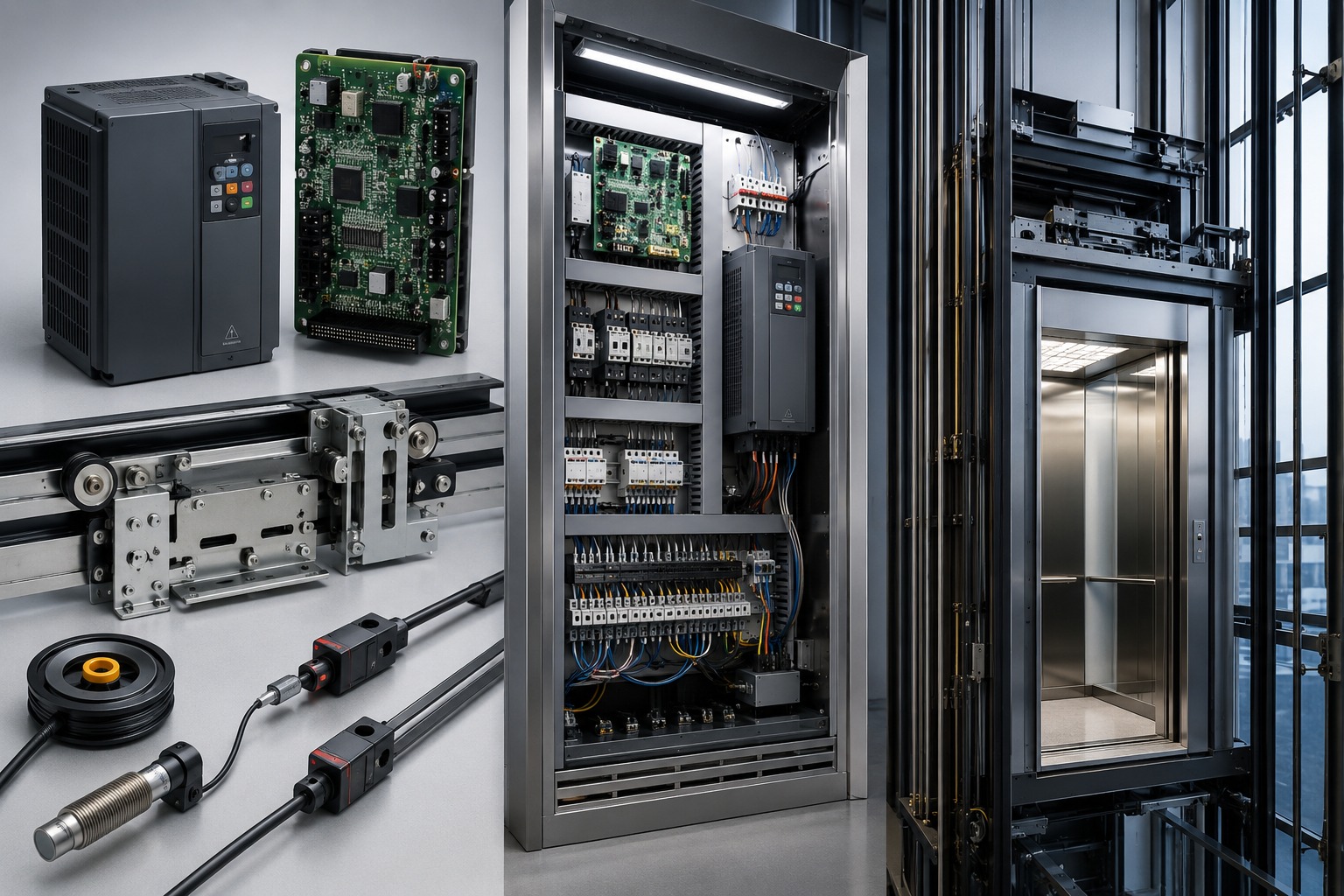
An elevator inverter is one of the most important components in modern lift control. It regulates motor speed, acceleration, deceleration, and torque so that passengers experience smooth starts, steady travel, and accurate floor leveling. In the Philippines, where elevators operate in residential towers, offices, hospitals, hotels, malls, ports, and mixed-use buildings from Metro Manila to Cebu and Davao, inverter condition directly affects comfort, energy use, and downtime risk.
For maintenance companies, building owners, modernization contractors, and distributors, buying the right frequency converter is not only about voltage and kilowatt rating. It also involves brand compatibility, encoder feedback requirements, braking configuration, cabinet space, software parameters, and supply-chain reliability. A mismatch can lead to repeated trips, poor ride quality, motor overheating, or communication faults with the controller.
This guide gives a direct answer for buyers in the Philippines: choose an elevator inverter by matching motor data, control method, car load, speed profile, site power conditions, and elevator brand requirements. Then confirm genuine model identification, installation checks, and commissioning parameters before putting the lift back into service. Whether you are comparing a KONE elevator inverter solution, reviewing a Hitachi elevator inverter source, or selecting a 22kW frequency converter for lift use, a disciplined buying process reduces risk and protects operating continuity.
The Philippine market has specific conditions that matter. Coastal humidity in Manila Bay, Cebu Port, Subic, and Batangas can accelerate corrosion. Voltage fluctuation in some provincial sites can stress power electronics. Heavy traffic patterns in shopping centers in Quezon City, Makati, Ortigas, Iloilo, and Cagayan de Oro can increase thermal load on elevator drives. These local realities make correct inverter selection and after-sales support especially important.
What an Elevator Inverter Does
An elevator inverter, often called a lift frequency converter or variable frequency drive, converts incoming electrical power into controlled output frequency and voltage for the traction motor. Its main job is to make the motor run only as fast and as forcefully as needed at each moment of the journey.
Without precise inverter control, a lift can start abruptly, stop with a jolt, consume more electricity, and level poorly at landings. With a properly matched inverter, the system can deliver smooth S-curve acceleration, stable torque at low speed, reduced mechanical shock, and better energy efficiency. This is why the inverter has a direct effect on passenger comfort and the operating life of brakes, ropes, gears, bearings, and door timing logic.
In practical terms, the inverter performs several critical tasks:
| Function | What the Inverter Controls | Benefit to the Elevator | Impact on the Building |
|---|---|---|---|
| Speed regulation | Motor frequency and RPM | Smooth travel between floors | Better passenger experience |
| Torque control | Motor pulling force under load | Stable movement with varying passenger loads | Reduced nuisance shutdowns |
| Acceleration profile | Start-up ramp and jerk limits | Comfortable launch from the landing | Improved premium feel for tenants |
| Deceleration profile | Controlled slowdown near floor | Accurate stopping and leveling | Safer boarding for users |
| Protection logic | Overcurrent, overvoltage, overheating | Prevents damage to motor and drive | Lower maintenance cost |
| Feedback handling | Encoder or resolver signals | Closed-loop precision control | Reliable high-rise operation |
| Energy optimization | Power output according to demand | Less wasted electricity | Reduced building energy bills |
The table above shows why the inverter should never be treated as a generic part. Even if two drives share the same power rating, they may differ in braking unit design, software logic, communication interface, motor control algorithm, and feedback card. In elevator applications, those differences matter far more than in ordinary fans or pumps.
In the Philippines, elevators in BGC office towers, Makati condominiums, Cebu hotels, and Davao hospitals often have different ride expectations and duty cycles. A residential building may prioritize quiet low-speed comfort, while a commercial tower needs fast response under high traffic. The inverter must support that real-world use pattern.
Signs an Elevator Inverter Needs Replacement
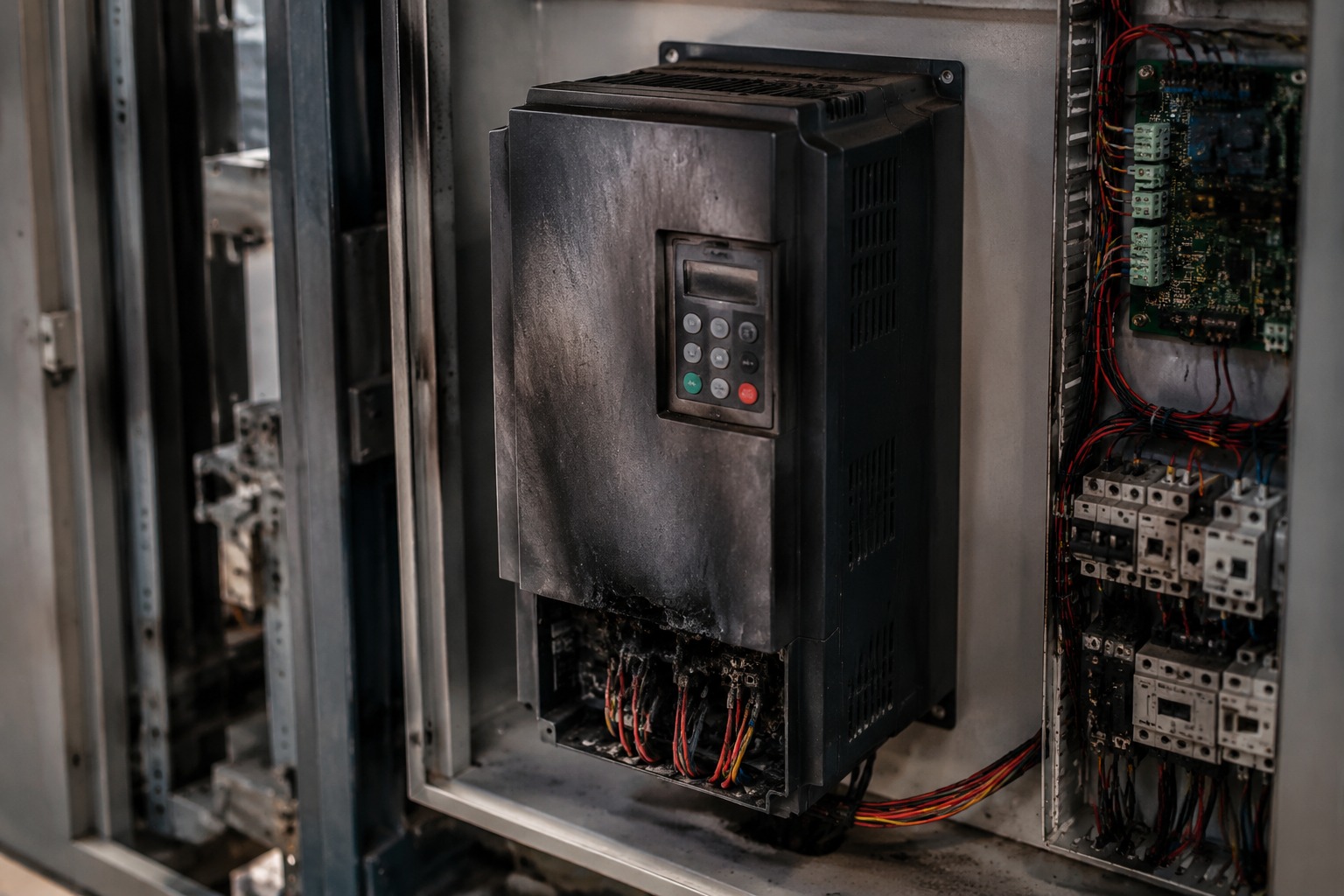
Some inverter failures are sudden, but many develop gradually. Recognizing warning signs early helps building operators avoid entrapments, service interruptions, and emergency call-outs. If a lift begins showing repeat faults after years of stable operation, the inverter should be evaluated alongside the motor, encoder, brake circuit, and power supply.
Common signs include rough starts, speed fluctuation, failure to reach rated speed, inaccurate floor leveling, frequent overcurrent alarms, overheating, burning smell, capacitor aging, fan failure, and visible board damage. Another warning sign is that the drive works normally when cold but trips after peak traffic periods.
| Observed Symptom | Possible Inverter Cause | Operational Risk | Recommended Action |
|---|---|---|---|
| Jerky start or stop | Parameter drift or control section wear | Poor ride comfort, mechanical stress | Check tuning, encoder, and drive health |
| Repeated overcurrent trip | IGBT weakness or shorting condition | Unexpected shutdown | Inspect motor, wiring, and replace drive if needed |
| Overheating alarm | Cooling fan failure or capacitor degradation | Thermal damage and reduced lifespan | Clean, test fans, assess replacement urgency |
| Floor leveling errors | Feedback instability or output inconsistency | Boarding hazard | Verify encoder and drive response |
| Burnt smell or discoloration | Power module overheating | Imminent failure | Take unit out of service and inspect immediately |
| Fault after power fluctuation | Damaged rectifier or DC bus section | Intermittent or total loss of operation | Test incoming supply and drive components |
| No spare parts available | Obsolete model | Extended downtime if failure occurs | Plan modernization or stock replacement |
The explanation here is simple: not every issue means the inverter is definitely bad, but these symptoms strongly justify a detailed diagnostic process. In older buildings in Manila, Pasig, and Quezon City, drives installed more than a decade ago may face aging capacitors and thermal fatigue. In coastal locations such as Cebu, Bacolod, and Zamboanga, corrosion and dust can also affect terminals and boards.
Replacement becomes more urgent when the same fault repeats despite encoder checks, motor insulation tests, brake adjustment, and wiring correction. If your maintenance team must reset the lift frequently just to keep it running, the cost of repeated service visits may already exceed the value of installing a stable replacement.
How to Choose Inverter Capacity and Compatibility
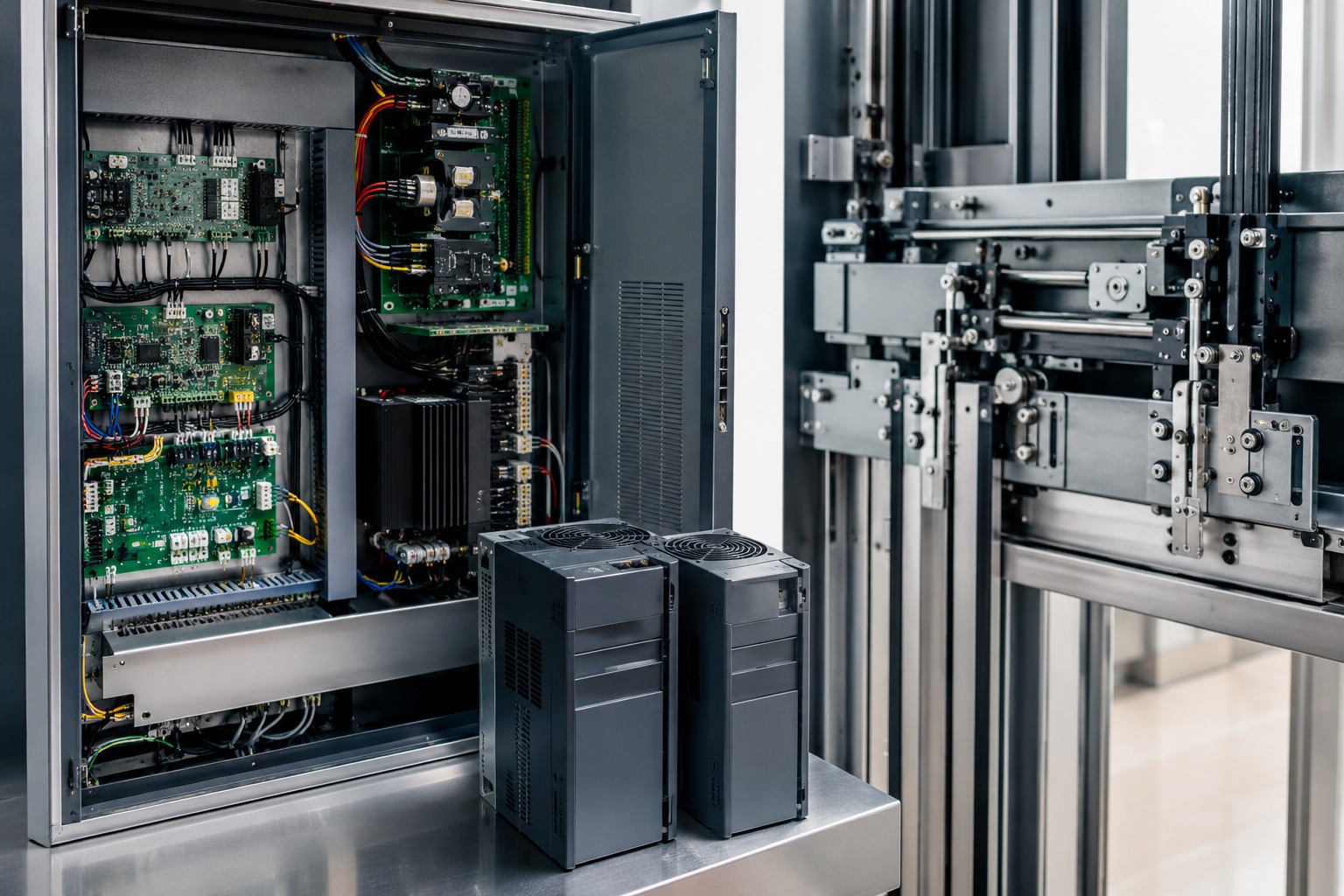
Choosing inverter capacity starts with motor nameplate data, but the decision should go further. Buyers should match rated power, output current, overload requirement, input voltage, control mode, braking setup, enclosure dimensions, communication needs, and software function set. Elevator applications are dynamic and safety-sensitive, so proper compatibility matters more than a simple kW match.
At minimum, gather the following data before ordering:
| Data Item | Why It Matters | Typical Source | Buyer Note |
|---|---|---|---|
| Motor power in kW or HP | Defines base inverter sizing | Motor nameplate | Do not estimate by car size alone |
| Rated current | More accurate than power alone | Nameplate or original manual | Critical for overload selection |
| Input voltage and phase | Must match site supply | Building electrical data | Check for local voltage variation |
| Motor control type | V/F, vector, closed-loop vector | Drive or controller documentation | High-performance lifts often need feedback control |
| Encoder specification | Signal matching for precise leveling | Encoder label and schematics | Verify pulse count and interface |
| Braking resistor or unit | Handles regenerative energy | Cabinet inspection | Essential for deceleration performance |
| Physical dimensions | Must fit existing panel space | Cabinet measurement | Ventilation clearance matters |
| Software parameters | Affects start, stop, torque, and fault logic | Original backup or controller settings | Always save before replacement |
The table makes one point clear: capacity and compatibility are both technical and practical. A drive that appears correct on paper may still fail in the field if the encoder card is wrong, if the braking arrangement is incompatible, or if the cabinet lacks cooling space. This is especially relevant for modernization projects where old machine-room layouts impose tight installation constraints.
For buyers in the Philippines, climate and operating profile should also be considered. In a residential tower in Taguig, average traffic may be modest, but continuous daily usage still demands thermal stability. In a hospital in Manila or a mall in Cebu, frequent acceleration cycles and stop-start duty can justify a stronger overload margin and better cooling performance.
If the system uses a known replacement path, it is often safer to follow the original brand’s equivalent specification or a thoroughly verified substitute. For example, some contractors review standard lift-drive options such as this 15kW frequency converter for elevator applications only after confirming control logic and motor matching details.
KONE Elevator Inverter Buying Considerations
When sourcing a KONE elevator inverter, the first priority is exact model matching. KONE systems may have specific communication expectations, parameter structures, and application behavior tied to the original controller design. Buyers should verify the full part number, software version where relevant, cabinet layout, and any associated board or encoder module before placing an order.
In the Philippine market, KONE units are common in commercial developments, premium residential projects, and modern mixed-use buildings. Because downtime can affect tenant satisfaction and property reputation, decision-makers often prefer replacement options that reduce integration risk rather than chasing the lowest upfront price.
Important KONE buying checks include:
- Original inverter model and full part code
- Controller generation and communication method
- Motor type and brake arrangement
- Encoder compatibility and connector style
- Mounting dimensions and cooling path
- Parameter backup availability
- Lead time versus urgency of building operation
For buyers comparing options, a dedicated KONE elevator inverter product page can be useful as a starting reference, but ordering should still be based on photos, labels, connector details, and technical confirmation. This is especially true for sites in Makati, Alabang, and Ortigas where property managers expect rapid restoration but cannot afford repeated mismatch issues.
There is also a broader purchasing question: should you buy original-matched stock, a professionally verified equivalent, or plan a fuller modernization? The answer depends on age, downtime cost, and spare-part availability. If the lift is part of a flagship office building with high traffic, proven compatibility may outweigh any apparent savings from an uncertain substitute.
Hitachi Inverter Sourcing Notes
Hitachi elevator systems are widely respected, but sourcing the correct inverter still requires care. In many cases, buyers need to confirm whether they are replacing the complete drive, only a power section, or a related board or accessory. The part description alone may not be enough because naming conventions can vary across project generations and regions.
For reliable sourcing, request clear images of the nameplate, terminal area, board labels, and the original cabinet position. Cross-check input voltage, output current, motor rating, and application details. If the lift has a history of encoder alarms or power instability, include that information during inquiry because it may affect whether the drive itself is the root cause.
A practical source reference for contractors is this Hitachi elevator inverter sourcing option, but the real value comes from detailed matching support rather than browsing a label alone. In the Philippines, where service teams may be dispatched from Metro Manila to Laguna, Pampanga, Iloilo, or Davao, getting the model right before shipping saves time and transport cost.
| Hitachi Sourcing Check | What to Verify | Why It Matters | Common Buyer Mistake |
|---|---|---|---|
| Part number | Exact alphanumeric code | Prevents generation mismatch | Using only a partial code |
| Voltage class | Input and output rating | Avoids electrical incompatibility | Assuming all units are identical |
| Current rating | Continuous and overload current | Supports elevator duty cycle | Matching kW only |
| Feedback option | Encoder card and signal type | Ensures control precision | Ignoring connector differences |
| Mounting format | Dimensions and terminal orientation | Simplifies cabinet replacement | Overlooking physical fit |
| Software setting backup | Parameter list or upload | Speeds commissioning | Replacing hardware without data capture |
| Site condition | Humidity, dust, unstable power | Improves long-term reliability | Focusing only on the part itself |
The table above highlights the biggest procurement lesson: elevator inverter sourcing is a systems decision, not a single-item purchase. Accurate identification and technical coordination help prevent return delays, especially when spare units must move through logistics hubs such as Manila, Cebu, and Davao.
Installation and Commissioning Checks
Even the correct inverter can fail prematurely or perform poorly if installation and commissioning are rushed. A disciplined check process is essential after replacement. Elevator drives must be installed with attention to electrical safety, grounding, cooling clearance, terminal torque, encoder wiring, motor direction, and parameter loading.
Before energizing the unit, technicians should inspect the cabinet for dust, moisture marks, loose terminals, heat damage, resistor condition, and fan operation. Measure insulation where appropriate and verify incoming supply quality. In areas with frequent brownouts or utility fluctuation, incoming protection and grounding integrity deserve extra attention.
| Commissioning Check | Purpose | Pass Condition | If Ignored |
|---|---|---|---|
| Terminal torque inspection | Prevents loose power connections | All power and control terminals secure | Heat buildup and fault trips |
| Grounding verification | Protects electronics and users | Stable low-resistance earth connection | Noise, trips, or safety issues |
| Encoder signal test | Confirms feedback integrity | Clean and stable signal | Speed instability and leveling errors |
| Motor rotation check | Ensures correct travel direction | Commanded direction matches movement | Unsafe operation and setup delays |
| Parameter loading | Restores designed performance | Verified against backup values | Jerky ride or overcurrent events |
| No-load and loaded run test | Checks actual operation | Smooth acceleration and deceleration | Hidden problems remain unresolved |
| Brake and leveling verification | Confirms final safety and comfort | Consistent stop accuracy | Passenger complaints and hazard risk |
The explanation is straightforward: commissioning is where compatibility becomes proven performance. A replacement drive may need fine-tuning based on motor behavior, rope condition, and actual building load pattern. High-rise towers in Bonifacio Global City may reveal different braking and speed feedback behavior compared with low-rise residential buildings in provincial cities.
For contractors, it is wise to document final parameter settings, alarm history, travel test results, and cabinet photos before turnover. This record helps future maintenance teams and shortens diagnosis if another issue appears months later.
Maintenance Tips for Frequency Converters
Preventive maintenance extends inverter life and reduces surprise outages. While some drive failures are unavoidable with age, many are accelerated by heat, dust, moisture, and neglected cooling components. In elevator machine rooms and control cabinets across the Philippines, environmental control is often as important as electrical quality.
Routine maintenance should include cleaning vents and filters, checking cooling fans, inspecting capacitors for swelling or leakage, tightening terminals, reviewing fault logs, and monitoring temperature during peak traffic periods. If the drive area is exposed to salt air, humidity, or construction dust, inspection intervals should be shorter.
Best practices include:
- Keep cabinet ventilation paths unobstructed.
- Replace worn cooling fans before total failure.
- Review fault history instead of only resetting alarms.
- Check for discoloration, smell, or abnormal capacitor appearance.
- Inspect braking resistors and associated wiring.
- Protect cabinets from water ingress, insects, and dust buildup.
- Back up parameters after stable commissioning.
Maintenance decisions should also account for spare-part strategy. If the installed model is obsolete, do not wait for complete failure before planning a replacement. Stocking a verified inverter or arranging a trusted source can be the difference between a same-week repair and a multi-week shutdown.
For many maintenance firms and building owners, supplier quality matters here. A dependable elevator parts partner should not only provide the part but also help with careful model matching, inspection support, protective packaging, and responsive communication. Those service elements reduce operational risk far more than low-price purchasing alone.
Philippines Market Demand, Product Types, and 2026 Trends
The elevator spare-parts market in the Philippines continues to grow alongside urban redevelopment, condominium turnover, transport-linked real estate, hospital expansion, and office modernization. Metro Manila remains the largest concentration of demand, but Cebu, Davao, Clark, Iloilo, Bacolod, and Cagayan de Oro are also important growth centers. New installations create future replacement demand, while older buildings generate immediate need for inverters, boards, door components, sensors, and other modernization parts.
Different product types serve different project needs:
| Product Type | Typical Use | Best Fit | Buyer Priority |
|---|---|---|---|
| Original matched inverter | Like-for-like replacement | Critical uptime buildings | Compatibility and speed |
| Verified equivalent drive | Cost-controlled replacement | Selected modernization projects | Technical confirmation |
| General lift frequency converter | Standard elevator applications | Systems with documented parameters | Motor and control matching |
| High-capacity drive | Heavy-duty or high-speed lifts | Commercial and hospital use | Overload and cooling margin |
| Compact cabinet replacement | Limited machine-room space | Retrofit projects | Dimensions and airflow |
| Modernization package drive | Broader control upgrade | Obsolete systems | Long-term serviceability |
From an industry perspective, demand is strongest in residential towers, offices, hotels, hospitals, retail malls, industrial sites, and logistics-linked developments. Elevator uptime is particularly critical where passenger flow is dense or where operations are safety-sensitive, such as healthcare facilities and transport-oriented mixed-use complexes.
The line chart above illustrates a realistic growth pattern in replacement and modernization demand. Drivers include aging installed equipment, expansion of residential high-rises, and stronger attention to service continuity in commercial property management.
The bar chart shows how mixed-use, residential, and mall projects can generate strong lift-drive demand due to high traffic, multiple elevator banks, and pressure to maintain tenant satisfaction.
This area chart reflects a strong trend toward higher-efficiency inverters, better diagnostic capability, and modernization planning. By 2026, buyers in the Philippines are expected to prioritize not only replacement but also sustainability, serviceability, and lifecycle cost.
Looking ahead to 2026, three trends stand out. First, energy efficiency will matter more as developers and facility managers track building operating costs more closely. Second, policy and procurement standards may increasingly favor documented safety, traceability, and preventive maintenance. Third, modernization demand will expand as older elevators remain in service beyond their ideal lifecycle. In that environment, inverter suppliers who combine product matching with technical responsiveness will be best positioned.
Buying Advice, Applications, Case Examples, and Local Supplier Evaluation
Smart buying begins with application context. A hospital service lift in Manila, a condominium passenger lift in Pasay, and a hotel elevator in Cebu may all use drives, but the tolerance for downtime, ride profile, and maintenance planning are very different. Buyers should ask not only “Will this inverter run?” but also “Will it run smoothly, safely, and predictably in this building?”
Applications commonly requiring inverter replacement include modernization of aging traction lifts, emergency repair after power module failure, preventive replacement of obsolete units, and performance improvement where ride quality has deteriorated. Industries with strong demand include property management, healthcare, hospitality, logistics, retail, and public-use commercial buildings.
Consider these practical examples:
- A Makati office tower replaces an aging inverter before tenant complaints increase, prioritizing parameter backup and minimal downtime.
- A Cebu hotel needs a drive with stable low-speed control to maintain quiet ride comfort and guest satisfaction.
- A Davao hospital requires a reliable replacement with careful commissioning because stretcher transport depends on smooth leveling.
- An Iloilo mixed-use building uses a verified compatible drive during modernization where the original model is already obsolete.
Local supplier evaluation should focus on technical response, not only stock claims. Ask whether the supplier can help review labels, connector details, and application data. Ask how products are packed for transport, especially for inter-island delivery. Ask whether incoming inspection is performed before shipment. For projects moving through Manila, Cebu, or Davao logistics channels, these service details affect outcome.
The comparison chart above shows the criteria many professional buyers now use when selecting a supplier. A strong score in model matching and inspection control often prevents costly repeat deliveries and return disputes.
Our Company’s Technical, Manufacturing, and Service Capabilities
For buyers who need dependable sourcing support, our role is built around three capabilities that matter in actual elevator maintenance work.
Technical capabilities: We support careful model matching for elevator control boards, inverter and frequency converter parts, door operator components, encoders, sensors, power supplies, buttons, COP panels, intercom parts, and other lift accessories across brands such as Hitachi, Toshiba, KONE, Mitsubishi, and more. For inverter inquiries, we focus on accurate identification through labels, photos, specifications, and application details so customers can reduce mismatch risk before ordering.
Manufacturing and quality capabilities: Our supply process emphasizes stable quality inspection and protective packaging. This matters for sensitive electronic components such as drives, control boards, feedback devices, and power modules that may travel to project sites across Luzon, Visayas, and Mindanao. Proper handling and packaging help protect parts in transit from impact, moisture exposure, and shipping-related damage.
Service capabilities: We serve maintenance companies, distributors, building owners, and modernization contractors with responsive communication and practical sourcing support. The goal is to help customers reduce downtime, secure compatible replacement parts, and keep elevator systems operating safely. In fast-moving repair situations, timely confirmation and dependable shipment can be just as important as the part itself.
This combination of technical confirmation, inspection discipline, and responsive service is especially useful in the Philippine market, where project locations may range from central business districts to regional cities and island delivery routes.
FAQ About Elevator Inverters
1. Can I replace an elevator inverter with any drive that has the same kW rating?
No. Elevator applications require compatibility in current rating, overload capacity, control mode, encoder interface, braking setup, physical fit, and parameter logic. Same kW does not guarantee safe operation.
2. How long does an elevator inverter usually last?
Service life varies by environment, duty cycle, cooling, and power quality. In hot or dusty machine rooms, life may shorten. Aging capacitors and fans are common limiters.
3. What is the difference between a frequency converter and an elevator inverter?
In many buying discussions the terms overlap. However, elevator use requires application-specific control performance, smooth ride profiles, and precise stopping behavior that generic industrial drives may not always provide without proper validation.
4. Should we repair or replace a faulty drive?
That depends on age, spare-part availability, failure severity, downtime cost, and risk of repeat faults. If the model is obsolete or the power section is badly damaged, replacement is often more practical.
5. Why does the elevator trip more during busy hours?
Peak traffic increases thermal stress and current demand. Weak cooling fans, degraded capacitors, or borderline parameter settings may only show problems under heavy load.
6. Is parameter backup really necessary?
Yes. Backing up parameters before replacement can save significant commissioning time and reduce performance errors after installation.
7. What documents should I send when asking for a quotation?
Send clear photos of the inverter nameplate, full model code, cabinet position, motor nameplate, fault code, and any available manual or parameter list. These details improve matching accuracy.
8. Are KONE and Hitachi inverter purchases handled the same way?
The sourcing logic is similar, but exact brand-specific compatibility checks can differ. Always verify the full part code, interface details, and application conditions before ordering.
9. Do Philippine site conditions affect inverter choice?
Yes. Humidity, salt air, unstable power, and heavy traffic patterns can influence cooling requirements, cabinet condition, and maintenance planning.
10. What is the safest buying approach?
Match the original specification carefully, confirm all technical details, review supplier support quality, and document installation and commissioning thoroughly.
In summary, an elevator inverter is not just a motor accessory. It is central to ride comfort, energy performance, and reliability. Buyers in the Philippines should evaluate replacement signs early, select capacity with full compatibility in mind, pay close attention to KONE and Hitachi model details, follow strict commissioning practice, and maintain the drive proactively. With the right sourcing process and technical support, maintenance teams and building owners can reduce downtime and keep elevators running smoothly in demanding local conditions.