
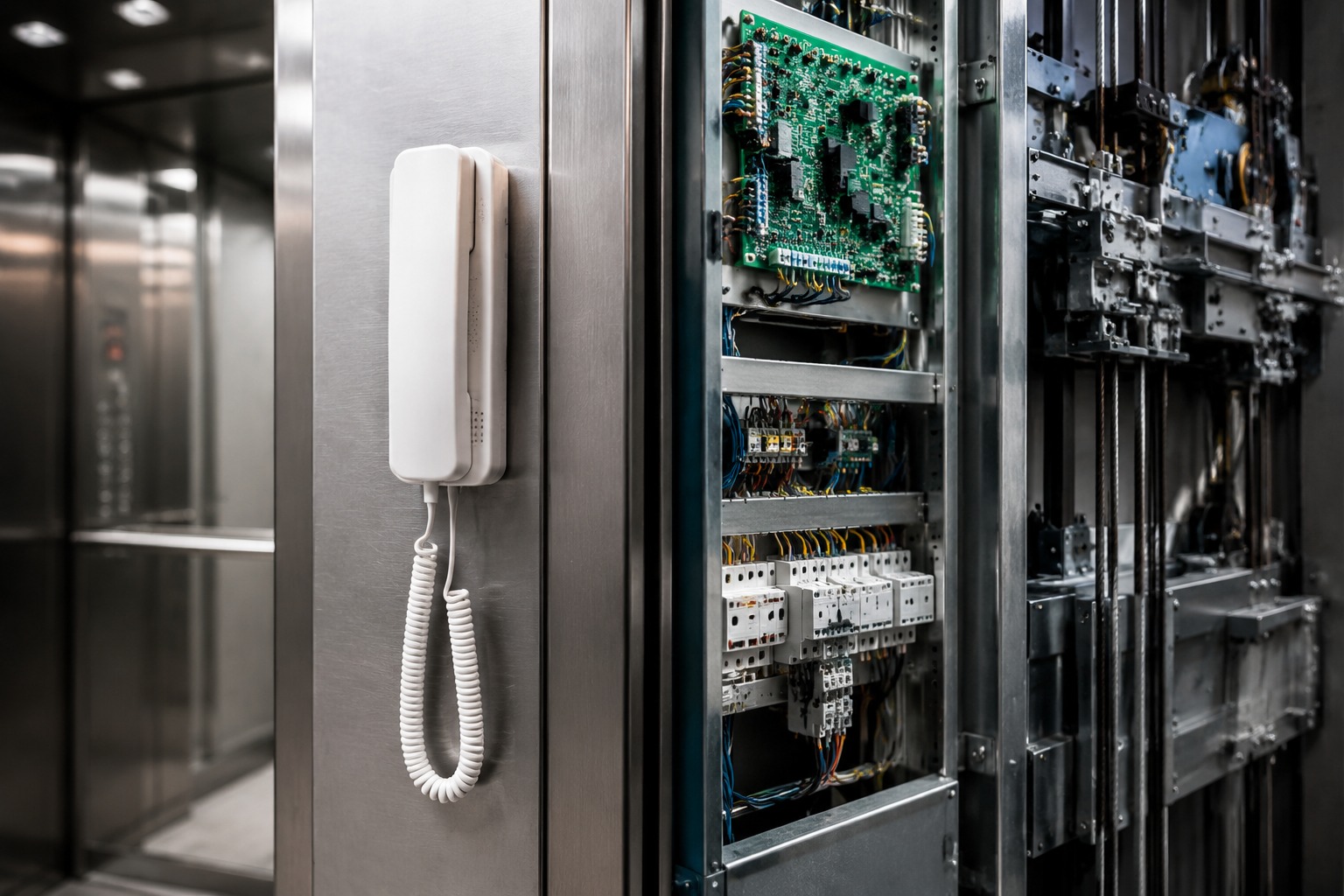
Elevator intercom phones are a basic but critical part of passenger safety. When a lift stops unexpectedly, loses normal operation, or requires emergency assistance, the intercom provides the direct voice link between passengers in the car and building personnel, security staff, or an outside response point. In the Philippines, where high-rise residential towers, mixed-use developments, hospitals, offices, hotels, and transport-connected properties continue to expand in Metro Manila, Cebu, Davao, Clark, Iloilo, and other urban hubs, dependable elevator communication systems are not optional. They support emergency response, help maintenance teams diagnose incidents faster, and contribute to code compliance and daily user confidence.
For building managers and elevator maintenance companies, choosing the right intercom phone is not only about ordering a replacement that looks similar. Correct sourcing depends on brand, model, voltage, terminal arrangement, mounting size, handset or hands-free design, audio performance, and compatibility with the existing elevator control and car operating panel layout. This is especially important when dealing with legacy systems or brand-specific parts such as Hitachi elevator intercom phones, car intercom modules, and intercom terminals.
In practical terms, a good elevator intercom strategy reduces downtime, avoids repeat site visits, and improves the safety reputation of the property. It also supports preventive maintenance by identifying weak audio quality, aging wiring, loose connectors, and power irregularities before a total communication failure happens. For buyers in the Philippines, this matters even more in coastal and humid environments near Manila Bay, Batangas port zones, Subic, Cebu port, and Davao logistics corridors, where corrosion, dust, heat, and vibration can affect elevator electrical parts over time.
This guide explains why elevator intercom systems are important, how to understand the difference between a car intercom and an intercom terminal, what to review when sourcing Hitachi-related units, how voltage and wiring compatibility affect performance, and when an old intercom part should be replaced instead of repeatedly repaired. It also covers maintenance tips for property and facility teams, buying advice for local projects, examples by industry, and a detailed FAQ to help buyers make better replacement decisions.
Why Elevator Intercoms Matter for Safety and Compliance
The elevator intercom is the passenger’s voice path during abnormal conditions. Even in buildings with advanced destination control, CCTV, access control, or remote monitoring, a clear voice channel remains one of the simplest and most effective ways to manage an elevator incident. If passengers are trapped, anxious, elderly, injured, or unfamiliar with emergency procedures, immediate two-way audio can calm them and help staff give practical instructions.
In the Philippines, local building operations often involve a combination of in-house engineering, third-party lift maintenance contractors, and security teams. An intercom system helps connect these roles. In a Makati office tower, a BGC mixed-use development, a condominium in Quezon City, or a hotel in Cebu IT Park, the response process usually begins with communication: confirming the elevator car number, checking whether passengers are safe, advising them not to force doors, and coordinating rescue procedures with trained personnel.
Intercoms also support code and risk management objectives. While technical requirements vary by project and authority, the underlying principle is consistent: elevators need reliable means for emergency communication. A failed intercom may expose the building owner or service contractor to complaints, delayed response, and reputational risk. During modernization projects, older communication modules are often reviewed because they no longer meet operating expectations for audio clarity or parts availability.
Another important reason elevator intercoms matter is operational efficiency. When building staff can hear clearly and passengers can be heard clearly, false dispatches are reduced. Technicians do not waste time guessing whether a problem is mechanical, electrical, or simply a misunderstanding. A good intercom can shorten diagnosis time by providing direct information from the car. This becomes valuable in large developments with multiple towers or banks of elevators where response coordination must be fast.
| Safety Function | How the Intercom Helps | Typical Building Benefit | Risk if Missing |
|---|---|---|---|
| Passenger reassurance | Provides immediate voice contact during stoppages | Reduces panic and complaints | Anxiety, forced door attempts |
| Emergency coordination | Allows staff to verify car location and passenger condition | Faster rescue preparation | Slower response and confusion |
| Incident documentation | Supports clearer reporting of what happened | Better maintenance follow-up | Incomplete records |
| Operational continuity | Helps identify whether the issue is minor or serious | Less unnecessary downtime | Repeated service calls |
| Compliance support | Aligns with emergency communication expectations | Safer property management | Audit and inspection concerns |
| User confidence | Shows the building is prepared for emergencies | Improved tenant and guest trust | Negative user perception |
The table above shows that the value of an elevator intercom extends beyond emergencies alone. It improves the full management cycle: prevention, communication, response, documentation, and resident or tenant satisfaction.
The growth trend above reflects the broader direction of the Philippine market: more vertical housing, more retrofit work, and a stronger focus on lifecycle maintenance. Intercom replacement demand typically increases alongside modernization work and stricter building risk management.
Car Intercom vs. Intercom Terminal: What Is the Difference?
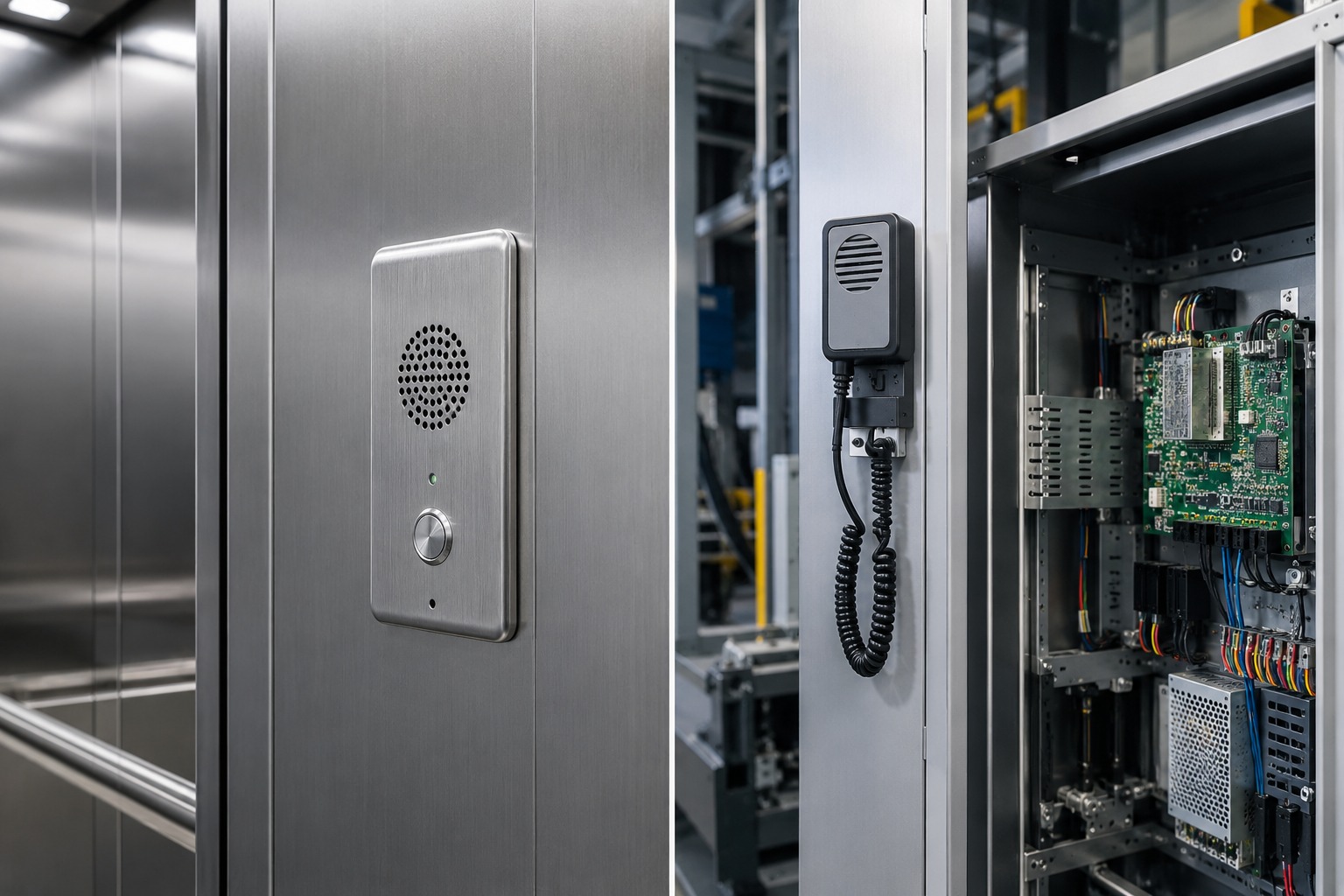
Buyers often use the word “intercom” for several different parts, but accurate ordering requires understanding the role of each unit. A car intercom is usually the communication device located inside the elevator car. It may include a microphone, speaker, push button, handset, or a compact voice module integrated with the car operating panel. This is the passenger-facing component.
An intercom terminal, by contrast, is commonly the receiving, switching, or connecting side of the communication path. Depending on system design, it may be installed in the machine room, control cabinet, security room, guard station, management office, or another central communication point. It can manage signal routing, power, line termination, or connection between the elevator car and the operator’s response location.
Confusion between these two components causes many wrong orders. A maintenance team may request an “elevator intercom phone,” but what they really need is the in-car car intercom module, not the terminal station. In other projects, the car unit is functional but the response terminal has failed, creating the false impression that the elevator phone itself is defective.
For Hitachi systems and similar brand-specific setups, the distinction becomes more important because mounting methods, connectors, communication protocols, and voltage requirements may differ between the car side and the terminal side. Matching by photo alone is risky. Buyers should confirm model code, dimensions, connector type, rated voltage, wire count, and system function before purchasing.
| Item | Car Intercom | Intercom Terminal | Buying Note |
|---|---|---|---|
| Main location | Inside elevator car | Security room or control side | Confirm installation point first |
| Main user | Passenger | Security or building staff | Different operating needs |
| Key components | Speaker, mic, button, handset or module | Terminal board, station, receiver, control interface | Check parts list carefully |
| Failure symptom | No sound inside car, broken call button | No response at receiving point | Test both sides before ordering |
| Typical replacement trigger | Physical wear, poor voice pickup | Signal routing issues, line faults | Verify with continuity and voltage tests |
| Ordering risk | Wrong faceplate or voltage | Wrong terminal format or interface | Use model matching and photos |
The comparison above highlights why maintenance teams should identify the communication path end to end. If you are sourcing a replacement, product naming must match the actual installed role. For example, a car intercom for Hitachi elevator systems is different from an intercom terminal for Hitachi lift applications, even if both are part of the same emergency communication system.
Hitachi Elevator Intercom Phone Sourcing Notes
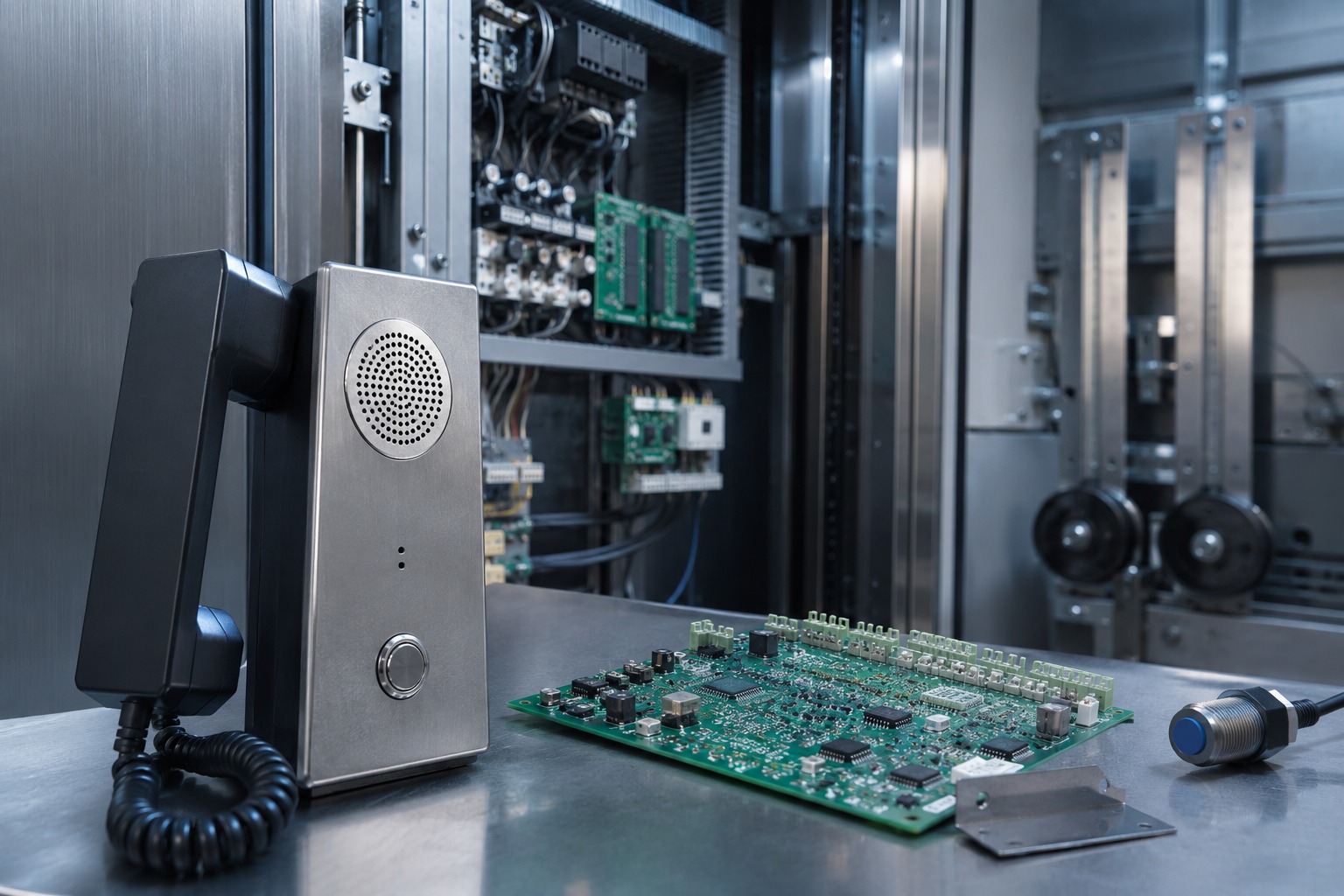
Hitachi elevator parts are widely used across many buildings in Asia, and replacement sourcing often requires careful confirmation because the installed base may include multiple generations, regional variations, and modernization combinations. In the Philippines, many properties operate mixed inventories where the elevator brand remains Hitachi but some related parts have already been updated over time. This means an intercom part may not always match the original catalog photo or old purchase note.
When sourcing a Hitachi intercom phone, begin with the part label if available. Check any model number, serial sticker, PCB marking, voltage rating, connector detail, and mounting measurement. Take front and back photos, including wire positions and terminal markings. If the old part is damaged or labels are faded, note the elevator unit location, project name, controller information, and whether the intercom is car-side or terminal-side.
It also helps to compare similar product categories rather than assuming one item fits all. For instance, some projects need a standard Hitachi elevator intercom phone, while others require an intercom system phone for Hitachi elevator parts with a different system role or interface. Sourcing accuracy improves when the buyer provides both the old part information and the actual problem description.
For imported parts used in Philippine projects, buyers should also think about shipping protection, lead time, and site replacement planning. Intercom units are small compared with control boards or door operators, but packaging still matters. Damage to handset clips, microphones, speaker surfaces, or terminal pins during transit can delay repairs. Good suppliers verify the model, inspect appearance and function where possible, and pack the unit to resist impact and moisture exposure.
Another sourcing factor is practical substitution. Sometimes the exact old part is obsolete, and the project requires a compatible replacement rather than an identical original production batch. In those cases, buyers should assess compatibility in terms of voltage, dimensions, mounting, connector layout, audio behavior, and communication function. A lower price is not a saving if the part requires rework, creates noise issues, or fails after installation.
| Sourcing Checkpoint | What to Confirm | Why It Matters | Common Mistake |
|---|---|---|---|
| Model identity | Part number, sticker, PCB code | Prevents wrong version orders | Ordering by appearance only |
| Application side | Car unit or terminal unit | Different function and wiring | Using generic “intercom phone” wording |
| Voltage rating | 6V, 12V, 24V or system-specific | Avoids power mismatch | Ignoring label or schematic |
| Connector style | Pin count, plug type, terminal layout | Supports direct replacement | Assuming same brand means same plug |
| Physical fit | Panel cutout, screw spacing, depth | Reduces site modification | Forgetting rear clearance |
| Audio function | Mic, speaker, call button behavior | Ensures practical usability | Testing power only, not voice quality |
The table above reflects real sourcing problems seen in building maintenance. The more complete the buyer’s site data, the better the chance of a correct replacement on the first shipment.
Voltage and Wiring Compatibility
Voltage and wiring compatibility are among the most overlooked causes of intercom problems. A replacement unit may look correct and even fit the panel opening, but if its rated voltage differs from the original design, performance will be unstable or the part may fail completely. In elevator applications, common intercom configurations may involve 6V, 12V, 24V, or other system-defined arrangements depending on design generation and manufacturer practice.
When dealing with older buildings in Manila, Pasig, Mandaluyong, or Cebu City, especially those that have undergone partial retrofits, there may be undocumented wiring changes. A prior technician may have adapted a connector, replaced a wire pair, or moved the terminal arrangement to keep an old system running. Before ordering a replacement, technicians should compare actual site wiring against the available drawing rather than trusting the drawing alone.
Basic checks include measuring supply voltage under operating conditions, confirming polarity where applicable, checking continuity on the audio line, inspecting shield or grounding condition, and verifying the number of active wires. Intercom issues can result from oxidized terminals, cable damage in traveling cables, weak crimps, or line interference from nearby power circuits. If the part is replaced without correcting these underlying issues, the new unit may appear defective.
Compatibility also includes call triggering logic. Some intercom phones use a simple push-to-call behavior, while others are integrated with a broader alarm or communication circuit. A mismatch can cause no-call conditions, stuck call states, intermittent response, or audio one-way transmission. This is why maintenance teams should document not only wire count but also button behavior and response sequence during testing.
| Compatibility Factor | What to Inspect | Possible Problem if Ignored | Recommended Action |
|---|---|---|---|
| Rated voltage | Nameplate and live measurement | No power, overheating, unstable audio | Match replacement to actual system voltage |
| Polarity | Positive and negative orientation | Part does not operate properly | Mark wires before removal |
| Wire count | Number of used conductors | Incomplete function after installation | Photograph terminal positions |
| Connector type | Plug shape and pin arrangement | Cannot install or poor contact | Compare front and back images |
| Signal path | Car to terminal routing | One-way audio or no call | Trace line end to end |
| Grounding and shielding | Noise protection and cable condition | Buzzing or weak audio | Inspect cable health during service |
This table shows that voltage is only one part of compatibility. Proper replacement depends on the full electrical path and system behavior. In many cases, a careful wiring review prevents unnecessary part purchases.
Audio Testing and Call Quality Checks
A working elevator intercom should do more than power on. It should deliver clear, stable, understandable voice communication in both directions. Audio testing is therefore essential after installation, during preventive maintenance, and whenever passengers report weak or distorted sound. In noisy urban buildings, especially properties near EDSA traffic corridors, airport approach zones, generator rooms, or busy loading areas, audio quality must be strong enough to overcome environmental noise.
Start with a basic call test from the car to the receiving point. Confirm that the call triggers correctly, the terminal side receives the signal, and staff can answer without delay. Next, evaluate voice clarity both ways. Listen for static, low volume, feedback, clipping, hum, crackling, or intermittent dropouts. These symptoms may indicate microphone wear, speaker damage, poor wiring, inadequate grounding, or unstable power supply.
Technicians should also test during realistic conditions. A quiet bench test is useful, but elevator environments include door operation noise, fan noise, vibration, and passenger movement. It is wise to test while the car is in service mode and while stationary, and if permitted, during controlled travel conditions. This helps identify intermittent issues related to cable movement in the traveling cable or vibration-sensitive connectors.
For buildings with multiple cars in one bank, verify that the correct car maps to the correct response point. Misidentification creates confusion during emergencies. Staff should know which elevator is calling, and records should reflect car number, tower designation, and terminal side labeling. This is particularly important in large residential developments in Quezon City, Ortigas, Alabang, and Cebu where identical lift interiors can complicate response if the communication setup is poorly documented.
| Test Item | What Good Performance Looks Like | Warning Sign | Likely Cause |
|---|---|---|---|
| Call initiation | Call starts immediately after button press | No trigger or delayed trigger | Button fault, line issue, terminal problem |
| Car-to-terminal audio | Clear voice with normal volume | Muffled, weak, broken audio | Mic wear, line attenuation, connector issue |
| Terminal-to-car audio | Passengers hear instructions clearly | Low output, distortion, hiss | Speaker issue, amplifier fault, low voltage |
| Noise resistance | Minimal interference or hum | Buzzing or electrical noise | Poor grounding or cable interference |
| Stability during travel | Consistent communication | Intermittent loss when car moves | Traveling cable damage |
| Correct car identification | Response point identifies exact elevator | Wrong car shown or answered | Terminal mapping or labeling issue |
The checklist above is useful for commissioning and routine maintenance alike. Audio quality should be assessed as a functional safety matter, not as a cosmetic detail.
This demand chart reflects a common market pattern in the Philippines. Residential towers and office buildings often lead in replacement activity because of heavy use, frequent tenant expectations, and the need to keep safety systems consistently functional.
When to Replace Old Intercom Parts
Not every intercom problem means the entire unit must be replaced, but many older components become uneconomical to keep repairing. If the phone or intercom module has repeated sound loss, cracked housings, failed buttons, brittle wiring tails, oxidized terminals, or outdated internal parts with poor availability, replacement is usually the better long-term decision.
Age alone is not the only factor. Replacement should also be considered when the part no longer delivers reliable communication quality, even if it still works intermittently. In an emergency, intermittent operation is not acceptable. A handset that only works when held at a certain angle, a call button that triggers irregularly, or a speaker that fades under vibration can create serious risk.
Another trigger is modernization compatibility. If a building is upgrading elevator control systems, security communication procedures, or COP panels, retaining a severely aged intercom can become the weak link in an otherwise improved system. Likewise, if a supplier can no longer reliably source a matching repair subcomponent, replacing the full unit may reduce downtime and simplify future maintenance.
In coastal Philippine environments or towers exposed to heat and humidity, visible corrosion is a strong warning sign. Moisture can degrade contact surfaces and reduce voice quality long before total failure occurs. If the intercom area shows signs of rust stains, oxidized screws, powdery residue, or degraded plastic around the microphone or speaker openings, it is wise to plan replacement before a breakdown occurs.
| Condition | Repair or Replace? | Reason | Priority Level |
|---|---|---|---|
| Single loose wire with otherwise healthy unit | Repair | Simple correction if no hidden damage | Medium |
| Repeated intermittent audio | Replace | Unreliable in emergency use | High |
| Cracked housing or broken handset mount | Replace | Mechanical damage affects usability | High |
| Corroded terminals and weak signal | Usually replace | Corrosion often returns and spreads | High |
| Obsolete model with no dependable spares | Replace | Reduces repeat downtime | High |
| Minor dirt or blocked speaker opening | Repair/clean | Maintenance may restore performance | Low |
As the table suggests, the decision should balance cost, reliability, and urgency. In most passenger communication applications, dependable performance matters more than extending the life of a weak component for a few extra months.
Maintenance Tips for Building Managers
Building managers do not need to perform advanced electrical diagnostics themselves, but they should ensure the intercom system is included in regular lift maintenance routines. Many teams focus heavily on doors, ride quality, and leveling accuracy, yet communication devices can be overlooked because they are used less often in normal operation. That is exactly why periodic testing is necessary.
A practical maintenance approach includes monthly call checks, clear labeling of response points, visual inspection of car-mounted devices, and logging any complaint about low volume or unclear sound. Staff turnover is another issue. Security and front desk personnel should know what happens when an elevator emergency call comes in, how to answer, what questions to ask, and when to alert the elevator maintenance contractor immediately.
Properties with many elevators should maintain a spare-part record. Even if each tower uses a similar brand, intercom units may differ by batch or modernization stage. Good records include part photos, voltage, wire arrangement, date installed, and supplier source. This reduces guesswork during emergencies.
Environmental control matters as well. Keep communication terminals in clean, dry, ventilated locations. Avoid exposing them to leaks, dust buildup, or unauthorized tampering. If a building experiences frequent brownouts or generator transfers, ask the maintenance contractor to check whether the intercom power supply remains stable during transition events.
For managers coordinating procurement, work with suppliers that understand elevator part matching rather than general electronics sellers alone. Intercom sourcing is safer when the supplier can review model details, verify compatibility, inspect quality before shipping, and pack the item properly. That reduces the chance of ordering delays and unsuccessful replacements.
The area chart reflects an important trend for 2026 and beyond: property owners are moving from emergency-only repair decisions toward planned replacement strategies. This change is driven by safety expectations, spare-parts management, and the need to reduce repeated service interruptions.
Market, Applications, and Local Buying Advice in the Philippines
The Philippine market for elevator communication parts is shaped by high-rise urban development, mixed building age, and ongoing modernization. Newer projects in Bonifacio Global City, Ortigas Center, Cebu Business Park, and Clark often demand organized spare-parts planning from the beginning. Older towers in Makati, Manila, and central business districts across the country may require more careful identification of installed intercom models because documentation is incomplete or the system has been modified over time.
Applications vary by sector. Residential condominiums prioritize occupant reassurance and 24/7 support. Office towers need smooth communication with security and engineering teams. Hospitals require especially clear and dependable communication because elevators may carry patients, medical staff, and sensitive equipment. Hotels value user experience and rapid issue handling. Industrial and logistics sites, including facilities near ports and trade zones, often deal with harsher environmental conditions and heavier vibration exposure.
When buying in the Philippines, one practical question is whether to source locally available stock or order matched replacement units from specialized suppliers. Local availability can shorten lead time, but matching quality is more important than speed alone. For uncommon or brand-specific parts, reliable sourcing with full model verification is often the better option.
Buyers should ask for clear product photos, model confirmation support, packaging standards, and communication on shipping lead times to Manila, Cebu, Davao, Cagayan de Oro, Bacolod, Iloilo, and other destinations. A supplier that understands elevator parts can also help compare alternatives if the original unit is discontinued.
| Sector | Main Need | Intercom Priority | Typical Buying Focus |
|---|---|---|---|
| Residential towers | Resident safety and response speed | Very high | Reliable replacement and low downtime |
| Office buildings | Operational continuity | High | Fast diagnosis and maintenance planning |
| Hotels | Guest experience and reputation | High | Clear audio and neat appearance |
| Hospitals | Critical communication reliability | Very high | Stable function and quick support |
| Malls | Public safety in high foot traffic | High | Routine testing and spare readiness |
| Industrial facilities | Durability in harsher conditions | Medium to high | Environmental resistance and wiring checks |
This sector view helps buyers prioritize features according to building use. A hospital or premium residential tower may place more value on maximum voice clarity and quick replacement support than on lowest unit price.
Case Examples and Supplier Comparison Considerations
Consider a condominium in Pasig with recurring complaints that trapped passengers could hear security, but security could barely hear passengers. The issue was first treated as a front-desk terminal fault. After proper testing, the actual cause was a weak in-car microphone module combined with connector oxidation. Replacing the car-side intercom and cleaning the terminal path restored full communication.
In another example from Cebu, a hotel undergoing lift refurbishment found that some intercom phones were mixed between older and newer generations. The faceplates looked similar, but voltage and connector formats differed. A supplier-assisted model review prevented the purchase of mismatched units and helped the maintenance contractor schedule replacements by elevator group.
For a logistics-linked commercial building near Batangas, environmental exposure played a larger role. Moisture and airborne contaminants had affected terminal contacts and call consistency. Here, the solution involved not only replacing the intercom component but also improving enclosure protection and maintenance inspection intervals.
These cases show that a dependable supplier should contribute more than price quotation. Useful supplier value includes model matching support, technical review, stable inspection, protective packaging, and responsive communication. This is especially important for building owners and contractors who need to minimize repeat visits and tenant disruption.
Our company supports these needs through three practical strengths. In technological capabilities, we focus on careful model matching for elevator spare parts, helping customers compare photos, labels, voltage data, and functional role before shipment. In manufacturing capabilities, we emphasize stable quality inspection and protective packaging to reduce handling risk for sensitive lift accessories, including communication parts. In service capabilities, we respond to maintenance companies, distributors, building owners, and modernization contractors with sourcing support aimed at reducing downtime and improving replacement accuracy across brands such as Hitachi, Toshiba, KONE, Mitsubishi, and others.
The comparison chart summarizes the features that matter most when selecting a supplier for elevator communication parts. In a market where downtime has direct operational and reputational costs, support quality is often as important as the part itself.
2026 Trends: Technology, Policy, and Sustainability
Looking toward 2026, elevator intercom systems in the Philippines are influenced by three major trends: smarter monitoring, stronger compliance culture, and more sustainable replacement planning.
On the technology side, building owners increasingly expect communication devices to fit into broader property management systems. While many elevator intercom phones remain simple and effective voice devices, future upgrades may involve clearer digital audio pathways, better integration with centralized monitoring, improved event logging, and easier car identification across multi-tower projects. Modernization projects may also favor components that simplify maintenance and reduce installation errors.
On the policy side, safety accountability is increasing. Even where exact technical requirements differ, owners, developers, and facility teams are under greater pressure to prove that emergency communication systems are operational, tested, and documented. This encourages scheduled intercom inspections rather than reactive troubleshooting only after a breakdown or passenger complaint.
On sustainability, the market is shifting toward longer service life through better matching, fewer incorrect orders, and more preventive replacement planning. Reducing repeat shipments, repeated technician travel, and unnecessary part swaps contributes to more efficient lifecycle management. Packaging quality also matters, especially for imported elevator parts moving through major trade routes into Manila, Subic, Cebu, and Davao.
For buyers, the practical takeaway is simple: choose intercom parts and suppliers that support reliability over time, not just short-term replacement. A correctly matched, well-tested unit installed with proper wiring review is the most cost-effective outcome.
FAQ About Elevator Intercom Phones
1. Why is an elevator intercom phone important if the building already has CCTV?
CCTV helps visual monitoring, but it does not replace direct two-way voice communication. Passengers need a reliable way to speak with building staff during an incident.
2. What is the difference between a car intercom and an intercom terminal?
The car intercom is the passenger-side communication device inside the lift car. The intercom terminal is typically the receiving or interface unit at the staff or control side.
3. Can I replace a Hitachi intercom phone with any similar-looking model?
No. You should verify model, voltage, connector type, mounting dimensions, and function. Similar appearance does not guarantee compatibility.
4. What voltages are common for elevator intercom parts?
Common configurations may include 6V, 12V, and 24V, but the actual system must be confirmed from the installed unit and site measurement.
5. What causes poor audio quality in elevator intercoms?
Typical causes include worn microphones, damaged speakers, loose connectors, corroded terminals, cable issues, grounding problems, and unstable power supply.
6. How often should intercom phones be tested?
Routine checks should be part of regular elevator maintenance, with scheduled call tests and immediate follow-up whenever users report unclear or failed communication.
7. When should old intercom parts be replaced instead of repaired?
Replace them when performance is intermittent, audio remains poor after basic repairs, corrosion is significant, the housing is damaged, or spare support is unreliable.
8. Are intercom issues always caused by the phone unit itself?
No. The problem may be in the terminal side, wiring, traveling cable, power supply, or connection mapping. Complete testing is important before ordering a part.
9. What information should I provide when asking for a quotation?
Provide clear photos of the front and back, part number if visible, voltage rating, connector detail, dimensions, building location, and a short description of the problem.
10. Where can I find replacement products for Hitachi elevator intercom applications?
You can review specialized product options such as a Hitachi elevator intercom phone, a Hitachi intercom system phone, a Hitachi intercom terminal, or a 24V or 6V car intercom for Hitachi elevators depending on the actual application and model.
For property owners, contractors, and maintenance teams in the Philippines, the best elevator intercom solution is one that matches the installed system accurately, delivers clear voice communication, and arrives ready for dependable replacement work. When sourcing is handled carefully, elevator communication becomes a strong support for both safety and operational continuity.