
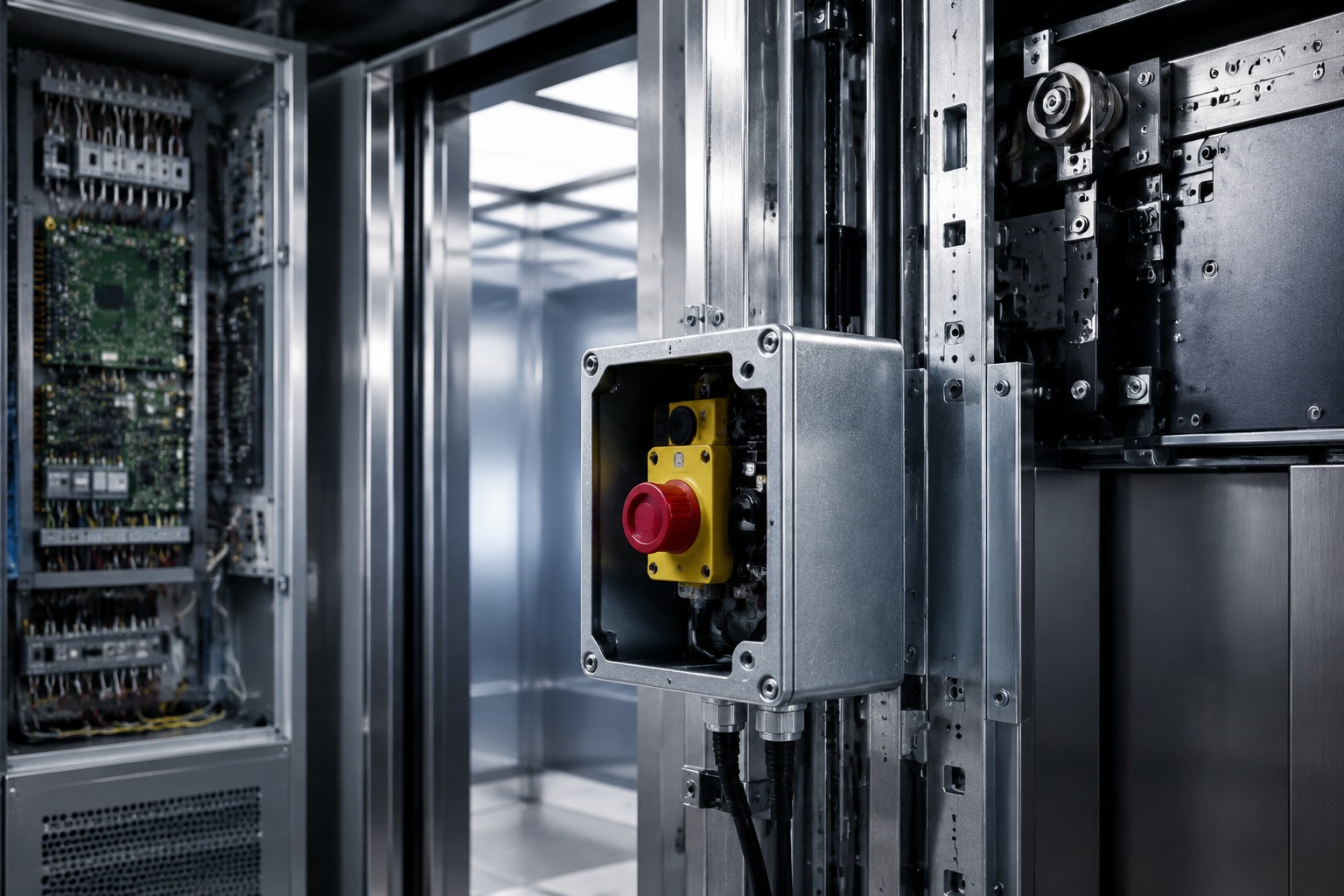
An elevator inspection box is a service control unit used during maintenance, adjustment, troubleshooting, and safe movement of the lift at reduced inspection speed. In practical terms, it gives technicians access to core functions such as inspection mode selection, up and down jogging, emergency stop, and sometimes lighting or communication support while working on the car top or in the shaft. For building owners and maintenance firms in the Philippines, choosing the correct inspection box is not just a parts decision. It is a safety, compatibility, and downtime decision.
In Metro Manila, Cebu, Davao, Clark, and other high-density urban areas, elevators run hard in residential towers, hospitals, offices, malls, hotels, and mixed-use developments. Because of humidity, dust, vibration, and frequent service cycles, car-top maintenance devices need stable switch action, strong cable protection, and connector matching that suits the original control system. A poorly matched inspection box can delay repairs, create unsafe service conditions, or trigger avoidable callbacks.
This guide explains what an elevator inspection box includes, where an LCA mobile switch box is commonly used, how control mode and emergency stop functions should work, what to check for cable and connector compatibility, and how to install, test, and maintain the unit before returning the elevator to normal service. It also looks at current demand in the Philippines, expected 2026 trends, and how a reliable spare parts supplier can help maintenance companies reduce lift downtime.
Why Safe Inspection Control Matters in the Philippines Market
The Philippine elevator market is shaped by rapid urban construction, modernization of older buildings, and strong demand for reliable after-sales service. Areas such as Makati, Bonifacio Global City, Ortigas, Quezon City, Cebu IT Park, and Davao business districts all depend on lifts that remain available during peak traffic. At the same time, many buildings outside these hubs need cost-effective replacement parts to keep legacy units operating safely.
Inspection boxes are especially important in this environment because they are used at the point where maintenance risk is highest: on the car top, around moving mechanical parts, near landing door equipment, or inside the shaft during troubleshooting. During brake checks, door synchronization work, leveling verification, encoder checks, sensor replacement, and controller diagnostics, the inspection box becomes the technician’s immediate interface to the elevator. If its switches are loose, the emergency stop is unreliable, or the connector is not properly matched, the risk level rises significantly.
For maintenance contractors working across NCR and nearby industrial corridors in Cavite, Laguna, Bulacan, and Batangas, the right replacement strategy often combines availability, compatibility, packaging protection, and technical confirmation. This is particularly relevant when sourcing specialized units such as the LCA mobile switch box for lift applications, where exact model matching helps avoid wiring mistakes and service delays.
The line chart above reflects a realistic upward trend in demand for elevator spare parts and maintenance components in the Philippines. As more buildings enter intensive service cycles and older installations move into modernization phases, inspection boxes and related maintenance accessories become more frequently replaced or upgraded.
What an Elevator Inspection Box Includes
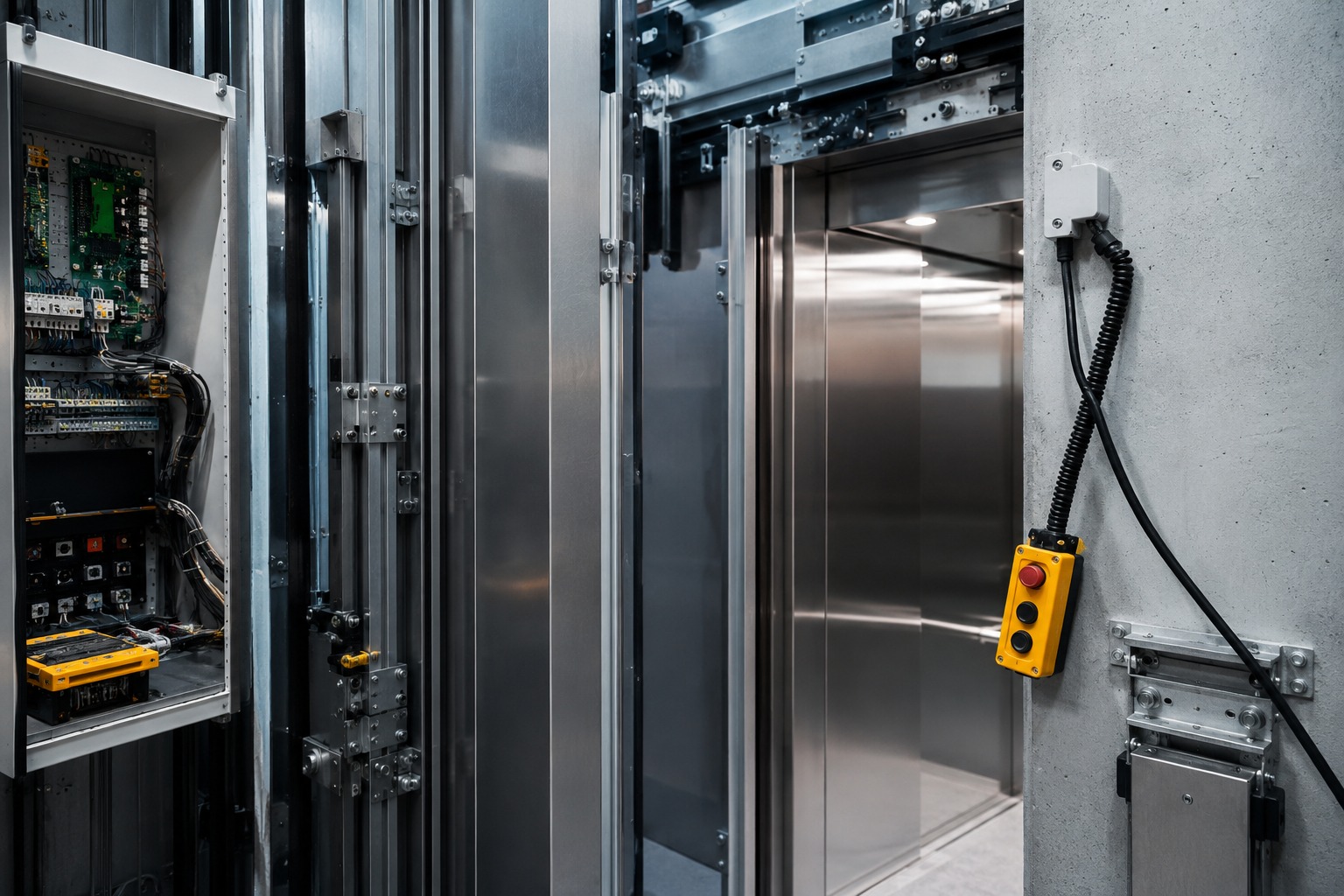
A standard elevator inspection box normally includes the control and safety elements required for supervised maintenance movement. Exact layouts differ by brand and application, but most units share several core components. Understanding these parts helps buyers evaluate whether a replacement box is functionally complete and suitable for field use.
| Component | Main Function | Why It Matters | Typical Failure Risk | Inspection Priority | Common Use Location |
|---|---|---|---|---|---|
| Inspection/normal mode selector | Switches the lift from normal automatic operation to maintenance control | Prevents unintended automatic movement during service | Worn contacts or unstable switching | Very high | Car top box |
| Up button | Moves the elevator upward at inspection speed | Needed for controlled positioning | Sticky button or poor contact | High | Car top or mobile box |
| Down button | Moves the elevator downward at inspection speed | Needed during door, guide, and leveling work | Button wear from repeated use | High | Car top or mobile box |
| Emergency stop switch | Immediately interrupts inspection movement | Critical life-safety function | Mechanical damage or contact failure | Critical | All inspection control units |
| Cable harness | Connects box to control circuits | Transfers power and signals reliably | Insulation wear, moisture ingress | Very high | Mobile or fixed wiring path |
| Connector or terminal block | Provides matched electrical connection | Ensures compatibility and quick installation | Wrong pinout or loose fit | Critical | Controller side or box side |
| Protective enclosure | Shields switches from dust, impact, and moisture | Improves durability in harsh service conditions | Cracks, missing seals | Medium to high | Car top, shaft, machine room access points |
This table shows that the inspection box is more than a simple switch pack. It is a coordinated service interface. Even if the casing looks acceptable, weak internal contacts or a mismatched harness can still lead to operational and safety problems. Buyers should therefore verify both visible and hidden parts before ordering.
Some models also include auxiliary features such as service lamps, communication terminals, or dedicated power connections. In Hitachi-related maintenance setups, technicians may pair the inspection arrangement with a 12V inspection light power supply when visibility on the car top or inside the shaft needs improvement. For coordinated communication during maintenance, some systems also use an elevator intercom terminal as part of the wider service setup.
LCA Mobile Switch Box Use Cases
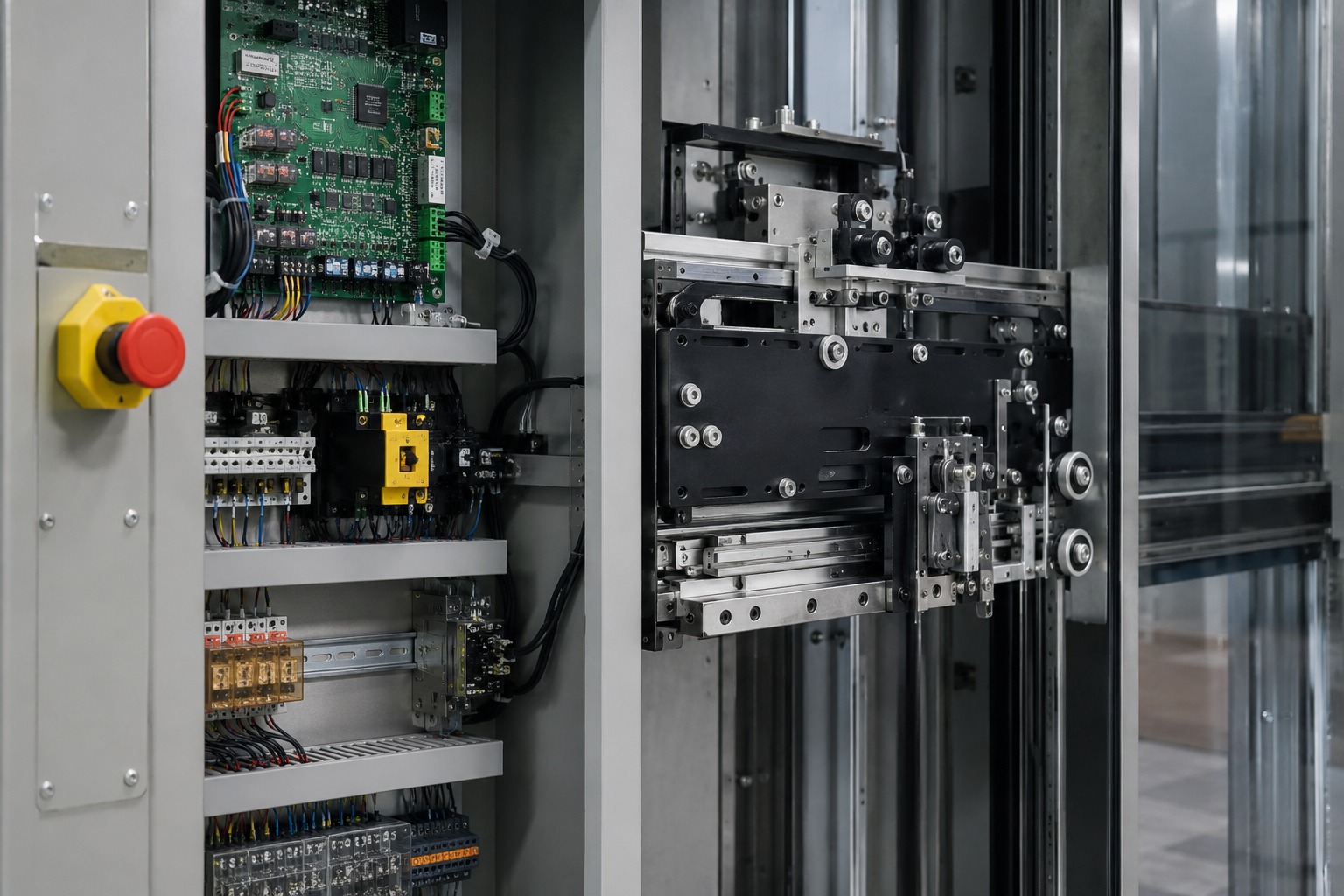
An LCA mobile switch box is commonly used when technicians need flexible inspection control during maintenance, troubleshooting, adjustment, or modernization work. Unlike a fully fixed car-top arrangement, a mobile switch box can support temporary controlled operation while personnel are working around the lift system in specific service conditions. Use always depends on the original equipment design and local safety procedures, but several field scenarios are common.
| Use Case | Typical Task | Main Benefit | Risk if Box Is Mismatched | Recommended Check | Common Philippine Project Type |
|---|---|---|---|---|---|
| Car-top maintenance | Guide shoe inspection, door operator checks | Direct local movement control | Incorrect speed or failed response | Verify pinout and inspection logic | Residential high-rise |
| Shaft troubleshooting | Sensor alignment, leveling verification | Safer incremental movement | Signal loss or cable drag issues | Confirm cable length and sheath condition | Office towers |
| Modernization work | Controller replacement and temporary service testing | Supports phased commissioning | Logic conflict with old/new systems | Review controller interface requirements | Older commercial buildings |
| Door zone adjustment | Landing alignment and releveling tests | Precise low-speed positioning | Delayed stop response | Test stop circuit before shaft work | Hotels and malls |
| Post-repair function test | Verification after replacing sensors or locks | Faster controlled validation | False assumptions from unstable contacts | Cycle test buttons repeatedly | Hospitals |
| Emergency diagnostics | Fault tracing after unexpected shutdown | Helps isolate control path issues | Misread fault source due to wrong wiring | Cross-check model and connector codes | Mixed-use developments |
In the Philippines, these use cases are especially relevant for maintenance teams handling fleets across multiple sites in one day. A contractor serving Makati office buildings in the morning and residential towers in Pasig or Taguig in the afternoon needs replacement parts that install quickly and match the original system correctly. That is why product traceability and model confirmation are so important when sourcing mobile switch boxes.
In older buildings near Manila Port, Subic, or Batangas industrial areas, modernization projects often involve mixed-brand or partially updated systems. In those projects, an LCA mobile switch box may be used during testing stages, but only after confirming compatibility with the existing control architecture, wiring logic, and site safety procedure.
Control Mode and Emergency Stop Functions
The two most important functions in an elevator inspection box are the control mode selection and the emergency stop circuit. These are fundamental to technician safety and must work exactly as intended every time.
The control mode selector shifts the elevator from normal automatic operation to inspection mode. In inspection mode, hall calls and standard passenger commands should not override the technician’s local service control. Movement should only occur through the designated inspection buttons and only under the correct safety chain conditions. This allows careful, reduced-speed movement for maintenance tasks such as checking door lock engagement, guide rail condition, travel cable behavior, and car-top clearances.
The emergency stop switch must immediately interrupt movement when activated. It is not a convenience feature. It is a core protective device. The switch should be mechanically sound, easy to identify, and electrically dependable. When technicians are working in tight spaces above the car or inside shaft areas, any uncertainty about stop function is unacceptable.
| Function | Expected Operation | Field Test Method | Warning Sign | Possible Cause | Action Required |
|---|---|---|---|---|---|
| Normal to inspection mode transfer | Automatic operation is disabled | Switch modes and confirm no hall call response | Lift still responds to normal commands | Selector contact fault or wiring error | Stop testing and inspect circuit |
| Inspection to normal return | Normal operation restores correctly | Return mode and run supervised service test | Lift remains locked in service state | Selector not resetting fully | Check switch mechanism and logic path |
| Up command | Car moves upward only while command is valid | Press and release during controlled test | Delayed release or no motion | Button wear or relay issue | Verify electrical continuity |
| Down command | Car moves downward only while command is valid | Repeat response test at low speed | Intermittent or uneven response | Contact contamination | Replace button or box assembly |
| Emergency stop activation | Movement stops immediately | Trigger stop during supervised inspection run | Slow stop or no stop | Faulty stop circuit | Remove from service immediately |
| Emergency stop reset | System only resumes after safe reset | Confirm proper reset sequence | Unexpected restart | Mechanical latch failure or logic bypass | Lock out and replace unit |
The explanation above highlights why technicians should never treat an inspection box as a generic accessory. Even similar-looking units can have different switch logic, terminal assignments, or reset behavior. In high-use buildings such as hospitals in Quezon City or hotels in Cebu, a wrong assumption can lead to longer shutdowns and higher service risk.
The bar chart indicates that residential and office buildings drive the largest replacement demand, but hospitals and malls often require faster response because downtime affects critical operations and public traffic flow.
Cable and Connector Compatibility
Cable and connector compatibility is one of the most overlooked causes of installation trouble. Many buyers focus on the outer appearance of the box and the number of buttons, but the real success of the replacement often depends on harness length, pin arrangement, conductor gauge, connector shape, insulation condition, and signal mapping.
For elevators operating in humid coastal or tropical conditions, such as buildings near Manila Bay, Cebu Port, or Davao Gulf, cable jacket quality also matters. Heat, vibration, and moisture can harden insulation over time. If the replacement harness is too stiff, too short, or poorly shielded, it may fail early or create unstable control signals.
| Compatibility Point | What to Verify | Why It Is Important | Common Error | Potential Result | Best Practice |
|---|---|---|---|---|---|
| Connector type | Plug shape, latch, and mating interface | Ensures physical fit | Assuming similar housings are identical | No installation or loose connection | Compare photos and part codes |
| Pin configuration | Terminal numbering and wiring order | Protects control logic integrity | Ignoring pinout differences | Incorrect operation or fault condition | Check wiring diagram before energizing |
| Cable length | Reach from box position to connection point | Prevents strain and unsafe routing | Ordering by estimate only | Tension, snagging, or rerouting issues | Measure actual installed path |
| Wire gauge | Conductor size and current capacity | Supports safe signal and power transfer | Using under-rated conductors | Voltage drop or overheating | Match original electrical specification |
| Shielding and insulation | Environmental resistance and signal stability | Improves durability in harsh sites | Choosing low-grade cable | Noise, cracking, shorter life | Select suitable industrial-grade materials |
| Strain relief | Cable entry support and bend protection | Reduces fatigue at the enclosure | Ignoring entry point stress | Broken conductors near the box | Inspect gland and routing path |
| Terminal markings | Clear identification for technicians | Speeds installation and future service | Unlabeled replacement parts | Longer downtime and wiring mistakes | Prefer well-marked assemblies |
This table shows why careful model matching is one of the most valuable services a supplier can provide. It is not enough for a part to “look close.” Exact cable and connector details reduce the chance of field rework, especially for maintenance teams traveling between jobs in Manila, Pampanga, Iloilo, and Cagayan de Oro where repeat visits add time and cost.
Installation Safety Checks
Before installing a replacement inspection box, technicians should complete a structured safety review. This is essential whether the unit is a direct replacement, a spare for emergency use, or part of a modernization package.
| Safety Check | Purpose | When to Perform | What to Look For | If Problem Is Found | Field Priority |
|---|---|---|---|---|---|
| Lockout and controlled access | Prevent accidental elevator operation | Before opening any control section | Isolation status and site control signage | Stop work until secured | Critical |
| Part number verification | Confirm correct replacement | Before unpacking or wiring | Model code, brand reference, revision | Reconfirm with supplier | Critical |
| Visual enclosure inspection | Check shipping and storage condition | At receiving and before install | Cracks, dents, missing hardware | Do not install damaged unit | High |
| Cable condition review | Ensure mechanical integrity | Before routing and connection | Cuts, compression, stiff insulation | Replace or quarantine part | High |
| Connector and pin check | Avoid miswiring | Immediately before connection | Bent pins, loose latch, wrong keyway | Correct or replace connector | Critical |
| Switch continuity check | Verify basic electrical function | Before final energizing | Stable readings on buttons and stop switch | Replace defective component | High |
| Mounting security | Prevent movement during use | After fitting the box | Loose screws, poor bracket support | Refit before testing | Medium to high |
These checks are practical and time-efficient. They do not replace official safety procedures or manufacturer instructions, but they help reduce avoidable problems. In the Philippine market, where imported parts may pass through hubs such as Manila Port, Batangas Port, or Subic before reaching the jobsite, protective packaging and receiving inspection are also very important.
Testing Before Returning to Service
After installation, the elevator should not be returned to normal passenger operation until inspection mode performance has been verified. Testing should be controlled, documented, and aligned with the building’s maintenance procedures. The objective is to confirm that the replacement inspection box behaves exactly as expected under service conditions.
Start by checking the mechanical installation, connector seating, and cable routing. Then confirm mode switching, up and down command response, stop function, and reset logic. The elevator should move only as permitted under inspection mode. Once local control performance is stable, technicians can verify safe return to normal operation and carry out final ride and call tests as required by site procedure.
| Test Step | Objective | Expected Result | Typical Tool | Common Fault Found | Release Decision |
|---|---|---|---|---|---|
| Visual final review | Confirm clean and secure installation | No loose parts or cable stress | Flashlight and checklist | Unsecured gland or bracket | Do not release until corrected |
| Mode selector test | Verify normal/inspection switching | Correct operating state change | Controller indication and service checklist | Selector not engaging fully | Hold release |
| Jog up/down response | Check directional command accuracy | Controlled low-speed movement only | Supervised movement test | Reversed or intermittent response | Correct before service |
| Emergency stop test | Validate immediate stop action | Instant interruption of movement | Supervised stop activation | Delayed or failed stop | Remove from service |
| Reset and recovery test | Ensure safe restart logic | No unintended motion | Manual reset procedure | Unexpected restart behavior | Investigate before release |
| Return to normal mode | Confirm standard operation resumes | Calls and travel restore properly | Landing calls and ride test | Normal mode not restored | Keep lift out of service |
| Documentation update | Create maintenance traceability | Recorded part and test results | Service log | Missing records | Complete before closure |
The explanation here is straightforward: the final test phase protects both technicians and end users. In busy Philippine properties such as hospitals, BPO offices, and transport-linked commercial complexes, pressure to restore service quickly is common. Even so, no lift should return to operation until the inspection box has passed functional checks.
The area chart shows a realistic trend already visible in the market: more building owners and service companies now prefer documented, model-matched parts over uncertain generic substitutions. This trend is expected to continue into 2026 as safety accountability and service quality expectations rise.
Maintenance Tips for Inspection Boxes
Routine maintenance of the inspection box can extend service life and reduce sudden failures during critical maintenance work. The most useful approach is preventive rather than reactive. Because the unit is often touched, moved, or exposed to dust and vibration, small defects can grow quickly if not addressed early.
First, inspect the enclosure regularly for cracks, loose screws, and degraded seals. Second, check push buttons for smooth travel and positive tactile response. Third, verify the emergency stop mechanism for clear engagement and stable reset. Fourth, examine the cable entry point and harness for fatigue, flattening, or conductor stress. Fifth, clean the box exterior and surrounding area so contaminants do not enter during service access.
It is also smart to include the inspection box in scheduled preventive maintenance records, especially for properties with heavy elevator usage such as shopping centers in Manila, condominium towers in Pasay, and resort hotels in Cebu and Boracay. Logging the condition of buttons, selectors, and cables helps maintenance managers see wear trends before failure causes downtime.
When the unit is stored as a spare, keep it in protective packaging away from excessive heat, moisture, and chemical exposure. A good supplier can support this by providing careful packing, moisture protection, and clear product identification. That makes a big difference for maintenance companies managing inventory across multiple branches or provincial service teams.
How Inspection Boxes Support Safe Service on Car Tops and Shafts
Inspection boxes support safe service by giving technicians a local, controlled method of operating the elevator during maintenance. On the car top, they reduce reliance on remote commands and allow precise movement while personnel inspect doors, guide components, wiring, sensors, and travel clearances. In shaft-related work, they help technicians reposition the car safely for access and verification tasks.
The safety value comes from three combined features: mode isolation, low-speed local movement, and emergency stopping capability. Without these, technicians would have less direct control over the equipment while working in hazardous spaces. That is why the condition of the inspection box should be treated as part of the overall safety chain, not as a minor accessory.
In local Philippine conditions, where service teams may work in high-rise towers exposed to dust from nearby construction or in coastal environments with elevated corrosion risk, inspection box reliability is especially important. A durable enclosure, correctly rated cable, and dependable switch action can make daily maintenance more predictable and safer.
Buying Advice for Building Owners and Maintenance Companies
When buying an elevator inspection box, start with exact model confirmation. Provide part number, brand, machine details if relevant, photos of the current unit, connector images, cable length, and any markings on the original assembly. This reduces ordering mistakes and shortens delivery-to-installation time.
Next, evaluate supplier strength in three practical areas. First is technological capability: can the supplier help compare model codes, connector styles, and application details across brands such as Hitachi, Toshiba, KONE, Mitsubishi, and others? Second is manufacturing capability: can the supplier deliver stable quality inspection, proper materials, and protective packaging that supports safe arrival in the Philippines? Third is service capability: can the supplier respond quickly, verify compatibility carefully, and help customers reduce downtime by recommending suitable replacement options?
These three capabilities matter because maintenance teams rarely buy a part in isolation. They buy a solution that must work on site. In many cases, the real value comes from the supplier’s ability to confirm details before shipment and support a smooth replacement process afterward.
Industries and Applications with Strong Demand
Inspection boxes are used across many industries, but replacement demand is strongest where elevators carry high daily traffic or where downtime has high operational cost. Residential towers need reliable maintenance tools because repeated service calls affect tenant satisfaction. Office buildings need fast turnaround to support worker movement. Hospitals need strict reliability because lift availability affects patient transport. Hotels, malls, and transport-connected properties need stable service to protect guest experience and crowd flow.
Industrial and institutional sites also need durable inspection units, especially where freight lifts or service elevators operate in tougher environments. In these settings, cable protection, enclosure integrity, and switch life become even more important than appearance.
For Philippine cities with continuous building growth such as Manila, Cebu, and Davao, these application differences help explain why some customers prioritize speed of supply while others prioritize long-term compatibility and documented quality checks.
Case Examples from the Philippines
Consider a condominium maintenance contractor in Pasig handling a cluster of mid-rise and high-rise properties. The team keeps a small stock of common electrical spare parts but usually confirms exact inspection box models before ordering. In one case, a worn emergency stop switch on a car-top box caused intermittent service lockouts. By matching the correct replacement assembly rather than attempting an improvised substitute, the team restored stable inspection control and avoided repeated callbacks.
In Cebu, a hotel modernization project required careful replacement of several service components on older elevators. During the planning phase, the contractor identified that the existing inspection control arrangement had connector variations between cars. Verifying each unit individually prevented incorrect delivery and reduced installation delays during a tight renovation schedule.
In Davao, a mixed-use building faced recurring moisture-related issues affecting exposed cable sections. The maintenance company moved to replacement parts with better packaging protection and stricter incoming inspection. This improved reliability over time and reduced emergency callouts during the rainy season.
Local Supply, Logistics, and 2026 Trends
Supply conditions in the Philippines are influenced by import lead times, customs processing, local warehousing, and last-mile delivery to provincial sites. Projects in Metro Manila may have faster access to stocked parts, while installations in Visayas or Mindanao can benefit greatly from correct first-time matching because return cycles are more expensive.
Looking toward 2026, three trends are likely to shape elevator inspection box demand. The first is technology: more maintenance teams will expect clearer model documentation, photo-based verification, and better traceability when sourcing replacement parts. The second is policy and safety discipline: buildings will continue to value better maintenance documentation, controlled testing procedures, and more consistent service records. The third is sustainability: replacing only the correct failed component, improving service life through better quality inspection, and reducing repeat shipments can lower waste and operating cost over the long term.
For modernization contractors, another likely trend is increased use of component packages that combine compatible control accessories, lighting support, communication parts, and other lift electrical items. This can simplify maintenance planning for large building portfolios.
The comparison chart above illustrates the criteria many Philippine buyers now use when evaluating suppliers. Price still matters, but predictable compatibility, stable quality control, and responsive support often determine the real total cost of ownership.
Our Support for the Philippines Elevator Parts Market
We support maintenance companies, distributors, building owners, and modernization contractors in the Philippines with a practical sourcing approach focused on reliability and compatibility. On the technical side, we help customers compare model details for inspection boxes and other lift electrical parts, reducing the risk of ordering a visually similar but electrically unsuitable product. This technological capability is especially valuable when dealing with mixed building portfolios or older units that need careful replacement selection.
On the manufacturing and quality side, we focus on stable sourcing, careful inspection, and protective packaging. For parts that may travel through major logistics points such as Manila, Subic, Batangas, Cebu, or Davao before reaching the final site, packaging quality matters. Better protection helps maintain switch, cable, connector, and enclosure integrity during transport and storage.
On the service side, we aim to respond quickly, confirm compatibility clearly, and help customers reduce elevator downtime. Our product range extends beyond inspection boxes to elevator control boards, inverter and frequency converter parts, door operator components, door locks, light curtains, guide shoes, oil cups, sensors, encoders, power supplies, buttons, COP panels, intercom parts, and other lift accessories for multiple brands. For buyers in the Philippines, this means fewer sourcing gaps and a better chance of resolving related maintenance needs through one dependable channel.
FAQ About Elevator Inspection Boxes
What is the main purpose of an elevator inspection box?
It provides local maintenance control so technicians can operate the elevator safely at inspection speed during service, troubleshooting, and adjustment work.
What functions should every inspection box have?
Most units should include a mode selector, up and down controls, and an emergency stop function. Some systems also include auxiliary connections for lighting or communication.
Can I use any inspection box that looks similar?
No. Appearance alone is not enough. Connector type, pinout, cable length, switch logic, and model compatibility must all be verified before installation.
When is an LCA mobile switch box typically used?
It is commonly used in maintenance, troubleshooting, controlled testing, and some modernization work where local service movement is required, depending on the original system design.
Why is the emergency stop so important?
Because it must immediately interrupt movement during maintenance. If it does not function correctly, the elevator should not be used for inspection work.
How should technicians test a replacement box?
They should verify mode switching, up and down response, emergency stop function, reset behavior, and safe return to normal operation under controlled maintenance procedures.
What are the most common replacement issues?
Wrong connector configuration, incorrect pin assignment, damaged cable entry points, worn buttons, and unverified compatibility with the original controller.
How often should an inspection box be checked?
It should be included in regular preventive maintenance, especially in buildings with heavy elevator usage or in environments with dust, vibration, humidity, or coastal exposure.
Is protective packaging important for this part?
Yes. Switches, connectors, and cable assemblies can be damaged in transit. Good packaging helps preserve installation readiness, particularly for shipments within the Philippines.
What should building owners ask a supplier before buying?
Ask about model confirmation, brand compatibility, connector details, cable specifications, quality inspection process, packaging method, and expected lead time.
For Philippine buyers, the best inspection box purchase is not simply the cheapest unit. It is the one that matches the elevator correctly, supports safe maintenance, passes functional testing, and helps return the lift to reliable service with minimal delay.