
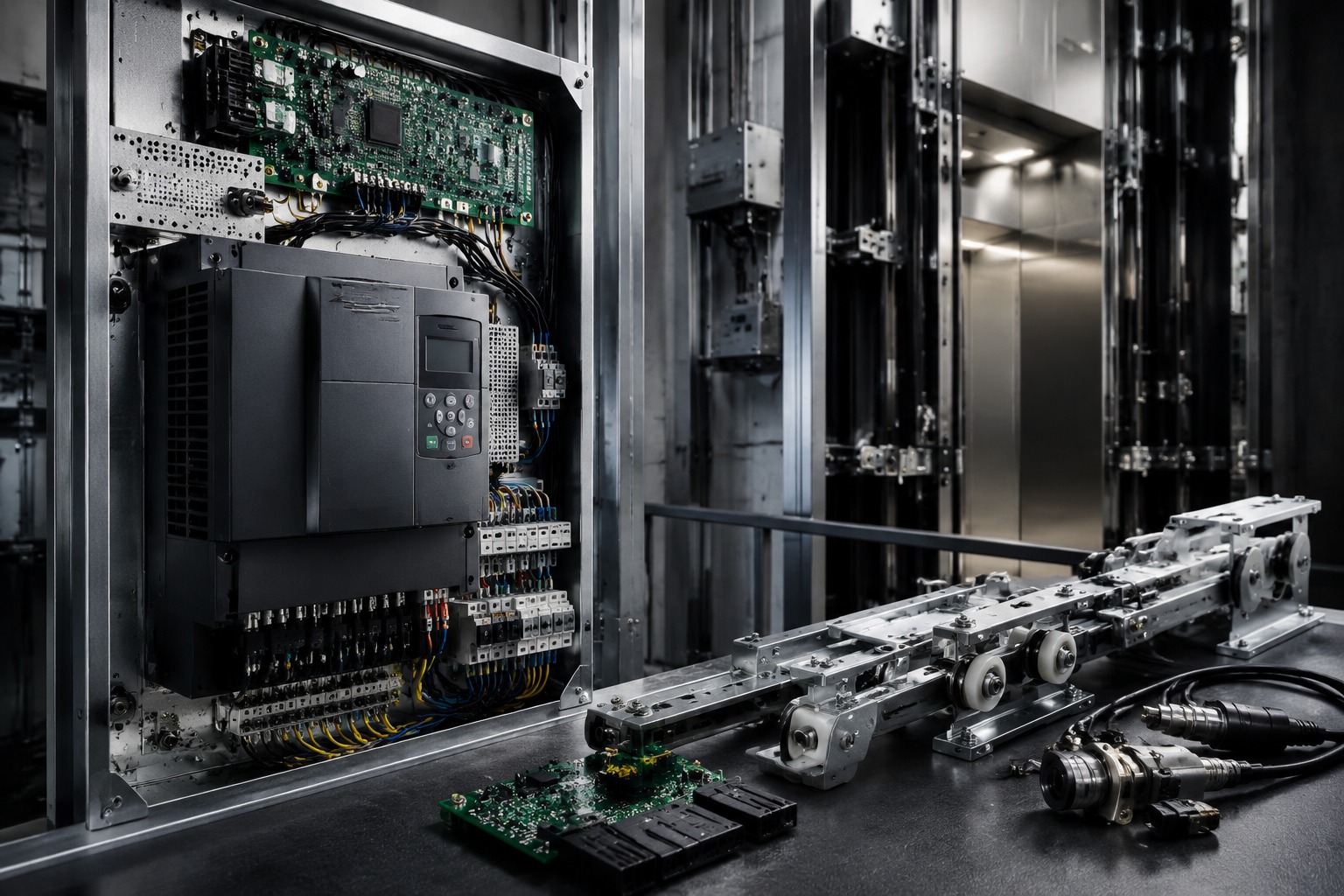
In modern lift systems, the frequency converter is one of the most important components for smooth travel, motor protection, landing accuracy, passenger comfort, and energy performance. In the Philippines, where elevators operate in office towers in Makati, mixed-use projects in Bonifacio Global City, hotels in Cebu, condominiums in Quezon City, hospitals in Davao, and logistics buildings near Batangas and Subic, a properly selected and maintained drive can reduce shutdowns and help technicians solve recurring ride-quality problems faster.
The direct answer is simple: an elevator frequency converter controls motor speed and torque by adjusting output frequency and voltage, allowing gradual acceleration, stable leveling, and controlled braking. Compared with older relay-based or direct-on-line approaches, it gives better comfort, lower mechanical stress, and improved energy use. However, selection should never be based on kilowatt rating alone. Building height, traffic pattern, motor data, brake resistor needs, cabinet temperature, feedback devices, and local power conditions in the Philippines all influence whether a 15KW or 22KW model is the right fit.
This guide is written for maintenance companies, distributors, building owners, and modernization contractors who need practical buying and replacement advice. It covers the difference between a frequency converter and an inverter, how to choose 15KW and 22KW models, fault codes and replacement triggers, motor and braking compatibility, heat dissipation planning, technician commissioning checks, maintenance routines, and common questions. For customers sourcing replacement parts, model matching matters because different lift brands and controller generations may require specific input voltage, output current, encoder interface, and parameter structures.
Across the Philippines market, demand is rising not only from new building construction but also from modernization of older lifts installed in Metro Manila, Iloilo, Bacolod, Cagayan de Oro, and industrial zones connected to major ports. Because parts availability and downtime cost are major concerns, many buyers prefer replacement solutions that balance compatibility, stable quality inspection, and responsive delivery support. When evaluating options, it is useful to compare documentation, protection features, cooling requirements, and after-sales assistance instead of looking at price alone.
Frequency Converter Versus Inverter
In everyday elevator maintenance, the terms “frequency converter” and “inverter” are often used interchangeably, and in many replacement discussions they refer to the same drive unit. Strictly speaking, an inverter is the section that converts DC back into controlled AC output, while a frequency converter usually describes the complete system that rectifies incoming power, filters the DC bus, and inverts it into variable-frequency output for the motor. In lift applications, the broader term frequency converter is often more accurate because the unit performs full motor-speed regulation, not just inversion.
Why does this distinction matter? It matters because elevator buyers in the Philippines often search for “lift inverter,” while technicians may actually need a full frequency converter with the correct control logic, overload capacity, braking support, encoder input, and lift-specific protection. If a service team only matches the term and not the technical function, the replacement may power the motor but still fail on leveling, overspeed detection, brake coordination, or communication with the main controller.
Elevator drives differ from general industrial drives in several ways. They typically require stronger low-speed torque, smoother acceleration curves, better stopping precision, and reliable operation during frequent starts and stops. A lift carrying office traffic in Ortigas or hotel guests in Manila Bay may cycle hundreds of times daily, so the drive must handle repeated thermal stress and maintain stable operation even during voltage fluctuation.
| Term or Feature | Frequency Converter | Inverter | Elevator Relevance | Risk if Misunderstood | Buying Tip |
|---|---|---|---|---|---|
| Basic meaning | Complete variable-speed drive system | DC to AC conversion stage | Most lift replacements need the full drive | Wrong product scope | Confirm full elevator drive function |
| Speed control | Yes, via frequency and voltage control | Possible, but not always full-featured | Needed for smooth ride and leveling | Poor ride quality | Check lift-specific parameter set |
| Torque management | Designed as part of system logic | May be limited by application | Critical at start and low speed | Rollback or jerking | Verify overload rating |
| Brake coordination | Usually integrated in elevator models | Not always application-specific | Important for safe launch and stop | Brake timing faults | Review brake output and timing |
| Encoder feedback | Often supported | Depends on model | Needed for vector control systems | Positioning errors | Match encoder interface exactly |
| Best search approach | Use model number and ratings | Use only as general keyword | Improves sourcing accuracy | Ordering delays | Share nameplate and photos |
The table above shows why terminology alone should not drive a purchasing decision. In practice, a buyer should identify the existing unit’s model, power class, input and output ratings, control method, and communication interface. If a building owner in Pasay or Alabang is facing repeated shutdowns, accurate matching saves far more money than choosing a low-cost but uncertain substitute.
How to Select 15KW and 22KW Models
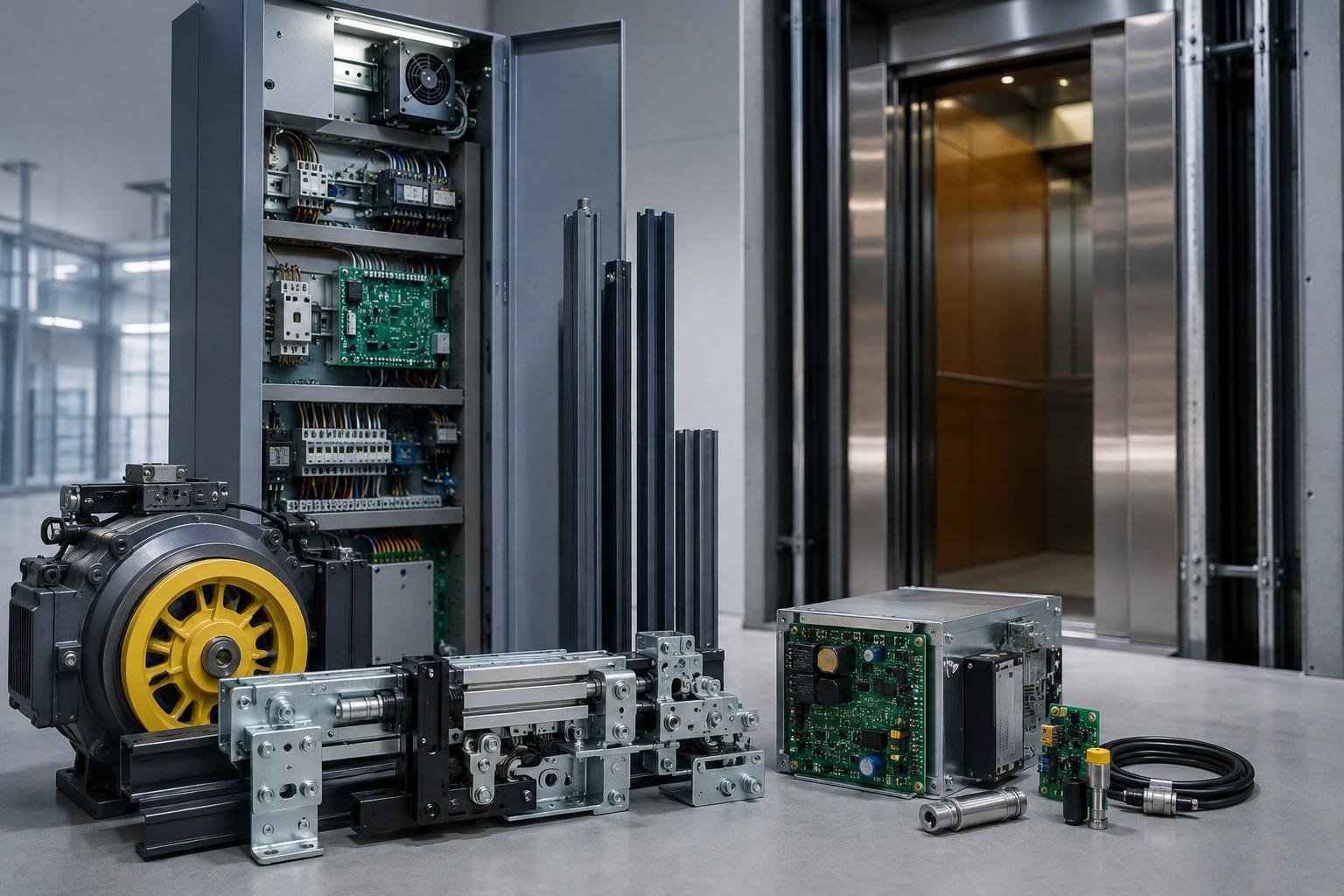
Choosing between 15KW and 22KW elevator frequency converters is not only about motor nameplate power. A 15KW drive may be suitable for some passenger lifts in mid-rise residential projects, while a 22KW model may be needed for heavier loads, higher duty cycles, larger motors, or modernization jobs where additional thermal margin is desirable. In the Philippines, ambient temperature, machine-room ventilation, and utility power quality can all justify selecting a model with more headroom when engineering conditions allow.
Start with the motor data: rated power, rated current, voltage, frequency, speed, insulation class, and whether the motor is geared or gearless. Next, check the controller requirements, encoder type, brake resistor specification, and whether the lift operates under high traffic in malls, hospitals, or BPO towers. Also review overload requirements. Elevators often demand high short-term torque during acceleration, so output current and overload capacity are often more important than nominal kilowatts.
For example, if you are replacing a damaged drive in an office building near Ayala Avenue, and the original unit was regularly running close to maximum current during peak hours, selecting the same kilowatt class without studying current history may repeat the same thermal problem. If the lift operates in a provincial city with a hotter machine room and weaker airflow, cooling margin becomes even more important.
Buyers looking for replacement options can review a 15KW elevator frequency converter for applications that match its electrical and operational envelope, while heavier-duty or higher-capacity systems may require a 22KW lift frequency converter. These links should be treated as model references, not universal substitutions, because final selection must match the existing lift system.
| Selection Factor | 15KW Model | 22KW Model | Where It Fits | Main Checkpoint | Common Mistake |
|---|---|---|---|---|---|
| Motor power range | Smaller to mid-size lifts | Mid-size to larger lifts | Residential, small commercial, larger commercial | Nameplate kW and current | Using kW only |
| Output current reserve | Moderate margin | Higher margin | Useful for heavy traffic buildings | Peak load current | Ignoring overload demand |
| Thermal performance | Depends on cabinet cooling | More headroom if properly set | Hot machine rooms in PH climate | Ambient temperature | No derating review |
| Cabinet space | Usually smaller footprint | Larger footprint | Retrofit constraints | Panel dimensions | No mechanical fit check |
| Brake resistor pairing | Application dependent | Often higher dissipation needs | Frequent down travel with load | Braking duty cycle | Undersized resistor |
| Cost of ownership | Lower initial cost | Higher but may reduce stress | Modernization decisions | Lifecycle evaluation | Buying on price alone |
The selection table above is useful because it forces a broader review than power class alone. In many projects, a 15KW unit is sufficient if the actual motor current and traffic profile support it. In other cases, a 22KW unit is the safer choice because it provides current reserve, better handling of repeated acceleration events, and more stable performance under difficult site conditions.
Below is a simplified market growth view for elevator modernization demand related to drives and control parts in the Philippines. It reflects the broad increase in replacement needs driven by aging installations, higher uptime expectations, and modernization programs in urban centers.
This growth trend supports a practical conclusion: replacement parts sourcing is becoming more strategic. Building managers increasingly expect shorter lead times, better documentation, and stable model matching because even a single lift outage can disrupt tenant satisfaction and logistics.
Common Fault Codes and Replacement Triggers
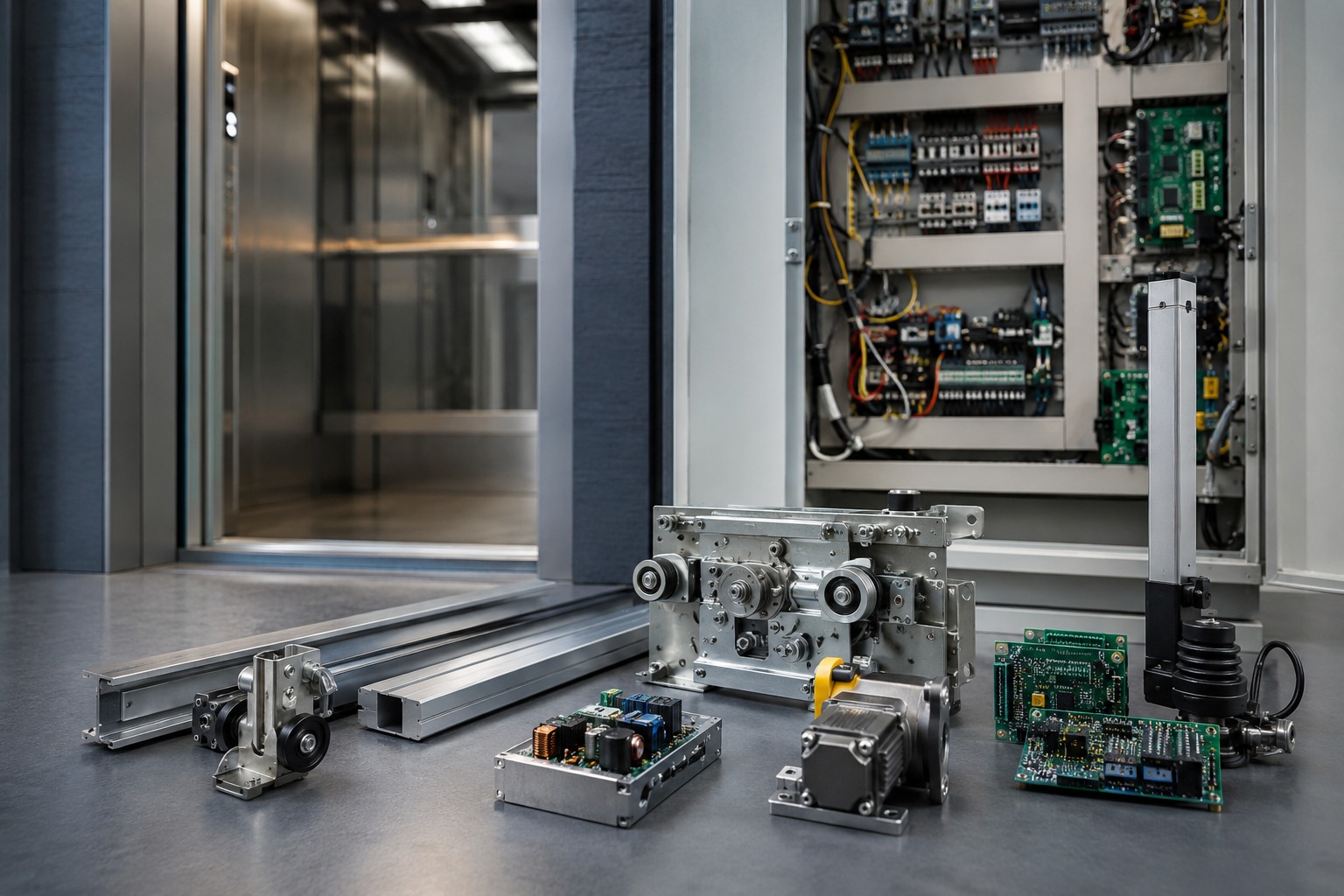
Elevator drives usually provide fault codes related to overcurrent, overvoltage, undervoltage, overheating, encoder loss, ground fault, communication loss, brake circuit abnormality, or motor overload. The exact code structure varies by brand and model, so technicians should always review the relevant manual. Still, recurring fault patterns often reveal whether a unit can be repaired on-site or should be replaced.
A single undervoltage trip during a utility event in a provincial area may not justify replacement. However, repeated overheat faults, unstable output current, capacitor aging, fan failure damage, burnt IGBT stages, or corrupted control boards often indicate that the drive is approaching end of service life. In coastal areas such as Cebu, Iloilo, and parts of Manila, humidity and airborne contaminants can accelerate board deterioration, especially where cabinet sealing and fan filtration are poor.
When fault history shows increasing trip frequency, longer reset times, or inconsistent behavior across similar load conditions, the maintenance team should shift from reactive resets to root-cause analysis. Replacement is usually triggered not by one alarm but by the combination of age, spare-parts difficulty, recurring downtime, safety concerns, and uncertain ride quality after temporary fixes.
| Typical Fault Type | Likely Cause | Immediate Action | Can It Be Repaired? | Replacement Trigger | Site Note for Philippines |
|---|---|---|---|---|---|
| Overcurrent | Motor issue, short circuit, wrong tuning, brake problem | Check motor insulation and wiring | Sometimes | Repeated trips after wiring and tuning checks | Watch for unstable power and moisture |
| Overvoltage | Regeneration, brake resistor fault, decel too short | Check braking circuit | Often | DC bus damage or repeated resistor failure | Common in heavy down-run traffic |
| Undervoltage | Input power dip | Inspect supply and terminals | Usually | Power stage damage from repeated events | Review local utility stability |
| Overtemperature | Blocked airflow, failed fan, aging components | Inspect cooling path | Sometimes | Recurring thermal alarms and board discoloration | Very important in hot machine rooms |
| Encoder/feedback loss | Loose cable, failed encoder, interface fault | Check feedback chain | Often | Drive feedback board failure | Vibration can loosen connectors |
| Communication fault | Controller mismatch, cable issue, board fault | Verify protocol and wiring | Sometimes | Obsolete board no longer available | Common during partial modernization |
The table helps technicians separate one-time events from structural failure. If a fault repeats after motor checks, cable tightening, resistor testing, and cooling correction, replacement becomes more economical than repeated call-backs. For some projects, buyers also compare legacy solutions with alternatives such as an Emerson lift inverter replacement option when documentation and compatibility support the application.
Motor Compatibility and Braking Needs
Motor compatibility is the core of a successful elevator drive replacement. The drive must match not only the motor power but also the voltage class, rated current, control method, speed feedback, and duty profile. Geared traction machines, gearless PMSM motors, and older induction motors have different requirements. A mismatch can create rough starts, poor leveling, heat build-up, nuisance faults, or unsafe brake coordination.
For induction motors, vector control and proper auto-tuning are especially important for low-speed torque and stable landing performance. For PMSM gearless systems, parameter accuracy is even more critical because motor constants and feedback settings influence smoothness and stopping precision. In modernization projects around Taguig or Mandaluyong, technicians often encounter cases where the motor remains serviceable but the original drive is discontinued. In these situations, replacement success depends on collecting motor data, encoder information, and controller logic before ordering.
Braking deserves special attention. During deceleration or downward travel with heavy load, regenerated energy must be managed safely. Some systems use brake resistors, while others may use regenerative solutions. If the resistor is undersized, poorly ventilated, or already heat-damaged, the new drive may still trip on overvoltage. Technicians should inspect resistor resistance value, wiring insulation, mounting location, and actual duty cycle.
| Compatibility Item | What to Verify | Why It Matters | Failure Symptom | Replacement Advice | Technician Reminder |
|---|---|---|---|---|---|
| Motor type | Induction or PMSM | Control algorithm differs | Jerking or unstable speed | Choose lift-specific drive | Never guess motor family |
| Rated current | Nameplate and measured load | Protects drive and motor | Trips under acceleration | Match current before kW | Measure real operating current |
| Encoder type | Incremental, resolver, or other | Needed for vector precision | Leveling errors | Confirm interface card | Check cable shield and grounding |
| Brake resistor | Ohm value and power rating | Handles regenerated energy | Overvoltage fault | Size for actual duty | Inspect resistor mounting heat marks |
| Brake timing | Open/close sequence | Safe start and stop | Rollback or shock | Parameter review required | Test under full load and no load |
| Controller interface | I/O or communication | Ensures command accuracy | Random shutdowns | Map signals carefully | Record original terminal layout |
The table is useful because many difficult lift faults are not caused by the drive alone. They result from the interaction between motor, brake, resistor, encoder, and controller. A disciplined compatibility review reduces repeat site visits and protects the customer from unnecessary downtime.
This industry demand comparison reflects a familiar pattern in the Philippines: office, mall, hospital, and residential high-rise segments generate a large share of replacement demand due to high traffic intensity and uptime requirements.
Heat Dissipation and Cabinet Fan Planning
Heat is one of the biggest hidden causes of elevator drive failure. In tropical conditions, cabinet temperatures can rise quickly, especially in poorly ventilated machine rooms, rooftop enclosures, or compact controller cabinets. Even if the drive’s nameplate rating appears adequate, thermal stress shortens capacitor life, weakens fan performance, and accelerates board aging. In many service cases, the drive did not fail because it was undersized on paper but because cabinet heat was ignored.
Heat dissipation planning starts with the total losses generated by the drive, brake resistor, controller power supplies, and nearby components. Airflow must move through the cabinet in a controlled direction instead of circulating hot air internally. Intake and exhaust fans should be sized according to cabinet volume, thermal load, and site ambient temperature. Filters must also be maintained because clogged filters reduce airflow and turn a properly designed panel into a heat trap.
In the Philippines, projects near the ports of Manila, Cebu, and Davao may also face corrosive or dusty conditions. Fan selection should therefore consider not just airflow but also durability, bearing quality, and maintenance access. A low-cost fan with inconsistent speed or weak bearing life can create repeated nuisance failures for a high-value drive.
| Cooling Factor | What to Check | Good Practice | Warning Sign | Consequence | Action Plan |
|---|---|---|---|---|---|
| Cabinet ambient temperature | Measure during peak operation | Keep within drive specification | Frequent heat alarms | Shorter component life | Add ventilation or derate |
| Airflow direction | Intake to exhaust path | Avoid recirculation | Hot spots near top of panel | Uneven cooling | Rearrange fan placement |
| Fan capacity | CFM or airflow rating | Match thermal load | Cabinet remains hot despite fan operation | Insufficient heat removal | Upgrade fan size |
| Filter condition | Dust and blockage | Clean or replace regularly | Reduced air intake | Overheating | Add maintenance schedule |
| Brake resistor location | Distance from sensitive boards | Mount in ventilated area | Heat damage nearby | Board failure | Relocate resistor |
| Humidity exposure | Condensation risk | Use sealed pathways where needed | Corrosion or moisture marks | PCB degradation | Improve enclosure protection |
The cooling checklist matters because many “electrical” faults are actually thermal faults in disguise. A clean cabinet, correctly sized fans, proper spacing, and resistor heat management often add more life to a drive than repeated parameter resets.
Commissioning Checks for Technicians
When installing a new or replacement elevator frequency converter, commissioning discipline is essential. A drive that is technically correct can still perform badly if wiring, tuning, or safety checks are rushed. Technicians should begin with a documented pre-power inspection: mechanical mounting, grounding, terminal torque, motor insulation, brake circuit integrity, encoder cable condition, resistor wiring, and controller I/O verification.
After power-up, verify input voltage balance, DC bus health where applicable, parameter initialization, motor data entry, and control mode. Perform no-load tests first, then low-speed travel, then full-speed operation, then loaded runs. Confirm acceleration, deceleration, brake opening delay, brake closing timing, ride vibration, floor leveling, and fault history stability. For sites serving hospitals or premium residences, ride comfort expectations are especially high, so fine tuning may be necessary even if the system is functionally correct.
It is also good practice to document baseline values at handover: output current during up and down travel, cabinet temperature, fan operation status, resistor temperature trend, fault log status, and parameter backup. This record is valuable for future maintenance teams and reduces diagnostic time if a problem appears months later.
| Commissioning Step | Purpose | What to Record | Pass Criteria | Common Oversight | Result if Skipped |
|---|---|---|---|---|---|
| Pre-power inspection | Catch wiring and mounting issues | Terminal checks and grounding | No loose or incorrect connections | Missed shield grounding | Noise and unstable feedback |
| Motor data entry | Enable correct control | Voltage, current, speed, frequency | Matches motor nameplate | Old parameter copy error | Poor torque response |
| Encoder verification | Ensure feedback integrity | Signal type and direction | Stable feedback reading | Wrong encoder polarity | Run faults and leveling issues |
| Brake timing test | Safe start and stop | Open and close delay | No rollback or shock | Skipping load test | Passenger discomfort and wear |
| Loaded travel test | Confirm real-world performance | Current, speed, temperature | No trips under load | Testing only empty car | Hidden overload problems |
| Parameter backup | Future service support | Final settings copy | Accessible maintenance record | No final documentation | Longer downtime later |
The table above is more than a checklist; it is a downtime prevention tool. Good commissioning reduces call-backs, protects the motor and brake system, and gives the building owner a cleaner service record.
Maintenance Tips for Longer Service Life
The best way to extend drive life is preventive maintenance combined with stable sourcing of compatible spare parts. In the Philippines, where traffic intensity, heat, humidity, and utility variation can all affect elevator equipment, quarterly inspection of the drive cabinet is usually more cost-effective than waiting for an emergency shutdown. Maintenance should include cleaning, terminal retightening where appropriate, fan inspection, filter replacement, capacitor condition review, resistor inspection, and event log analysis.
Pay attention to small changes. A rise in cabinet temperature, a louder cooling fan, intermittent floor-leveling drift, or increasing deceleration faults often appears before a major failure. Maintenance teams serving towers in Makati, Cebu IT Park, and Clark Freeport can reduce emergency visits by trend-logging these indicators and scheduling intervention before passenger service is affected.
From a supplier perspective, long service life also depends on correct part matching and consistent quality control. Our approach in the Philippines market focuses on three practical areas. First, technological capabilities: careful review of model codes, electrical ratings, and compatibility details for elevator control boards, drives, sensors, encoders, and related accessories. Second, manufacturing capabilities: stable sourcing channels, quality inspection routines, and protective packaging that help reduce transit risk for sensitive electronic parts. Third, service capabilities: responsive communication, support for model confirmation, and assistance for maintenance firms and modernization contractors trying to reduce downtime on branded lift systems such as Hitachi, Toshiba, KONE, Mitsubishi, and others.
Those strengths matter because elevator part replacement is rarely generic. Even experienced technicians benefit from reliable photos, label checks, connector confirmation, and packaging that protects boards and drives during shipping to Metro Manila, Visayas, and Mindanao destinations. For contractors handling multi-site service portfolios, this consistency lowers repeat order risk and helps standardize replacement planning.
The area trend above highlights the wider industry shift from keeping outdated drives alive at all costs to installing more efficient, better-documented replacement solutions. This trend is likely to strengthen through 2026 as buildings pursue better energy performance, lower downtime, and easier maintenance planning.
FAQ About Elevator Frequency Converters
1. When should a frequency converter be replaced instead of repaired?
Replace it when faults are recurring, power-stage damage is present, key boards are obsolete, overheating has caused visible aging, or downtime costs exceed the value of repeated repairs. If the unit keeps tripping after motor, encoder, resistor, and wiring checks, replacement is usually the safer path.
2. Is a 22KW drive always better than a 15KW drive?
No. A larger unit is not automatically better. It must be compatible with the motor, control system, cabinet space, and parameter structure. Oversizing without engineering review can create integration issues or unnecessary cost.
3. Can any inverter work for an elevator?
No. Elevator systems often need lift-specific control behavior, stronger torque performance, brake coordination, and precise leveling support. A general industrial inverter may not be suitable even if voltage and power appear similar.
4. What causes frequent overheat trips in Philippine installations?
Common causes include hot machine rooms, blocked cabinet airflow, failed cooling fans, dirty filters, resistor heat near control boards, and undersized panels. Coastal humidity and contamination can also worsen cooling performance over time.
5. How important is model matching?
It is critical. Matching should include brand, model code, software or control method where applicable, voltage class, current rating, encoder interface, I/O structure, and physical dimensions. Accurate matching reduces commissioning delays and incompatibility risk.
6. What should technicians send when asking for a replacement quote?
Send clear photos of the drive nameplate, controller labels, terminal areas, fault display, motor nameplate, and encoder if available. Include symptoms, application details, and whether the site uses a brake resistor or regenerative setup.
7. Are there local market factors that affect sourcing in the Philippines?
Yes. Lead time, shipping to islands, port-related logistics, machine-room conditions, and urgency of building operations all influence sourcing strategy. Projects in Metro Manila may prioritize speed, while provincial projects may prioritize packaging security and spare planning.
8. What industries buy elevator frequency converters most often?
Residential towers, office buildings, hospitals, hotels, malls, and some industrial or warehouse facilities with passenger or service lifts. High-traffic sites usually experience the strongest replacement demand.
9. What future trends should buyers watch through 2026?
Expect more modernization of aging lift systems, stronger focus on energy-efficient drives, better fault diagnostics, smarter predictive maintenance, and greater attention to sustainability. Building owners may also prefer solutions that support lower heat generation, more stable ride comfort, and simpler long-term parts support.
10. How can service life be extended after installation?
Maintain cabinet cooling, keep terminals and filters in good condition, inspect feedback wiring, back up parameters, trend fault history, and replace aging fans before they fail. Preventive work costs much less than emergency shutdowns.
Philippines Market, Applications, and Buying Advice
In the Philippines, elevator frequency converter demand comes from both new construction and modernization. High-rise residential growth in Metro Manila, hotel development in tourist hubs, healthcare expansion, and the continuous operation needs of offices and malls all support steady replacement demand. Buildings near logistics corridors and ports such as Manila, Batangas, Cebu, and Davao also value reliable lift service because downtime affects goods movement, staff circulation, and tenant operations.
Applications include passenger lifts, service lifts, hospital elevators, residential towers, office buildings, shopping centers, and selected industrial facilities. Product types range from direct replacement of the original branded unit to compatible alternatives used in modernization when original models are discontinued or too difficult to source.
For buyers, the best advice is to build a selection file before requesting a quote. Include the old drive model, motor nameplate, fault codes, controller type, encoder details, cabinet dimensions, ambient temperature notes, and photos. This approach speeds model confirmation and reduces the risk of ordering the wrong unit.
A short case example illustrates this well. A contractor handling a mid-rise residential building in Quezon City faced repeated overtemperature and overvoltage trips on an older lift drive. Initial resets solved nothing. After reviewing cabinet fan performance, resistor placement, and current demand during peak evening traffic, the team replaced the aging drive, upgraded airflow management, and documented new baseline readings. The result was fewer nuisance trips and better leveling consistency. In another example from Cebu, a building service team avoided a wrong order by sharing encoder and controller details early, proving that accurate matching matters as much as speed.
When evaluating local suppliers, buyers should compare not only stock status but also model confirmation support, inspection consistency, packaging quality, and responsiveness during troubleshooting. The strongest supplier relationships are built on accurate matching, practical communication, and understanding of site urgency rather than simple price competition.
The comparison chart reflects what serious buyers usually prioritize in the replacement market: getting the correct part, in stable condition, with enough support to reduce downtime and avoid repeat installation problems.
Future Trends Through 2026
Looking ahead, the elevator drive market in the Philippines is expected to move in three clear directions. First, technology: more buildings will adopt smarter diagnostics, better event logging, and maintenance routines based on real operating trends rather than fixed intervals alone. Second, policy and operating standards: owners and contractors will place more attention on safe modernization, documentation, and lifecycle planning as building portfolios age. Third, sustainability: energy efficiency, reduced heat generation, longer component life, and fewer emergency replacements will become stronger purchasing factors.
These trends support a more professional sourcing model. Buyers want stable replacement parts for elevators, not just quick one-time shipments. They need partners who understand compatibility, packaging, and ongoing service realities across the Philippines archipelago. For maintenance companies managing multiple brands and sites, that practical support can make the difference between routine service and repeated disruption.
In summary, frequency converters improve motor control and energy performance by giving elevators smooth speed regulation, better torque management, and safer braking behavior. The right 15KW or 22KW selection depends on current, duty cycle, temperature, and system compatibility. Common fault codes help identify root causes, but replacement decisions should consider repeated downtime, aging components, and site conditions. With proper cooling, disciplined commissioning, and preventive maintenance, building owners and service teams in the Philippines can extend equipment life and keep lift systems running safely and efficiently.