
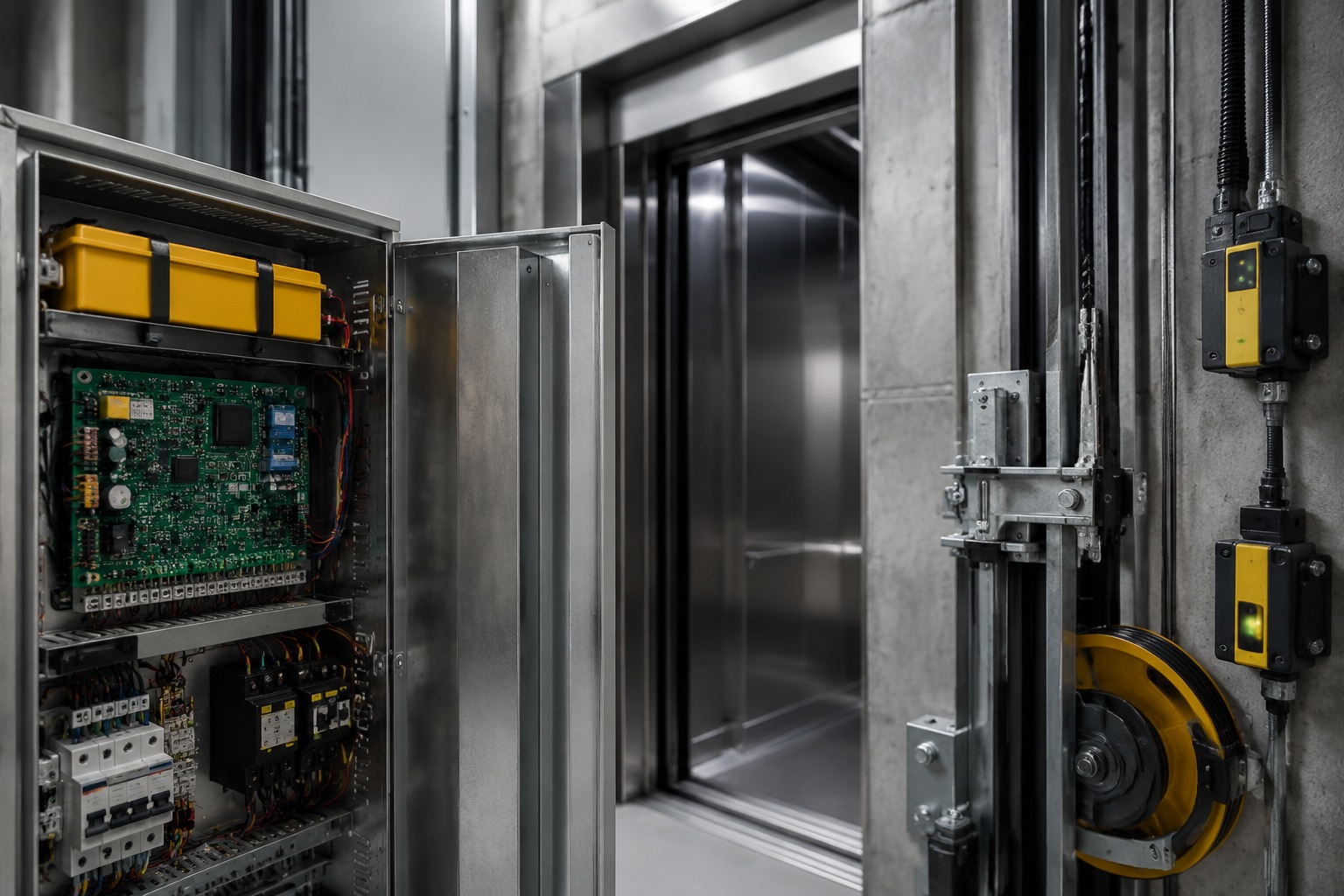
Elevator emergency power systems are installed to protect passengers when the main electrical supply fails. In practical terms, they help keep cabin lighting on, support alarm and communication functions, and in some cases allow a controlled rescue run to the nearest floor so passengers can exit safely. For building owners, maintenance contractors, and modernization teams in the Philippines, the correct emergency power setup is not just a technical preference. It is a safety decision that affects response time, downtime, tenant confidence, and service continuity in offices, condominiums, hospitals, hotels, malls, and industrial facilities.
In the Philippine market, emergency power planning must consider local operating realities. Power disturbances, brownouts, severe weather, and high humidity can shorten battery life and stress electronic parts. Buildings in Metro Manila, Cebu, Davao, Iloilo, Cagayan de Oro, Clark, and Subic may have different traffic patterns, load profiles, and service expectations, yet they all need reliable lift support during outages. For towers near major trade hubs such as the Port of Manila, Batangas Port, Cebu International Port, and Davao Port, rapid replacement part availability can also matter because even short elevator downtime may disrupt logistics, office occupancy, or mixed-use building operations.
The market for elevator backup power in the Philippines is growing alongside modernization demand. Older lifts may only have basic emergency lighting, while newer systems often require coordinated rescue functions, battery monitoring, and compatibility with brand-specific control logic. That is why buyers should not treat all power supplies as interchangeable. A lighting power supply, a rescue power module, and a brake power unit serve different roles, and each must be matched carefully to the elevator model, voltage, control board behavior, and site conditions.
For customers sourcing replacement parts or planning upgrades, the main buying advice is simple: confirm the required function first, then verify model compatibility, battery condition standards, installation testing steps, and future maintenance expectations. A low-priced unit that does not communicate correctly with the lift controller can create more risk than value. By contrast, a properly matched unit can reduce trapped passenger incidents, shorten recovery time, and support safer maintenance workflows.
This guide explains how emergency power supplies work, how to choose them, what to check on Hitachi-related applications, how to evaluate batteries and voltage, how rescue operation compatibility affects purchasing, what tests should follow installation, and how maintenance records support timely replacement. It also includes local market observations, practical tables, and visual trend charts to help maintenance companies, distributors, building owners, and contractors make informed decisions in the Philippines.
What Emergency Power Supplies Actually Do in Elevators
An elevator emergency power supply is designed to provide temporary electrical support when the main utility source is lost. Its exact job depends on the equipment type. In many buildings, the first and most basic requirement is emergency cabin lighting. If passengers are inside during an outage, lighting should remain available long enough to avoid panic and support communication. Some systems also maintain the alarm bell, intercom, or emergency phone connection.
More advanced configurations support automatic rescue operation. In this mode, the elevator controller uses stored energy or backup power to move the car at a controlled speed to the nearest landing, open the doors, and release passengers. This feature is especially important in high-rise residential towers, hospitals, and office buildings where the inconvenience and safety impact of entrapment can be significant.
It is also important to distinguish elevator emergency power from a building generator. A generator may restore broader building power after a delay, but the elevator still needs the right internal power conversion, control logic, and interface behavior to respond correctly at the moment of outage. In other words, the backup power inside the lift system and the building’s emergency generation strategy must work together, not independently.
In the Philippine market, buyers often encounter three common product categories: emergency lighting power supplies, rescue operation power supplies, and brake or auxiliary DC power units used in specific lift functions. For example, some applications require a specialized model such as the Hitachi elevator emergency power supply for rescue-related functions, while others primarily need a dependable elevator emergency lighting power supply to maintain cabin illumination and passenger reassurance during a blackout.
Different industries prioritize these functions differently. Hospitals value reliable evacuation support and communication continuity. Hotels focus on passenger comfort and brand reputation. Residential towers want quick recovery and lower complaint rates. Industrial and warehousing sites may prioritize ruggedness, consistent performance, and replacement speed because maintenance teams cannot afford repeated shutdowns.
| Function | Main Purpose | Typical Components Supported | Typical Runtime | Common Application | Key Buying Note |
|---|---|---|---|---|---|
| Emergency lighting | Keep cabin visible during outage | Cabin lights, indicator lights | Short to medium | Residential, office, hotel | Confirm voltage and battery duration |
| Alarm support | Allow passengers to call for help | Alarm bell, buzzer | Short to medium | All passenger lifts | Check signal stability during low battery state |
| Intercom or phone support | Maintain communication | Intercom, emergency phone | Medium | High-rise and premium buildings | Confirm compatibility with existing communication board |
| Automatic rescue operation | Move car to nearest floor | Controller interface, motor drive logic | Short but high-demand | Modernized passenger lifts | Controller and inverter compatibility is critical |
| Brake power support | Provide stable DC power for brake-related function | Brake circuit or related controls | Application-specific | Brand-specific systems | Match model and DC rating carefully |
| Door release support | Assist safe exit after stop | Door operator, unlocking logic | Short | Selective rescue systems | Verify door controller response under backup power |
The table above shows why specification matching matters. A lighting unit may not be suitable for rescue movement, and a DC brake power unit may be essential in one controller architecture but irrelevant in another. The buyer should therefore begin with the actual rescue sequence and hardware requirement, not just the part name.
The line chart reflects a realistic upward demand trend driven by modernization projects, growing residential towers, and stronger safety expectations. Demand is especially visible in Metro Manila, Makati, Bonifacio Global City, Quezon City, Pasig, Cebu City, and Davao City, where older systems are being retrofitted and property managers are under pressure to reduce passenger entrapment incidents.
How to Select an Emergency Lighting Power Supply
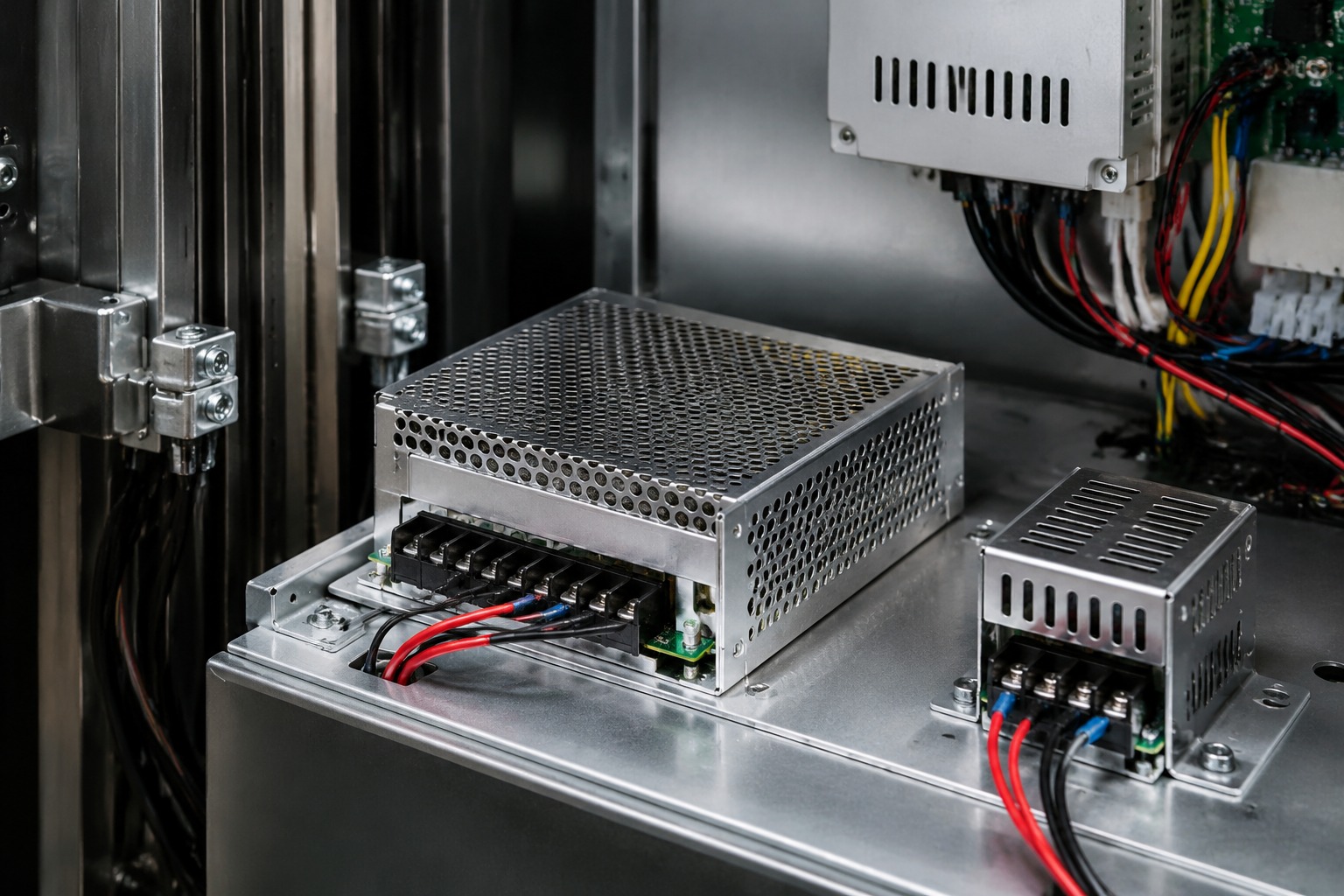
Emergency lighting power supply selection should start with one basic question: what load must the unit support, and for how long? Many buyers focus only on input and output voltage, but that is not enough. The correct unit must also match current demand, battery chemistry or battery pack design, charging behavior, installation space, heat dissipation conditions, and the expected operating duration required by the building’s maintenance standard or site policy.
In the Philippines, humidity and ambient temperature can influence battery aging and charger stability. A unit installed in a machine room exposed to poor ventilation in Manila or Cebu may age differently from one in a better-controlled environment in Baguio or a newer mixed-use tower in Clark. Site conditions affect component life, so selection should not rely only on catalog values.
Product type is another key factor. Some lighting units are simple, compact modules meant only to keep a lamp or LED strip active for a short period. Others integrate charging, automatic switching, and fault indication. Where the building owner wants better monitoring, it is worth selecting a model with clear status indication and easier maintenance access. For projects involving replacement of legacy parts, technicians should compare terminal layout, enclosure size, output behavior, and installation wiring before purchase.
When the requirement is specifically for cabin emergency illumination, buyers can review a dedicated emergency lighting power supply for lift accessories and compare it with the installed lamp load, wiring method, and service environment. This is often a practical option for maintenance companies managing multiple brands and seeking stable replacement stock for common lighting applications.
| Selection Factor | Why It Matters | What to Check | Common Risk if Ignored | Best for Which Building | Recommendation |
|---|---|---|---|---|---|
| Output voltage | Must match lamp or LED requirement | Rated DC or AC output | Flicker or no lighting | All buildings | Verify against actual load label |
| Battery capacity | Determines support duration | Ah rating and discharge curve | Light fades too quickly | High-rise residential | Choose margin above minimum runtime |
| Charging circuit quality | Affects battery life | Float voltage stability | Premature battery aging | Hot machine rooms | Select stable charger design |
| Physical size | Must fit panel or cabinet space | Dimensions and mounting method | Rework during installation | Retrofit projects | Measure before ordering |
| Status indication | Improves maintenance visibility | LED, alarm, fault output | Hidden failures | Large portfolios | Prefer visible status features |
| Environmental tolerance | Supports local site conditions | Temperature and humidity range | Reduced service life | Coastal or humid areas | Consider site-specific exposure |
This table helps buyers move from general intention to actual specification review. For example, many replacement issues in aging lifts come from underestimating runtime or from using a charger that over-stresses the battery pack. In practical purchasing, it is better to confirm the real connected load than to assume all cabin lighting circuits are the same.
From a market perspective, emergency lighting units are commonly used across condominiums, schools, public buildings, provincial hospitals, and mid-rise commercial blocks. The volume demand can be high because even lifts without full rescue operation still need basic passenger reassurance during a power interruption. This makes lighting power supplies a frequent spare part category for local distributors and service contractors.
Important Notes for Hitachi Emergency Power Supply Applications
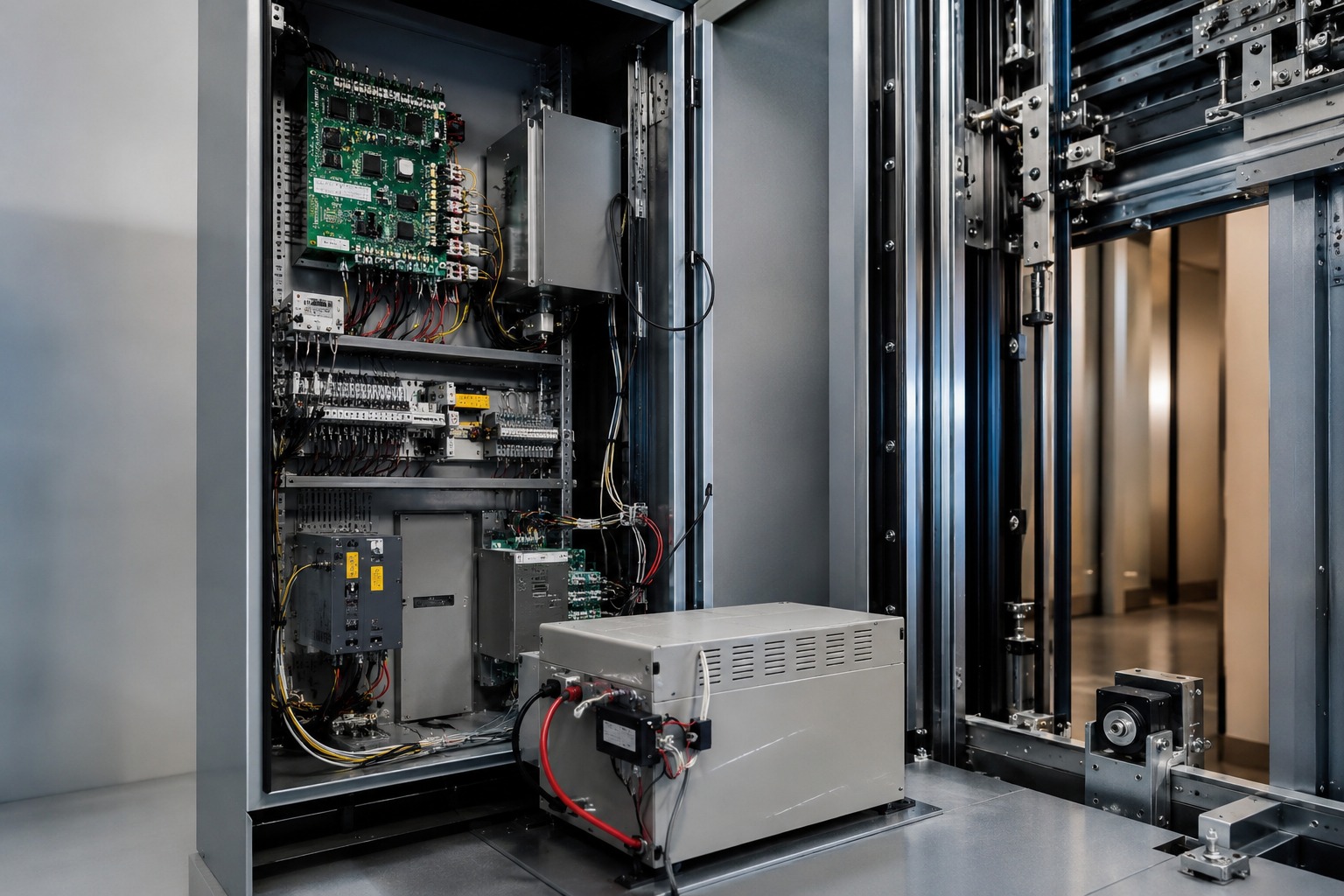
Hitachi elevator applications require careful model matching because the emergency power function may interact with controller logic, inverter behavior, door operation, and brake release conditions. A generic substitute can be risky if the pin configuration, timing sequence, output characteristics, or protection logic do not align with the original design. This is especially true in modernization projects where some components are upgraded while others remain original.
When working on Hitachi-related systems, technicians should confirm part number, equipment generation, elevator type, control cabinet label, and actual field wiring. They should also determine whether the power supply is intended only for emergency lighting, for rescue operation, or for a more specific sub-function such as brake-related DC support. In some cases, a model such as the UAX 48V brake power supply for Hitachi elevator applications may be required because the system depends on a stable DC48V source for proper brake circuit behavior.
Another common issue is assuming that all Hitachi emergency units are interchangeable across different years or regional configurations. They are not. Elevator controllers evolve, and electrical interfaces can change. For maintenance companies in the Philippines handling multiple properties, the best practice is to keep detailed records of installed models, cabinet photos, connector references, and previous replacement history. This reduces ordering errors and shortens troubleshooting time.
For buildings in Makati CBD, Ortigas, Alabang, and Cebu IT Park, downtime expectations are usually strict. If a replacement part arrives but does not match the site requirement, the property manager may still face passenger complaints, repeated service calls, and delayed reopening of the lift. Accurate identification before procurement therefore saves both labor cost and reputation.
| Hitachi Check Item | Why It Is Important | Field Verification Method | Possible Problem | Who Should Review | Action |
|---|---|---|---|---|---|
| Part number | Confirms direct compatibility | Nameplate and spare list | Wrong replacement delivered | Purchasing and technician | Cross-check before ordering |
| Voltage rating | Protects connected circuits | Measure and compare to manual | Overvoltage or undervoltage | Technician | Confirm input and output values |
| Connector layout | Prevents wiring mistakes | Photo and terminal mapping | No response or damaged board | Installer | Match terminal assignment |
| Function type | Lighting, rescue, or brake support differ | Trace circuit purpose | Unit works but wrong function | Maintenance engineer | Define required role first |
| Controller generation | Older and newer systems vary | Controller model plate | Timing mismatch in rescue mode | Service supervisor | Record system generation |
| Site history | Reveals prior modifications | Maintenance log review | Hidden non-original wiring | Building owner and contractor | Inspect before replacement |
The explanation behind this table is straightforward: the more brand-specific the application, the more valuable disciplined field identification becomes. In modern elevator maintenance, part sourcing is not only about inventory. It is about reducing uncertainty through careful model matching and documented verification.
Battery Condition and Voltage Checks
Battery condition is one of the most common reasons an elevator emergency power supply fails when it is actually needed. A unit may appear normal during routine observation, yet if the battery is weak, sulfated, swollen, undercharged, or nearing end of life, the system may not support lighting or rescue for the required duration. This is why regular voltage checks, load checks, and visual inspection are essential.
Technicians should inspect open-circuit voltage, charging voltage, connector cleanliness, cable tightness, and any signs of heat damage or corrosion. They should also compare test results over time. A single reading is useful, but a trend is better. A battery that gradually loses hold voltage over several months can be replaced proactively before a failure event occurs.
In coastal and high-humidity locations such as Manila Bay districts, Cebu port-side commercial zones, and parts of Davao, corrosion and temperature variation can accelerate wear. Machine rooms with poor airflow make the problem worse. For this reason, preventive testing intervals should be adjusted to the actual site environment rather than applied uniformly across every property.
| Inspection Item | Acceptable Condition | Warning Sign | Likely Cause | Operational Impact | Recommended Response |
|---|---|---|---|---|---|
| Battery terminal voltage | Within expected standby range | Low resting voltage | Aging or poor charging | Short runtime | Retest and prepare replacement |
| Charging voltage | Stable within design tolerance | Too high or too low | Faulty charger circuit | Battery damage or weak backup | Check charger board and wiring |
| Physical condition | No swelling or leakage | Bulging case or fluid trace | Overcharge or heat | Unsafe operation | Replace immediately |
| Terminal cleanliness | Clean, tight contacts | Corrosion buildup | Humidity exposure | Voltage drop under load | Clean and protect connection |
| Load retention | Holds voltage during test | Rapid drop during discharge | Capacity loss | Failed rescue or dim lighting | Replace battery pack |
| Temperature condition | Moderate operating environment | Constant high heat | Poor ventilation | Reduced battery life | Improve airflow and inspect more often |
The table above should be used together with a scheduled inspection form. It is not enough to say that the battery “looks okay.” A proper maintenance standard should capture voltage values, ambient conditions, and pass-fail criteria.
The area chart illustrates a realistic downward trend in battery capacity retention over service time. It shows why routine replacement planning is better than waiting for a complete failure. In heavy-use Philippine buildings with warmer ambient conditions, the decline may be faster than ideal laboratory assumptions.
For buyers managing several sites, one useful strategy is to group batteries by installation date and environment type. This allows more efficient forecasting for Makati office towers, Quezon City residential projects, Cebu mixed-use complexes, and Davao hotels, where usage and thermal profiles differ. A data-driven approach helps control inventory and prevents surprise outages.
Rescue Operation Compatibility
Compatibility is the most critical factor when an emergency power supply is expected to support rescue movement rather than only lighting. Rescue operation involves communication between the power source, controller, inverter or drive, braking system, and sometimes the door operator. If any of these elements are mismatched, the lift may stop safely but fail to reach the nearest landing, or it may not execute the intended sequence at all.
Before selecting a rescue-capable unit, technicians should review the elevator’s rescue logic. Does the car move upward, downward, or only to the nearest floor based on load and position? Does the system require a dedicated DC supply for the brake? Is the inverter programmed for low-speed emergency travel? Are there interlocks that prevent operation if battery voltage falls below a threshold? These questions are vital in modernization planning.
Product choice also depends on whether the elevator is hydraulic, geared traction, gearless traction, passenger, service, or hospital type. A hospital lift serving emergency departments in Metro Manila or Cebu may prioritize a more controlled rescue profile than a low-rise residential car in a smaller provincial building. Application context matters.
| Compatibility Factor | Why It Matters | How to Verify | Failure Risk | Suitable Project Type | Best Practice |
|---|---|---|---|---|---|
| Controller communication | Starts rescue sequence correctly | I/O review and manual check | No automatic rescue | Modernization | Confirm signal timing |
| Drive or inverter response | Controls car movement speed | Parameter review and test run | Car does not move | High-rise traction lifts | Check emergency run settings |
| Brake power requirement | Needed for controlled release | Circuit tracing and voltage test | Brake remains engaged | Brand-specific systems | Use correct DC brake power unit |
| Door operation logic | Allows safe passenger exit | Landing test after rescue | Car arrives but doors stay closed | All passenger lifts | Verify door unlock sequence |
| Battery discharge capability | Supports short high-demand load | Load test under simulation | Voltage collapse mid-rescue | Heavily used lifts | Size battery properly |
| Safety interlocks | Prevents unsafe operation | Review safety chain behavior | Unintended fault lockout | All projects | Test under real outage scenario |
This compatibility table is especially relevant for contractors comparing products from multiple sources. A power supply may be electrically sound but still unsuitable if its behavior does not fit the elevator’s rescue architecture. That is why experienced sourcing support and model matching can save significant time.
The bar chart shows realistic demand concentration by industry. Residential towers and hospitals often lead because trapped-passenger risk and response expectations are high. Offices and hotels also account for strong demand, particularly in business districts and tourism centers such as Makati, BGC, Cebu City, and major developments in Davao.
As a practical case example, a condominium cluster in Pasig with frequent short brownouts may only need stable cabin lighting on older lifts, but after resident complaints and entrapment incidents, management may decide to modernize selected cars with rescue-capable backup systems. By contrast, a tertiary hospital in Quezon City may classify rescue compatibility as mandatory from the start because any extended passenger entrapment is unacceptable.
Testing After Installation
Testing after installation should never be treated as a formality. The purpose of an emergency power supply is to work during abnormal conditions, so the installed unit must be tested under a realistic outage simulation. Basic continuity checks are not enough. The technician should verify actual switching behavior, battery support duration, alarm continuity, lighting performance, and if applicable, rescue movement to a landing.
A useful testing process includes pre-power inspection, wiring verification, normal-charge confirmation, simulated mains failure, observation of transfer time, rescue sequence execution, landing and door response, and reset to normal operation. Where the building has generator backup, technicians should also confirm how the elevator behaves during the interval between utility failure and generator takeover.
For sites with multiple lifts, test one car at a time and document outcomes clearly. This is particularly important in hospitals, malls, and office towers where building operations cannot be disrupted extensively. In major Philippine cities, scheduling is often done during low-traffic windows, such as late evening for offices or early morning for malls.
| Test Step | What to Observe | Pass Indicator | Common Failure | Operational Meaning | Corrective Action |
|---|---|---|---|---|---|
| Visual and wiring check | Terminal tightness and polarity | No abnormal condition | Loose or reversed wiring | Unsafe energizing | Correct before power on |
| Charging state verification | Battery charging status | Stable charge indication | No charge or overcharge | Unreliable backup readiness | Inspect charger circuit |
| Simulated mains failure | Transfer to backup source | Instant or proper timed response | No switching | System unusable during outage | Trace switching logic |
| Lighting continuation | Cabin visibility level | Lights remain on | Dim or no light | Passenger panic risk | Check output and load |
| Rescue run test | Movement to nearest floor | Controlled travel and stop | Car stalls or faults | Entrapment remains | Review controller compatibility |
| Door and reset test | Door opens and system recovers | Safe exit and return to standby | Door remains closed or persistent fault | Incomplete rescue process | Check door interface and reset procedure |
The explanation for this table is that each test step corresponds to a real safety outcome. If lighting fails, passengers may panic. If the rescue run fails, entrapment continues. If the doors do not open, the rescue sequence is incomplete. Detailed testing converts installation from theoretical compliance to actual operational readiness.
Case experience across local projects shows that the most frequent post-installation issues are wrong wiring assumptions, aged batteries left in service with a new charger, and unverified controller behavior. In many cases, these problems are preventable with a disciplined commissioning checklist and documented sign-off by the responsible technician and site representative.
Maintenance Records and Replacement Timing
Maintenance records are often undervalued, yet they are one of the strongest tools for reducing emergency failures. A well-kept record allows the maintenance team to see battery age, test history, voltage trends, prior alarms, replacement dates, and recurring environmental issues. This helps plan replacement before the system becomes unreliable.
Replacement timing should not rely only on a fixed calendar rule. It should consider battery condition, usage intensity, ambient heat, charging quality, and actual test performance. In a cooler, lower-duty installation, battery life may meet the expected cycle. In a heavily used Metro Manila residential tower with a warm machine room and frequent brownouts, replacement may be required sooner.
Building owners should also retain purchasing and model records. If the original part and replacement history are well documented, future procurement becomes faster and more accurate. This matters for distributors and contractors serving multiple properties from Luzon to Visayas and Mindanao, where shipment timing and service coordination can affect restoration speed.
From a supplier perspective, the best support goes beyond sending a box. Buyers need technical matching support, stable quality checks, and protective packaging so electronic parts arrive safely, especially when shipped across the Philippines through major logistics routes connected to Manila, Cebu, Davao, Batangas, and Iloilo. A professional parts source should help customers reduce downtime and avoid repeat ordering errors.
Our role in this market is centered on three capabilities. First, technological capability: we support careful model matching for elevator electronic parts and accessories, helping maintenance teams compare control-related requirements, voltage parameters, and application roles before ordering. Second, manufacturing capability: we focus on stable sourcing, quality inspection, and protective packaging for replacement parts used in demanding field conditions. Third, service capability: we respond quickly to customer inquiries, support distributors and contractors with practical identification guidance, and help building owners secure compatible parts that keep lifts operating safely with less downtime.
| Record Item | Why It Should Be Logged | Suggested Frequency | Who Uses It | Benefit | Replacement Decision Value |
|---|---|---|---|---|---|
| Installation date | Tracks service age | Once at installation | Owner and contractor | Creates baseline | Helps forecast lifecycle |
| Battery voltage reading | Shows health trend | Monthly or quarterly | Technician | Detects decline early | Supports proactive replacement |
| Load test result | Confirms usable capacity | Scheduled periodic test | Maintenance engineer | Verifies real performance | Identifies weak batteries |
| Fault alarm history | Reveals recurring issues | Every event | Service supervisor | Improves troubleshooting | May justify full unit replacement |
| Environmental notes | Links heat and humidity to wear | At each major inspection | Site team | Explains abnormal aging | Adjusts replacement schedule |
| Replacement parts used | Preserves compatibility history | Every change | Purchasing and service team | Faster future sourcing | Reduces wrong-part risk |
The logic behind these records is simple: what gets documented can be managed. What is not documented becomes guesswork. For portfolio managers with buildings in Makati, Taguig, Cebu, and Davao, standardized records make it easier to compare asset condition across locations.
The comparison chart highlights the criteria that matter when choosing a supplier for elevator emergency power parts. In the Philippines, local availability is important, but accurate model matching and dependable quality control often matter even more because incorrect electronic replacements can prolong downtime instead of reducing it.
Looking ahead to 2026, three trends are likely to shape purchasing decisions. First, technology: more buildings will expect better status indication, easier diagnostics, and tighter integration between emergency power modules and lift controllers. Second, policy and safety practice: property managers are becoming more sensitive to documented testing and rescue readiness, especially in high-occupancy developments. Third, sustainability: buyers will increasingly favor durable components, efficient charging design, and replacement planning that reduces waste and repeat failures.
FAQ About Elevator Emergency Power
Is emergency lighting the same as rescue operation power?
No. Emergency lighting keeps the cabin illuminated, while rescue operation power supports controlled movement to a floor and passenger release. Some systems only provide lighting, while others provide both functions.
How often should batteries be checked?
A visual and voltage check should be part of regular preventive maintenance, with deeper testing scheduled based on building usage, environment, and manufacturer practice. Hot or humid sites in the Philippines may need closer monitoring.
Can a generic unit replace a brand-specific emergency power supply?
Not safely in many cases. Brand-specific systems, especially those with rescue logic or brake-related DC requirements, need careful compatibility review. Always verify part number, voltage, connector layout, and function.
Why does a new power supply still fail during testing?
The most common reasons are weak old batteries, incorrect wiring, unverified controller compatibility, or an installation that supports lighting but not rescue movement. Commissioning tests should identify these issues before handover.
What should building owners ask from a supplier?
Ask for model matching support, clear voltage and application information, quality inspection, secure packaging, and responsive after-sales communication. These reduce the chance of wrong-part deliveries and repeated downtime.
Which buildings in the Philippines benefit most from rescue-capable backup systems?
High-rise condominiums, hospitals, hotels, office towers, and busy mixed-use developments benefit the most because passenger volume and service expectations are higher. This is particularly relevant in Metro Manila, Cebu, and Davao.
How do we know when replacement timing is approaching?
Use maintenance records. Falling voltage trends, reduced load retention, more frequent alarms, visible battery aging, and poor performance during simulations all indicate that replacement planning should begin.
What is the difference between a standard emergency power module and a 48V brake power supply?
A standard module may support lighting or general backup functions, while a dedicated 48V brake power supply is designed for applications where the brake circuit needs a specific DC source. This distinction is important in some Hitachi-related systems.
Are 2026 upgrades likely to focus only on compliance?
No. The trend is broader. By 2026, many buyers will also focus on smarter diagnostics, reduced maintenance uncertainty, better energy efficiency, and more sustainable replacement cycles, not just minimum outage response.
What is the best practical buying approach?
Start with the exact function needed, confirm the installed lift model and voltage, review rescue compatibility, inspect battery condition, and require post-installation testing. This approach gives better long-term value than choosing on price alone.
For maintenance companies, distributors, building owners, and modernization contractors in the Philippines, elevator emergency power supply decisions should combine safety logic, electrical compatibility, and lifecycle planning. Whether the immediate need is a lighting backup unit, a rescue-related power supply, or a specific DC brake supply for a Hitachi application, success depends on accurate identification, disciplined testing, and reliable sourcing support. With careful planning, buildings can reduce downtime, improve passenger safety during outages, and maintain more dependable vertical transportation across the country’s growing urban centers.