
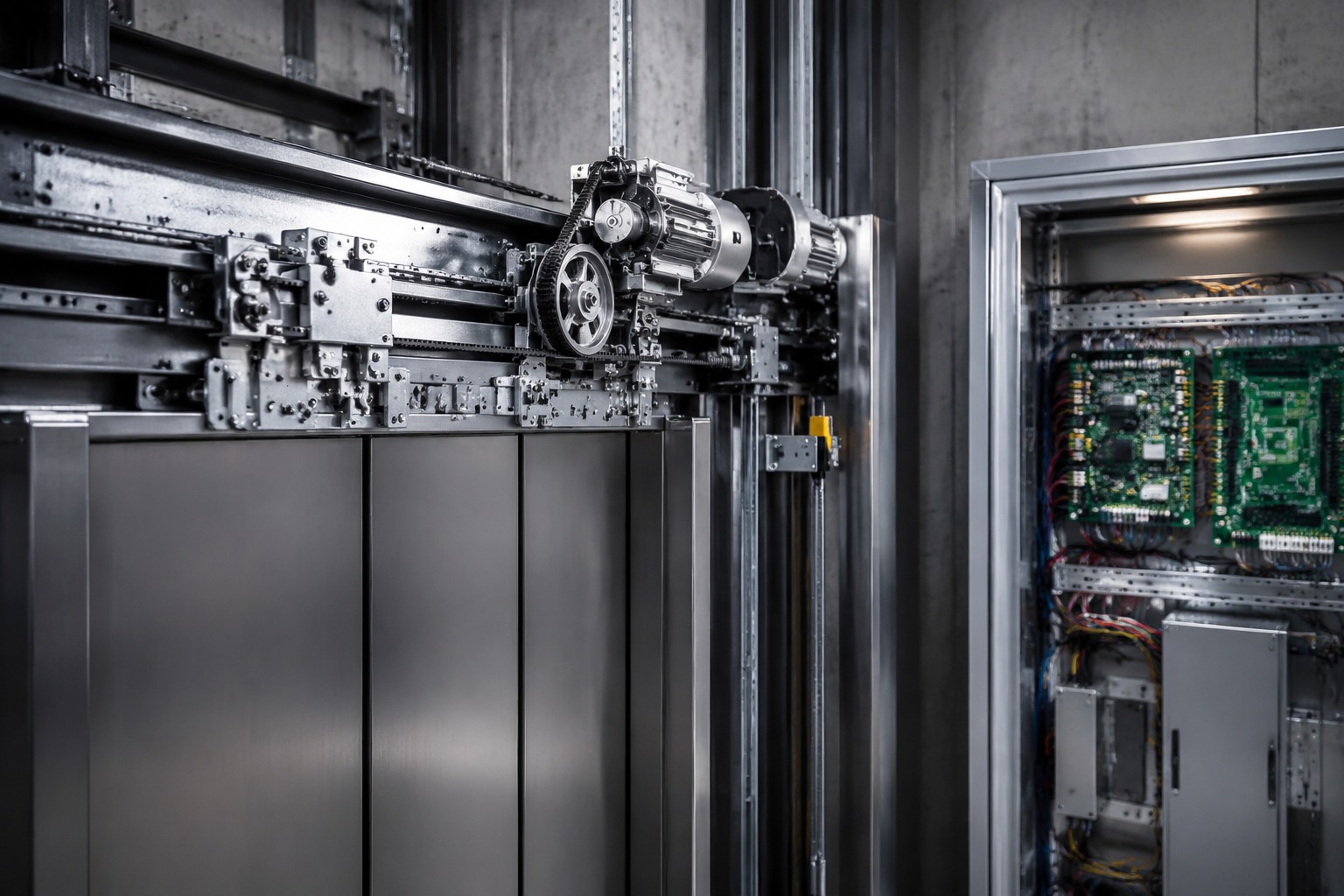
Reliable elevator door opening performance starts with one simple fact: most passenger complaints and many service callouts begin at the door system, not the main traction machine. In buildings across Metro Manila, Cebu, Davao, Clark, Iloilo, and other fast-growing cities in the Philippines, door operators cycle thousands of times every month. When the door motor, belt, controller, pulley, or hanging panels begin to wear, the result is usually visible long before total failure: slower opening, rough closing, noise, re-open events, inconsistent landing performance, or frequent door protection triggers.
For maintenance companies, distributors, building owners, and modernization contractors, understanding how the motor, mechanical transmission, and controller work together is essential for reducing downtime. In tropical and coastal areas such as Manila Bay, Batangas, Subic, and Cebu port zones, heat, dust, humidity, and corrosion can also accelerate wear in door operator components. That is why a practical inspection routine, correct model matching, and stable replacement part quality matter as much as technical specifications.
This guide explains common elevator door motor problems, the benefits of permanent magnet synchronous door motors, inspection points for pulley and hanging panels, belt replacement signs, and commissioning advice for speed and torque settings. It also includes market insight for the Philippines, product selection guidance, local applications, maintenance recommendations, and a detailed FAQ to help buyers and technicians make better decisions.
Common Elevator Door Motor Problems
The most common elevator door motor problems are not always caused by the motor alone. In practice, door opening performance depends on the complete door operator assembly: motor, controller, encoder or feedback device, belt, pulley, clutch mechanism, tracks, rollers, door locks, and panel alignment. When one element changes, the others are affected.
In the Philippines, high-rise residential towers in Makati, BGC, Ortigas, and Quezon City often experience heavy peak-hour cycling. Hotels in Cebu and resorts in Palawan may face salt-laden air and seasonal humidity swings. Industrial and mixed-use properties near ports such as Manila, Subic, and Davao can see more airborne dust. These local operating conditions make certain problems more frequent.
| Symptom | Likely Cause | Operational Effect | Inspection Priority | Repair Urgency | Recommended Action |
|---|---|---|---|---|---|
| Door opens slowly | Weak motor output, worn belt, poor controller tuning | Longer waiting time | High | Medium | Check torque settings, belt tension, and mechanical drag |
| Door closes with jerks | Pulley wear, misaligned panels, track contamination | Poor ride impression | High | High | Inspect rollers, track, pulley groove, and panel alignment |
| Frequent re-open events | Door speed mismatch, sensor interference, drag in panel movement | Passenger delay | High | High | Review door force, closing speed, and detector condition |
| Abnormal motor noise | Bearing wear, belt slip, loose mounting | Risk of sudden failure | High | High | Stop repeated operation and inspect mount, bearings, and belt |
| Door stalls near full open | Controller limit issue, encoder feedback drift, mechanical obstruction | Incomplete opening | Medium | High | Verify travel learning and inspect hanger path |
| Burning smell or heat rise | Motor overload, excess friction, electrical issue | Potential shutdown | Critical | Critical | De-energize if needed and check current draw and moving resistance |
The table above shows an important point: a “door motor problem” is often a system problem. A motor can overheat because the hanging panels are dragging. A controller can report a fault because the belt is slipping. A door may hit open and close limits poorly because the pulley is worn or because the commissioning values do not match real mechanical load.
From a fault diagnosis perspective, technicians should divide issues into three groups:
- Electrical problems: unstable voltage, damaged control board, motor winding issue, feedback loss, poor terminals, moisture intrusion.
- Mechanical problems: worn belt, pulley groove wear, loose couplings, bent brackets, roller wear, dirty tracks, rubbing panels.
- Parameter and commissioning problems: incorrect speed curve, excessive torque command, poor acceleration/deceleration settings, wrong learning values after part replacement.
A common mistake is replacing the motor immediately without checking the surrounding components. A better approach is to measure door travel resistance manually, inspect the transmission path, compare motor current to normal values, and review recent adjustments or part changes. This method reduces unnecessary cost and improves repair accuracy.
The line chart reflects a realistic trend seen in the local market: as residential, office, hospital, and hotel projects age, replacement demand for door motors, belts, controllers, and sensors rises steadily. This is especially visible in modernization work where uptime expectations are increasing but original parts may already be discontinued or difficult to source.
Benefits of Permanent Magnet Synchronous Door Motors
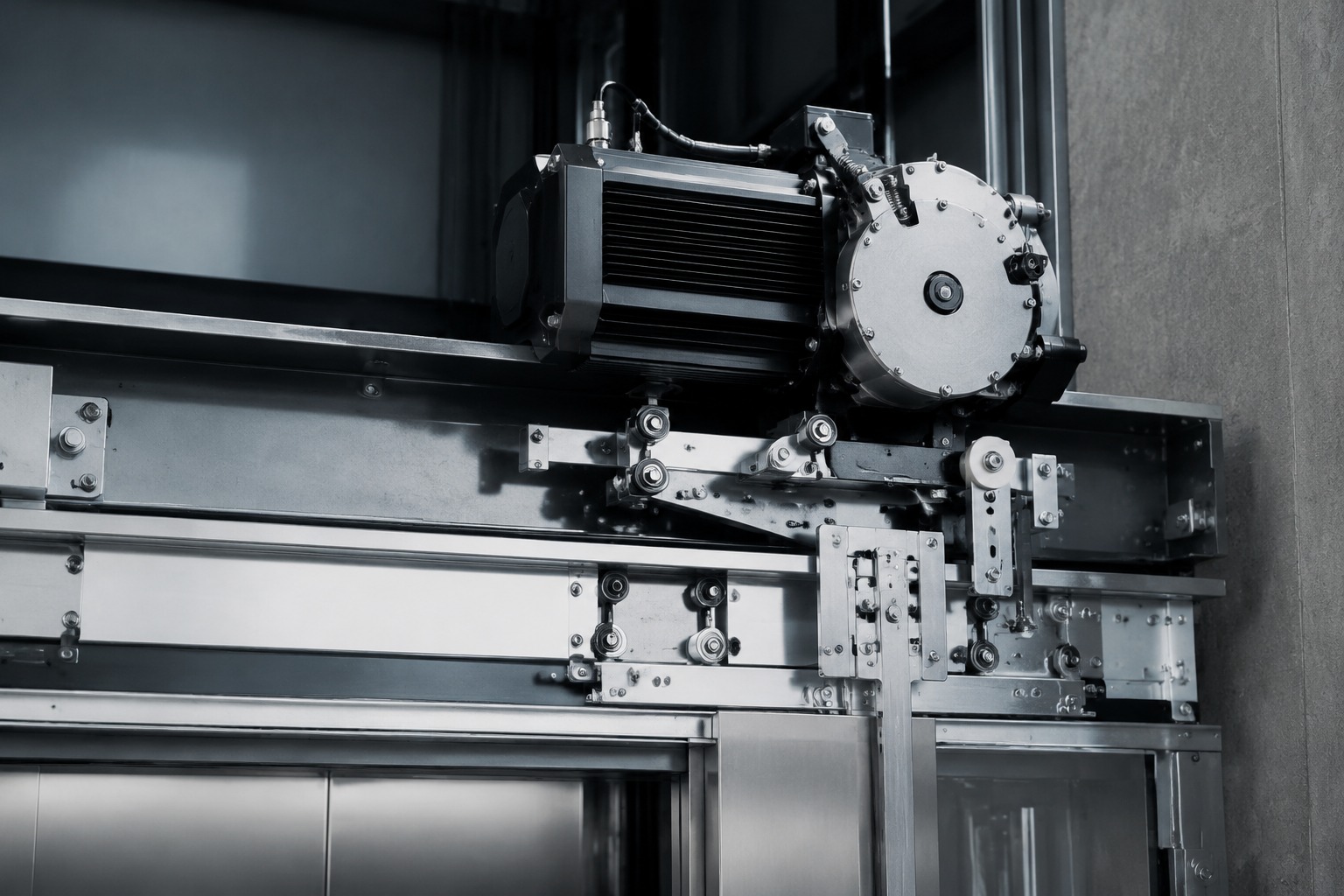
Permanent magnet synchronous door motors, often called PMSM door motors, are increasingly preferred in modern elevator door systems because they offer better efficiency, stable low-speed performance, precise control, and smoother operation. For buildings in the Philippines where energy costs, passenger comfort, and maintenance response time all matter, these benefits are practical rather than theoretical.
Compared with older conventional designs, a PMSM door motor can provide stronger torque response at low speed, which is valuable during door opening and closing transitions. This helps improve consistency, especially when the door load changes due to panel mass, friction variation, or seasonal environmental effects.
| Feature | PMSM Door Motor Advantage | Benefit for Building Operators | Benefit for Maintenance Teams | Typical Application | Why It Matters in the Philippines |
|---|---|---|---|---|---|
| Low-speed torque | Stable torque at start and stop | Smoother passenger experience | Better adjustment margin | High-rise residential | Useful in heavy daily traffic towers |
| Energy efficiency | Lower power loss | Reduced operating cost | Less thermal stress | Hotels and offices | Supports energy-conscious buildings |
| Compact structure | Efficient output in smaller size | Easier fit in door operator assemblies | Convenient replacement planning | Modernization projects | Useful where shaft space is limited |
| Speed control precision | Accurate open-close response | Consistent door cycle timing | Improved commissioning results | Hospitals | Supports smooth access and stretcher use |
| Reduced vibration | Smoother mechanical transfer | Less noise at landings | Lower wear on related parts | Premium condos | Important for tenant satisfaction |
| Compatibility with modern controllers | Works well with advanced feedback logic | Reliable operation data | Better fault tracing | Commercial buildings | Useful for uptime-focused service teams |
The main explanation behind the table is that PMSM technology improves both motion quality and maintenance control. It can help reduce repeated callbacks caused by uneven opening speed, poor low-speed response, or unstable closing action. In a busy mall in Manila or a hospital in Cebu, that improvement affects not only comfort but also traffic flow and service reputation.
If you are sourcing replacement parts for Hitachi-related systems, model matching is still critical. A PMSM motor should not be selected by appearance alone. Shaft dimensions, mounting points, rated voltage, control logic, connector type, rotational characteristics, and operator compatibility all need verification. For projects that require a compatible replacement, many buyers review options such as the permanent magnet synchronous door motor for Hitachi elevator applications when assessing modernization or repair needs.
Looking toward 2026, PMSM door motor adoption is likely to grow further in the Philippines due to three drivers: stronger focus on energy performance, wider modernization of aging building stock, and stricter expectations around passenger safety and smooth access. Sustainable building policies, ESG reporting by large developers, and lifecycle cost analysis will push procurement teams to prioritize efficient, stable, and well-documented door operator components.
Notes on Hitachi HGE and UAX Door Motor Applications
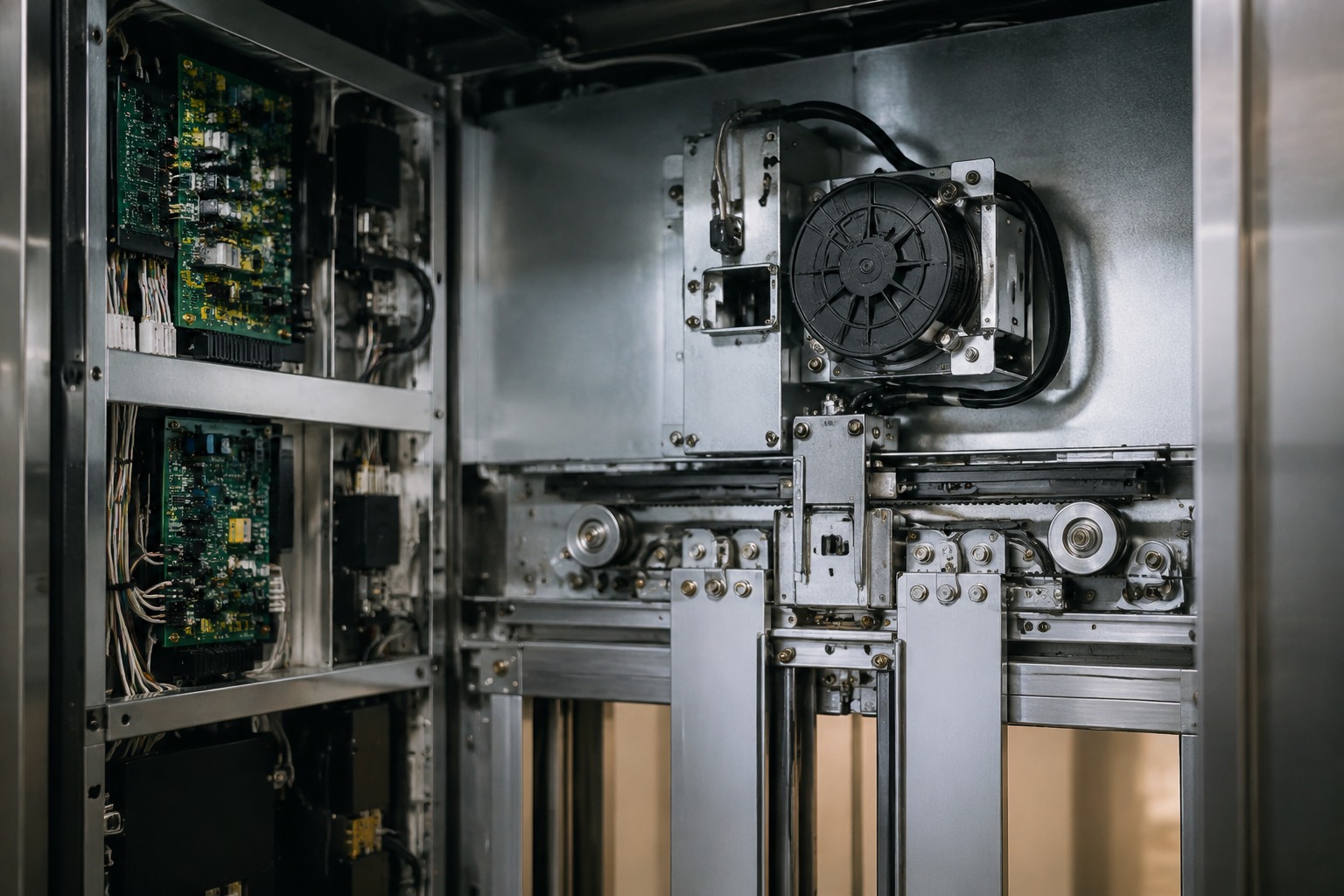
Hitachi HGE and UAX door motor applications are often discussed by maintenance teams because these models appear in various installed bases across Asian markets, including the Philippines. When handling these systems, the key is not simply to identify the brand family, but to confirm the exact operator arrangement, controller interface, mechanical mounting, and travel characteristics.
Technicians should pay close attention to the existing door operator assembly before ordering. Even within a familiar equipment family, there may be differences in motor size, encoder feedback, pulley dimensions, bracket geometry, and control parameter behavior. This is especially relevant in modernization work where previous field modifications may have already changed the original configuration.
For projects that specifically require HGE-related replacement planning, buyers often compare the HGE permanent magnet synchronous door motor with the installed operator arrangement to verify fit, compatibility, and expected performance.
| Checkpoint | What to Verify | Why It Matters | Common Risk if Ignored | Best Source of Confirmation | Field Tip |
|---|---|---|---|---|---|
| Model code | Exact code on nameplate | Avoids ordering mismatch | Wrong motor supplied | Nameplate photo | Capture both front and side labels |
| Mounting dimensions | Bracket hole spacing and shaft height | Ensures physical fit | Installation delay | Field measurement | Measure before dismantling |
| Electrical rating | Voltage, current, connector type | Supports controller compatibility | Control faults or no movement | Nameplate and wiring photos | Check terminal orientation |
| Pulley and belt setup | Groove size, belt profile, tension path | Affects transmission accuracy | Slip or abnormal wear | Visual inspection | Look for polished or uneven grooves |
| Door panel weight | Single or center opening load condition | Influences torque requirement | Weak opening performance | Operator drawing or field check | Review previous replacements |
| Controller parameters | Opening speed, closing speed, torque limits | Needed after part replacement | Jerky operation or fault trips | Service menu records | Save old settings before changeout |
The table emphasizes a practical lesson: correct sourcing starts with correct information. Many delays in elevator parts procurement happen because technicians send only a general description such as “Hitachi door motor” without a full label photo, belt size, or operator view. In the Philippine market, where replacement parts often move through Manila, Cebu, or Davao logistics channels, accurate identification saves both freight cost and downtime.
From our technological capability perspective, careful model matching is one of the most important ways to protect system reliability. A supplier that understands elevator control boards, inverters, door operator parts, encoders, sensors, and interrelated accessories can help customers verify compatibility more effectively than a generic trading source that only compares visual appearance.
Signs That an Elevator Door Motor Belt Needs Replacement
A door motor belt is a relatively small part, but it has a major effect on door cycle speed, synchronization, and motion smoothness. A worn belt can cause slip, noise, delayed acceleration, speed inconsistency, and repeated fault conditions. Because belts gradually degrade, they are sometimes overlooked until passengers notice obvious performance problems.
In hot and humid Philippine environments, belt materials may age faster if exposed to dust, poor alignment, oil contamination, or excessive tension. Buildings near coastal zones can also see accelerated deterioration of adjacent metal parts, which may affect pulley surface condition and overall transmission quality.
| Sign | What It Looks or Sounds Like | Likely Cause | Impact on Door Cycle Speed | Risk Level | Recommended Response |
|---|---|---|---|---|---|
| Cracks on belt surface | Fine lines or splits on outer layer | Age, heat, repeated flexing | Reduced transmission stability | Medium | Schedule replacement soon |
| Frayed edges | Thread-like edge damage | Misalignment or rubbing | Irregular speed response | High | Replace belt and inspect pulley alignment |
| Glossy or hardened belt face | Shiny, stiff contact area | Heat and slip | Poor traction during acceleration | High | Inspect for tension error and replace |
| Chirping or squealing noise | Noise during open or close motion | Belt slip or pulley wear | Slower and inconsistent movement | High | Check transmission system immediately |
| Uneven tooth wear | Pattern mismatch or missing sections | Pulley damage or wrong belt type | Loss of precise transfer | High | Verify belt specification before replacement |
| Door delay after motor starts | Motor runs but panels react late | Slip under load | Direct reduction in cycle performance | Critical | Replace belt and inspect complete drive path |
These signs should not be assessed in isolation. A new belt installed over a damaged pulley or misaligned operator will wear prematurely. Likewise, over-tensioning a new belt may create motor overload, bearing stress, and harsh motion. The correct method is to check the entire transmission path when replacing the belt.
For customers seeking common replacement items, a product such as the door motor belt 144 for elevator applications may be relevant when the installed size and profile match the operator design. The key is exact specification confirmation rather than approximate substitution.
From a manufacturing capability standpoint, consistent belt quality, stable dimensions, proper material selection, and protective packaging all matter. A belt that arrives distorted, contaminated, or poorly labeled can create unnecessary site risk. Good manufacturing control and inspection discipline help ensure that replacement parts perform predictably once installed.
How to Inspect the Pulley and Hanging Door Panels
Pulley and hanging panel inspection is one of the most effective preventive practices for preserving reliable door operation. Even a good motor cannot deliver smooth performance if the moving panels are dragging or if the pulley cannot transfer motion evenly.
A practical field inspection should begin with safe isolation and proper access control. After that, technicians can observe door movement manually and under powered operation. The inspection should focus on mechanical resistance, alignment, wear patterns, and evidence of impact or contamination.
| Inspection Point | What to Check | Common Defect | Possible Result | Frequency | Corrective Action |
|---|---|---|---|---|---|
| Pulley groove condition | Surface smoothness and wear depth | Polishing, deformation, sharp edges | Belt slip and noise | Quarterly | Replace worn pulley and review belt condition |
| Pulley alignment | Straight belt path | Side tracking | Frayed belt edges | Quarterly | Adjust mounting and tension path |
| Hanger rollers | Rotation and wear pattern | Flat spots or looseness | Jerky travel | Monthly | Replace worn rollers and clean track |
| Upper track | Cleanliness and straightness | Dirt, debris, corrosion | High running resistance | Monthly | Clean track and remove obstruction |
| Panel clearance | Gap consistency and rubbing marks | Misalignment or impact shift | Door drag and re-open events | Monthly | Realign panels and confirm sill condition |
| Bottom guide engagement | Stable tracking in sill groove | Wear or looseness | Panel sway and noisy travel | Monthly | Replace guide shoe or adjust panel position |
The checklist above is especially useful for routine maintenance contracts. It shows that pulley and hanging panel condition directly influence motor load. If a panel drags due to worn guides or misalignment, the controller may compensate with higher torque. Over time, this can increase belt wear, raise current draw, and shorten motor life.
In older buildings in Manila, Pasig, and Mandaluyong, panel alignment issues often appear after years of heavy use, renovation works, or accidental impact from moving carts and equipment. In hospitals and logistics facilities, repeated stretcher or trolley traffic can also contribute to sill and panel wear. Regular inspection helps catch these problems early.
Commissioning Door Speed and Torque Correctly
Correct commissioning of door speed and torque is critical after replacing a motor, belt, controller board, encoder-related component, or major mechanical part. Poor settings can make a healthy system behave like a faulty one. At the same time, aggressive tuning can create unsafe door force or unnecessary mechanical stress.
The right target is balanced performance: doors should open and close smoothly, consistently, and within the manufacturer’s safety requirements, without slamming, hesitation, or repeated reopening. In practical terms, commissioning should account for actual panel mass, transmission condition, friction level, and traffic pattern.
In busy Philippine properties such as office towers in Makati, residential clusters in Quezon City, and hospitals in Cebu, traffic conditions can vary greatly by hour. A stable commissioning setup should perform well both during early-morning light traffic and peak movement periods.
| Parameter | Purpose | If Too Low | If Too High | Commissioning Goal | Technician Note |
|---|---|---|---|---|---|
| Opening speed | Controls open travel rate | Slow passenger flow | Harsh stop near full open | Fast but smooth opening | Observe landing approach behavior |
| Closing speed | Controls close travel rate | Long door dwell cycle | Uncomfortable motion, more re-open events | Steady, compliant closing | Coordinate with detector response |
| Acceleration | Start-up response | Lazy motion | Jerk at movement start | Clean launch without slip | Monitor belt and pulley behavior |
| Deceleration | Soft stop before limit | Long settling time | Impact at end of travel | Controlled arrival at position | Check both open and close directions |
| Torque limit | Motor force control | Incomplete movement under load | Excess stress and wear | Adequate movement with margin | Never use torque to hide drag problems |
| Obstacle sensitivity | Passenger protection response | Weak safety response | False reopen and nuisance trips | Safe, stable detection | Test with actual operating conditions |
The explanation is simple: speed and torque must be matched to the real mechanical condition of the door. If a technician raises torque to overcome friction instead of fixing panel drag, the door may appear normal for a short time but wear will increase quickly. Good commissioning is not about forcing performance; it is about restoring balanced operation.
From a service capability perspective, responsive technical communication is extremely valuable during commissioning. When a parts supplier can help verify model details, compare photos, review dimensions, and support practical replacement matching, maintenance teams save time and reduce trial-and-error adjustments on site.
The bar chart shows where demand tends to concentrate. Residential towers lead because of high unit counts and frequent daily cycling. Malls, hospitals, and offices also create strong demand due to intense public use and stricter uptime expectations. This market profile explains why door operator components remain a high-priority category for Philippine maintenance companies.
Preventive Maintenance Tips for Longer Door Motor Life
Preventive maintenance is the most cost-effective way to extend door motor life and maintain stable opening performance. A well-planned routine helps reduce emergency breakdowns, repeat callbacks, and passenger complaints. It also improves spare parts planning, which is important in the Philippines where transport lead times between Luzon, Visayas, and Mindanao can affect urgent repairs.
Good preventive maintenance should combine visual inspection, mechanical cleaning, electrical checking, and performance review. It should also document trends rather than only react to failures. If current draw, noise, or cycle time slowly changes over several months, that trend may reveal a problem before service is interrupted.
- Clean tracks, sill grooves, and hanger areas regularly to prevent added mechanical resistance.
- Inspect belts for cracks, glaze, edge wear, and tension problems during scheduled service visits.
- Check pulley alignment and groove condition whenever a belt is replaced.
- Verify motor mounting bolts and brackets for looseness or vibration marks.
- Review door opening and closing time trends to catch gradual performance decline.
- Inspect door locks, light curtains, and sensors because door system reliability depends on the whole circuit.
- Record replacement dates for belts, rollers, and key operator parts for lifecycle planning.
- Protect spare parts from moisture, direct sunlight, and rough handling before installation.
For building owners and property managers, preventive maintenance should also include vendor planning. Choosing a supplier that can support reliable sourcing, stable inspection, careful packaging, and responsive communication helps reduce the risk of ordering incorrect or poor-quality replacement parts.
In the Philippine market, this matters even more for projects outside Metro Manila. Sites in Bacolod, Cagayan de Oro, General Santos, and Baguio may need dependable shipment coordination and accurate model verification before dispatch. A well-organized service chain is part of preventive maintenance because wrong parts create avoidable downtime.
The area chart illustrates a realistic 2026 trend: more building operators are moving away from pure emergency repair and toward preventive and predictive maintenance. This shift is driven by three forces in the Philippines: rising expectations from tenants and guests, the cost of downtime, and growing interest in sustainable building operations through longer component life and lower waste.
Frequently Asked Questions About Elevator Door Motors
What causes elevator doors to open slowly?
Slow opening is usually caused by belt wear, panel drag, poor pulley condition, incorrect speed parameters, weak motor output, or excessive friction in the hanger system. The best diagnosis checks both electrical and mechanical factors.
Can a door motor fail even if the elevator still runs?
Yes. The elevator may still travel normally while door performance degrades first. Since doors cycle constantly, the operator system often shows symptoms earlier than the main drive system.
How do I know if the belt should be replaced?
Look for cracks, frayed edges, glazing, noise, delayed panel response, or visible wear pattern mismatch. Belt replacement should also include pulley and alignment inspection.
Are PMSM door motors better for modernization projects?
In many cases, yes. They can offer smoother low-speed control, better efficiency, and improved tuning stability. However, exact compatibility with the installed operator and controller must always be verified.
What is the biggest ordering mistake for door motors?
Ordering from appearance only. Correct sourcing requires model code, nameplate data, dimensions, mounting detail, connector information, and preferably photos of the installed assembly.
How often should pulley and hanging panels be inspected?
Visual checks should be part of routine maintenance, while detailed pulley groove, alignment, roller, and guide checks should be done regularly based on traffic level and site condition. High-use buildings need more frequent review.
Can torque settings be increased to solve a slow door?
Only after mechanical condition is confirmed. Increasing torque without correcting drag, misalignment, or belt slip can shorten component life and create unsafe or unstable door behavior.
Which industries in the Philippines need the most door operator maintenance?
Residential towers, offices, malls, hospitals, hotels, and mixed-use developments all have strong demand, especially in dense urban centers and high-traffic properties.
Philippines Market, Buying Advice, and Local Applications
The Philippines continues to see demand for elevator modernization and replacement parts as more buildings enter mid-life service stages. Metro Manila remains the largest concentration point, but Cebu, Davao, Pampanga, Laguna, Iloilo, and Cagayan de Oro are also important markets. Trade hubs and ports such as Manila, Batangas, Subic, and Cebu support the movement of industrial and building components, making logistics planning part of successful procurement.
For buyers, the best purchasing approach is not to focus only on the lowest price. Door motors and belts affect safety, reliability, and tenant satisfaction. A cheaper but mismatched part can create repeated service visits, lost labor, and building complaints. A stronger buying process includes:
- Matching the exact model and application, not just the brand.
- Requesting photos, dimensions, and nameplate verification before shipment.
- Checking whether related wear parts should be replaced at the same time.
- Confirming packaging quality for domestic or international transit.
- Choosing suppliers with responsive technical communication.
Applications in the Philippines include condominiums, office towers, hospitals, hotels, schools, government buildings, shopping centers, industrial facilities, and transport-linked properties. In hospitals, smooth door motion supports stretcher handling. In malls, stable opening speed improves crowd flow. In residential towers, quiet operation contributes to user satisfaction and reduced management complaints.
Case studies in the market often follow the same pattern. A condominium in Makati experiences repeated door reopen faults at peak hours. Initial suspicion falls on sensors, but inspection reveals a glazed belt and worn pulley groove. Replacing both and recommissioning speed and torque restores stable service. In a Cebu hotel, abnormal door noise appears after a long humid season. Inspection finds track contamination and roller wear increasing motor load. Cleaning, roller replacement, and parameter review eliminate the issue without replacing the motor. In a Davao medical building, modernization requires a compatible PMSM replacement for a legacy operator; accurate model matching and dimensional confirmation prevent installation delay.
When evaluating local suppliers, buyers should compare more than stock claims. They should assess compatibility knowledge, inspection process, packaging quality, consistency of communication, and after-sales response. This is especially important when dealing with door operator parts, inverter components, sensors, encoders, power supplies, and other interrelated elevator accessories.
The comparison chart highlights what many Philippine buyers already know from experience: supplier value is measured by accuracy and reliability, not only by unit price. For door motor projects, strong model matching and technical response often prevent the most costly mistakes.
Our Company Support for Elevator Door Motor Projects
For customers in the Philippines, our role is focused on helping maintenance teams and project buyers reduce downtime through reliable elevator parts sourcing and careful application matching. We support a wide range of lift accessories and replacement components for brands such as Hitachi, Toshiba, KONE, Mitsubishi, and others, including door operator parts, control boards, inverter-related items, locks, light curtains, guide shoes, sensors, encoders, buttons, COP panels, power supplies, and additional lift accessories.
Technological capabilities: We place strong emphasis on accurate model identification and compatibility review. For door motor projects, this means checking available product information against nameplate details, assembly photos, mechanical configuration, and application requirements. This approach helps customers avoid ordering errors when replacing motors, belts, and associated operator components.
Manufacturing capabilities: We focus on stable quality inspection, consistent sourcing standards, and protective packaging suitable for transport and storage. For critical parts such as door motors, belts, sensors, and control components, quality consistency matters because even small dimensional or electrical variations can affect on-site installation and performance.
Service capabilities: We respond with practical support for maintenance companies, distributors, building owners, and modernization contractors who need dependable replacement parts and responsive coordination. In a market where downtime quickly affects tenants, hotel guests, hospital operations, and commercial traffic, timely communication and careful shipment handling are essential.
As 2026 approaches, the elevator parts market in the Philippines is expected to place even greater importance on energy efficiency, lifecycle maintenance, accurate retrofit planning, and sustainability. Building owners will increasingly prioritize components that support longer service life, lower repeat maintenance, and stable operation in demanding local environments.