
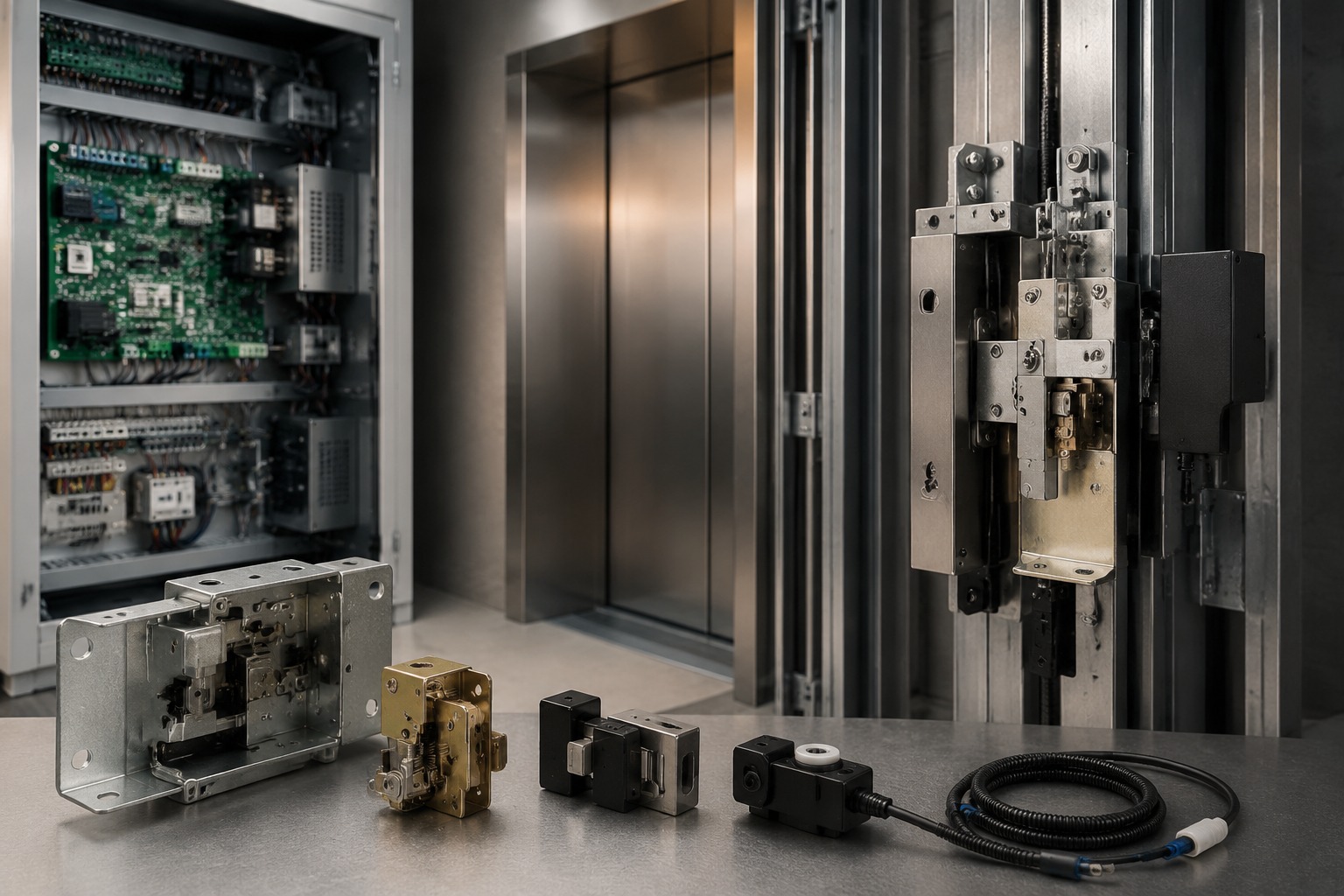
Elevator door locks are critical because they prevent landing doors from opening unless the car is correctly positioned and the unlocking sequence is safe. In practical terms, a properly working hall door lock hook, contact switch, and lock spring form a safety chain that protects passengers, technicians, and goods. If one small part wears out, misaligns, or loses contact reliability, the risk is not only equipment downtime but also a serious landing door safety hazard. For building owners, maintenance companies, and modernization contractors in the Philippines, understanding these components is essential for compliant, reliable operation.
Across Metro Manila, Cebu, Davao, Clark, Batangas, and Iloilo, elevators operate in humid, high-traffic, and sometimes corrosive environments. Residential towers, mixed-use developments, hospitals, logistics warehouses, and ports all place different demands on elevator door systems. Landing door locks in a Makati office tower may face heavy daily cycles, while freight elevator locks in a warehouse near Subic or Batangas Port often face vibration, dust, and impact from pallet handling. That is why part selection should never rely on appearance alone. Model matching, electrical rating, mechanical dimensions, and installation conditions must all be checked carefully.
This guide explains the role of door lock hooks, contact switches, and springs; how to identify replacement signs; how to select a freight elevator lock switch; how to inspect wear; how to test contact reliability after repair; and how to source certified parts in the Philippines. It also covers market trends, maintenance scheduling, common applications, and practical buying advice for local customers who need dependable replacement parts and responsive support.
Why Elevator Door Locks Are Critical
The elevator door lock is one of the most important landing door safety mechanisms. Its main job is simple to describe but vital in operation: it keeps the hall door mechanically secured and electrically monitored so the elevator system knows whether a landing door is locked. The lock assembly usually includes a hook or latch mechanism, a contact switch, a spring, and associated mounting and actuation parts. When these components work together correctly, the controller receives a valid locked signal only when the landing door is safely secured.
In the Philippines, the importance of reliable door locking is heightened by several local operating realities. Many buildings in Quezon City, Taguig, Pasig, and Ortigas have high passenger flow during peak office hours. Hotels and hospitals in Cebu and Davao often run elevators nearly continuously. Industrial facilities and cargo-handling sites near major trade hubs can expose door equipment to dust, humidity, and frequent impacts. Under these conditions, weak springs, worn hooks, oxidized contacts, or poorly matched replacement parts can quickly lead to nuisance faults, intermittent door lock signals, or unsafe conditions.
A door lock issue can cause repeated shutdowns, trapping incidents, call-backs, and service delays. More importantly, it can compromise the safety interlock chain. For this reason, technicians should never treat the lock hook, lock switch, or lock spring as minor hardware. These are safety-related components that need correct specification, careful installation, and verification after service.
| Door Lock Component | Main Function | Common Failure Mode | Operational Symptom | Safety Impact | Recommended Action |
|---|---|---|---|---|---|
| Lock hook | Mechanically secures the hall door | Wear, bending, burrs | Misalignment, incomplete locking | Door may not lock consistently | Inspect profile, replace if worn |
| Contact switch | Sends locked status to controller | Pitting, oxidation, weak contact | Intermittent fault signal | False lock confirmation or shutdown | Check continuity and rating |
| Lock spring | Returns and maintains locking force | Fatigue, loss of tension, corrosion | Sluggish engagement | Delayed or weak locking action | Measure force and replace as needed |
| Mounting bracket | Maintains alignment | Loosening, distortion | Uneven engagement | Reduced lock consistency | Re-align and tighten hardware |
| Roller or actuator surface | Transfers motion to lock system | Flat spots, wear | Noisy or rough operation | Incomplete actuation | Inspect contact surfaces |
| Wiring terminals | Carry switch signal | Loose connection, overheating | Random lock circuit faults | Loss of signal integrity | Reterminate and test insulation |
The table above shows why elevator door lock assemblies must be treated as integrated safety systems rather than isolated spare parts. A technician may replace only one visible item, but long-term reliability depends on the condition of every related element.
Signs a Hall Door Lock Hook Needs Replacement
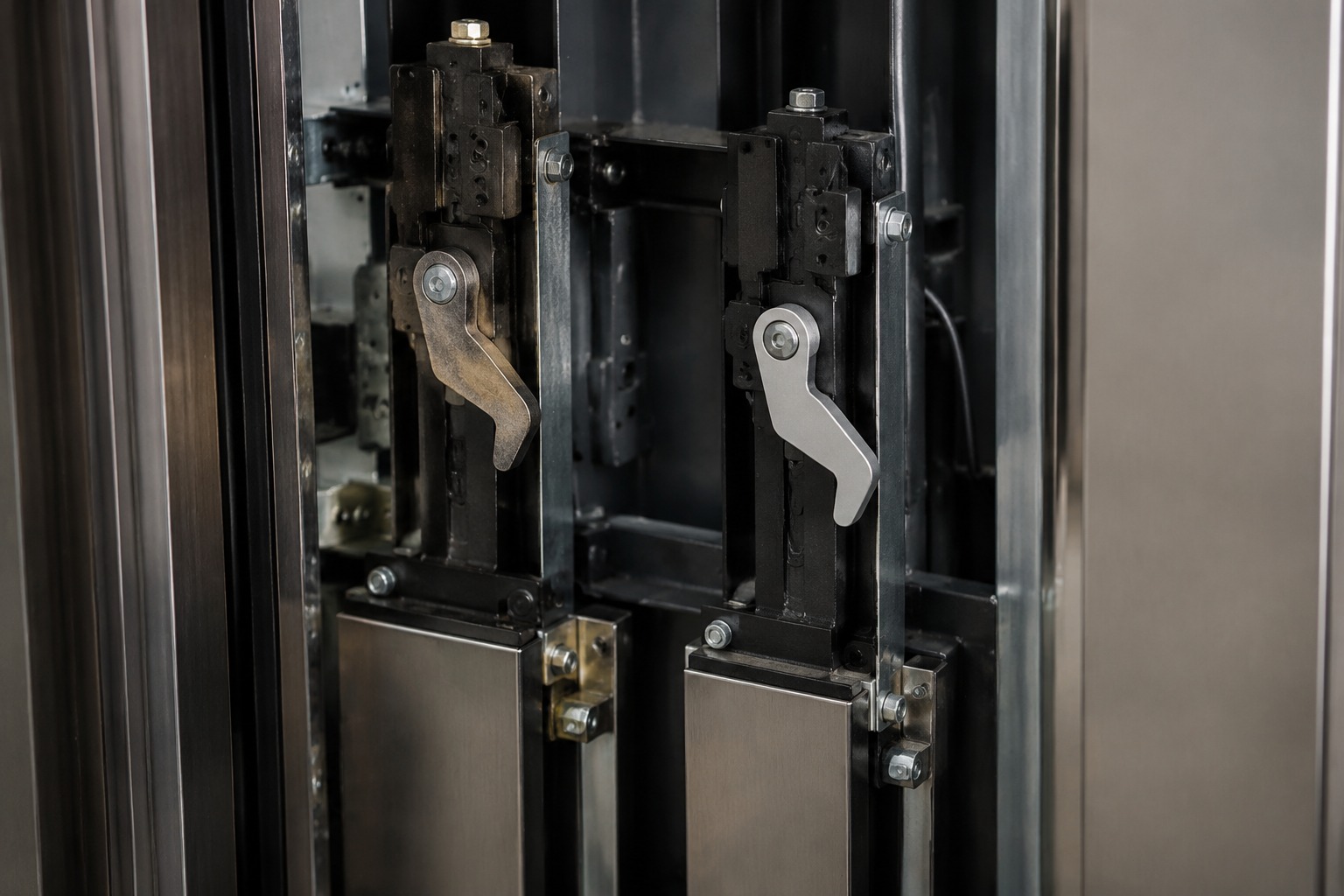
The hall door lock hook is a high-wear mechanical part because it repeatedly engages and disengages during elevator operation. Over time, the hook profile can wear down, edges may round off, or the metal may deform slightly from impact and repetitive cycling. Even small dimensional changes can reduce locking depth, affect contact timing, or create inconsistent mechanical engagement.
Typical replacement signs include visible thinning at the contact edge, uneven polishing on one side, burr formation, cracking near the mounting point, or a hook that no longer aligns smoothly with the mating lock piece. Another common sign is repeated fault resetting without a clear electrical cause. When the controller reports intermittent door lock faults but the switch itself tests acceptable, the hook geometry may be the hidden problem.
In coastal or humid environments such as Manila Bay districts, Cebu port areas, and some industrial estates, corrosion can accelerate wear. Rust and oxidation may increase friction and change the movement of the locking mechanism. In older installations, unapproved machining or field modification of the hook can also create unsafe tolerances. Replacement is usually more cost-effective and safer than trying to rework a damaged hook.
For technicians seeking a compatible part, proper model identification is essential. A hall door lock hook for elevator landing doors should be matched by brand, series, dimensions, mounting pattern, and operating direction. Visual similarity does not guarantee safe fit or proper lock timing.
| Replacement Sign | What to Look For | Likely Cause | Short-Term Effect | Long-Term Risk | Priority Level |
|---|---|---|---|---|---|
| Rounded hook edge | Loss of sharp engagement surface | Cycle wear | Shallow locking | Failure to secure door | High |
| Uneven wear pattern | One side polished more than the other | Misalignment | Rubbing and noise | Accelerated part damage | High |
| Burrs or metal chips | Rough edges on hook face | Impact or abrasion | Jerky operation | Switch timing issues | Medium |
| Crack near mounting area | Hairline or visible fracture | Fatigue or overload | Reduced structural strength | Sudden breakage | Critical |
| Corrosion buildup | Rust, pitting, discoloration | Humidity, poor sealing | Increased friction | Seized movement | Medium |
| Repeated lock faults | Door lock alarms without stable cause | Hook geometry drift | Frequent shutdowns | Unreliable safety circuit | High |
The practical takeaway is simple: if the hook shows profile wear or structural damage, replacement should be prioritized before more severe faults appear. In many service cases, replacing the worn hook at the first sign of instability reduces call-backs and protects the life of the switch and spring.
How to Select a Lock Switch for Freight Elevators
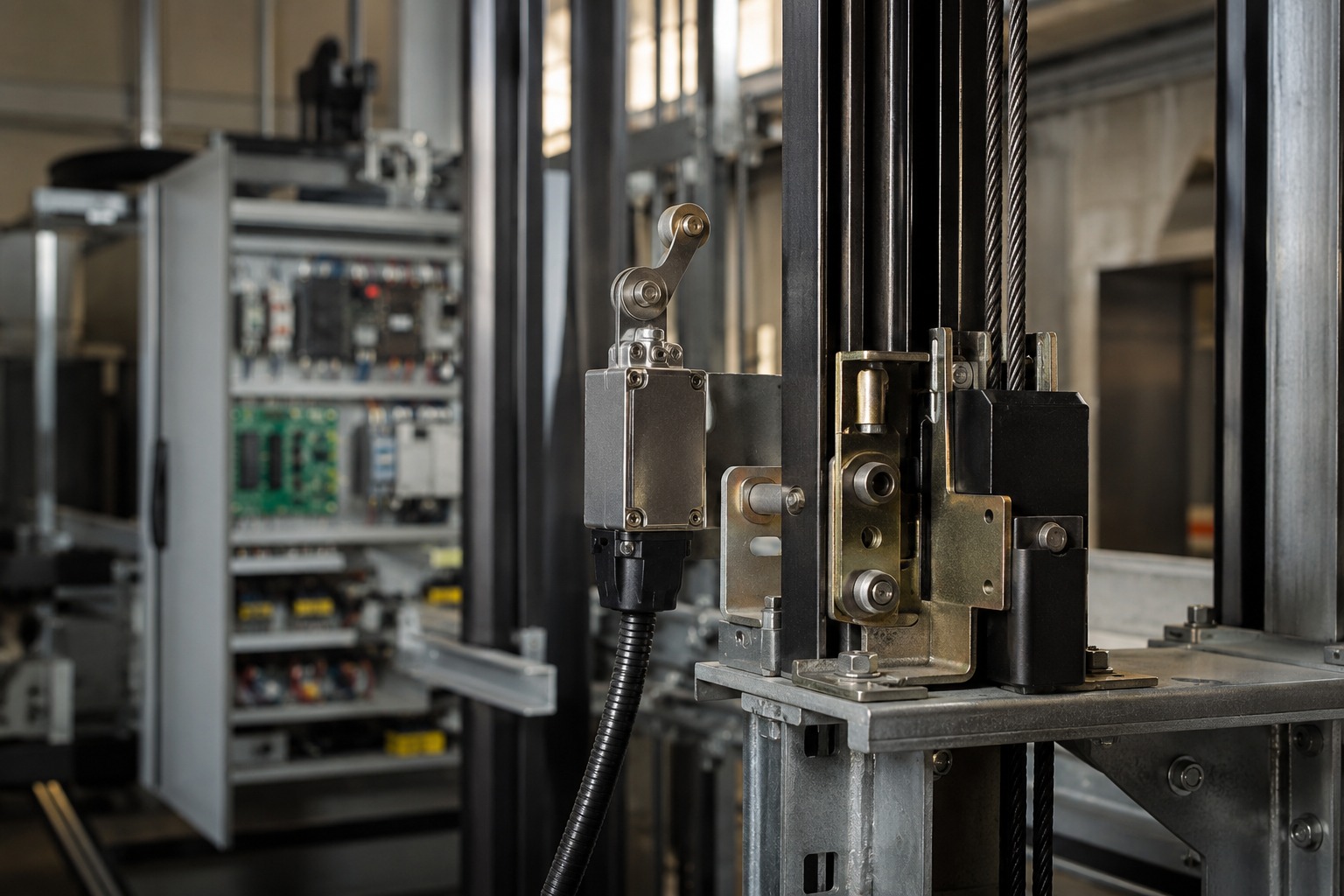
Freight elevators have different operating demands from passenger lifts. Doors are often heavier, usage patterns may be irregular but intense, and loading environments can involve dust, vibration, forklift traffic, or pallet impact. Because of that, freight elevator lock switch selection should focus on both electrical reliability and mechanical durability.
Start with the original brand and model reference whenever available. For a freight elevator, technicians should verify contact type, voltage and current rating, actuator style, travel distance, enclosure protection, terminal configuration, and compatibility with the lock assembly. A contact switch that appears physically similar but has different operating force or contact arrangement may cause intermittent confirmation or premature failure.
It is also important to assess the installation environment. Warehouses in Laguna, Cavite, and Bulacan may expose switches to fine dust and vibration. Cold-storage or food-processing sites can require materials resistant to moisture and cleaning chemicals. Port-linked facilities in Batangas and Subic may need better corrosion resistance. Heavy-duty applications benefit from switches with robust housings, reliable snap action, and stable electrical contact over a high number of cycles.
When sourcing parts, customers can review a freight elevator door lock contact switch matched for industrial lift applications. The best selection process includes not only part number confirmation but also photos, dimensional drawings, terminal details, and usage conditions.
| Selection Factor | Why It Matters | Passenger Lift Priority | Freight Lift Priority | Verification Method | Common Mistake |
|---|---|---|---|---|---|
| Electrical rating | Ensures safe current handling | Medium | High | Nameplate and datasheet | Ignoring voltage differences |
| Actuator design | Affects switching timing | High | High | Compare movement path | Using similar-looking actuator only |
| Mechanical life | Determines durability | High | Very high | Cycle rating review | Choosing low-cost light-duty switch |
| Ingress protection | Resists dust and moisture | Medium | High | Check enclosure grade | No consideration for environment |
| Terminal layout | Affects wiring reliability | Medium | Medium | Terminal inspection | Forcing incompatible wiring |
| Mounting dimensions | Ensures proper fit and alignment | High | High | Measure hole spacing | Assuming universal compatibility |
For freight elevators, a good buying decision is not just about price. It is about avoiding repeat site visits, unstable operation, and the hidden cost of downtime. This is especially true for logistics operators where one disabled lift can delay internal cargo movement and disrupt tenant operations.
The bar chart highlights where replacement demand is often strongest. Warehouses, malls, and office towers typically show high activity because of frequent door cycles and extended operating hours.
Door Lock Spring Wear and Inspection
The lock spring is easy to underestimate because it is small and relatively inexpensive. However, its condition directly affects the consistency of the lock mechanism. A spring that has lost tension may still move the mechanism, but not with enough force or speed to guarantee repeatable locking. In real field conditions, that can create door lock faults that seem random and difficult to diagnose.
Common spring wear issues include fatigue from repeated cycling, corrosion from humid environments, deformation from improper installation, and loss of elasticity due to age. Springs can also suffer from uneven loading if the lock assembly is misaligned. In buildings near the sea or in older machine-room environments with poor ventilation, corrosion can reduce spring life significantly.
Inspection should include visual checking for rust, cracking, elongation, and distortion; comparison against original dimensions where possible; and observation of return action during operation. If the mechanism feels slow, sticky, or inconsistent, the spring and related moving parts should be evaluated together. Replacing the spring alone may not solve the problem if the hook or pivot points are also worn.
For maintenance teams needing a matching component, a hall door lock spring for elevator accessories should be selected by wire diameter, free length, coil count, end style, and intended lock assembly, not by approximate appearance.
| Inspection Item | Acceptable Condition | Wear Sign | Likely Cause | Effect on Locking | Recommended Response |
|---|---|---|---|---|---|
| Surface condition | Clean, uniform finish | Rust or pitting | Humidity exposure | Higher friction, reduced life | Replace and check sealing |
| Free length | Within original tolerance | Stretching or shortening | Fatigue or overload | Incorrect preload | Measure and replace |
| Coil shape | Even spacing | Warped or compressed coils | Misalignment | Uneven return force | Correct alignment and replace |
| Return action | Quick and smooth | Slow or sticky response | Weak spring or contamination | Delayed lock engagement | Clean mechanism and test |
| Mounting points | Secure and undamaged | Wear at hook ends | Movement or vibration | Reduced spring stability | Replace spring and hardware |
| Cycle history | Within planned service life | Unknown age, high cycles | No tracking system | Unexpected failure risk | Add preventive replacement plan |
This inspection table shows that spring evaluation should be systematic. A spring can look acceptable at first glance but still fail to provide consistent return force under operating conditions. Preventive replacement is often a smart decision in high-cycle sites such as transport hubs, shopping centers, and hospitals.
Testing Contact Reliability After Repair
After replacing a hook, spring, switch, or related lock assembly part, the job is not complete until contact reliability has been tested. Successful repair means more than making the elevator run again. It means confirming stable mechanical engagement and stable electrical signaling under repeated operation.
A proper post-repair test should include manual inspection, continuity verification, alignment review, repeated cycling, and monitoring for intermittent faults. Technicians should check whether the contact switch changes state cleanly at the correct locking point, whether terminal connections are secure, and whether the lock remains stable under vibration and door movement. On sites with known intermittent lock faults, repeated cycle testing is especially important.
In the Philippines, some buildings experience voltage instability, moisture ingress, or contamination in control spaces. These conditions can mask or amplify lock contact issues. For that reason, testing should include both static checks and operational checks with normal door cycling. If available, controller fault history can help confirm whether repair has eliminated the root cause.
| Test Step | Purpose | Tool Needed | Pass Indicator | Failure Indicator | Follow-Up Action |
|---|---|---|---|---|---|
| Visual alignment check | Confirm proper mechanical position | Light, gauge, reference mark | Centered engagement | Off-center or rubbing | Re-align assembly |
| Manual actuation | Check movement smoothness | Hand tools | Free and repeatable motion | Binding or delayed return | Inspect hook and spring |
| Continuity test | Verify electrical switching | Multimeter | Stable open/close reading | Fluctuation or resistance drift | Replace or retighten switch terminals |
| Repeated cycle test | Expose intermittent issues | Normal elevator operation | No lock fault over repeated cycles | Random alarms or resets | Review timing and contact pressure |
| Controller monitoring | Validate signal recognition | Diagnostic display | Consistent lock status | Delayed or missing status change | Check wiring and logic interface |
| Final safety verification | Confirm safe completion | Service checklist | All checks signed off | Incomplete documentation | Do not release until verified |
A good practice is to document the part number used, observations before and after repair, measured continuity readings, and the number of successful test cycles. This record helps future technicians, supports preventive maintenance planning, and reduces repeated troubleshooting.
The area chart reflects a broader market shift: more maintenance teams are moving from reactive replacement to preventive door lock servicing as building owners recognize the cost of repeated shutdowns.
How to Source Certified Door Lock Parts
Sourcing certified or properly documented elevator door lock parts requires more than finding a low-priced item online. Buyers should verify supplier credibility, traceability, compatibility, quality inspection process, packaging standards, and technical support capability. For safety-related parts such as landing door lock hooks, contact switches, and springs, documentation and matching accuracy are especially important.
In the Philippines, customers often balance three concerns: cost, availability, and reliability. A building in Bonifacio Global City may prioritize fast response to reduce downtime. A distributor in Cebu may need repeatable supply across multiple projects. A modernization contractor in Davao may need assistance matching old parts to upgraded systems. In all cases, certified sourcing means understanding what is being supplied, how it is checked, and whether it is truly suitable for the installed elevator.
Buyers should ask for clear product photos, dimensions, applicable models, electrical details where relevant, and packaging protection information. For imported parts entering through Manila, Cebu, or Davao logistics channels, shipment protection matters because bent hooks, damaged terminals, and corroded small metal components can create installation problems before the part even reaches the site.
Our role in this market is focused on practical reliability. On the technology side, we support careful model matching, cross-checking against original references, and detailed confirmation of critical specifications for brands such as Hitachi, Toshiba, KONE, Mitsubishi, and others. On the manufacturing side, we emphasize stable quality inspection, dimensional review, and protective packaging to reduce mismatch and transit damage. On the service side, we work with maintenance companies, distributors, building owners, and modernization contractors to provide responsive communication and help reduce downtime through faster sourcing and compatibility support.
| Sourcing Checkpoint | What to Request | Why It Matters | Risk if Ignored | Good Supplier Practice | Buyer Benefit |
|---|---|---|---|---|---|
| Model matching | Brand, series, dimensions | Ensures fit and operation | Installation failure | Photo and drawing confirmation | Less rework |
| Electrical details | Contact rating, switch type | Protects circuit reliability | Intermittent faults | Datasheet support | Safer replacement |
| Material quality | Surface finish, metal grade | Affects wear resistance | Short service life | Incoming inspection | Better durability |
| Traceability | Batch or sourcing record | Supports quality control | Unclear origin | Order tracking system | Easier warranty handling |
| Packaging | Protective wrapping and labeling | Prevents transit damage | Bent or contaminated parts | Protective export packing | Ready-to-install condition |
| Technical response | Application support | Improves part accuracy | Wrong item ordered | Responsive pre-sale checking | Faster project completion |
This table makes one point clear: sourcing quality is not only about the part itself but also about the process surrounding it. For safety-related elevator parts, process discipline often determines whether the installed result will be reliable.
Maintenance Schedule Recommendations
Maintenance scheduling for elevator door locks should reflect usage intensity, environment, elevator type, and building risk profile. A luxury residential tower may require different attention from a freight lift in an industrial site, even if both use similar lock principles. The best schedule combines routine visual checks, periodic functional tests, and preventive replacement planning based on cycle history.
For high-traffic buildings in Metro Manila, monthly observation of lock engagement, switch status, and door behavior is advisable. For freight elevators in warehouses and production plants, inspections may need to be more frequent because of mechanical shock and contamination. Hospitals, transport-linked buildings, and older commercial properties should also treat landing door lock maintenance as a priority item because service interruptions can have operational consequences beyond inconvenience.
Preventive maintenance should include lubrication only where approved, cleaning of debris, tightening of hardware, contact testing, and review of worn parts before they reach failure. A schedule should also track repeated lock-related call-backs by floor. If the same landing door reports issues multiple times, a broader assembly review is better than repeated reset-only service.
| Site Type | Usage Level | Visual Check | Functional Test | Detailed Inspection | Preventive Replacement Advice |
|---|---|---|---|---|---|
| Residential tower | Medium to high | Monthly | Quarterly | Every 6 months | Replace worn parts at first drift sign |
| Office building | High peak traffic | Monthly | Quarterly | Every 6 months | Track floors with repeated faults |
| Hospital | Continuous service | Monthly | Monthly | Quarterly | Prioritize stable lock signaling |
| Hotel | Moderate, uneven peaks | Monthly | Quarterly | Every 6 months | Inspect after guest complaint or shutdown |
| Warehouse freight lift | Heavy-duty | Biweekly | Monthly | Quarterly | Replace switches and springs proactively |
| Industrial plant | Harsh environment | Biweekly | Monthly | Quarterly | Corrosion and vibration checks essential |
The schedule above should be adapted to actual duty cycles and local conditions. A building near the coast or a site with poor enclosure protection may require shorter intervals than a similar building inland.
The line chart suggests steady growth in the local elevator parts market. This is supported by urban development, modernization of aging installations, and increased awareness of preventive maintenance in major Philippine cities.
Market Outlook, Applications, and Buying Advice in the Philippines
The Philippine elevator parts market continues to evolve as new buildings rise and older elevators enter modernization cycles. In Metro Manila, dense vertical development creates constant demand for passenger elevator components. In Clark, Cavite, Laguna, and Batangas, industrial growth supports demand for freight and service lift parts. In Cebu and Davao, commercial expansion, hospitality projects, and logistics activity are also driving replacement and maintenance requirements.
From a product perspective, door lock hooks, contact switches, and springs are used across passenger elevators, freight elevators, hospital lifts, service lifts, and some specialized access systems. The application details differ, but the core safety function is the same: landing doors must remain secure and correctly monitored.
For buyers, the smartest approach is to combine technical verification with commercial planning. Keep service records, photograph worn parts before removal, note any markings, and compare dimensions. Ask suppliers about compatibility support, not only availability. For fleets with multiple brands, creating a simple internal reference library can reduce emergency ordering mistakes.
A practical case seen in many local projects involves a building that repeatedly changes one failed switch but ignores a worn hook and weak spring. The immediate fault clears, but the unstable mechanics continue to stress the new switch. After several months, the same landing door fails again. In contrast, a complete lock assembly review during the first repair often reduces total service cost over time.
Another common case comes from freight elevators in warehouse zones. Heavy doors and rough handling may slightly deform mounting positions or accelerate spring fatigue. If the site only reacts to shutdowns, downtime becomes frequent. But when the operator adopts a preventive schedule and uses correctly matched parts, reliability improves noticeably.
The comparison chart illustrates why specialized sourcing matters for safety-related elevator parts. The strongest suppliers are not simply those with stock; they are those with proven matching, inspection, packaging, and service capabilities.
2026 Trends: Technology, Policy, and Sustainability
Looking toward 2026, three trends are shaping how elevator door lock parts will be selected and maintained in the Philippines.
First is technology-driven maintenance. More building owners and contractors are using digital service logs, controller fault history, and trend monitoring to identify recurring landing door issues. This supports predictive replacement of hooks, switches, and springs before failure. As modernization projects increase, compatibility data and cross-reference support will become more valuable, especially for mixed-brand portfolios.
Second is tighter attention to policy, safety compliance, and documentation. Building owners are becoming more aware that safety-related components require traceable sourcing and proper maintenance records. In larger commercial developments, procurement teams increasingly ask for specification confirmation, inspection evidence, and organized part identification before approval.
Third is sustainability. Instead of replacing large assemblies too late after collateral damage occurs, many maintenance teams are shifting to timely replacement of key wear components to extend overall door system life. Better packaging also matters because it reduces transit damage and waste from unusable parts. Choosing durable, accurately matched parts helps reduce repeated shipments, unnecessary technician call-outs, and avoidable material consumption.
FAQ About Elevator Door Locks
What does an elevator door lock do?
It mechanically secures the landing door and provides an electrical confirmation signal so the controller knows the door is safely locked.
Why is the hall door lock hook important?
The hook is the mechanical engagement point. If it wears, bends, or cracks, the landing door may not lock consistently, even if the switch is still functional.
How can I tell if the lock spring is weak?
Signs include slow return action, inconsistent engagement, visible corrosion, elongation, or repeated door lock faults without a clear electrical cause.
Can I replace only the switch if the elevator shows a lock fault?
Not always. Many lock faults are caused by a combination of worn hook geometry, weak springs, misalignment, and switch wear. A full assembly inspection is recommended.
What is different about freight elevator lock switch selection?
Freight elevators usually need stronger mechanical durability, suitable ingress protection, and better resistance to vibration and harsh environments.
How should contact reliability be tested after repair?
Use visual alignment checks, manual actuation, continuity testing, repeated cycling, and controller status monitoring to confirm stable operation.
Why should I buy from a specialized elevator parts supplier?
Because safety-related parts need accurate model matching, stable quality inspection, protective packaging, and technical support to reduce downtime and repeat failures.
What information should I prepare before ordering?
Provide brand, model, part markings, photos, dimensions, installation location, and a description of the fault. This improves matching accuracy.
How often should door lock parts be inspected?
That depends on traffic and environment, but monthly visual checks and periodic functional testing are common. Freight and harsh-environment sites often need more frequent inspection.
Are preventive replacements worth it?
Yes. Replacing worn hooks, springs, or switches before failure can reduce shutdowns, call-backs, and cumulative wear on the entire lock assembly.
In summary, elevator door locks are critical because they sit directly in the safety chain between landing door security and controller permission to operate. In the Philippines, where elevators serve busy residential towers, hospitals, hotels, malls, warehouses, and industrial sites, dependable lock performance is essential. By recognizing hall door lock hook replacement signs, selecting the right freight elevator lock switch, inspecting door lock spring wear, testing contact reliability after repair, and sourcing certified parts through a capable supplier, maintenance teams and building owners can improve safety, reduce downtime, and support longer system life.