
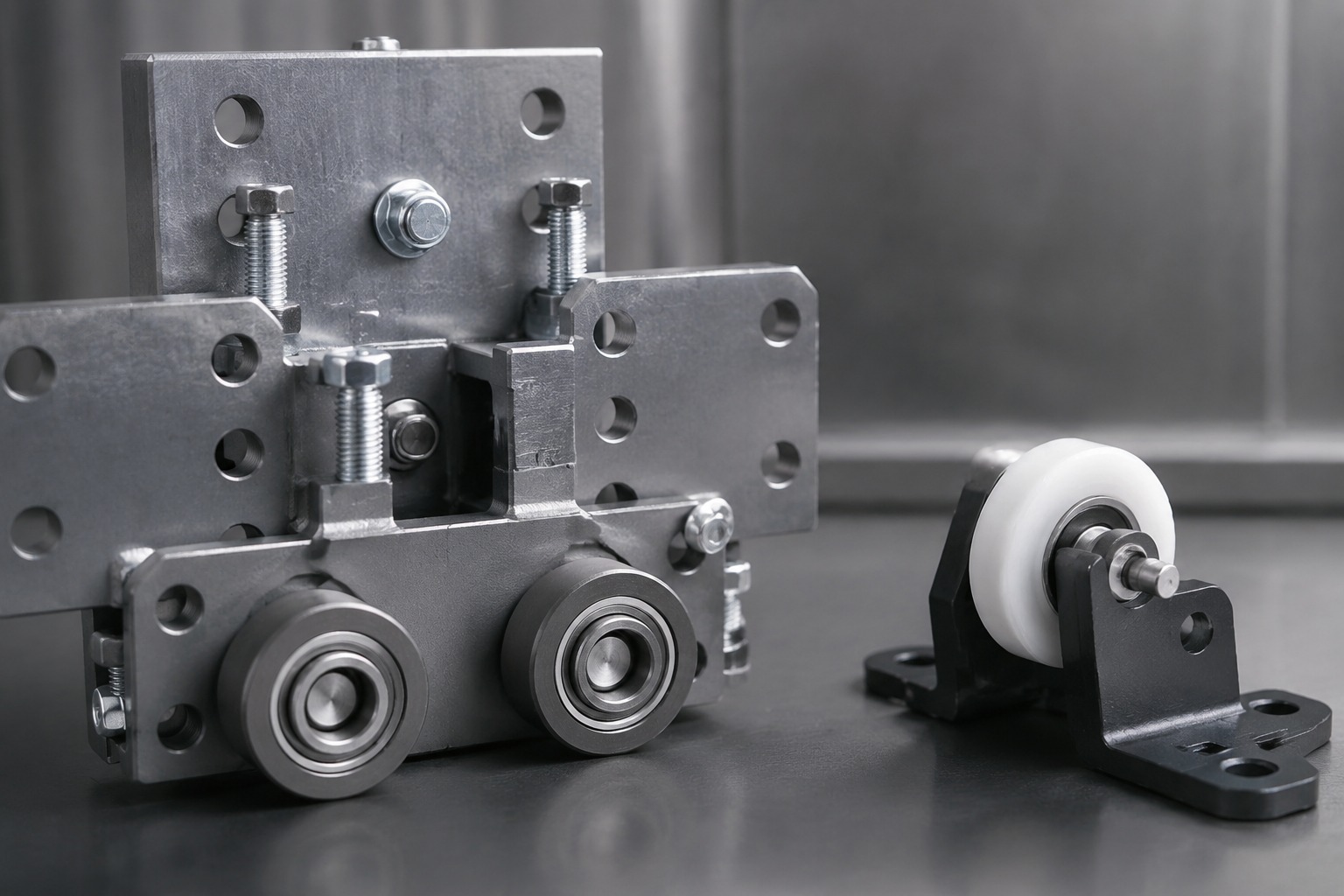
Elevator door performance depends heavily on the condition, fit, and alignment of the door hanging plate, roller pulley, guide parts, and related hardware. When these parts are correctly matched, the elevator door opens and closes smoothly, stays level, tracks properly, and produces less noise. When they are worn, mismatched, or installed out of alignment, common issues appear fast: scraping, vibration, delayed opening, door reversal, uneven gaps, or repeated lock faults. For building owners and service teams in the Philippines, understanding these parts is practical, not theoretical, because door problems are among the most frequent sources of callbacks and tenant complaints in residential towers, offices, hospitals, hotels, and mixed-use developments.
In local markets such as Metro Manila, Cebu, Davao, Clark, Iloilo, and Cagayan de Oro, elevator maintenance companies often face the same challenge: they need compatible replacement parts quickly, especially for modernization work in older buildings or for imported units where documentation may be incomplete. Ports and trade hubs like Manila International Container Port, Batangas, and Cebu play a role in lead times, but correct model matching matters even more than shipping speed. A door hanging plate that looks similar but is designed for a different opening distance, pulley diameter, or operator geometry can create persistent door noise and accelerated wear.
This guide explains what elevator door hanging plates do, how car door and hall door hanging panels differ, how opening distance affects selection, what to check on rollers and pulleys, and where Hitachi NF door hanging plate details fit into maintenance planning. It also covers installation checks, preventive maintenance, local purchasing considerations, and 2026 trends in modernization, sustainability, and maintenance policy. If you are comparing replacement options, the right match often starts with the opening width and pulley size. For example, a hall-side option for 800 to 900 door opening distance with a 65 mm pulley can be reviewed here: hall door hanging plate for 800–900 opening distance. For car-side applications with wider openings, you may also compare this car door hanging plate for 1000–1100 opening distance.
In practical terms, the best buying decision balances four factors: exact model compatibility, stable quality of rollers and metalwork, protective packaging to avoid transport damage, and responsive technical support during matching. That is especially relevant in the Philippines, where lifts in coastal areas such as Pasay, Parañaque, Subic, and parts of Cebu may see faster corrosion, while high-traffic towers in Makati, Bonifacio Global City, Ortigas, and Quezon City demand long service intervals and consistent ride quality.
The role of elevator door hanging plates
A door hanging plate is the structural component that carries the elevator door panels and allows them to move along the track through rollers or pulley assemblies. It supports the panel weight, keeps the door stable during travel, and helps maintain the relationship between the moving panel, sill, guide shoe, lock zone, and operator mechanism. In many systems, it is one of the most important pieces affecting how quietly and accurately the door moves.
Its function is broader than simply “holding the door.” The plate defines roller spacing, supports mounting hardware, influences verticality, and affects how door forces are transferred during opening and closing. If the plate is bent, incorrectly drilled, or paired with the wrong roller arrangement, the door may wobble, bind on the track, hit the jamb, or produce metallic contact noise. In heavy-use buildings, even a small misalignment can shorten the life of rollers, door shoes, and locks.
| Component | Main Function | Effect on Smooth Movement | Effect on Noise | Typical Failure Mode | Maintenance Priority |
|---|---|---|---|---|---|
| Door hanging plate | Supports door panel and mounting geometry | Keeps door level and stable on the track | Misalignment can create scraping and rattling | Bending, loose fasteners, wrong model | High |
| Roller pulley | Allows low-friction travel on track | Reduces drag and opening resistance | Worn bearings create humming or grinding | Flat spots, bearing wear, diameter mismatch | High |
| Track | Guides roller path | Maintains consistent movement path | Dirt or damage causes knocking sounds | Contamination, corrosion, deformation | High |
| Guide shoe or lower guide | Controls panel swing at sill | Prevents door sway and mis-tracking | Loose fit can create chatter | Wear, cracking, looseness | Medium |
| Fasteners and brackets | Secure plate and roller assembly | Preserve set alignment | Loose bolts create vibration noise | Loosening, stripped threads | High |
| Door operator linkage | Transfers motion from operator to panel | Controls timing and speed | Incorrect stroke can cause impact noise | Wear, poor adjustment | Medium |
The table above shows why the hanging plate should never be treated as an isolated spare part. In real maintenance work, it interacts with the roller, track, lower guide, and operator geometry as one door system. For that reason, experienced buyers in the Philippines often ask for photos, dimensions, opening distance, pulley diameter, and brand reference before confirming an order. That process helps avoid site delays, especially in modernization projects where multiple brands may have been mixed over time.
From an operational perspective, smooth movement and noise control bring commercial value. In premium residential towers in Makati or Taguig, quiet door operation contributes to the perception of quality. In hospitals in Manila, Cebu, or Davao, reliable doors help reduce transport delays. In retail and transport hubs, they help maintain passenger flow. For maintenance contractors, proper replacement reduces repeat visits and labor cost.
The line chart reflects a realistic market pattern: demand for door components tends to rise with aging installed bases, modernization activity, and higher expectations for uptime. In the Philippines, this is visible in older commercial buildings in Manila and business districts outside the capital where lift refurbishment has become more common.
Car door and hall door hanging plate differences
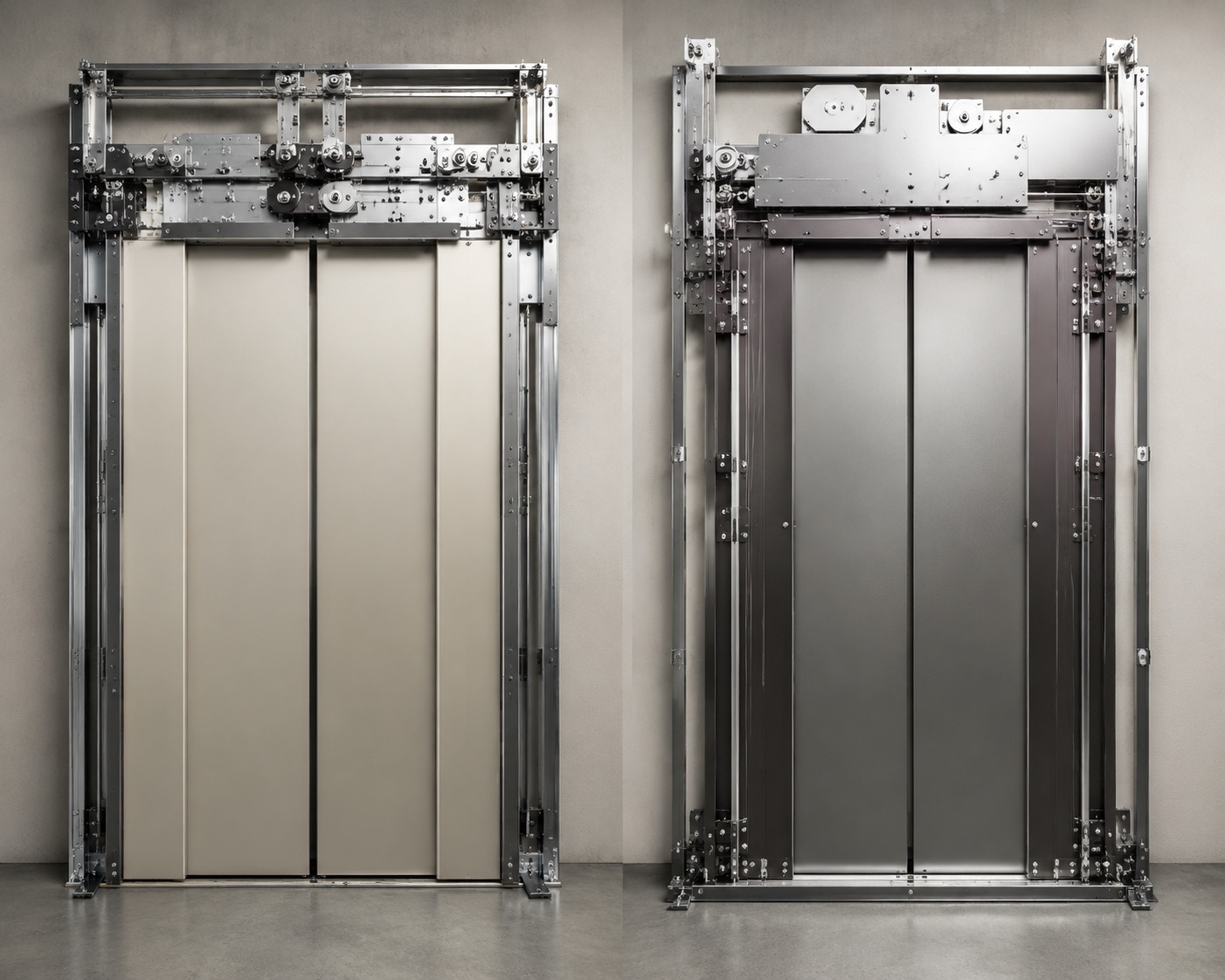
Car door hanging plates and hall door hanging plates are often confused because both are part of the same elevator doorway system. However, they work in different locations and usually have different dimensional and structural requirements. The car door assembly is mounted on the elevator car and moves with it from floor to floor. The hall door assembly is installed at each landing. While both may use rollers, tracks, and guides, they are not automatically interchangeable.
The car door side must coordinate directly with the door operator mounted on top of the car. It often carries different load distribution, coupling requirements, and opening kinematics. The hall door side must align with the landing frame, lock mechanism, and sill at each floor. If a maintenance team installs a hall-side plate where a car-side plate is required, or vice versa, the system may still “fit” physically but perform poorly, causing door drag, improper coupling, or lock engagement faults.
| Feature | Car Door Hanging Plate | Hall Door Hanging Plate | Operational Impact | Common Buying Mistake | Inspection Note |
|---|---|---|---|---|---|
| Mounting location | On the elevator car | At each landing entrance | Defines different movement relationships | Assuming both sides use the same plate | Confirm installation position first |
| Linkage with operator | Directly linked to the car door operator | Indirectly engaged through coupling | Affects timing and stroke | Ignoring operator geometry | Check opening mechanism arrangement |
| Panel load behavior | Moves with the car continuously | Stationary except during opening at a floor | Influences wear pattern | Using same wear assumptions | Inspect rollers differently |
| Lock relationship | Works with coupler and interlock sequence | Works directly with hall lock and landing frame | Critical for safe landing operation | Focusing only on dimensions | Verify lock interface clearance |
| Typical opening width range | Often larger in some configurations | Depends on landing design and brand | Affects plate length and roller spacing | Ordering by appearance only | Measure actual door opening distance |
| Service replacement priority | High in heavy-use passenger lifts | High where landing wear is uneven by floor | Changes stock planning | Keeping only one side in stock | Review floor-by-floor wear history |
The most useful way to read this table is to focus on application. Car-side and hall-side assemblies may share a general function, but their service environment differs. In a condominium with frequent short trips, such as many towers in Mandaluyong or Pasig, the car door operator and car-side hardware may see more repetitive cycling. In an office tower where some floors receive heavier traffic than others, hall-side components at the busiest floors may wear unevenly. That is why a spare parts plan should not assume identical consumption for all landing doors.
When comparing options, car-side buyers often review opening width and plate dimensions closely. A relevant example is this car door hanging plate for 1000–1100 door opening distance, which suits applications requiring careful matching of opening range and geometry. On the hall side, service teams frequently compare pulley diameter and opening width, especially where 65 mm pulleys are specified, such as this hall door hanging plate for 800–900 opening distance with 65 mm pulley.
Choosing parts by door opening distance
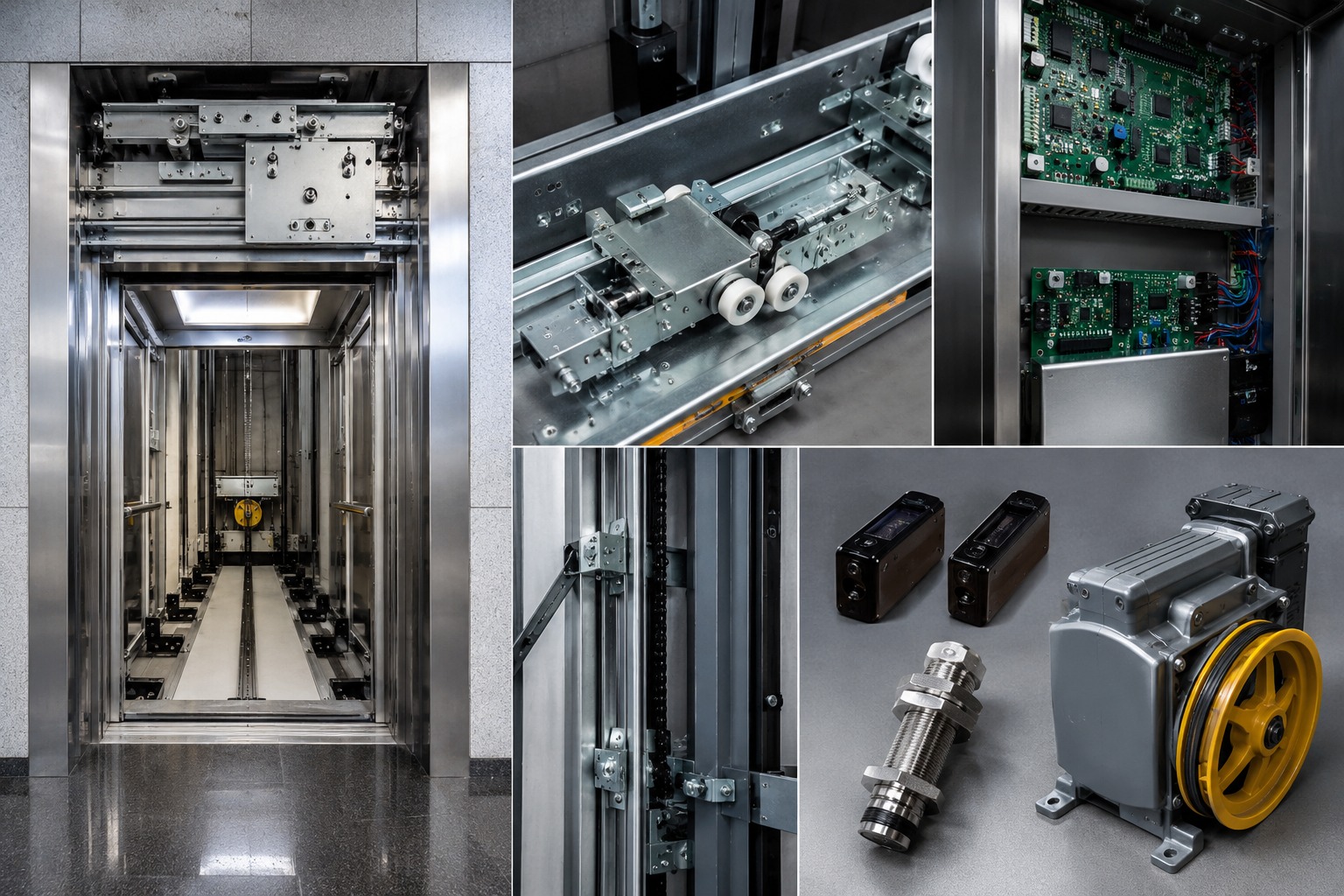
Door opening distance is one of the most critical variables in selecting an elevator door hanging plate. It influences the plate length, roller spacing, mechanical travel, operator coordination, and panel overlap. A part that is too short, too long, or designed for another opening range may install with difficulty or cause poor travel performance even if the hole pattern seems similar.
For this reason, the opening distance should be confirmed from the actual elevator door, not guessed from building drawings alone. Many buildings in the Philippines have undergone repairs, panel replacements, or partial upgrades over the years. A measured field value is safer than an old specification sheet, especially in renovations across Binondo, Makati, Alabang, Cebu IT Park, or Davao business districts where equipment history can be mixed.
| Door Opening Distance | Typical Application | Plate Selection Concern | Roller/Pulley Check | Risk of Wrong Match | Buying Recommendation |
|---|---|---|---|---|---|
| 700–800 mm | Compact passenger lift or service area | Shorter plate geometry | Check wheel offset carefully | Door edge interference | Verify exact panel width and track position |
| 800–900 mm | Common passenger lift range | Frequent hall-side replacement category | 65 mm pulley often appears | Uneven landing alignment | Match by opening distance and pulley size |
| 900–1000 mm | Residential and office traffic | Operator stroke becomes more critical | Review bearing smoothness | Slow or noisy closure | Confirm both plate and linkage dimensions |
| 1000–1100 mm | Wider passenger or stretcher-friendly access | Longer plate and stable panel guidance needed | Check load distribution on rollers | Panel swing or deflection | Use application-specific car-side plate |
| 1100–1200 mm | Hospital or large commercial use | Heavier panel considerations | Inspect wheel material and bearing class | Accelerated roller wear | Request detailed dimensional review |
| Custom or non-standard | Modernization or mixed-brand systems | High matching complexity | All dimensions must be confirmed | Repeated installation failure | Send photos, measurements, and brand data |
This table shows why opening distance is a selection rule, not just a catalog detail. The wider the opening, the more important correct load support and travel geometry become. On wider openings, small alignment errors can create visible sway or asymmetrical gaps. On narrower openings, the risk is often binding or edge interference if the plate geometry does not match the panel path.
Buyers sometimes ask whether the opening distance alone is enough to order. The answer is no. It is a starting point, but good matching also checks brand, mounting orientation, roller diameter, bracket arrangement, and door operator style. Still, opening range remains one of the fastest ways to narrow down options. For instance, if the elevator uses an 800–900 mm landing opening and a 65 mm pulley configuration, the selection path becomes much clearer. If the car opening is 1000–1100 mm with a 350 mm related dimensional reference, a different car-side configuration is likely required.
In our supply work for maintenance companies and modernization contractors, technical capability begins with careful model matching. Rather than pushing a generic substitute, the better approach is to compare site photos, dimensions, pulley details, and brand references before shipment. This reduces installation risk, avoids unnecessary returns, and helps customers in the Philippines shorten downtime during urgent repairs.
The bar chart highlights where replacement demand is usually strongest. Malls and office buildings often show high door part turnover because of traffic intensity, while hospitals and residential towers need reliable availability because door faults directly affect service continuity and user confidence.
Checking roller pulley size and wear
The roller pulley is one of the most sensitive wear items in a door hanging system. Its diameter, tread condition, bearing smoothness, and fit on the track all affect door motion. A pulley that is only slightly worn may already increase noise, especially during acceleration and deceleration. Once flat spots, bearing looseness, or side wobble appear, the door can begin shaking or striking the track unevenly.
Pulley size is not a cosmetic detail. A 65 mm wheel, for example, changes the running geometry compared with other diameters. If the replacement diameter differs from the original design, vertical position, contact angle, or travel smoothness may change. That can affect clearances with the lower guide and sill, and in some systems it can alter lock engagement timing indirectly by changing door travel behavior.
| Inspection Point | What to Check | Normal Condition | Wear Symptom | Likely Result on Site | Recommended Action |
|---|---|---|---|---|---|
| Pulley diameter | Measure actual wheel size | Matches original specification | Undersized or mixed sizes | Door level inconsistency | Replace with correct diameter |
| Bearing rotation | Spin by hand and feel resistance | Smooth and quiet | Roughness or sticking | Grinding or humming noise | Replace roller assembly |
| Tread surface | Look for flat spots and cracking | Even contact surface | Flat or chipped edge | Knocking or vibration | Replace worn wheel |
| Side play | Check lateral looseness | Minimal movement | Visible wobble | Door sway and track noise | Inspect bearing and shaft fit |
| Track contact pattern | Inspect wear marks | Centered running path | One-sided polishing | Misalignment and drag | Realign plate and track relation |
| Fastener security | Confirm axle and mounting tightness | Stable and secure | Loose nut or bracket | Rattle and unstable travel | Retighten or replace hardware |
This checklist is useful during scheduled maintenance and especially before replacing the whole hanging plate. In many cases, the plate itself is still serviceable, but the roller pulley has reached the end of its life. In other cases, repeated roller failure is a sign that the plate or track alignment is wrong. Skilled technicians look at the pattern, not just the damaged part.
Another field issue in the Philippines is environmental exposure. Buildings near the coast, ports, and humid districts may see faster oxidation on metal parts and contamination on tracks. In locations such as Manila Bay area, Cebu waterfront zones, or Subic, preventive cleaning and earlier roller checks can extend service life. Dust in industrial corridors can also affect bearings and track condition.
On the manufacturing side, reliable replacement quality depends on material consistency, machining accuracy, and inspection of rolling components before packing. Good suppliers pay attention to dimensional tolerance, wheel rotation, bracket finish, and protective packaging so that parts arrive without deformation. That matters for customers receiving shipments across Luzon, Visayas, and Mindanao, where transport handling conditions can vary.
Notes on Hitachi NF door hanging plates
Hitachi NF door hanging plate applications are frequently discussed in replacement and modernization work because many service teams need dependable model matching rather than generic substitution. With this type of application, confirmation should include the exact model reference, opening width, installation side, and visible structural details. A matching item may be reviewed here: Hitachi NF door hanging plate.
One important note is that brand-based identification alone is not enough. Elevators from the same brand may have different door operator arrangements or dimensional variations depending on year, project configuration, and regional sourcing history. In the Philippines, some buildings have undergone modernization in phases, so the existing hall doors, car doors, and control systems may not all be original to the first installation.
| Matching Factor | Why It Matters | What to Confirm on Site | Common Error | Operational Risk | Best Practice |
|---|---|---|---|---|---|
| Brand and series reference | Helps narrow configuration family | Nameplate or maintenance record | Using only a verbal brand description | Wrong hole pattern or geometry | Collect clear photos and tags |
| Car or hall side | Different application roles | Physical mounting location | Ordering the opposite side | Installation incompatibility | Label side during dismantling |
| Opening distance | Controls plate suitability | Measure clear door opening | Estimating from panel size | Poor travel and gaps | Measure actual opening width |
| Pulley diameter | Affects running geometry | Measure wheel outside diameter | Ignoring wheel size | Noise and guide mismatch | Confirm exact pulley spec |
| Bracket and hole spacing | Determines mounting compatibility | Photograph with ruler reference | Assuming similar shape means same fit | Rework and site delay | Compare dimensions before shipment |
| Condition of related parts | Avoids repeat failure | Track, guide shoe, lock, coupling | Replacing plate alone | Persistent noise or drag | Review full door system condition |
The main lesson from this table is simple: successful Hitachi NF replacement work depends on verification, not assumption. A supplier with strong technical capability should be able to review images, dimensions, and application details and then suggest the most suitable part path. This is especially useful for maintenance contractors handling multiple brands and mixed portfolios across Metro Manila, Laguna, Cavite, Pampanga, Cebu, and Davao.
For buyers working under time pressure, requesting a pre-shipment confirmation process can reduce risk. That usually includes checking dimensions, comparing product photos, confirming pulley size, and reviewing the installation side. It is a practical step that supports safety and lowers the chance of emergency repeat orders.
Installation alignment checklist for smooth operation
Even a correct part will perform poorly if installed out of alignment. Door hanging plates must be mounted so that the panel remains level, rollers contact the track correctly, clearances remain consistent, and the lower guide tracks cleanly in the sill groove. During installation, technicians should check not only the plate itself but also the relationship between the car door, hall door, operator, coupler, lock, and sill.
Alignment is one of the biggest reasons a new replacement can still result in noise. A fresh roller on a skewed plate will quickly develop uneven wear. A correctly sized plate on a dirty or bent track will still drag. Good installation is therefore a system adjustment exercise, not just a parts change.
| Checkpoint | Target Condition | Problem if Ignored | How to Verify | When to Adjust | Result of Proper Setup |
|---|---|---|---|---|---|
| Plate mounting level | Horizontal and firmly secured | Door tilt and uneven travel | Use level and fastener torque check | During initial mounting | Smoother panel movement |
| Roller-to-track contact | Centered and free-running | Side wear and noise | Observe contact path during manual travel | After plate installation | Reduced drag and vibration |
| Door verticality | Panel hangs plumb | Lower guide scraping | Check top and bottom gap consistency | Before final tightening | Stable lower guide movement |
| Sill and guide shoe relation | Clean tracking without rubbing | Chatter, dust buildup, reversal | Manual slide test through full travel | After leveling panel | Quiet opening and closing |
| Door coupling engagement | Correct timing and contact | Hall door unlocking issues | Cycle door slowly and observe pickup | After mechanical setup | Reliable landing operation |
| Final dynamic test | Smooth travel at normal speed | Undetected intermittent faults | Repeated open-close test under power | Before returning lift to service | Fewer callbacks and complaints |
The checklist above is especially valuable in modernization projects where existing frames and tracks may already have wear history. In older buildings in Manila, Bacolod, or Baguio, installers may find slight structural deviations accumulated over years of service. Small corrective adjustments during installation can prevent a premature repeat failure.
Our service capability in this area is built around responsive matching and practical communication. Maintenance companies and distributors often need dimensional confirmation, careful packing for inter-island shipment, and quick support on compatible replacement choices. When that process is organized well, customers can reduce downtime and avoid unnecessary on-site modifications.
The area chart shows a realistic shift in the market: more building operators are moving from reactive repair to planned replacement of door system parts. This trend is expected to continue into 2026 as service teams aim to lower downtime, improve passenger experience, and control maintenance budgets.
Maintenance practices for elevator door systems
Preventive maintenance for elevator doors should combine cleaning, inspection, adjustment, and timely replacement. The door hanging plate itself may last for many years if protected from impact and severe corrosion, but rollers, guide shoes, and fastening points need regular attention. The highest-value routine action is not always replacement; often it is early detection of misalignment before it damages multiple parts.
A strong maintenance routine in the Philippines should account for local operating conditions. High-rise buildings in dense urban districts may experience intensive daily traffic. Coastal and humid environments increase the need for corrosion checks. Inter-island logistics can delay urgent supply, so planners should keep critical door parts in stock for high-priority sites such as hospitals, government facilities, hotels, and premium residential towers.
Recommended maintenance practices include cleaning the track, checking roller noise, inspecting the lower guide and sill groove, confirming bolt tightness, measuring door gaps, and observing open-close cycles under normal speed. Recording wear floor by floor is also useful for hall doors because traffic is rarely equal across all levels. In office buildings, lobby and parking levels usually wear faster. In hotels, service floors and ballroom access floors may show concentrated usage.
From a manufacturing perspective, consistency matters as much as maintenance. Reliable door system spares should come from suppliers that pay attention to stable sourcing, dimensional inspection, and packaging that protects machined edges and rollers in transit. This reduces installation surprises and supports maintenance teams that need predictable fit-up on site.
Looking ahead to 2026, three trends stand out. First, modernization projects will continue to grow as aging elevators in commercial and residential properties require better uptime and quieter operation. Second, sustainability goals will push building owners to extend equipment life through targeted replacement rather than full system disposal when possible. Third, maintenance policy and safety expectations are likely to become more documentation-driven, making traceable part matching and inspection records more important. Smart maintenance practices may also include better logging of door cycle counts and fault history to predict roller or hanging plate replacement intervals.
For local suppliers serving the Philippines market, this means value will increasingly come from dependable technical advice, not just product availability. Customers want to know whether a part is compatible, whether it has been checked carefully, and whether it will arrive protected and ready for installation. Those expectations are strongest in business centers such as Makati, Pasig, Cebu, and Davao, but they are spreading nationwide as more buildings adopt structured maintenance planning.
The comparison chart reflects what many maintenance companies actually prioritize when selecting a parts source: correct model matching, stable quality checks, solid packaging, broad brand coverage, responsive communication, and the ability to reduce downtime.
Common questions about elevator door hanging plates
What does a door hanging plate do in an elevator?
It supports the door panel and allows it to move along the track through roller or pulley assemblies. It affects panel stability, alignment, smoothness, and noise.
Can a car door hanging plate be used as a hall door hanging plate?
Usually no. Car door and hall door applications have different mounting locations, movement relationships, and dimensional requirements. Always confirm the side before ordering.
Why is opening distance so important?
Opening distance helps determine the correct plate geometry, roller spacing, and operator compatibility. A mismatch can cause poor travel, rubbing, uneven gaps, or repeated callbacks.
How do I know if the roller pulley is worn?
Typical signs include grinding noise, flat spots, side wobble, rough bearing rotation, and visible uneven wear marks on the track. Door shaking during travel is another common symptom.
Is pulley size really critical?
Yes. Even if the plate looks similar, the wrong pulley diameter can change running geometry and affect smooth motion, clearance, and wear pattern.
What should I prepare before asking for a quotation?
Provide the brand, series if known, car or hall side, opening distance, pulley diameter, product photos, and any visible dimensions. This improves matching accuracy and shortens response time.
Are Hitachi NF door hanging plates easy to substitute?
They should be matched carefully rather than substituted by appearance alone. Confirm the series, side, opening width, hole spacing, and related pulley information before purchase. If needed, review this Hitachi NF door hanging plate option as a reference point.
How often should door hanging parts be inspected?
In heavy-use sites, checks should be part of routine preventive maintenance. High-traffic buildings, hospitals, malls, hotels, and towers with many short trips may need more frequent roller and alignment inspections.
What industries rely most on these parts?
Residential towers, office buildings, hospitals, hotels, shopping centers, schools, transport facilities, and industrial sites all depend on reliable elevator door systems. The highest demand usually comes from locations with intensive passenger movement.
What makes a reliable supplier in the Philippines market?
Look for strong technical review, broad elevator brand familiarity, quality inspection, protective packaging, and responsive service. These factors help reduce downtime and support modernization work across Luzon, Visayas, and Mindanao.
In summary, elevator door hanging plates are central to safe, quiet, and stable door movement. Choosing between car door and hall door configurations, checking opening distance, and confirming roller pulley size are essential steps that directly affect service life and passenger experience. In the Philippines, where maintenance teams often handle varied building ages, mixed brands, and inter-island logistics, a careful matching process is one of the smartest ways to improve reliability. Whether the project involves a busy office tower in Makati, a hotel in Cebu, a hospital in Davao, or a residential property in Quezon City, the same principle applies: accurate part selection and proper alignment lead to smoother doors, less noise, and fewer callbacks.