
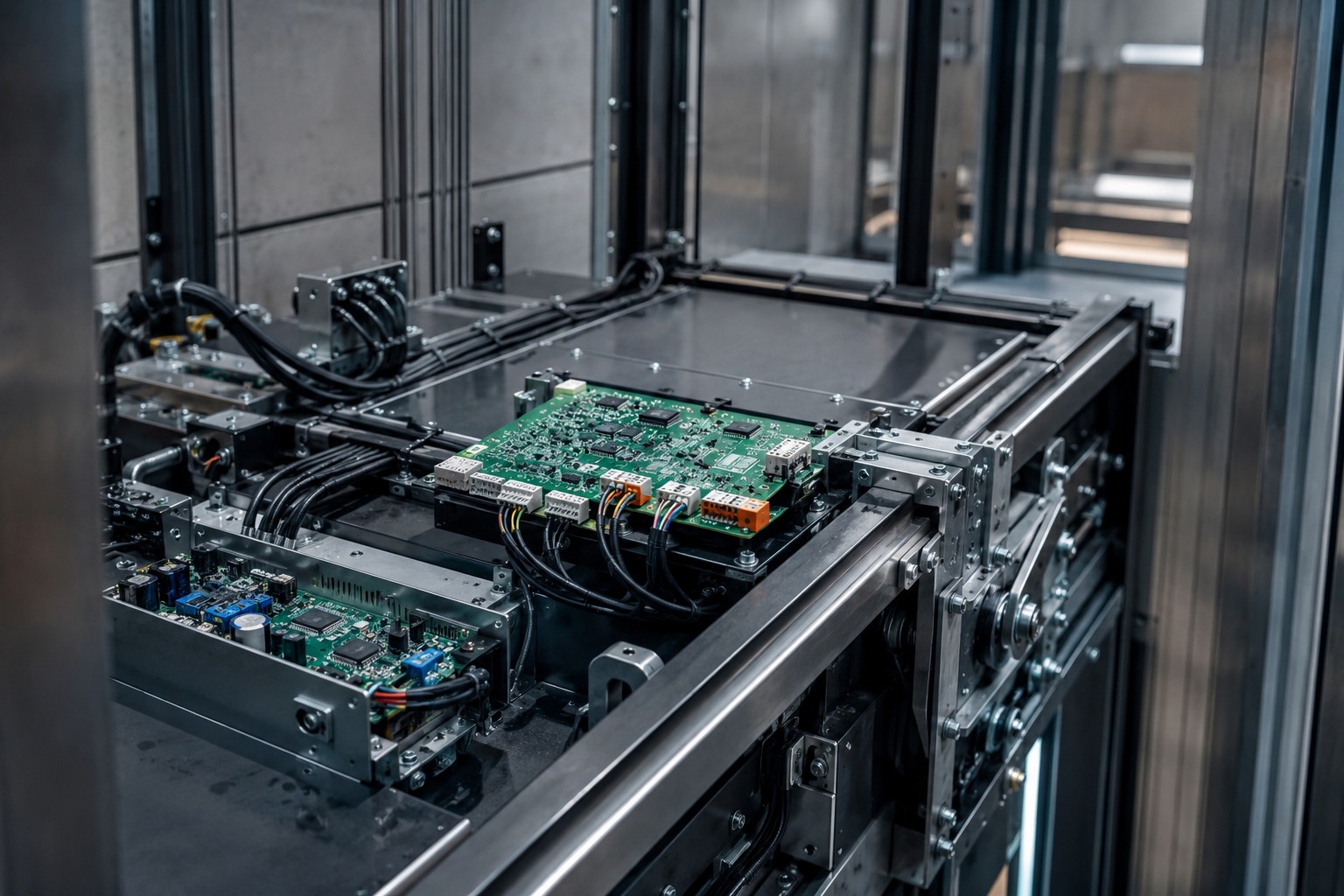
In a modern elevator, the car top communication board is a small but critical electronic part that helps signals move reliably between the car top devices, the main controller, and maintenance interfaces. When this board becomes unstable, technicians may see intermittent faults, inspection mode issues, door signal loss, or unclear status feedback. For building owners, service contractors, and distributors in the Philippines, understanding this board is important because it can shorten downtime, improve troubleshooting accuracy, and reduce the risk of replacing the wrong part.
In practical field work, a car top communication board acts like a signal hub. It gathers data from car top devices such as door zone sensors, limit inputs, inspection controls, and safety-related interfaces, then communicates them to the control system using the correct wiring and protocol. This is especially important in mid-rise and high-rise properties across Metro Manila, Cebu, Davao, Clark, and Makati, where elevators operate under heavy daily traffic in offices, hotels, hospitals, residential towers, and mixed-use developments.
The Philippine market also has its own service realities. Many maintenance teams handle mixed elevator portfolios with older Toshiba units, modernized systems, and imported spare parts moving through Manila, Batangas Port, Subic, and Cebu logistics routes. Because of that, board matching, connector verification, and safe testing after installation matter just as much as price. A board that looks similar may still use a different communication mapping, firmware logic, or interface layout.
This guide explains what a car top communication board does, how to spot communication failures, what to watch during Toshiba replacement work, how to check cables and protocols, how inspection boxes link into maintenance activity, how to test the system after repair, and how service companies can plan spare parts more effectively. It also shares product selection advice for elevator maintenance firms, modernization contractors, and building operators that need dependable sourcing and responsive support in the Philippines.
Market context for the Philippines elevator service sector
Demand for elevator electronics in the Philippines continues to grow with urban redevelopment, infrastructure projects, hospital expansion, condominium turnover, and office retrofits. In areas such as Bonifacio Global City, Ortigas, Quezon City, Pasig, Alabang, Cebu IT Park, and Davao commercial centers, vertical transportation uptime is directly linked to tenant satisfaction and building operations. As more aging lifts enter their second or third major maintenance cycle, communication boards are becoming a common replacement item alongside inverter parts, door operator components, intercom devices, and COP electronics.
Service firms in the country also face long lead times for low-volume models, varying site conditions, and limited tolerance for repeated callback visits. That is why many local buyers now look for suppliers that can support reliable model matching, stable quality inspection, protective packaging for electronics, and quick responses when serial references or board photos need review. In communication board sourcing, speed matters, but correctness matters more.
| Driver | Where it is seen | Effect on elevators | Impact on car top boards | Buyer priority | Recommended action |
|---|---|---|---|---|---|
| Condominium turnover | Metro Manila, Cebu, Davao | Higher daily ride cycles | More wear on signal networks | Fast replacement availability | Keep matched spare stock for common models |
| Office retrofit projects | Makati, BGC, Ortigas | Controller and interface updates | Compatibility checks become essential | Protocol verification | Confirm board revision and connector layout before purchase |
| Hospital operations | Major city medical districts | Low downtime tolerance | Communication faults require rapid response | Reliability and support | Choose suppliers with responsive technical review |
| Hotel renovations | Manila Bay, Cebu, Boracay gateways | Guest experience depends on smooth operation | Intermittent faults become highly visible | Stable quality parts | Use protected packaging and incoming inspection |
| Industrial estate expansion | Laguna, Cavite, Clark | Mixed passenger and service lift use | Higher demand for maintenance-ready parts | Inventory planning | Forecast parts by installed base and route density |
| Modernization of aging stock | Nationwide | Legacy and upgraded systems coexist | Board version mismatches are common | Accurate model matching | Cross-check photos, labels, and application notes |
The table shows why communication boards are no longer a niche item. In the Philippines, service teams often manage both urgent repairs and phased modernization work, so sourcing strategy must cover common failures, legacy references, and changing site requirements.
How a car top communication board handles lift signals
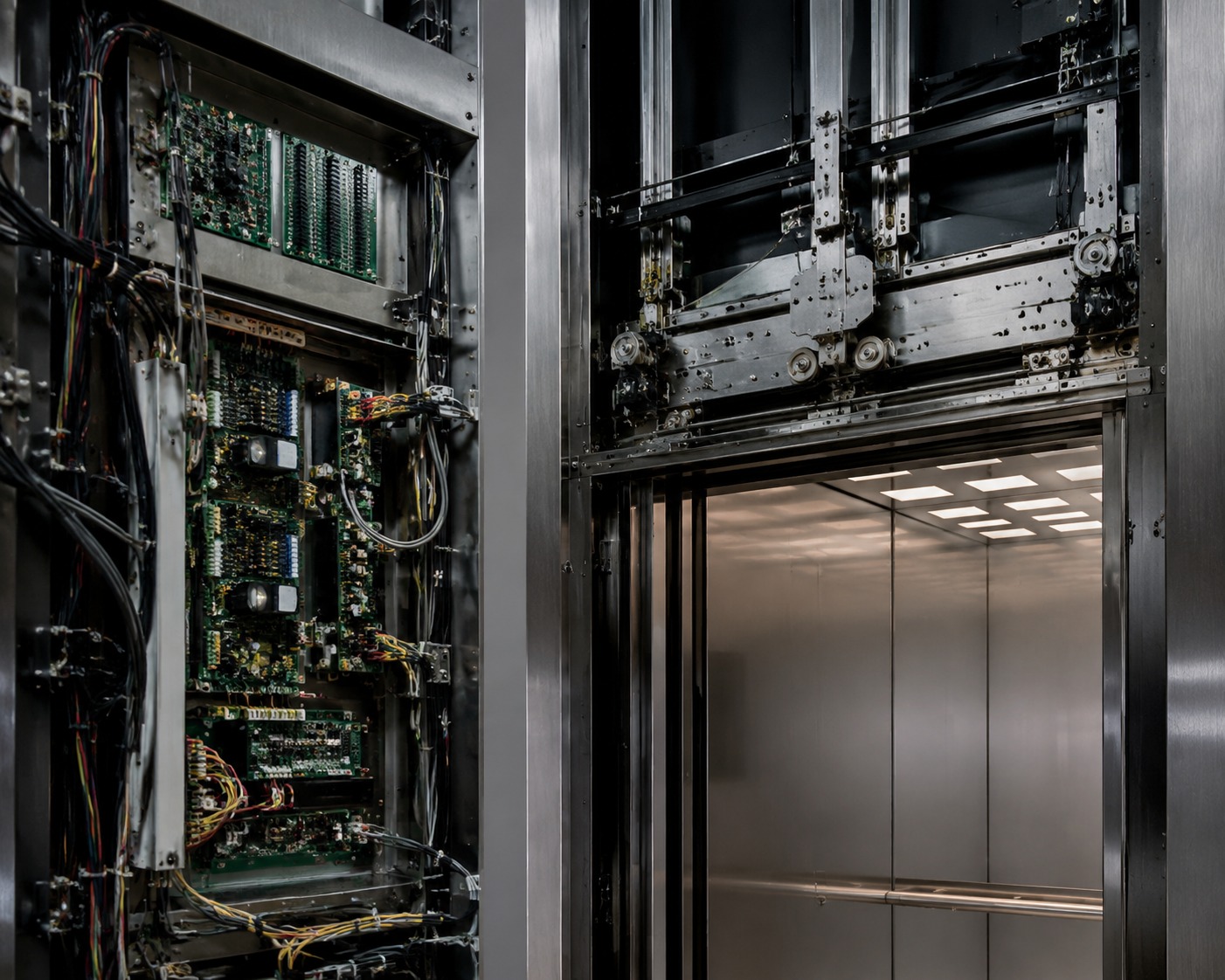
A car top communication board supports signal transmission between devices mounted on or near the elevator car top and the wider control system. Depending on the design, it may collect input and output signals, relay door-related feedback, transmit inspection commands, and support maintenance communication paths. In simple terms, it helps the elevator “understand” what is happening at the car top and pass that information where it needs to go.
On many installations, the board interacts with door operators, limit and safety circuits, inspection station functions, sensor lines, and sometimes interconnection boards. It may work through discrete wiring, bus communication, or a brand-specific protocol architecture. In Toshiba applications, exact function depends on the system generation, board reference, and controller family, so one should not assume interchangeability based only on board size or connector count.
For technicians, the value of the board is clear during troubleshooting. If signals from the car top do not reach the controller accurately, the elevator may fail to move, may stop responding in inspection mode, may report false faults, or may show inconsistent door behavior. If signals return late or become noisy, the control system may record random communication alarms that are hard to reproduce.
Car top boards also help maintenance work because they create an organized signal interface. Instead of tracing every individual wire from multiple devices all the way to the main control panel, technicians can inspect the board, its LEDs, its connectors, and its communication pathway first. This saves time, especially in large buildings where lift downtime affects many users.
| Function | Typical connected device | What the board does | Possible fault result | Site symptom | Why it matters |
|---|---|---|---|---|---|
| Signal collection | Door zone and position inputs | Receives and organizes field signals | Missing status data | Erratic floor or door response | Supports normal travel logic |
| Inspection interface | Car top inspection controls | Transfers maintenance commands | Inspection mode failure | Technician cannot run safely from top | Essential for service operations |
| Door communication | Door operator and locks | Relays open, close, and status signals | Door cycle interruption | Door reopening or no start | Major effect on availability |
| Status feedback | Controller communication path | Sends board and input state information | Alarm generation | Intermittent communication errors | Improves diagnosis |
| Input/output isolation | Multiple field devices | Helps manage distributed wiring | Signal interference issues | Random or unstable operation | Protects signal integrity |
| Maintenance access | Inspection box and interfaces | Links service tools and top controls | Testing limitations | Longer repair time | Important for efficient field work |
This breakdown helps buyers understand why a failed board can create symptoms that seem unrelated. A door problem, an inspection problem, and a communication alarm can all come from the same car top board path.
When selecting a replacement, many service teams review not only the board itself but also related assemblies. For example, if the site uses linked expansion functions, it may also be wise to compare compatible options such as a Toshiba elevator expansion board to understand how the complete signal chain is arranged.
Typical signs of communication failure
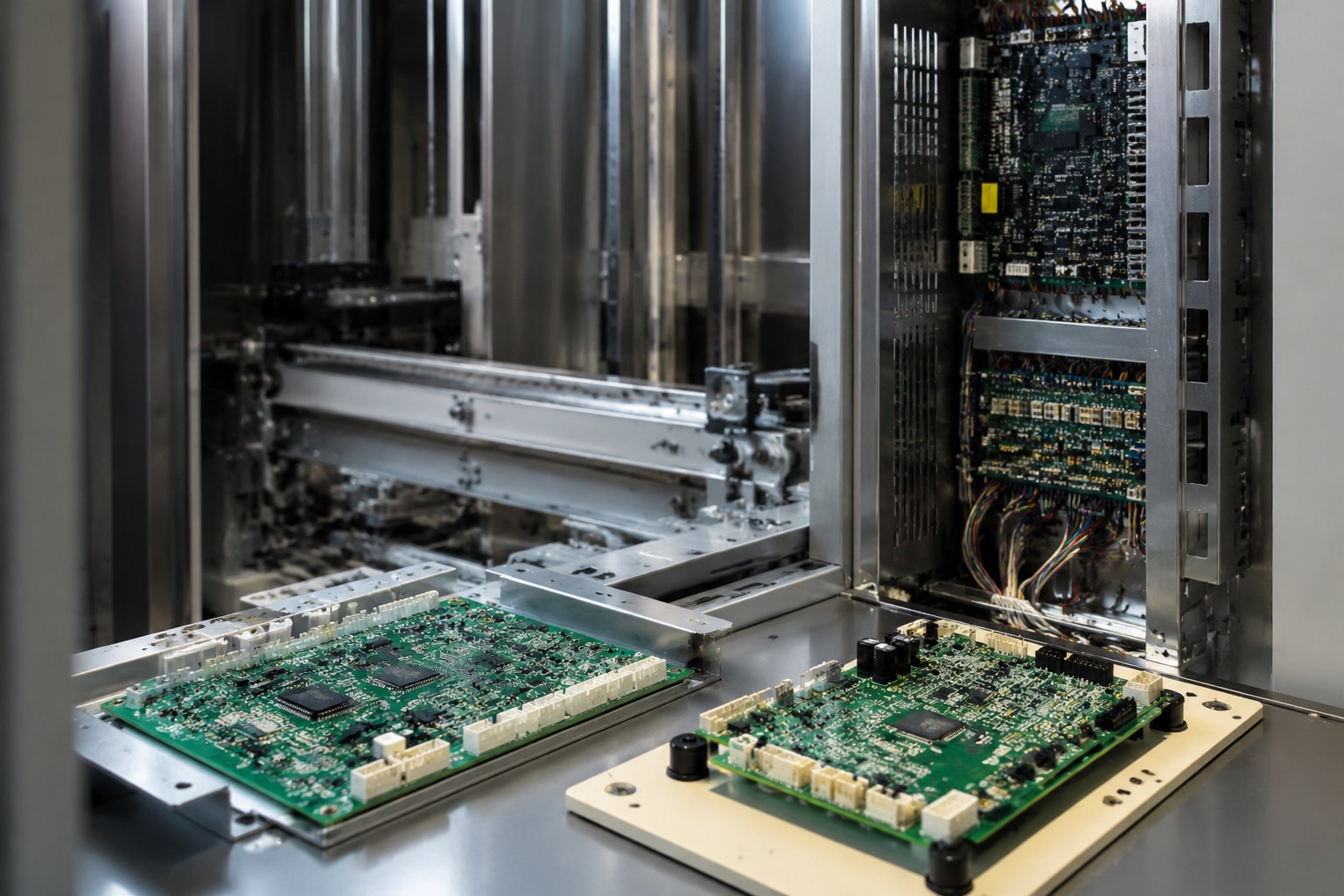
Communication failure at the car top does not always appear as a total shutdown. In many Philippine service cases, the first signs are intermittent and easy to misread: occasional door refusal, random fault resets after power cycling, inspection mode inconsistency, or brief service interruptions during peak traffic. High humidity, vibration, aging connectors, and cabinet contamination can all contribute to these symptoms.
Technicians should separate communication failures from pure mechanical problems. For example, a noisy door operator can still be mechanical, but if the operator is healthy and the controller loses status confirmation, the issue may be in the communication board path. Likewise, if an elevator runs normally in automatic mode but behaves unpredictably during top inspection, the fault may involve the board, inspection station wiring, or a connector carrying maintenance signals.
Another common sign is repeat callback behavior. The lift returns to service after temporary re-seating of connectors or after a reset, but the fault comes back within days or weeks. This usually suggests an unstable electronic interface, oxidized contacts, a weak solder area, a damaged cable, or a board that is no longer processing signals reliably under load or temperature changes.
| Observed sign | Likely communication issue | Other possible cause | Urgency level | First field check | Recommended next step |
|---|---|---|---|---|---|
| Intermittent communication alarms | Unstable board or bus signal | Power fluctuation | High | Check LED status and connector seating | Measure supply and inspect board condition |
| Inspection controls not responding | Broken interface path | Faulty switch assembly | High | Verify inspection box output | Check board input recognition |
| Door does not complete cycle | Missing status transmission | Mechanical door issue | High | Compare operator behavior and board feedback | Inspect I/O and protocol path |
| Fault clears after reset only | Board instability | Controller memory event | Medium | Review recurrence pattern | Replace suspect board after confirmation |
| Random missing input states | Loose cable or oxidized terminal | Defective sensor | Medium | Wiggle test and continuity check | Repair cable or replace connector |
| Elevator stops during heavy traffic | Heat-related communication drop | Main control issue | High | Inspect temperature and enclosure condition | Check board under real operating load |
The table is useful because it links what building staff see with what technicians should inspect first. It helps avoid wasted time replacing sensors, switches, or door parts when the actual weakness is the communication board network.
Notes on replacing Toshiba car top boards
When replacing a Toshiba car top communication board, the most important rule is exact matching. Part number alone may not be enough if the board has multiple revisions, different application firmware, or connector differences between system families. Before replacement, technicians should document the original board label, any barcode or revision code, the connector count, terminal naming, and the installation environment.
It is also wise to photograph the board in place before removal. This is especially helpful when service teams in Manila, Iloilo, Cagayan de Oro, or provincial areas need remote support from a parts supplier or central engineering office. Clear images of both sides of the board, connected harnesses, and nearby assemblies can prevent mismatches and speed up approval.
For Toshiba-related jobs, users often look for direct product references rather than generic electronics. A dedicated Toshiba elevator car top communication board listing can help buyers compare application details, but final confirmation should still include board markings, system use, and site conditions. It is safer to confirm than to assume.
During replacement, pay attention to ESD handling, mounting integrity, and connector orientation. A good board can fail early if installed in a contaminated enclosure, if a loose fixing point causes vibration stress, or if a harness is forced into the wrong position. Check for bent pins, heat discoloration, cracked solder joints, and trapped cable insulation before re-energizing the system.
Replacement work should also consider related components. If the board failed because of voltage instability, moisture ingress, or a damaged cable, replacing only the board may not solve the problem. Repeat failures are expensive and can hurt the maintenance company’s reputation, especially in premium buildings where downtime notices spread quickly among tenants.
| Checkpoint | Why it matters | What to verify | Common mistake | Risk if ignored | Best practice |
|---|---|---|---|---|---|
| Part number confirmation | Avoid mismatch | Main code and suffix | Matching by appearance only | Non-functioning replacement | Verify label and application data |
| Revision level | Boards may differ internally | Revision mark or version code | Ignoring secondary identifiers | Signal incompatibility | Cross-check before dispatch |
| Connector layout | Prevents wiring error | Pin count and naming | Assuming similar harness fit | Input/output confusion | Use pre-removal photos |
| Power condition | Protects new board | Voltage stability and grounding | Replacing board without cause check | Repeat failure | Measure supply before startup |
| Mechanical mounting | Reduces vibration stress | Standoffs, screws, insulation | Loose or uneven installation | Premature damage | Rebuild mounting carefully |
| Post-install test | Confirms function | Auto mode and inspection mode | Checking only power-on status | Hidden field faults | Run full communication verification |
This checklist is designed to reduce return visits. In Philippine conditions where traffic, access schedules, and long travel between sites can raise service costs, getting the replacement right the first time is a major operational advantage.
Checking cable connectors and communication protocols
Even when a board is suspected, cable connectors and protocol integrity must be checked before final diagnosis. Many communication faults originate in the wiring path rather than the PCB itself. Car top environments can expose cables to vibration, repeated movement, dust, and moisture, especially in older shafts or buildings with inconsistent machine room conditions.
Start with a physical inspection. Look for loose plugs, uneven insertion depth, oxidation, damaged locking tabs, broken shielding, rubbed insulation, and signs of previous overheating. Then verify continuity, insulation condition, and supply voltage. If the system uses a bus-based protocol, inspect termination, polarity, and noise sources. Miswiring during earlier service work is more common than many teams expect.
Protocol checks are equally important. A communication board may be healthy but unable to exchange data because the expected signal format, address logic, or linked device response is disrupted elsewhere in the chain. In mixed modernization environments, one substituted cable assembly or a changed interface board can produce inconsistent communication behavior.
For service companies handling many brands, standardized inspection forms help. Recording connector ID, wire color, voltage reading, pin condition, and communication status creates a repeatable diagnosis process. It also improves handover between field technicians and back-office support staff.
| Inspection item | What to look for | Test method | Normal result | Abnormal clue | Corrective action |
|---|---|---|---|---|---|
| Connector seating | Fully locked engagement | Visual and gentle pull test | Firm and even fit | Loose or partial insertion | Re-seat or replace connector |
| Pin condition | Bent, burnt, or oxidized pins | Close visual inspection | Clean and aligned pins | Dark, green, or deformed pins | Clean or replace affected parts |
| Cable continuity | Open or unstable conductor | Meter continuity test | Stable reading | Intermittent or no continuity | Repair or replace cable |
| Shielding integrity | Damage to protective layer | Visual and grounding check | Intact shield path | Noise-related instability | Restore shield and routing |
| Protocol polarity or addressing | Correct communication setup | Reference against wiring diagram | Matches system design | Random communication loss | Correct wiring or board setting |
| Supply to board | Stable power level | Voltage measurement under load | Within expected range | Drop, ripple, or fluctuation | Trace upstream power issue |
This table emphasizes a key point: connector and protocol checks should come before expensive part replacement whenever fault evidence is incomplete. Good diagnosis reduces unnecessary inventory movement and speeds final repair.
How inspection boxes and maintenance interfaces connect
The inspection box on the car top is a practical bridge between the technician and the elevator system. During maintenance or troubleshooting, it gives controlled access to inspection mode, movement commands, stop functions, and status interaction. The car top communication board often acts as part of the pathway that links this inspection interface to the controller.
If the inspection box is healthy but the communication path is not, the technician may encounter delayed response, no response, or incomplete command recognition. That is why the inspection box should not be treated as a separate issue from the board. In many cases, these devices are functionally linked within the same service workflow.
When evaluating related parts, service companies may review items such as an elevator inspection box and mobile switch box assembly to make sure the maintenance interface itself is not contributing to the problem. This is especially useful when the site has visible wear on switches, emergency stop components, or cable tails.
In dense service routes such as Quezon City, Pasay, Taguig, and Mandaluyong, efficient maintenance depends on being able to isolate whether the problem sits in the board, the inspection box, the harness, or the control logic. A systematic approach reduces time on top of the car and supports safer service execution.
Technologically, experienced parts suppliers add value here by helping customers match not just one board but the surrounding interface ecosystem. Strong technical capability includes reviewing board photos, part numbers, connector forms, and likely application conditions before shipment. That reduces ordering mistakes and helps maintenance teams arrive on site with better-prepared replacement plans.
How to test communication after repair
Testing after repair should confirm more than simple power-up. A proper communication test verifies that the board receives and transmits signals correctly during automatic operation, door cycles, and inspection mode. The goal is to prove stable performance under realistic conditions rather than to assume success because fault codes disappear temporarily.
Start with a visual check after installation: confirm mounting, cable routing, connector locks, and no trapped wires. Then power the system and check board indicators if available. Review whether the controller recognizes normal communication status. Next, test individual functions one by one: inspection enable, movement commands, door open and close behavior, and any input changes from top-side devices.
After basic function is confirmed, run repeated cycles. Intermittent communication faults often reappear only after vibration, temperature rise, or repeated door operation. If possible, test during conditions similar to actual building use. In a busy office tower in Makati or a condominium in Pasig, that may mean observing several runs during morning demand or after consecutive door cycles.
Good service organizations document the test outcome. They note pre-repair symptoms, replaced parts, final voltage readings, connector condition, communication status, and the result of auto and inspection mode testing. This creates a maintenance record that is valuable for future troubleshooting and warranty review.
| Test step | Purpose | What to observe | Pass condition | Fail indication | Follow-up action |
|---|---|---|---|---|---|
| Visual installation check | Prevent immediate wiring errors | Mounting and connector position | No loose or misaligned parts | Visible installation issue | Correct before energizing |
| Power-on status review | Confirm board start-up | Indicators and controller status | Normal initialization | No communication or alarm | Recheck supply and addressing |
| Inspection mode test | Verify maintenance interface link | Response to top controls | Stable command recognition | Delay or no response | Trace box-to-board pathway |
| Door cycle verification | Confirm door-related communication | Open, close, and status return | Consistent normal cycles | Door hangs or restarts | Check operator and feedback lines |
| Repeated run test | Catch intermittent faults | Behavior over multiple trips | No recurring communication alarm | Random fault return | Inspect load and thermal factors |
| Documentation and handover | Build service traceability | Record results and replaced parts | Complete service note | Missing history for future work | Standardize report format |
The test sequence above is useful because it covers both immediate and delayed failure patterns. It supports more confident return-to-service decisions and reduces the chance of next-day callback visits.
Spare parts planning for elevator service companies
For service companies in the Philippines, spare parts planning for communication boards should combine installed-base knowledge, fault frequency, customer priority, and logistics risk. Not every board should be stocked in the same quantity. A practical inventory plan separates fast-moving references, medium-demand parts, and rare boards that may be sourced on request.
Companies that support hospitals, premium residential towers, airports, government buildings, and business districts often benefit from keeping at least one board for their most common Toshiba applications. For sites farther from main logistics hubs, such as regional cities or island locations, a proactive spare strategy can make a major difference in downtime performance.
Manufacturing capability also matters when choosing a supplier. Buyers need sources that understand consistent component selection, careful quality inspection, anti-static protection, durable packaging, and shipment handling that suits long domestic transit or onward delivery through ports and inter-island routes. A board that arrives damaged or poorly packed creates hidden cost even if the unit price looks attractive.
Service capability matters just as much. Responsive support, clear communication during model confirmation, and practical help with replacement matching reduce risk for maintenance contractors and distributors. In this area, a dependable supplier becomes an extension of the customer’s service operation rather than only a seller of parts.
| Inventory class | Typical part profile | Stock level idea | Best for which customer | Main risk | Planning advice |
|---|---|---|---|---|---|
| Critical stock | Common Toshiba car top boards on key accounts | Keep 1 to 3 units | Hospitals, premium offices | Immediate downtime penalties | Review monthly by installed base |
| Operational stock | Medium-frequency electronics | Keep limited rotation stock | Residential and hotels | Slow-moving capital lockup | Align with service route density |
| Project stock | Modernization-specific boards | Buy per project phase | Contractors and upgrades | Revision mismatch | Confirm bill of materials early |
| Emergency source only | Rare legacy references | No regular stock | Old provincial installations | Extended lead time | Maintain supplier database and photos |
| Shared group stock | Used across multiple branches | Centralized stock pool | National service firms | Dispatch delay | Use route-based allocation |
| Return-evaluation stock | Uncertain field diagnosis items | Controlled reserve | Mixed brand service teams | Unnecessary deployment | Require pre-issue technical review |
The table helps service managers balance inventory cost with uptime obligations. In a market with heavy traffic and varying lead times, a layered stock strategy is more efficient than trying to hold every possible part in quantity.
Buying advice for Philippine buyers
When purchasing a car top communication board in the Philippines, buyers should focus on six factors: exact model matching, revision confirmation, quality screening, packaging quality, supplier response speed, and support for related components. This is true whether the buyer is a maintenance company, distributor, building owner, or modernization contractor.
Ask for confirmation based on board photo, part number, and application description. If available, share controller model, elevator brand, and the site symptom. A specialist supplier can often identify mismatch risk early and recommend whether related items such as expansion boards, door components, power supplies, or inspection accessories should also be reviewed.
Local operating conditions also matter. In coastal and high-humidity areas, corrosion risk is higher. In busy commercial districts, downtime cost is higher. In remote projects, packaging protection and dispatch reliability matter more. The best supplier is one that adapts to these realities instead of offering only generic catalog answers.
Industries and applications that depend on stable car top communication
Stable car top communication is important across many building types. In hospitals, lift response is tied to patient movement and equipment flow. In condominiums, it affects resident satisfaction and move-in schedules. In office towers, faults can disrupt tenant operations during peak hours. In hotels and retail centers, elevator reliability shapes visitor experience directly.
Industrial and logistics properties also depend on reliable communication, especially where service lifts or freight-capable units support operational movement. In ports, warehouses, and transport-linked developments around Subic, Batangas, Clark, and Cebu, a recurring electronic fault may delay maintenance windows and increase service pressure.
Applications vary from passenger lifts and service lifts to modernization projects where old control architecture must coexist with newer components. In every case, signal reliability at the car top remains a basic requirement for safe and efficient operation.
Case studies from common service situations
Case 1: Residential tower in Pasig. The elevator showed random communication faults and occasional inspection mode failure. The first assumption was a worn inspection box, but testing found unstable input recognition at the car top board connector. After board replacement and connector cleaning, the fault did not return during repeated cycle testing.
Case 2: Office building in Makati. The door operator was initially blamed for interrupted closing cycles during peak traffic. However, the mechanical system tested normally. Signal review showed intermittent feedback loss through the car top communication path. Replacing the matched Toshiba board and re-securing the harness resolved the issue.
Case 3: Provincial hotel project near Cebu. A replacement board sourced without revision confirmation powered on but did not communicate correctly. The lesson was clear: appearance-based matching is risky. After verifying the exact reference and application, the correct board was installed and the elevator returned to service.
Case 4: Multi-site maintenance contractor. A company managing lifts across Metro Manila and Laguna reduced callback frequency by standardizing pre-order checks: site photos, label capture, connector review, and a short diagnosis form. This improved communication with the supplier and reduced incorrect dispatches.
About our supply approach for elevator electronics
We support maintenance companies, distributors, building owners, and modernization contractors with elevator spare parts sourcing focused on accurate matching and dependable service. Our technical capability is centered on careful review of board models, connector forms, application details, and compatibility clues, helping customers identify suitable replacement parts for Toshiba and other major brands used across the Philippines.
Our manufacturing and product handling capability emphasizes stable quality inspection, careful electronic protection, and packaging that helps sensitive boards travel safely through local and international delivery routes. This is important for customers shipping to Metro Manila, Cebu, Davao, Iloilo, Cagayan de Oro, and project locations that depend on inter-island logistics.
Our service capability is built around responsive communication, practical sourcing support, and coordinated follow-up for model confirmation and order handling. In addition to car top communication boards, we help customers source control boards, inverter and frequency converter parts, door operators, locks, light curtains, sensors, encoders, power supplies, buttons, COP panels, intercom parts, and other lift accessories. The goal is simple: reduce downtime, improve replacement accuracy, and keep elevator systems operating safely.
2026 trends in car top communication boards
Looking toward 2026, three trends are likely to shape the market. First, diagnostics will become more data-oriented. More elevator systems will rely on better event logging, clearer communication status reporting, and faster fault isolation. This means buyers will value boards and related interfaces that support stable signal transparency and easier maintenance interpretation.
Second, modernization policy and lifecycle planning will gain importance. As buildings in the Philippines continue to age, owners will compare reactive repair cost with phased electronics replacement. Car top communication boards will increasingly be evaluated as part of broader reliability upgrades rather than as isolated emergency purchases.
Third, sustainability will affect spare parts strategy. Building operators want to reduce waste, avoid repeated truck rolls, and extend the useful life of elevator systems through correct part matching. Better diagnostics, more durable packaging, and efficient inventory planning all support lower lifecycle waste. For service companies, the practical sustainability move is not only recycling; it is also preventing misorders and repeat failures.
Frequently asked questions about car top communication boards
What does a car top communication board do in an elevator?
It transfers and manages signals between devices on the car top and the elevator control system, often including inspection, door, sensor, and status communication functions.
How do I know if the board is faulty?
Common signs include intermittent communication alarms, inspection controls not responding, unexplained door issues, random fault resets, and repeated return of the same problem after temporary fixes.
Can I replace a Toshiba car top board with one that looks similar?
No. Similar appearance is not enough. Always confirm the exact part number, revision, connector layout, and application compatibility before replacement.
Should I check wiring before replacing the board?
Yes. Loose connectors, oxidized terminals, damaged cables, unstable power, and protocol errors can create the same symptoms as a failed board.
Why is the inspection box relevant to communication board faults?
The inspection box often depends on the same signal path. If maintenance commands are not reaching the controller properly, the issue may involve the board, box, harness, or interface connection.
What should be tested after board replacement?
Check power-up status, inspection mode, door operation, input recognition, repeated travel cycles, and alarm recurrence. Documentation is recommended for future service records.
Should service companies stock these boards?
For common models on critical sites, yes. A small planned stock can reduce downtime and improve response for hospitals, office towers, and high-traffic residential buildings.
What should Philippine buyers look for in a supplier?
Look for accurate model matching, quality inspection, careful packaging, responsive support, and experience with compatible elevator spare parts for Toshiba and other brands.