
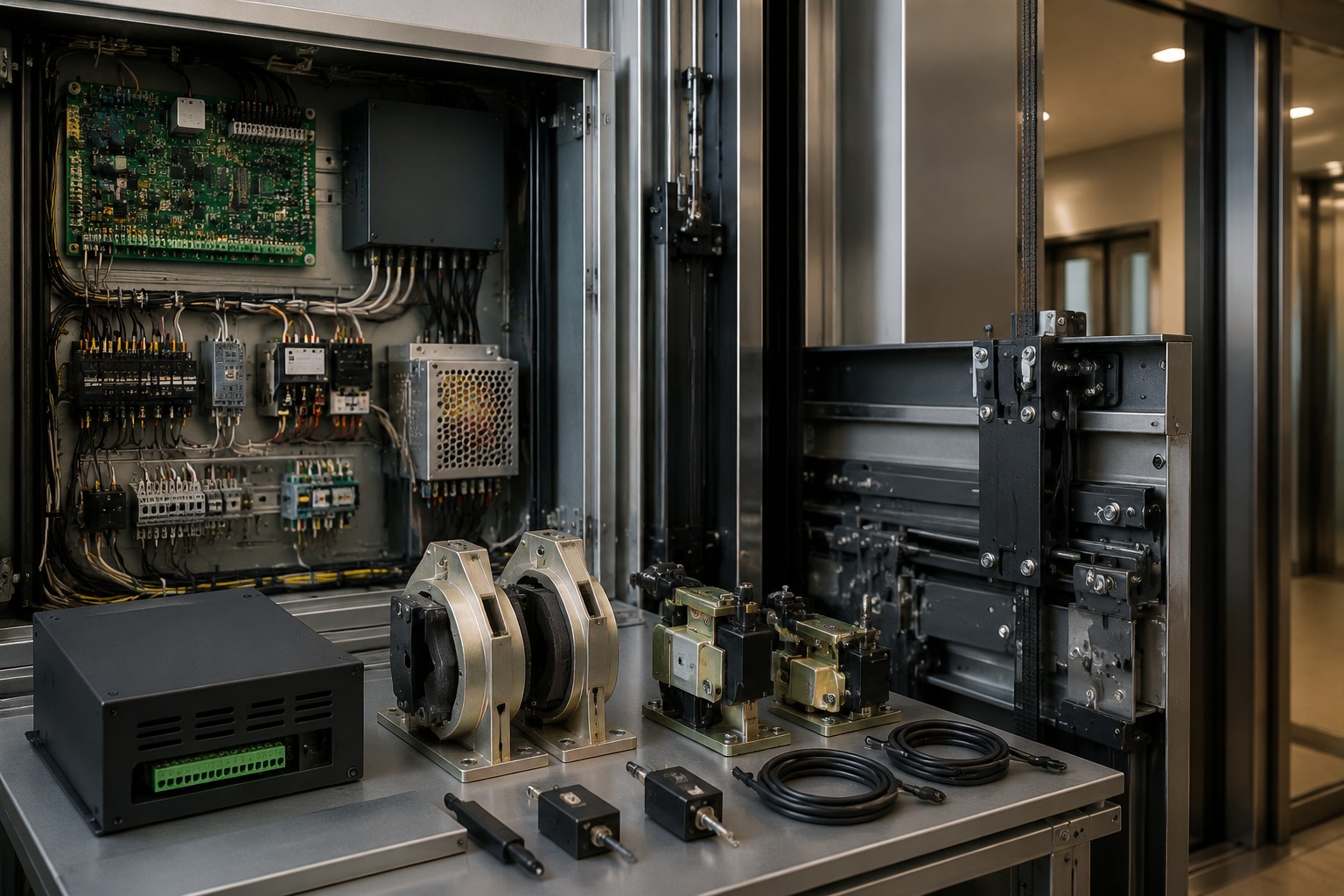
Brake power components are small parts with a very large safety role. In an elevator, the brake must release smoothly when the car is permitted to move and must apply reliably when the system stops, levels, or enters a fault condition. That is why maintenance teams in the Philippines pay close attention to brake release power supplies, constant current brake supplies, 48V brake power units, and wire rope brake controllers. When these parts are matched correctly, inspected carefully, and replaced in time, they help reduce nuisance shutdowns, improve rescue readiness, and support stable elevator operation in residential towers, offices, hospitals, hotels, factories, and transport-linked properties.
For building owners and service contractors in Metro Manila, Cebu, Davao, Clark, Iloilo, Bacolod, Cagayan de Oro, and nearby growth corridors, the practical question is not only what the brake part does, but also how to choose the correct replacement, how to test it after installation, and how to plan spare stock before an urgent outage happens. In a market where imported parts often pass through Manila, Subic, Batangas, and Cebu logistics routes, sourcing discipline matters. Correct voltage, current profile, coil compatibility, connector format, mounting size, and control logic all need to be verified before installation.
This guide explains the core brake power parts used in elevator systems, common signs of brake circuit failure, practical testing steps after replacement, and buying advice for Philippine maintenance companies, distributors, modernization contractors, and building operators. Where relevant, you can review product options such as a brake release power supply for elevator applications, a constant current brake release power supply, a 48V brake power supply unit, or a wire rope brake controller for lift systems when matching replacement requirements.
Philippines Market Overview for Elevator Brake Power Parts
The Philippines elevator service market continues to expand with new mixed-use developments, condominium towers, business parks, logistics buildings, medical facilities, and transport-oriented projects. As more elevators move from warranty phase into routine maintenance and modernization cycles, demand for electrical brake support parts also increases. Brake power assemblies are especially important in aging equipment because heat, humidity, voltage fluctuation, contamination, and repetitive duty cycles can accelerate wear in power modules, relays, capacitors, connectors, and control boards.
In dense urban environments such as Makati, Taguig, Ortigas, Quezon City, Bonifacio Global City, Cebu IT Park, and Davao commercial zones, downtime is expensive. Property managers prefer reliable replacement sourcing that minimizes repeated callbacks. For provincial cities and island locations, spare planning is even more important because emergency delivery can take longer. Buildings near coastal areas may also see faster corrosion risk in terminals and enclosures, making periodic inspection of brake circuits more important.
| Market Factor | Why It Matters | Typical Effect on Brake Parts Demand |
|---|---|---|
| High-rise residential growth | More elevators entering regular service cycles | Steady need for brake release power supplies and spares |
| Office and mixed-use modernization | Older systems require compatible replacement parts | Higher demand for model-matched brake controllers |
| Hospital and hotel uptime pressure | Service interruption is highly disruptive | Preference for preventive spare stock |
| Humidity and coastal exposure | Electrical contacts and enclosures age faster | More inspections and earlier replacement planning |
| Variable logistics lead times | Imported parts may require careful planning | Local stocking of critical brake power items |
| Modernization of legacy brands | Compatibility checking is essential | Need for technical model matching support |
The table above shows why brake power parts are not only a technical purchase but also an operational planning issue. Demand is driven by both elevator growth and the realities of maintaining diverse installed brands across the Philippines.
What Brake Release Power Supplies Do
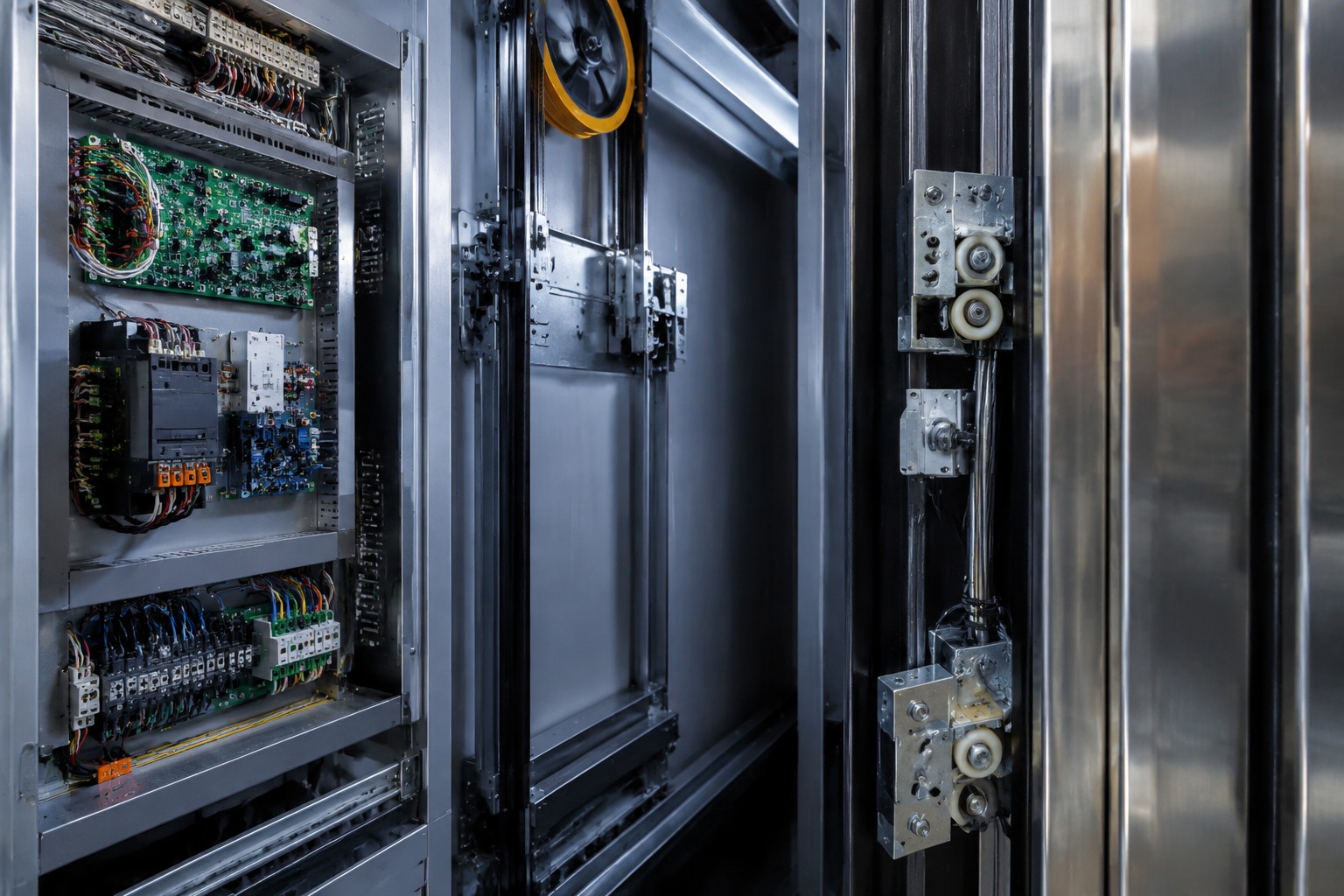
A brake release power supply provides the electrical output needed to energize the elevator brake coil so the brake can release at the proper moment. In simple terms, the elevator controller allows movement, the brake power circuit sends the required output to the brake assembly, and the brake opens so the traction machine or motor can run. When the command ends or a safety condition occurs, the power is removed and the mechanical brake applies again.
Although this sounds straightforward, the output profile matters. Many elevator systems do not simply apply a fixed voltage in the same way from start to finish. Some brake circuits use a higher initial release output and then maintain the brake in a lower holding condition. This helps the brake open quickly while reducing heat stress on the coil. A properly functioning brake release power supply therefore supports three important goals: dependable release, controlled holding, and thermal protection.
In practical field service, these units help prevent slow release, uneven brake opening, coil overheating, nuisance fault trips, and premature wear of related components. They also influence ride quality because a poorly releasing brake may cause start delay, jerk, drag, or unusual vibration. Maintenance technicians in the Philippines often check brake release behavior when diagnosing complaints such as delayed takeoff, occasional leveling issues, repeated controller alarms, or unexplained shutdowns after long operating hours.
| Brake Power Function | System Role | If the Function Becomes Unstable |
|---|---|---|
| Initial brake energizing | Opens the brake at startup | Car may hesitate or fail to move |
| Holding output | Keeps brake released during travel | Brake drag, noise, or intermittent faults may appear |
| Output regulation | Protects coil from excessive stress | Coil overheating and shortened life |
| Signal coordination | Works with controller timing | Start sequence errors or unsafe operation lockout |
| Electrical isolation and protection | Reduces damage risk in abnormal conditions | Burnt components or repeated fuse issues |
| Stable power conversion | Delivers correct DC or controlled output | Inconsistent brake behavior across trips |
The table makes clear that a brake release power supply is not just an accessory. It is a functional safety support component that directly affects how reliably the brake responds during every trip.
Constant Current Brake Supply Use Cases
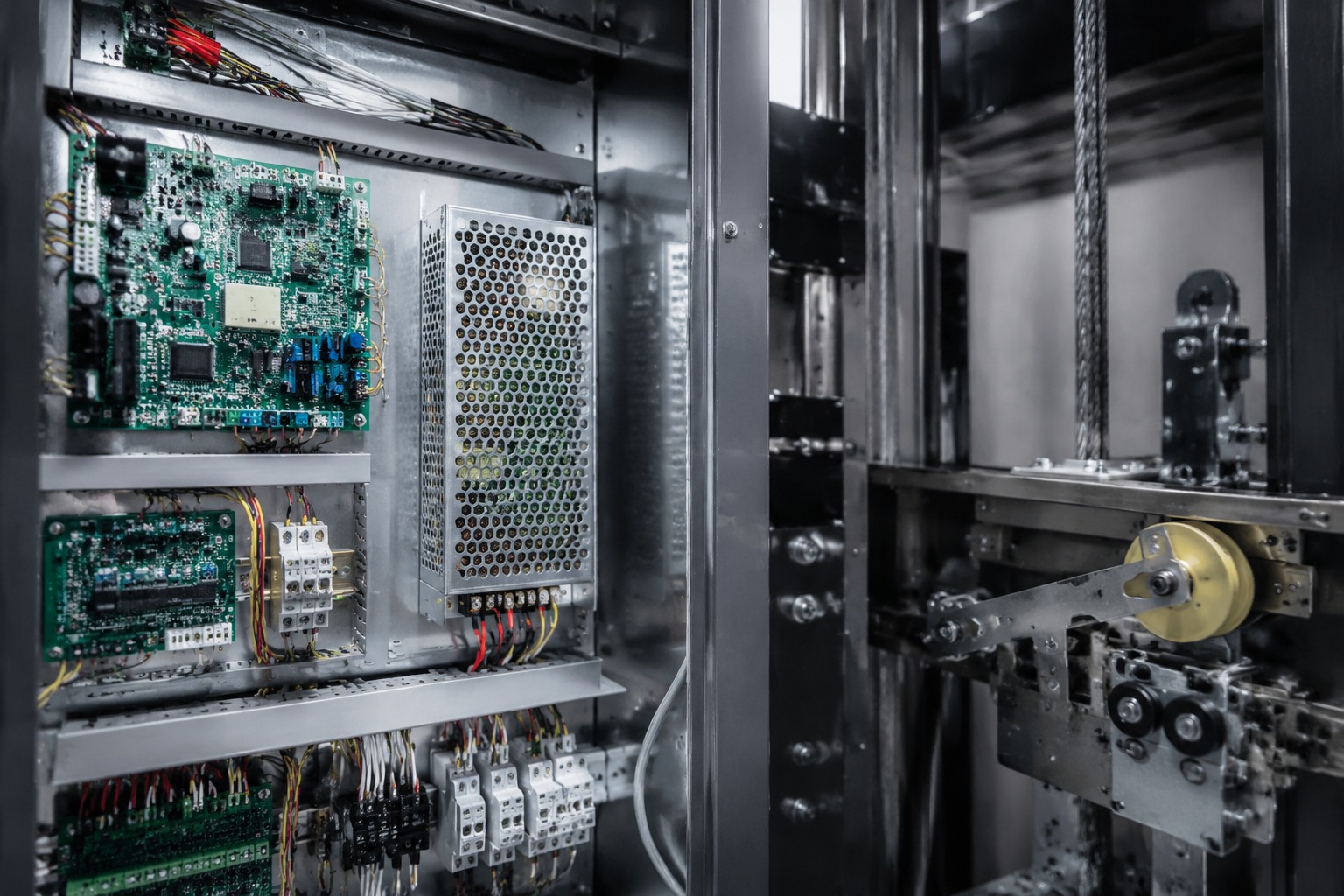
A constant current brake supply is designed to deliver a controlled current profile to the brake coil. This is useful in elevator designs where coil performance must remain stable despite normal input variation or changes in temperature. In the field, a constant current arrangement can help achieve consistent release force and reduce the chance of under-energizing or overheating the brake coil.
These units are commonly selected when the original system design specifies current control rather than simple voltage output. In modernization or replacement work, technicians should never assume a standard power supply can replace a constant current type. The coil characteristics, release timing, and controller expectations may be different. This is especially important for buildings with heavy start-stop patterns such as hospitals, office towers, malls, and transport-linked facilities, where repeatability matters more than a low initial purchase price.
Constant current brake supplies can also be valuable in environments where utility quality is not perfectly stable. In parts of the Philippines where line conditions vary, a current-controlled output may help maintain predictable brake behavior, though overall system condition and upstream power quality still need to be checked. For service teams, the key is matching the replacement to the original electrical and control design, not simply selecting the nearest voltage rating.
| Use Case | Why Constant Current Helps | Typical Site Example |
|---|---|---|
| High-duty elevator service | Maintains consistent brake release over many cycles | Busy office towers in Makati |
| Temperature-sensitive operation | Compensates better for coil behavior changes | Machine rooms with varying heat load |
| Legacy OEM design requirement | Preserves original operating characteristics | Modernized older commercial buildings |
| Frequent rescue readiness | Supports stable brake actuation logic | Hospitals and medical centers |
| Voltage fluctuation concern | Improves current consistency to the coil | Remote provincial properties |
| Precision ride quality demand | Reduces erratic brake release behavior | Premium residential towers |
When a site requires this design, a correctly matched constant current brake release power supply can be a more reliable replacement path than a generic power module. Before ordering, the maintenance team should confirm the model code, output characteristics, installation dimensions, and connector or terminal format.
48V Brake Power Supply Considerations
A 48V brake power supply is used in systems designed around a DC48V brake circuit. The most important rule is simple: match the rated electrical requirements exactly. A wrong voltage rating can result in weak brake release, excessive heat, control faults, or coil damage. Even when the nominal rating appears correct, technicians still need to verify current behavior, wiring polarity where applicable, startup and holding characteristics, and compatibility with the rest of the control circuit.
In replacement planning, Philippine buyers should consider several practical points. First, confirm whether the original part is truly a 48V brake power supply and not another power unit in the same cabinet. Second, compare the input range, especially if the building experiences unstable supply conditions. Third, inspect surrounding parts such as fuses, relays, rectifiers, terminals, and coil wiring because replacing only the power supply may not resolve the root cause. Fourth, check environmental conditions such as machine room heat, dust, and moisture exposure. Fifth, verify whether the elevator model expects a specific OEM part number or a tightly matched compatible replacement.
For service managers buying spares for multiple sites, a 48V brake power supply should be treated as a model-specific electrical item, not a universal stock part. The same voltage label does not guarantee the same functional profile.
| 48V Consideration | What to Check | Reason |
|---|---|---|
| Rated output voltage | Confirm true DC48V requirement | Wrong voltage can prevent proper brake action |
| Output current behavior | Review release and hold characteristics | Correct voltage alone may not be enough |
| Input power range | Match site supply conditions | Helps maintain stable operation |
| Mounting and dimensions | Check cabinet fit and terminal access | Speeds installation and avoids rework |
| Wiring compatibility | Verify terminals, harness, and polarity | Prevents field wiring errors |
| Related circuit health | Inspect coil, relay, fuse, and connectors | Avoids replacing one failed symptom only |
This selection table shows why disciplined identification is essential. In many service cases, the best result comes from matching the original code and application details before purchase rather than making a quick guess based on voltage alone.
Wire Rope Brake Controller Notes
A wire rope brake controller is relevant in certain elevator safety and braking arrangements where rope-related braking control is part of the system design. This component must be treated carefully because it works within a wider control and mechanical safety sequence. If the building uses this configuration, technicians should follow the exact service logic, interlock conditions, and manufacturer-specific wiring references when replacing or testing the controller.
From a sourcing perspective, the controller should be evaluated for model compatibility, control sequence requirements, terminal layout, and any interaction with safety circuits or rescue functions. In some cases, the controller problem may actually be triggered by an upstream signal issue, loose connection, relay wear, or a power irregularity rather than an internal controller defect. That is why a full inspection should be completed before replacement.
For Philippine maintenance teams dealing with installed base diversity, a wire rope brake controller should be ordered only after confirming the elevator model, part code, electrical ratings, and site symptoms. This is especially important for modernization contractors managing mixed-brand portfolios in office clusters, hotels, or industrial estates.
Because brake controllers participate in safety-relevant functions, post-installation testing should include command input confirmation, output verification, sequence timing checks, and observation under both normal operation and controlled fault conditions according to site procedures.
Common Brake Circuit Failure Signs
Brake circuit problems rarely look identical from one site to another, but several warning signs appear repeatedly in field service. The elevator may hesitate before movement, produce a dragging sound at startup, show intermittent brake-related alarms, trip after repeated runs, or become unavailable during heavy traffic periods. Some sites report a burnt smell in the machine room, abnormal brake coil temperature, discolored terminals, or visible wear around connectors and relay contacts.
Technicians should separate mechanical brake issues from electrical supply issues, even though both may occur together. A brake shoe or spring problem can create symptoms similar to weak electrical release, while a poor power supply output can make a healthy brake assembly appear mechanically stiff. Good troubleshooting therefore includes resistance checks, voltage or current verification, terminal inspection, command sequence review, and observation of actual brake action.
| Failure Sign | Possible Brake Power Cause | Field Action |
|---|---|---|
| Delayed car start | Weak or unstable brake release output | Measure output and inspect brake opening timing |
| Intermittent shutdown | Thermal drift or failing internal component | Test during repeated operation cycles |
| Burnt smell or heat marks | Overloaded circuit or poor terminal contact | Inspect wiring, current draw, and terminal tightness |
| Brake drag noise | Insufficient holding condition or low output | Check coil energizing and brake clearance |
| Blown fuse or tripped protection | Shorted module, wiring fault, or coil issue | Isolate circuit before replacing power supply |
| Alarm during peak traffic | Component weakness under frequent duty | Run stress tests and compare hot versus cold behavior |
| Uneven ride start | Poor release timing coordination | Review controller sequence and brake response |
This fault table is useful because it links visible symptoms to possible electrical causes. However, it should never replace proper diagnostic procedure. In safety-related elevator work, parts should be replaced only after careful troubleshooting and model confirmation.
Testing After Replacement
After replacing a brake release power supply, constant current unit, 48V brake power supply, or wire rope brake controller, testing should be structured and documented. The first step is a visual check: verify mounting security, wiring correctness, terminal tightness, insulation condition, grounding, and surrounding clearance. The second step is static electrical confirmation: input power, output level, fuse status, and continuity checks as applicable. The third step is operational observation: confirm the brake releases and applies at the correct points in the sequence.
The fourth step is repeated running under controlled conditions. An elevator that appears normal on one trip may still show problems after multiple cycles when heat builds up. The fifth step is fault review: check whether the controller history shows any remaining brake-related alarms. The sixth step is rescue and return-to-service readiness according to site procedures. In buildings with high occupancy or critical use, technicians should also communicate test results clearly to the property manager or engineering team.
| Test Stage | What to Verify | Expected Result |
|---|---|---|
| Visual inspection | Part number, mounting, terminals, wiring route | Correct installation with no loose points |
| Static power check | Input and output values | Readings within specification |
| Sequence test | Brake release and apply timing | Clean response with no hesitation |
| Multi-cycle run test | Performance over repeated trips | No thermal drift or intermittent fault |
| Load or traffic simulation | Behavior under realistic use | Stable operation during higher duty |
| Alarm review | Controller logs and status indicators | No active brake-related error |
| Final documentation | Readings, photos, and observations | Traceable maintenance record |
These checks help ensure the replacement solved the actual problem and not just one symptom. In the Philippines, this is especially valuable for dispersed site portfolios where repeat visits increase both cost and downtime.
Maintenance and Spare Stock Planning
Good spare planning reduces emergency downtime. Brake power parts should be categorized as critical or non-critical based on building use, elevator traffic, age, lead time, and consequence of failure. A hospital, hotel, premium residential tower, or government service building may justify on-hand critical stock, while a lower-duty property may rely on scheduled replenishment. The right answer depends on risk, not just budget.
For maintenance companies serving many brands, spare planning should include part standardization where possible, but not at the expense of compatibility. Keep records of model numbers, cabinet photos, wiring details, historical failures, and lead times. Review which sites operate in harsher conditions such as coastal areas, dusty industrial locations, or machine rooms with poor ventilation. These sites may need earlier preventive replacement and larger spare buffers.
By 2026, spare planning is expected to become more data-driven in the Philippines. More service teams are likely to combine maintenance logs, failure history, route planning, and building criticality to define stocking levels. Sustainability goals will also influence decisions, favoring parts with stable quality, lower repeat replacement rates, protective packaging, and more accurate first-time matching to reduce waste and return freight.
| Planning Item | Recommended Practice | Operational Benefit |
|---|---|---|
| Critical site classification | Rank buildings by uptime importance | Prioritizes emergency stock correctly |
| Part history tracking | Record failures by model and location | Improves demand forecasting |
| Lead time review | Monitor import and delivery timing | Prevents stockout during urgent cases |
| Environment-based planning | Flag humid, coastal, or high-heat sites | Supports earlier replacement schedules |
| Model matching files | Keep photos, labels, and wiring records | Reduces ordering errors |
| Minimum stock rules | Set reorder points for critical items | Shortens outage duration |
| Post-use replenishment | Replace emergency stock immediately after use | Maintains readiness for the next incident |
The planning table above is especially useful for distributors, service branches, and building groups managing multiple elevators across different Philippine cities.
Buying Advice for the Philippines
When buying brake power components in the Philippines, the safest process begins with exact identification. Collect the part label, elevator model, application photos, terminal details, and any fault description. If the old label is damaged, capture the cabinet context and surrounding wiring before removal. This helps avoid ordering a part that looks similar but behaves differently in the system.
Technical capability matters during model matching. A reliable supplier should be able to review photos, codes, voltage and current requirements, and application context rather than selling by appearance only. This is particularly important for brake release power supplies and controllers because output behavior and sequence compatibility are often more important than general product category alone.
Manufacturing capability also matters. Buyers should prefer suppliers that work with stable sourcing channels, consistent quality inspection, and protective packaging. Brake power electronics can be damaged by poor handling, moisture exposure, or inadequate packing during transit to Manila, Cebu, Davao, or provincial destinations. Clean labeling and careful packing reduce field confusion and freight-related loss.
Service capability is equally important. Philippine customers often need responsive confirmation, cross-checking of replacement details, and practical communication on lead time and stock status. Fast response is valuable, but accurate response is even more important when the component influences brake function. A supplier that supports careful model matching, clear documentation, and practical after-sales follow-up can help reduce repeat downtime.
For modernization contractors and distributors, it is often wise to maintain a shortlist of brake power items by brand family, including brake release modules, constant current types, 48V units, and controller variants. This supports quicker decisions during service calls and planned shutdown windows.
Applications Across Philippine Industries
Brake power parts are used across many sectors. In residential towers, they support daily reliability during morning and evening peak traffic. In office buildings, they help maintain smooth starts and reduce disruption to tenants. In hospitals, stable brake operation is essential because elevator interruptions directly affect staff movement and patient logistics. In hotels, guest experience is tied to reliable vertical transport. In malls and mixed-use developments, high ride frequency makes heat stability and repeatability more important. In industrial buildings and logistics hubs near Clark, Laguna, Cavite, or Cebu port-linked zones, equipment may face demanding operating conditions and stricter maintenance windows.
As 2026 approaches, three trends are likely to shape this market. First, modernization activity will continue, increasing demand for compatible replacement parts that fit older installations. Second, policy and safety expectations will push for more documented testing and maintenance traceability. Third, sustainability goals will encourage longer-life components, reduced emergency freight, better packaging protection, and more efficient spare planning to avoid waste from incorrect orders or repeated replacement.
Case Examples and Local Sourcing Notes
Consider a condominium tower in Quezon City experiencing intermittent delayed starts during evening peak traffic. The maintenance team initially suspected a mechanical brake issue, but repeated testing showed unstable brake release output after heat buildup. Replacing the matched brake power unit and retightening affected terminals resolved the issue. In this case, proper diagnosis prevented unnecessary mechanical disassembly.
In a Cebu hotel property, an aging elevator showed occasional brake alarms during high occupancy periods. The original component type required a controlled output profile, and a standard replacement had previously caused repeat faults. After confirming the correct specification and installing the properly matched unit, the system returned to stable service. This illustrates why not all brake power supplies are interchangeable.
In a Davao medical building, the facility team chose to hold one critical brake power spare on site after facing delivery pressure during a previous outage. That decision reduced risk for future service interruptions and reflected a practical spare strategy for a high-priority site.
For buyers near major trade hubs such as Manila, Batangas, Subic, and Cebu, logistics may be faster, but correct identification still matters more than speed alone. For Visayas and Mindanao sites farther from central stock points, maintaining photo records and approved spare lists can significantly reduce downtime when urgent replacement is needed.
About Our Elevator Parts Supply Support
We support maintenance companies, distributors, building owners, and modernization contractors with practical sourcing for elevator spare parts used across major brands such as Hitachi, Toshiba, KONE, Mitsubishi, and others. In brake power applications, our focus is not only on supplying a part, but on helping customers confirm compatible replacement details to reduce unnecessary downtime.
From a technology standpoint, we assist with model matching through part code review, application photo checking, and careful comparison of specifications relevant to elevator control and brake circuits. This helps customers avoid ordering by visual similarity alone, which is a common source of delays in replacement work.
From a manufacturing and product handling standpoint, we emphasize stable sourcing channels, quality inspection, and protective packaging. These steps are important for electrical parts that may travel to projects in Metro Manila, Central Luzon, CALABARZON, Cebu, Davao, and other Philippine destinations where transit handling can affect product condition.
From a service standpoint, we aim to respond quickly and clearly on compatibility questions, stock availability, and replacement support. For customers managing multiple sites, this can help improve spare planning and shorten outage periods when a brake power component fails unexpectedly.
FAQ About Elevator Brake Power Parts
What is the main job of a brake release power supply?
Its job is to provide the electrical output needed to energize the brake coil so the brake can release correctly when the elevator is allowed to move, and to support stable holding behavior during travel where the design requires it.
Can I replace a constant current brake supply with a regular power supply?
Not safely by assumption. If the original design specifies constant current behavior, the replacement should match that requirement. Otherwise, release timing, coil temperature, and system reliability may be affected.
Is a 48V brake power supply universal if the voltage is the same?
No. Voltage alone is not enough. Output profile, current behavior, terminals, mounting, and control compatibility must also match.
What are the most common signs that a brake power part is failing?
Delayed starts, intermittent brake alarms, brake drag noise, repeated shutdowns after multiple trips, blown protective devices, abnormal heat, or burnt terminals are common warning signs.
Should I replace the brake coil at the same time?
Only if testing shows the coil is damaged, out of specification, overheated, or contributing to the fault. Many failures involve the power circuit, but a full diagnosis is required.
How should we test after replacement?
Perform visual checks, verify electrical values, confirm release and apply timing, run repeated operational cycles, review alarm history, and document the results according to site procedures.
What spare parts should a building in the Philippines keep on hand?
Critical sites such as hospitals, hotels, major offices, and high-occupancy residential towers often benefit from keeping selected brake power parts in stock, especially if lead times are long or building downtime is costly.
How can we reduce ordering mistakes?
Provide clear part labels, cabinet photos, wiring information, elevator model details, and fault descriptions. This improves model matching and helps identify the correct compatible replacement faster.
What trends will matter by 2026?
Expect stronger focus on modernization compatibility, maintenance traceability, preventive spare planning, and more sustainable sourcing practices that reduce repeat failures and unnecessary freight.
In summary, brake release power supplies, constant current brake supplies, 48V brake power units, and wire rope brake controllers are essential support components for safe stopping, reliable release, and efficient rescue readiness. For Philippine buyers, the best results come from exact model matching, disciplined testing, careful spare planning, and sourcing support that combines technical review, quality control, protective packaging, and responsive service.